The Concept of Human Development (VCE SSCE Health and Human Development): Revision Notes
📚Revision Notes
The Concept of Human Development
Introduction to human development
Human development offers an important way to understand differences and similarities between countries around the world. While we can classify countries as low-, middle- and high-income, this classification has limitations. Many characteristics of different income groups are difficult to measure accurately, making comparisons challenging.
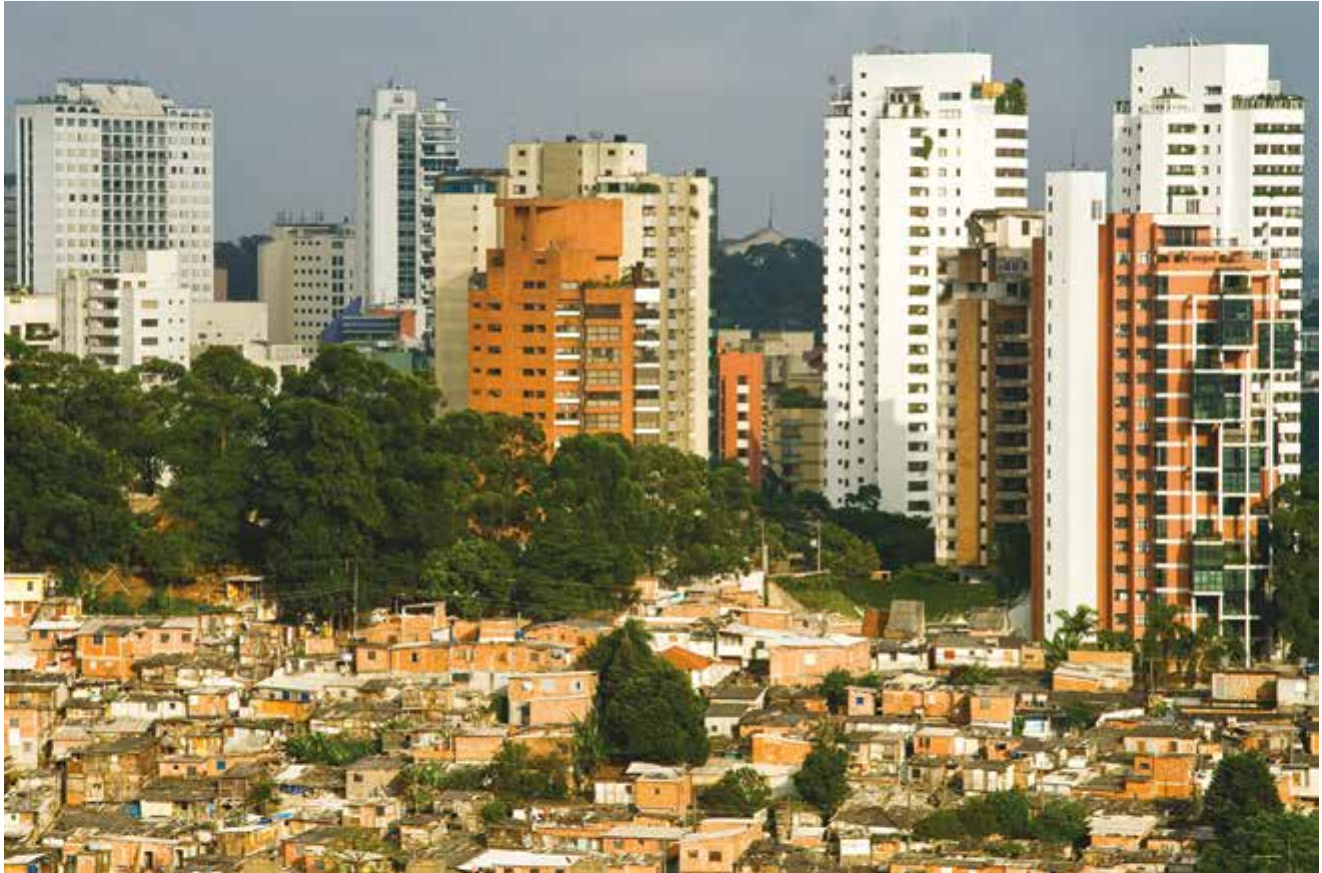
Historically, a country's Gross National Income (GNI) per capita has been used to assess how well people are living. However, economic wealth alone doesn't paint the complete picture. Even when a country has high average income, wealth is rarely distributed equally throughout the population. Some people may live very well while others struggle significantly.
Note
The image above demonstrates this inequality clearly. Within the same area, we can see stark contrasts between living conditions. This shows us that looking at income statistics alone won't necessarily reveal how the entire population is living.
The purpose of human development is to shift the focus from a country's income to its people. Rather than asking "how wealthy is this country?", human development asks "how well are people actually living?".
What is human development?
Human development is about creating conditions where people can develop to their full potential. It means enabling individuals to lead productive and creative lives that align with their own needs and interests.
According to the United Nations Development Programme, human development involves several key aspects:
- Expanding the choices available to people
- Enhancing their capabilities (the range of things people can be and do)
- Providing access to knowledge, health and a decent standard of living
- Enabling participation in community life and decisions that affect their lives
Human development recognises that people value many achievements that don't appear in income or economic growth figures. These include better access to knowledge, improved nutrition, health services, secure livelihoods, safety from crime and violence, leisure time, political and cultural freedoms, and meaningful community participation.
Important
The goal is to create an enabling environment where people can enjoy long, healthy and creative lives, rather than assuming economic growth will automatically improve everyone's quality of life.
Freedom and choice in human development
A central principle of human development is freedom of choice. People should have the opportunity to lead lives they value, not lives imposed upon them. Human development provides opportunities but doesn't insist people must use them.
Example
Understanding Freedom of Choice
Consider someone who chooses to fast for religious reasons compared to someone who goes hungry because they cannot afford food. Both are experiencing hunger, but only the religious faster has made a free choice. Human development aims to ensure people have genuine choices available to them.
This distinction is crucial. There is no limit to the choices people might make. However, equity remains essential. One person's choices must not negatively impact another person's ability to lead the life they value. For example, someone wanting to marry should not force another person into marriage against their will.
Capabilities and participation
Expanding choices means developing people's abilities and giving them opportunities to use those abilities. For instance, educating a girl builds her skills, but provides little benefit if she cannot then access meaningful employment or lacks the right skills for available jobs.
Note
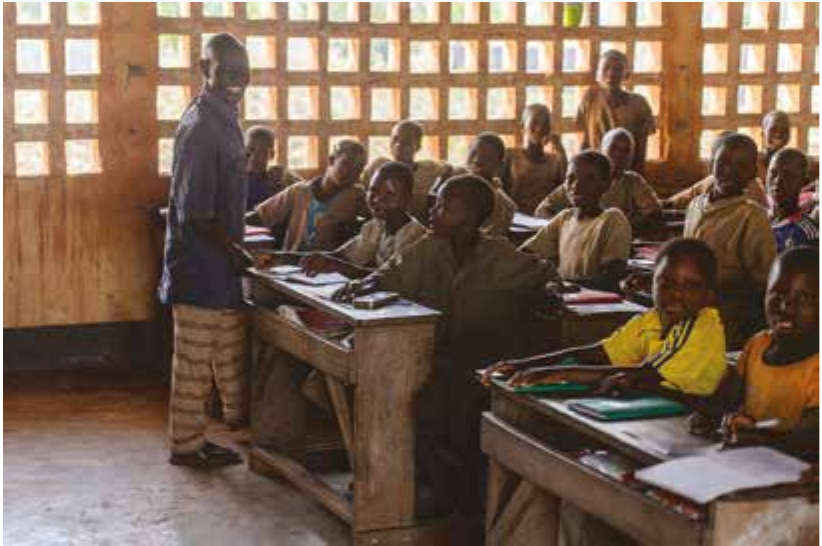
Education plays a vital role in human development because it expands people's choices and capabilities. With education, individuals develop skills that open up more career options and life possibilities.
Capabilities refer to what people can be and do. Examples of what people can be include:
- Being well-nourished
- Being sheltered
- Being healthy
Examples of what people can do include:
- Attending school
- Working in chosen employment
- Voting in elections
- Participating in community life
Human development requires that people can influence and actively participate in processes that shape their lives. The focus is on improving people's actual lives rather than assuming economic growth automatically benefits everyone. While economic factors matter, they are not the sole objective of human development.
Six critical elements of human development
For human development to progress, people need certain choices, capabilities and freedoms. The following diagram illustrates the essential elements:
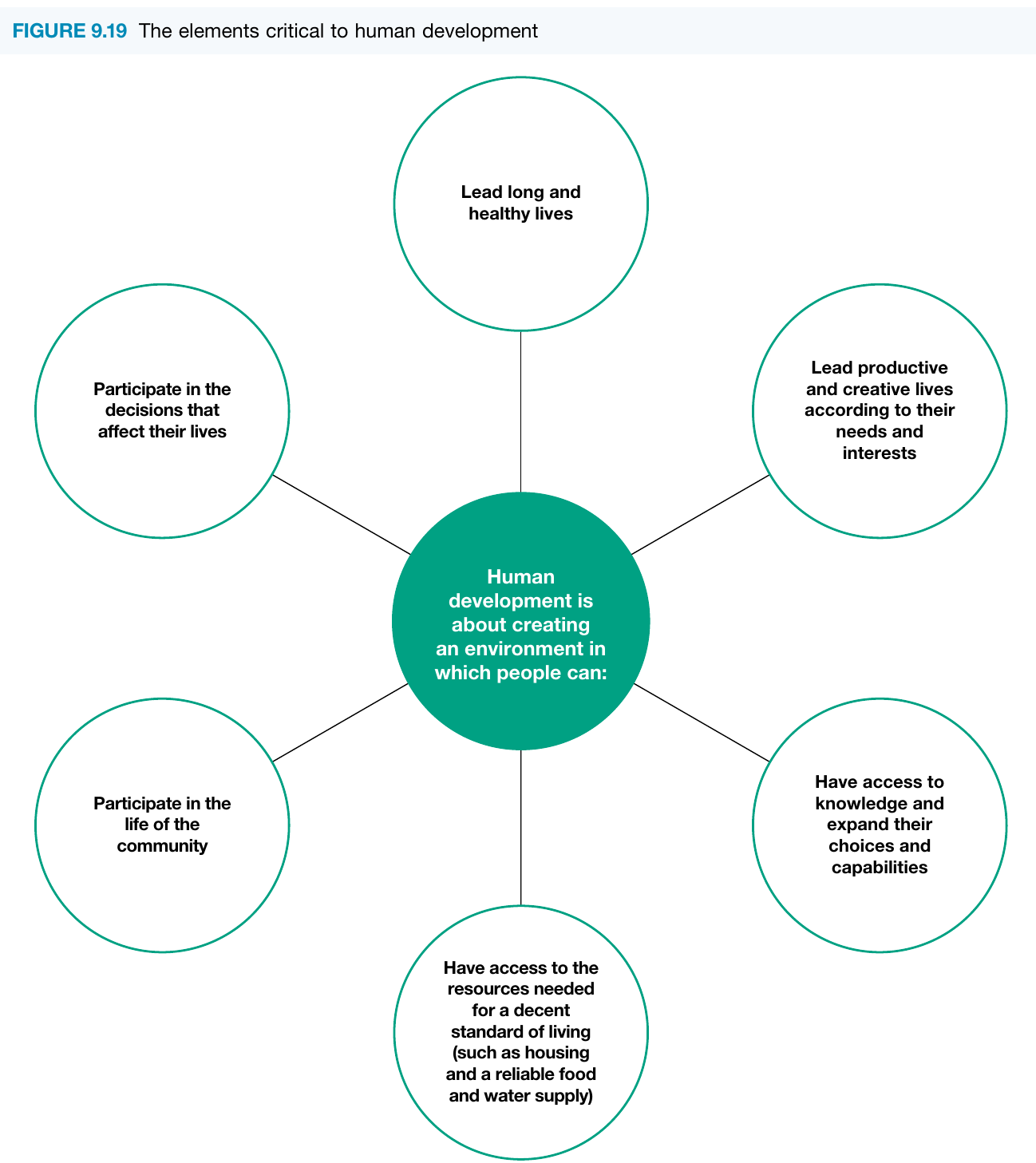
These six interconnected elements form the foundation of human development:
Lead long and healthy lives
People need access to healthcare, nutrition and safe environments that enable them to live long, healthy lives. This includes protection from preventable diseases and access to medical care when needed.
Lead productive and creative lives according to needs and interests
Individuals should be able to pursue work and activities that align with their personal goals and interests. This means having genuine choices about careers and lifestyles, rather than being limited by circumstances.
Have access to knowledge and expand choices and capabilities
Education and learning opportunities are fundamental to human development. Knowledge enables people to make informed decisions, develop new skills, and expand the range of possibilities available to them. With education comes increased capability in areas like literacy and numeracy, which then opens doors to various career paths.
Have access to resources needed for a decent standard of living
This includes adequate housing, reliable food supplies, clean water, and sanitation. Without these basic resources, people cannot thrive or pursue other aspects of human development.
Participate in the life of the community
Human development includes being able to engage in community activities, cultural events, and social connections. People should be able to contribute to and benefit from their communities.
Participate in decisions that affect their lives
People must have a voice in decisions that impact them, whether through voting, community consultations, or other forms of participation. This ensures individuals have agency over their own lives rather than having decisions imposed on them.
Important
Without these capabilities and freedoms, human development cannot progress, and many opportunities remain inaccessible. These elements must be sustainable over the long term for genuine human development to occur.
Case study: Lackistan
To understand how human development appears in real life, consider two young people growing up in Lackistan, a fictional country.
Context
Lackistan has a high average income and growing economy, but wealth distribution is extremely unequal. Major cities are well-developed with public services and infrastructure. City residents have access to education, healthcare, transport, adequate housing, safe water and sanitation.
However, rural areas tell a different story. Rural residents often face food insecurity, lack of healthcare access, limited education opportunities, and inadequate water and sanitation. This situation is typical of many countries where high average incomes hide the reality that not everyone benefits from economic growth.
Example
Adam's Experience: High Human Development
Adam lives in Lackistan's capital with his parents in a safe neighbourhood with low crime rates. Healthcare, safe water and sanitation are readily available. He recently graduated from secondary school and has been accepted to university to study medicine.
Adam's family belongs to the ethnic majority and enjoys freedoms like voting and community participation. He wants to complete his medical degree and work in general practice or a hospital, fulfilling his dream of helping people. He plans to have a family eventually but will wait until his career is established.
Level of human development: Adam experiences high human development in multiple ways:
- He received quality education and chose to pursue medicine at university
- He has genuine choices about his career path and can focus on work he finds meaningful
- He has freedom to decide when to start a family
- He lives in a safe community with access to essential resources like healthcare, water and sanitation
- He can vote and participate actively in community life
Example
Veronica's Experience: Low Human Development
Veronica lives in rural Lackistan with her mother. Her father died when she was five years old, at age 28, from a preventable infectious disease due to lack of basic healthcare access.
During childhood, Veronica spent much of her time collecting water while her mother worked in fields trying to grow enough food for survival. Although educational opportunities were limited in rural areas, Veronica couldn't have attended school anyway because she was needed to collect water.
Without literacy skills, Veronica's employment options are limited to physically demanding, unrewarding unskilled work in her community. She belongs to an ethnic minority that faces discrimination regarding basic rights like voting and community participation.
Following cultural traditions, Veronica was married at age 15 to a man chosen by her uncle. She subsequently had three children and now works in agriculture, struggling to grow sufficient food for her family.
Level of human development: Despite living in the same country, Veronica experiences much lower human development:
- Her father died young from a preventable disease, indicating people in her community cannot lead long, healthy lives
- Safe water isn't readily available, showing lack of resources for decent living standards
- She couldn't access education, severely limiting her employment choices
- She had no freedom to make decisions about major life events like marriage
- She faces discrimination that prevents meaningful community participation
Key insights from the case study
Adam and Veronica's contrasting experiences demonstrate how average income statistics can mask dramatic inequalities. Both live in a country with high average income, yet their lived experiences of human development are vastly different. This illustrates why human development provides a more accurate picture than economic measures alone.
Exam tips
Important
Answering Questions About Human Development
When answering questions about human development, follow these guidelines:
Be specific: Always identify a particular aspect of human development and provide sufficient detail about how it's impacted. For example, rather than stating "education enhances choices and capabilities" (too general), explain: "education can develop capabilities in relation to numeracy and literacy. With these skills, a person is likely to have more choice regarding the careers they pursue in the future."
Link clearly: Make explicit connections between factors and specific elements of human development. Show your understanding of cause and effect.
Use examples: Draw on case studies and real-world examples to illustrate your points. This demonstrates deeper understanding.
Address all elements: Remember that human development encompasses multiple interconnected elements. Consider which ones are most relevant to the question.
Remember!
Summary
Key Points to Remember:
- Human development focuses on people, not just a country's income or economic growth
- It's about creating an environment where people can develop their full potential and lead lives they value
- Freedom of choice is central—people must have genuine options available to them
- Six critical elements must be present: long healthy lives, productive/creative lives, access to knowledge, access to resources, community participation, and participation in decisions
- Capabilities refer to what people can be and do, such as being healthy, educated, and able to work
- Economic measures alone can hide significant inequalities, as shown in the Lackistan case study
- Equity matters—one person's choices shouldn't harm another's opportunities
- Human development must be sustainable over the long term to be meaningful
Human development provides a comprehensive framework for understanding quality of life that goes far beyond economic indicators. By focusing on people's actual experiences, choices, and capabilities, it offers valuable insights into how well populations are truly living.