The Victorian Parliament (VCE SSCE Legal Studies): Revision Notes
📚Revision Notes
The Victorian Parliament
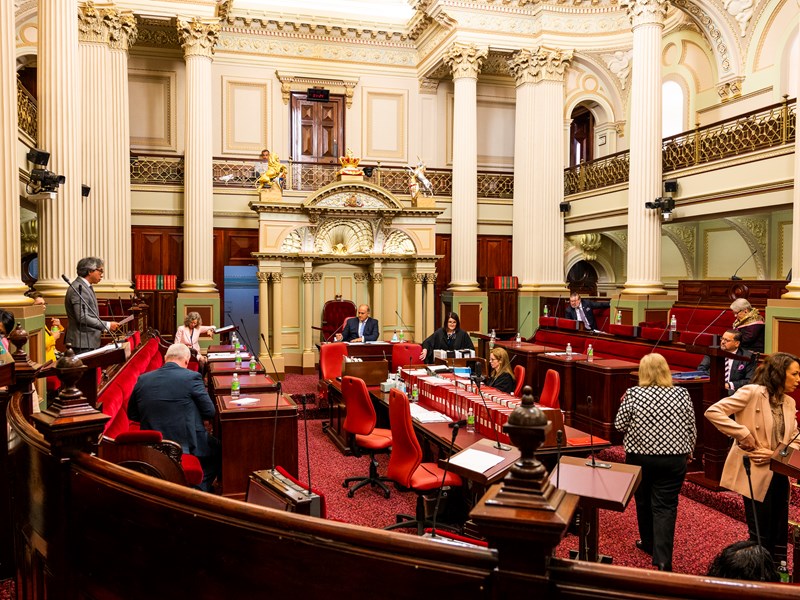
Overview of the Victorian Parliament
The Victorian Parliament (also called the Parliament of Victoria) operates as a bicameral parliament, meaning it has two chambers or houses. This structure mirrors the Commonwealth Parliament of Australia.
The Victorian Parliament consists of three essential components:
- The King (represented by the Governor of Victoria)
- The Legislative Council (the upper house)
- The Legislative Assembly (the lower house)
Note
Key term: A statute is a law made by parliament. It is a bill that has been passed through both houses of parliament and received royal assent (also known as legislation or an Act of Parliament).
The Legislative Assembly (the lower house)
Composition and electoral structure
The Legislative Assembly comprises 88 members. Victoria is divided into 88 electoral districts for state election purposes. Each district elects one representative through a state election to serve in the lower house.
Members serve a four-year term. Victorian state elections occur every four years on the last Saturday in November. Each member is expected to represent the interests and views of the people within their electoral district.
Note
Study tip: Remember the houses alphabetically – Assembly (lower) comes before Council (upper) in the alphabet.
Government formation
The political party or coalition of parties that secures the majority of seats in the Legislative Assembly forms the state government. The leader of this governing party becomes the Premier of Victoria.
The party with the second-highest number of elected members becomes the opposition. The opposition leader appoints shadow ministers whose role is to monitor and scrutinise the activities and responsibilities of their corresponding government ministers.
Roles of the Legislative Assembly in law-making
The Legislative Assembly performs several critical functions in Victoria's law-making process:
Initiate and pass bills
This is the primary function of the Legislative Assembly. Government ministers usually introduce new laws to this house, though any member may introduce a bill. Bills are introduced as government bills, reflecting policies established by the Premier and senior ministers. The consideration and debate of bills occupies much of the Assembly's parliamentary time.
Form government
The political party with the most seats forms government. Most bills originate in the Legislative Assembly as government bills. These bills reflect the Premier's and senior ministers' policy priorities.
Note
Ministers must be members of parliament and are answerable and accountable for their actions. This ensures democratic accountability in the law-making process.
Scrutinise government administration
Opposition members can question ministers about their policies and proposed legislation during question time. Government decisions and legislative proposals face parliamentary scrutiny through the committee system. This process ensures transparency and accountability in government operations.
Represent the people
Members are elected to represent their constituents' interests. Law-making actions should reflect community views and values. Members who fail to represent their constituents effectively risk losing their seats at the next election.
Act as a house of review
When the Legislative Council initiates and passes a bill first, the Legislative Assembly reviews it. This provides checks and balances in the law-making process.
Control government expenditure
Important
Only the Legislative Assembly can introduce money bills (bills related to taxation or government spending). Any bill proposing to collect taxes or spend public money must be introduced in the Legislative Assembly first. This gives the lower house exclusive control over government expenditure.
The Legislative Council (the upper house)
Composition and electoral structure
The Legislative Council has 40 members. For election purposes, Victoria is divided into eight regions. Each region comprises 11 electoral districts.
Five members of the Legislative Council are elected for each region. These members serve a fixed four-year term.
Primary function
The Legislative Council's primary role is to act as a house of review. This means it reviews, scrutinises, debates and potentially rejects legislation that has already passed through the Legislative Assembly. This function represents an important checking mechanism in Victoria's law-making process.
Roles of the Legislative Council in law-making
Act as a house of review
Similar to the Senate's role in Commonwealth Parliament, the Legislative Council reviews bills passed by the Legislative Assembly. It scrutinises, debates, and may amend or reject government-initiated legislation. This applies important checks and balances to the law-making process and ensures legislation receives thorough examination before becoming law.
Initiate and pass bills
Bills can be introduced in the Legislative Council, though this is less common than in the Legislative Assembly. Like the Senate, the Legislative Council cannot introduce money bills. Money bills must be debated and passed in the Legislative Assembly first.
Note
While the Legislative Council can initiate bills, its primary strength lies in its review function rather than bill initiation. Most bills begin their journey in the Legislative Assembly.
Scrutinise government administration
Ministers who are members of the upper house face questioning by opposition members. Questions during question time cover ministerial policies and proposed legislation. Government decisions undergo scrutiny through the committee process.
The law-making process in Victoria
The Victorian Parliament's main role is to make laws. The process of passing a bill in Victoria mirrors the Commonwealth Parliament process:
Example
The Victorian Law-Making Process:
Step 1: The bill must pass through specific stages in both houses
Step 2: Both houses must pass the bill by majority vote
Step 3: Both houses must pass identical versions of the bill
Step 4: The bill must receive royal assent from the Governor of Victoria
Step 5: After royal assent, the bill becomes a statute (law)
Exam guidance
Important
When answering questions about the Victorian Parliament:
- Identify which house has specific powers (e.g. only the Legislative Assembly can introduce money bills)
- Compare the Victorian Parliament structure to the Commonwealth Parliament to show understanding of bicameral systems
- Explain how the house of review function provides checks and balances
- Analyse how the composition of the houses affects law-making effectiveness (particularly whether the government holds a majority in the upper house)
- Evaluate the effectiveness of parliamentary scrutiny through question time and committees
Remember!
Summary
Key Points to Remember:
- The Victorian Parliament is bicameral with three components: the King (represented by the Governor), the Legislative Council (upper house), and the Legislative Assembly (lower house)
- The Legislative Assembly has 88 members elected from districts for four-year terms and is the primary law-making house
- The Legislative Council has 40 members elected from eight regions and acts primarily as a house of review
- Only the Legislative Assembly can introduce money bills, giving it exclusive control over government expenditure
- Both houses must pass a bill in identical form before it receives royal assent and becomes a statute
- The party with the majority in the Legislative Assembly forms government, and its leader becomes the Premier
- Parliamentary scrutiny occurs through question time and the committee system, holding ministers accountable