Defamation (VCE SSCE Legal Studies): Revision Notes
📚Revision Notes
Defamation
Introduction to defamation
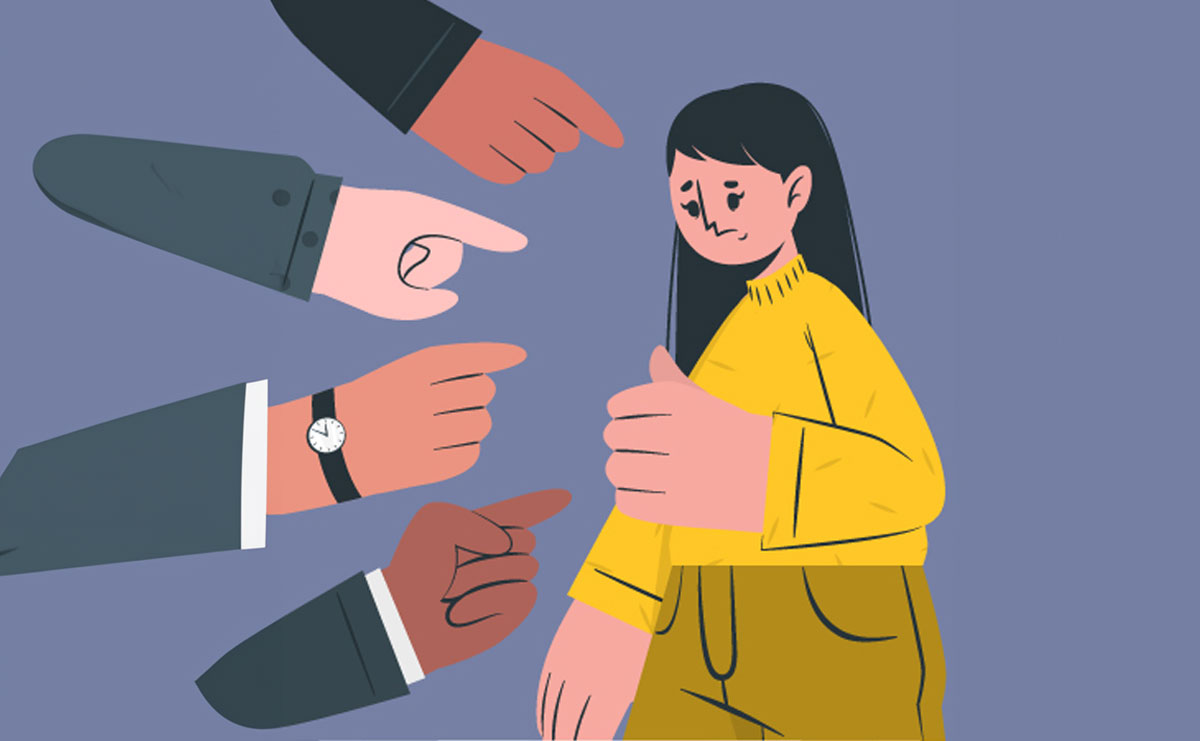
Defamation is a civil tort that protects an individual's reputation from false statements that cause harm. While the Charter of Human Rights and Responsibilities Act 2006 (Vic) protects the right to freedom of expression, this right has limits. You cannot make unproven statements that damage someone's reputation.
Defamation occurs when someone damages another person's personal or professional reputation by communicating false and untrue statements. In Australia, legal action can be taken against anyone who publishes defamatory material, including authors, publishers, journalists, broadcasters, distributors, and ordinary members of the public.
Note
Recent years have seen a significant increase in defamation claims arising from social media platforms such as Facebook, X (formerly Twitter), TikTok, and Instagram. This trend reflects the ease with which statements can be published and shared widely in the digital age.
Rights protected by defamation laws
Defamation law seeks to balance competing rights:
- Right to freedom of expression – the ability to speak and share ideas freely
- Right to be considered of good character and reputation – the ability to maintain one's standing in the community
- Right to have reputation protected – through reasonable limits on freedom of expression
- Right to seek effective and fair remedies – when reputation has been harmed
- Right to quick and effective dispute resolution – in defamation matters
Note
Balancing Competing Interests
Defamation law attempts to strike a balance between freedom of expression and the protection of reputation. Non-profit organisations and small private companies (fewer than 10 employees) can use defamation law to protect their business reputations, but larger companies cannot sue for defamation.
Elements required to establish liability for defamation
To succeed in a defamation claim, the plaintiff must prove all five elements on the balance of probabilities:
Element 1: The statement is defamatory
A statement is defamatory if it lowers a person's reputation or standing in the eyes of ordinary members of the community. The key question is: would ordinary people think less of the plaintiff after hearing or reading the statement?
Important
The plaintiff does not need to prove the defendant intended to cause harm. The focus is on the effect of the statement, not the intention behind it.
Example
Case Example: Mickle v Farley [2013] NSWDC 295
Facts: A 20-year-old former student posted defamatory comments about his former teacher on Twitter and Facebook.
Outcome: The District Court of New South Wales ordered him to pay $105,000 in damages.
Key Legal Principle: The judge noted that defamatory publications on social media spread easily through the "grapevine effect" – the rapid sharing of content across platforms. The effect on the plaintiff was devastating; she took sick leave and later returned to work on a limited basis.
Element 2: The statement is untrue
The plaintiff must prove that the defamatory statement is false. If the statement is substantially true, there can be no defamation claim.
Element 3: The statement refers to the plaintiff
The plaintiff must establish that they were the person referred to in the statement. Direct naming is not required – it is sufficient if people who read, hear, or see the statement would reasonably conclude it refers to the plaintiff.
Note
A plaintiff may also be defamed as part of a group, provided the group is sufficiently small that the plaintiff can be recognised as a member whose reputation has been lowered.
Element 4: The statement has been published by the defendant
Publication means the statement was communicated to someone other than the plaintiff. Private comments made directly to the person concerned do not constitute defamation. However, once a third person reads, hears, or sees the defamatory material, the statement becomes actionable.
Publication can occur:
- To the general public or a small group
- In verbal or written form
- Through printed materials (articles, letters, books)
- Through online platforms (blogs, websites, social media posts and comments)
Element 5: The publication caused, or is likely to cause, serious harm
Legislative changes in Victoria in 2020 introduced a requirement that the plaintiff establish serious harm to their reputation. This element must be proven before the trial commences (unless special circumstances exist).
Important
What constitutes "serious harm"?
The harm must be:
- Above "substantial" but less than "grave"
- Confined to harm to reputation (not harm to feelings)
- Either harm that has already occurred or harm likely to occur
Factors considered by courts:
- Extent of publication – how many people read it, whether it was prominently displayed, the "grapevine effect"
- Financial impact – loss of business turnover, lost opportunities, unemployment
- Evidence of reputational harm – whether people treat the plaintiff differently, whether opportunities were lost
Example
Case Example: High Quality Jewellers Pty Ltd v Ramaihi [2022] VCC 2240
Facts: Plaintiffs involved in a family-run jewellery business sued over a Google review posted by their former tenant (with whom they had a rental dispute).
Court's Analysis: The County Court judge examined:
- The number of people who read the review
- Whether the business experienced financial loss (complicated by COVID-19's impact on the jewellery industry)
- Evidence of changed treatment by others
Outcome: The judge concluded that while the plaintiffs suffered distress and some harm, it did not reach the level of "serious harm". The case was dismissed.
Note
Purpose of the Serious Harm Requirement
This reform prevents trivial or frivolous defamation claims, limits the burden of unwarranted cases on businesses and courts, and encourages parties to resolve disputes without litigation.
Limitation of actions
Important
Time Limits for Defamation Actions
Under section 5(1AAA) of the Limitation of Actions Act 1958 (Vic), a defamation action must be commenced within one year from the date of publication.
However, a court may extend this period by up to three years from the date of publication if satisfied that it was not reasonable for the plaintiff to have commenced action within one year.
Defences to a defamation claim
A defendant may argue that one or more elements have not been proven (statement not defamatory, statement is true, does not refer to plaintiff, not published, no serious harm). Alternatively, the defendant may rely on one of eight statutory defences:
Defence 1: Justification
This defence applies when the defamatory statement is substantially true. The vast majority of the statement must be true, even if minor details are incorrect.
Example
Application of Justification Defence
Scenario: A person commits indecent exposure before 30 people. A publication wrongly states it occurred before 60 people.
Analysis: The person cannot claim defamation because the substance of the statement (that the act occurred) is true.
Key Principle: Minor factual inaccuracies do not defeat the defence if the core allegation is substantially true.
Defence 2: Contextual truth
This defence applies when defamatory statements are made alongside statements that are substantially true, and the defamatory statements do not further harm the plaintiff's reputation.
Example
Application of Contextual Truth Defence
Scenario: A publication correctly states that someone caused a serious accident by riding a bike into traffic while intoxicated, but incorrectly states they were not wearing a helmet.
Analysis: In context, the statement is substantially true, and the incorrect detail about the helmet does not further harm the reputation beyond the more serious true allegations.
Key Principle: Minor false details that do not add to the harm caused by substantial true allegations may be protected by this defence.
Defence 3: Absolute privilege
This defence gives complete immunity from defamation liability when the statement was published during proceedings of:
- Parliamentary bodies
- Courts
- Tribunals
Defence 4: Publication of public documents
This defence applies when the published statement was a fair copy, summary, or extract of a public document, published for public benefit or educational purposes.
Note
Public documents include those from parliamentary bodies, courts, tribunals, local government, or statutory authorities.
Defence 5: Fair report of proceedings of public concern
A defendant can argue that the statement is a fair report of proceedings, published for public information or educational purposes.
Proceedings of public concern include:
- Parliamentary bodies, local government, courts, or tribunals (open to public scrutiny)
- Government inquiries, law reform bodies, ombudsman investigations
- International organisations and conferences with government representation
- Professional, trade, sporting, or recreational associations dealing with membership or contractual issues
- Company shareholder meetings dealing with matters of public interest
Defence 6: Public interest
This defence protects publication of matters concerning public interest issues, where the defendant reasonably believed the publication was in the public interest. It aims to assist journalists and media organisations.
Factors courts consider:
- Seriousness of the defamatory imputations
- Whether the publication distinguishes between suspicions/allegations and proven facts
- Whether the material relates to the plaintiff's public actions or professional role
- Sources of information and their integrity
- Whether reasonable attempts were made to contact the plaintiff for comment
- Whether other steps were taken to verify information
- The importance of freedom of expression regarding the content
Defence 7: Honest opinion
This defence applies when the defamatory material expresses an honest opinion (rather than stating a fact) on a matter of public interest, based on proper material.
Note
Proper material means material that is:
- Substantially true
- Relates to public documents, or
- Constitutes a fair report of proceedings of public concern
Important
Important Limitation
If a review is grossly exaggerated, untrue, or goes beyond what would reasonably be expected of a critic, this defence does not apply.
Defence 8: Innocent dissemination
This defence protects people who unknowingly distribute defamatory information, such as printing companies, booksellers, libraries, and internet or email providers.
Requirements:
The defendant must establish that they:
- Published the material as a subordinate distributor (or as an employee/agent of one)
- Did not know (and should not have known) that the publication contained defamatory material
- Had no obligation to check for defamatory material
Important
Note on Media Platforms and Third-Party Comments
The law regarding liability for third-party comments on media platforms has been developing. In Fairfax Media Publications Pty Ltd v Voller [2021] HCA 27, the High Court held that news outlets were publishers of readers' Facebook comments because they facilitated, encouraged, and assisted the posting of those comments.
This has a "chilling effect" on organisations with social media platforms where third parties can post comments. At the time of writing, governments were considering legislative changes to address this issue.
Possible remedies
Only a judge or magistrate can order remedies in a defamation claim (not the jury). The two main remedies are damages and injunctions.
Damages
Damages are monetary payments from the defendant to the plaintiff to compensate for injury, loss, and/or damage.
Types of compensatory damages:
Special damages compensate for loss that can be accurately measured in monetary terms, such as:
- Loss of wages
- Lost employment contracts
- Lost business opportunities
General damages compensate for loss that cannot be accurately measured in monetary terms, such as:
- Loss of enjoyment of life
- Anxiety, sleeplessness, or depression
- Pain and suffering
Aggravated damages are awarded when the defendant shows reckless disregard for the plaintiff's feelings. These compensate for distress causing shame or humiliation. The defendant's conduct must be considered outrageous.
Note
Note: Exemplary damages (which punish the defendant) cannot be awarded for defamation.
Factors affecting damages awards:
- Type of loss – economic loss (easily quantifiable through special damages) versus non-economic loss (harder to quantify, compensated through general damages)
- Seriousness of harm – very serious harm may result in higher damages
- Caps on damages – Victoria limits damages for non-economic loss to a maximum of $250,000 (only in the most serious cases)
- Mitigating factors – damages may be reduced if the defendant:
- Made an apology
- Published a correction
- The plaintiff already recovered damages for another publication on the same matter
Injunction
An injunction is a court order requiring the defendant to do or not do something. It is a non-financial remedy that may be awarded alone or alongside damages.
Types of injunctions:
Mandatory injunction – compels behaviour (forces someone to do something)
- Example: Ordering someone to take down a social media post
Restrictive injunction – prohibits behaviour (stops someone from doing something)
- Example: Ordering someone to stop posting further defamatory material on social media
Note
Considerations for Social Media
Courts must consider whether an injunction would have a lasting effect. A person whose identity is known could continue posting under a pseudonym or on platforms where identities are hidden (such as the dark web), making enforcement difficult.
Possible impacts of a breach of defamation law
Impacts on the plaintiff
- Loss of reputation – loss of status, being shunned by former associates
- Emotional impact – development of depression, anxiety, or other mental health conditions
- Loss of wages and livelihood – taking time off work due to distress
- Unemployment – loss of business opportunities or colleague support
Impacts on the defendant
- Costs – legal costs of defending the claim and potentially paying the plaintiff's costs, causing financial hardship
- Need to sell assets – to meet high damages awards
- Public humiliation – from widely reported court proceedings
Remember!
Summary
Key Points to Remember:
- Defamation protects reputation from false statements that cause harm, balancing freedom of expression with the right to good character
- All five elements must be proven: statement is defamatory, untrue, refers to plaintiff, has been published, and caused (or is likely to cause) serious harm
- The serious harm requirement (introduced in 2020) prevents trivial claims and must be proven before trial
- Claims must be brought within one year (extendable to three years in certain circumstances)
- Eight defences are available: justification, contextual truth, absolute privilege, publication of public documents, fair report of proceedings of public concern, public interest, honest opinion, and innocent dissemination
Key Terms:
- Defamation – damaging reputation through false statements
- Publication – communication to a third person
- Serious harm – harm above substantial but less than grave, affecting reputation only
- Compensatory damages – special (quantifiable loss), general (non-quantifiable loss), aggravated (reckless disregard for feelings)
- Injunction – court order to do or not do something (mandatory or restrictive)
Exam Guidance:
When analysing defamation scenarios:
- Work through each element systematically
- Pay particular attention to the serious harm requirement and the factors courts consider
- Consider which defences might apply and evaluate their likelihood of success
- Identify appropriate remedies based on the harm suffered
- Use case examples to support your analysis (Mickle v Farley, High Quality Jewellers, Fairfax Media v Voller)