An Overview of Australia’s Parliamentary System (VCE SSCE Legal Studies): Revision Notes
📚Revision Notes
An Overview of Australia's Parliamentary System
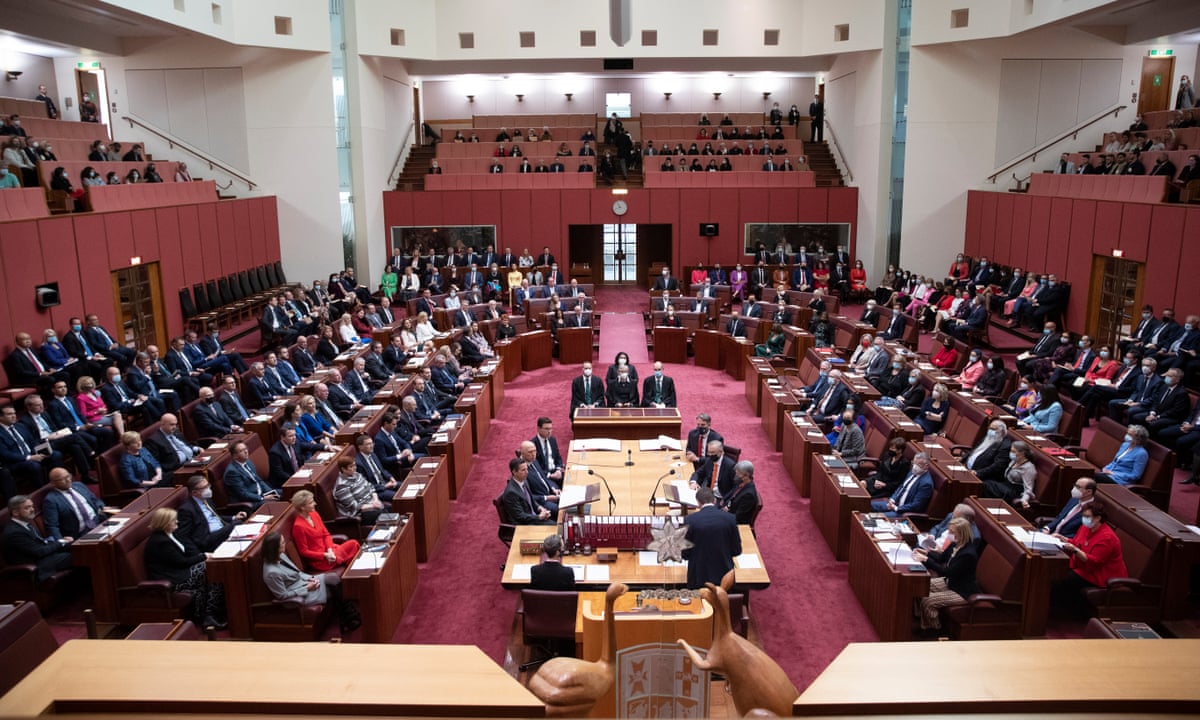
Establishment of Australia's parliamentary system
Australia's parliamentary system was created by the Australian Constitution, which took effect on 1 January 1901 – the date known as Federation. This Constitution established a federal parliamentary system that divides law-making power between national and state levels.
The Constitution created a framework where:
- One national parliament makes laws for the entire country
- State parliaments make laws within their own boundaries
- Powers and structures are clearly defined and limited
Note
The federal system established in 1901 was revolutionary for its time, creating a balance between national unity and state autonomy. This division of powers allows both levels of government to legislate on matters within their respective jurisdictions.
Australia's nine parliaments
Australia operates with nine separate parliaments, each with authority to make laws within its jurisdiction.
The Commonwealth Parliament
The Commonwealth Parliament (also called the federal or national parliament) has the power to make laws that concern and apply to the whole of Australia. Under the Constitution, this parliament must consist of two houses.
Six state parliaments
Each state has its own parliament with power to make laws within state boundaries:
- Victoria
- New South Wales
- Queensland
- South Australia
- Tasmania
- Western Australia
Most state parliaments consist of two houses, except Queensland, which operates with only one house.
Two territory parliaments
Australia's mainland territories have their own elected parliaments:
- Australian Capital Territory
- Northern Territory
Both territory parliaments consist of only one house.
Note
The structure of Australia's parliamentary system reflects the country's federal nature. While the Commonwealth Parliament must have two houses by constitutional requirement, states and territories have flexibility in their parliamentary structure based on their own constitutions and legislation.
The Westminster system and its key features
Australia's parliamentary system is modelled on Britain's Westminster system. The Westminster system is a parliamentary system of government that developed in Britain and provides the foundation for how Australia's democracy operates.
The Australian Constitution incorporated two fundamental principles from the Westminster system that shape how power is exercised and controlled.
Responsible government
Responsible government is a legal principle requiring the government (also called the executive) to be answerable to elected representatives of the people for its actions. The government must maintain the confidence of the majority of the lower house.
Important
The Core Principle of Responsible Government:
Under responsible government, the executive branch cannot operate independently of parliament. The government must:
- Maintain the support of the majority in the lower house
- Answer questions and defend its decisions in parliament
- Face the risk of losing power if it loses majority support
- Ultimately be accountable to voters through regular elections
This principle ensures democratic accountability at every level of governance.
Under this principle:
- The government is the ruling authority formed by the political party (or coalition of parties) that holds the majority in the lower house
- The government is responsible for administering and carrying out the laws
- The government must account for its decisions and actions to parliament
- Direct elections ensure accountability – governments that fail to act in the public interest risk losing office at the next election
Separation of powers
The separation of powers is a doctrine established by the Australian Constitution that prevents any single institution from holding all three main law-making powers. The three powers must remain separate:
- Legislative power – the power to make the law (held by parliament)
- Executive power – the power to administer or carry out the law (held by government)
- Judicial power – the power to interpret how the law is to be applied (held by courts)
Important
Why Separation of Powers Matters:
This separation ensures that courts can independently interpret the law without political or government pressure. It provides a crucial check on government power and protects the rule of law. Without this separation, a single body could make laws, enforce them, and judge disputes about them – creating an unacceptable concentration of power.
Note
Understanding Incompatible Roles:
Certain roles are incompatible under the separation of powers doctrine. For example, police officers and parliament members cannot serve on juries because:
- Police officers are part of the executive branch (they administer and enforce laws)
- Parliament members are part of the legislative branch (they make laws)
- Serving on a jury is a judicial function (interpreting and applying the law to specific cases)
Allowing these roles to overlap would undermine the separation of powers and compromise the independence of the judicial process.
The role of the High Court
The Australian Constitution established the High Court of Australia with two primary functions:
- Constitutional interpretation – to interpret and resolve disputes over the meaning of the Constitution
- Final court of appeal – to hear final appeals in Australian legal matters
The High Court is Australia's ultimate court of appeal and has the authority to hear and determine disputes arising under the Australian Constitution.
Important
Judicial Independence:
The Constitution guarantees that the High Court and other federal courts remain independent of parliament and government. This independence is essential for maintaining the separation of powers and ensuring courts can make decisions based on law rather than political considerations.
This independence means:
- Judges cannot be removed by parliament or government for making unpopular decisions
- Courts decide cases based on legal principles, not political pressure
- The judiciary acts as a check on both parliament and government power
Structure of Australian parliaments
The number of houses in each parliament varies across Australia's federal system:
| Parliament type | Number of houses | Examples |
|---|---|---|
| Commonwealth | Must have two houses | House of Representatives and Senate |
| State parliaments | Most have two houses | All states except Queensland |
| State parliaments | Some have one house | Queensland only |
| Territory parliaments | One house | ACT and Northern Territory |
The Australian Constitution mandates that the Commonwealth Parliament must consist of two houses. However, state and territory parliaments have their own constitutions that outline their structure, allowing for variation in the number of houses.
Note
The requirement for two houses at the Commonwealth level (bicameralism) provides an additional check on legislative power. The Senate acts as a house of review, examining legislation passed by the House of Representatives and representing state interests at the national level.
Constitutional checks on parliament
The Australian Constitution establishes mechanisms to ensure parliament does not make laws beyond its powers. These safeguards work together to maintain the balance of power established in 1901.
Important
Key Constitutional Safeguards:
The Constitution creates multiple layers of protection against abuse of parliamentary power:
- Defined law-making powers for the Commonwealth Parliament (parliament can only legislate in specific areas)
- The High Court's role in resolving constitutional disputes and striking down invalid laws
- The separation of powers preventing any single body from holding excessive authority
- The requirement for responsible government ensuring accountability to parliament and voters
These mechanisms work together to create a system of checks and balances that protects against the concentration or abuse of power.
Note
Evaluating Effectiveness:
When analyzing how well these constitutional mechanisms work, consider:
Strengths:
- Clear constitutional boundaries define what parliament can and cannot do
- Independent courts can strike down laws that exceed constitutional powers
- Multiple levels of accountability (parliament, courts, voters) prevent abuse
Potential weaknesses:
- Constitutional interpretation can be complex and contested
- Political pressure may influence how vigorously boundaries are defended
- The balance between parliamentary sovereignty and judicial review remains a point of ongoing debate
Summary
Key Points to Remember:
Historical Foundation:
- Australia's parliamentary system was established by the Australian Constitution on 1 January 1901 (Federation)
- Nine parliaments operate in Australia: 1 Commonwealth, 6 state, and 2 territory parliaments
Core Principles from the Westminster System:
- Responsible government ensures the executive is accountable to parliament and, through elections, to the people
- Separation of powers divides authority among legislative (parliament), executive (government), and judicial (courts) branches to prevent concentration of power
The Three Powers:
- Legislative power (make laws) – Parliament
- Executive power (administer laws) – Government
- Judicial power (interpret laws) – Courts
The High Court's Role:
- Interprets the Constitution and resolves constitutional disputes
- Acts as the final court of appeal for Australian legal matters
- Maintains independence from parliament and government
Key Terms to Know:
- Federation – 1 January 1901, when the Australian Constitution came into effect
- Commonwealth Parliament – the national parliament with power to make laws for all of Australia
- Westminster system – the British parliamentary system on which Australia's system is based
- Responsible government – principle requiring government to answer to parliament for its actions
- Separation of powers – doctrine keeping legislative, executive, and judicial powers separate
- High Court – Australia's highest court, with power to interpret the Constitution and hear final appeals
- Government/Executive – the ruling authority formed by the party with a majority in the lower house