The Federation of Australia (VCE SSCE Legal Studies): Revision Notes
📚Revision Notes
The Federation of Australia
Understanding the Australian Constitution
The Australian Constitution is a set of rules and principles that determines how Australia is governed. Throughout this unit, you will explore three key aspects of the Constitution:
- How it establishes Australia's parliamentary system
- How it protects Australian citizens
- How Australian people can influence constitutional change
To understand why the Constitution exists and what it achieves, you must first understand how Australia became a unified nation through Federation.
First Nations legal systems
Before examining Federation, it is essential to recognise that Australia's legal history did not begin with British colonisation. First Nations peoples had inhabited Australia for at least 65,000 years before 1788, developing sophisticated systems of law, established rights, responsibilities, and codes of behaviour. These legal systems predated British law and represent the oldest living cultures in the world. Many of these customs and laws continue to be observed today.
Important
British colonisation in 1788 imposed extreme generational hardship on First Nations peoples, including dispossession of land and denial of basic human rights. This historical injustice remains relevant to understanding Australia's legal and constitutional development.
British colonisation and the six colonies
The British established New South Wales as their first colony in 1788. By the end of the nineteenth century, Britain had created six separate colonies across Australia. Each colony operated independently with the power to create its own laws for the people living within its borders.
This system meant that:
- Each colony had different laws on the same issues
- There was no coordination between colonies on national matters
- Trade, transport, and immigration laws varied across colonial borders
Note
The lack of coordination between colonies created significant practical challenges for trade, defence, and daily life, particularly for those who needed to travel or conduct business across colonial borders.
The push for Federation (1870s–1880s)
During the 1870s and 1880s, British colonists became increasingly concerned about inconsistencies across the colonies. Several key issues drove the push for a unified national government:
Immigration concerns: The arrival of non-British immigrants raised concerns among British colonists. Without a common immigration policy, each colony managed immigration differently, creating confusion and inconsistency.
Need for national laws: Colonists recognised that certain matters required uniform laws across all colonies, including:
- Defence and national security
- Immigration policy
- Railway transport systems
- Trade tariffs and customs duties
- Interstate commerce
The colonies realised that having consistent laws would serve the national interest and strengthen Australia as a whole.
Note
The push for Federation was not merely about administrative convenience—it reflected genuine concerns about Australia's ability to defend itself, manage its economy, and present a unified front on international matters. The inconsistency in railway gauges between colonies, for example, meant that trains could not cross colonial borders, severely hampering trade and transport.
The Federation process (1880s–1890s)
By the 1880s, all six colonies had begun formal discussions about federating—uniting to form a single nation. The key challenge was determining which powers would be transferred to a central government and which powers each colony would retain.
Constitutional conventions: In the 1890s, each colony sent representatives to special meetings called constitutional conventions. These conventions served as forums for negotiation and compromise between the colonies.
At these conventions, representatives:
- Debated which law-making powers should belong to a central Parliament
- Agreed to create a new central Commonwealth Parliament
- Drafted the Federal Constitution Bill
The voting process: The draft Federal Constitution Bill was submitted to voters in each colony for approval in 1898 and 1899. This represented a democratic approach to constitutional change—the people themselves would decide whether to unite as one nation. In each colony, the majority of voters approved the bill.
Note
The constitutional conventions were remarkable exercises in negotiation and compromise. Representatives had to balance their colony's specific interests against the broader national interest. Smaller colonies, in particular, sought protections to ensure they would not be dominated by larger colonies like New South Wales and Victoria.
Federation achieved (1901)
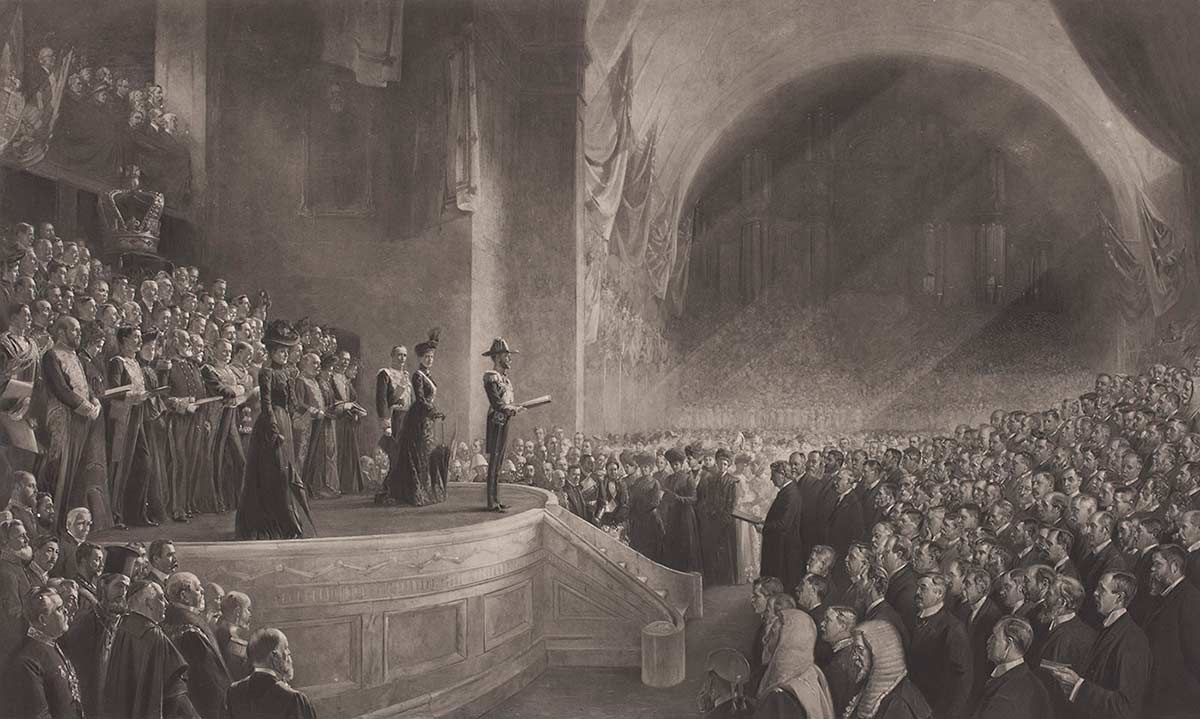
The Federation of Australia was the result of the constitutional conventions and the voting process. With British approval, the six separate colonies became states, each retaining its own parliament while also creating a central body called the Commonwealth Parliament.
The Commonwealth of Australia Constitution Act is the formal legal document that achieved Federation. It came into force on 1 January 1901, marking the birth of modern Australia. The Australian Constitution is contained within this Act and continues to govern Australia today.
Important
Federation can be defined as the union of sovereign states that gave up some of their powers to a central authority to form Australia. Under this system:
- Each state retained its own parliament and certain law-making powers
- The Commonwealth Parliament gained power to make laws on matters of national importance
- Powers were divided between state and federal levels of government
Australia's system of government
Australia operates as both a constitutional monarchy and a representative democracy.
Constitutional monarchy
A constitutional monarchy is a system of government in which:
- A monarch (the King) serves as head of state
- A constitution sets out the powers of parliament and the framework for governance
- The constitution limits and defines the monarch's role
Note
The Constitution establishes clear rules about how Australia is governed, ensuring that government power is exercised according to established principles rather than arbitrary decisions. This means that even though Australia has a monarch as head of state, the monarch's powers are strictly limited by constitutional law.
Representative democracy
Australia is also a representative democracy, meaning:
- All eligible citizens vote to elect representatives
- These representatives sit in parliaments (both state and federal)
- Representatives make laws and govern on behalf of the people
- Citizens can influence law and policy through their elected representatives
This system ensures that government remains accountable to the people, as representatives must regularly seek re-election.
Note
The combination of constitutional monarchy and representative democracy creates a system of checks and balances. The Constitution limits government power, while regular elections ensure that representatives remain accountable to citizens. This dual system has provided stability and democratic governance since 1901.
Exam guidance
When answering questions about Federation, examiners expect you to:
For 'explain' questions: Clearly describe the reasons why Federation occurred, linking causes to outcomes. For example, explain how concerns about immigration and defence created pressure for a central government with uniform laws.
For 'outline' questions: Provide a brief overview of key events or issues. Focus on the main points without extensive detail—for example, outline the process from constitutional conventions to the 1901 Federation.
For analysis questions: Examine the tensions between colonial interests and national interests. Consider why representatives disagreed about which powers to give to the Commonwealth Parliament and which to retain at state level.
Important
Key command words to watch for:
- Explain: Provide reasons and causation
- Outline: Give a brief overview of main points
- Identify: List or name specific elements
- Discuss: Present different perspectives
Remember!
Summary
Key Points to Remember:
- Federation united six British colonies into one nation on 1 January 1901, creating the Commonwealth of Australia under the Commonwealth of Australia Constitution Act
- First Nations peoples had established legal systems for at least 65,000 years before British colonisation
- The push for Federation in the 1870s–1880s was driven by concerns about immigration, defence, and the need for consistent national laws on trade, transport, and tariffs
- Constitutional conventions in the 1890s allowed colonial representatives to negotiate the division of powers between state and federal governments
- Australia operates as both a constitutional monarchy (with the King as head of state and a constitution limiting government power) and a representative democracy (with elected representatives making laws on behalf of citizens)