The Fallibility of Gustatory Perception (VCE SSCE Psychology): Revision Notes
📚Revision Notes
The Fallibility of Gustatory Perception
Introduction
Our sense of taste, like other sensory systems, is not perfect. Gustatory perception can be influenced by various factors that affect how we experience flavours. These factors include genetic variations in taste sensitivity and chemical substances that can alter taste perception. Understanding these influences helps explain why different people can have very different reactions to the same food.
Note
The fallibility of our gustatory system has important practical implications - it explains why some people are "picky eaters" whilst others will eat almost anything, and why the same meal can taste completely different to different people sharing the same table.
Individual differences in taste perception
Papillae and taste buds
Taste perception begins with specialised structures on the tongue called papillae. These raised bumps contain taste buds, which detect the five basic tastes: sweet, salty, sour, bitter, and umami. The taste buds collect sensory information from food and drink, then transmit this information to the brain for processing. Most papillae are clustered on the tongue, though they can be found throughout the mouth.
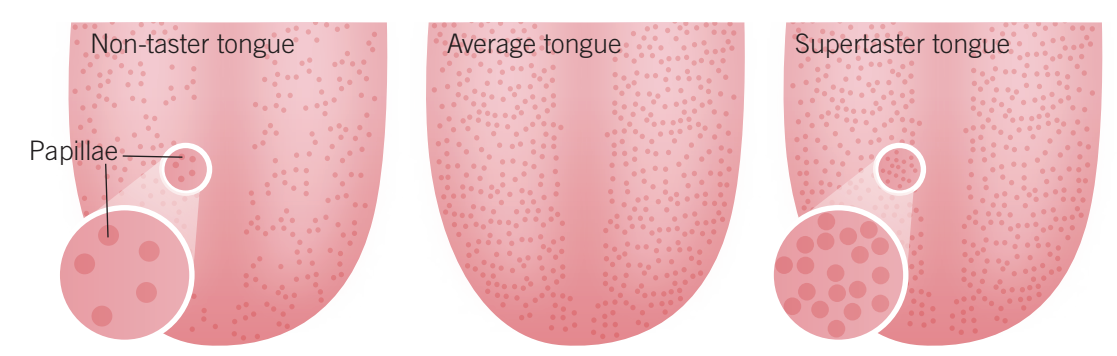
The number of papillae varies considerably between individuals, and this variation has important consequences for taste perception. People can be classified into three categories based on their papillae density.
Supertasters
Supertasters are people born with an unusually high number of papillae on their tongue. To be classified as a supertaster, a person must have more than 35 taste buds within a small area (approximately the size of a hole punch, about 0.5 cm diameter). This higher density of taste buds results in heightened sensitivity to all tastes.
This trait is genetic, meaning it is inherited from parents. Research shows that females are more likely to inherit the supertaster gene than males. Approximately 25% of the population are supertasters.
Important
Being a supertaster is not necessarily an advantage! While it means more sensitive taste perception, it often leads to finding many healthy foods (like vegetables) unpleasantly bitter, which can make maintaining a balanced diet more challenging.
Effects on taste preferences
Having heightened taste sensitivity affects food preferences in several ways:
- Bitter tastes: Supertasters are particularly sensitive to bitter flavours. This can make vegetables like broccoli, asparagus, and green capsicums taste unpleasantly bitter. Drinks such as coffee may also be perceived as too bitter to enjoy.
- Sweet tastes: Some supertasters find sweet foods overwhelming. A dessert that tastes pleasant to most people might seem excessively sweet to a supertaster, making it difficult to finish.
- Salt consumption: Interestingly, supertasters often add more salt to their food than average tasters. This is thought to occur because salt helps mask bitter flavours, creating a more balanced taste experience.
- Spicy foods: Supertasters may find spicy foods more intense and less enjoyable than others do.
Non-tasters
At the other end of the spectrum are non-tasters. These individuals have fewer than 15 taste buds in the same small area measured for supertasters. With reduced papillae density, non-tasters experience decreased sensitivity to all taste stimuli. Like supertasting, this trait is inherited genetically. Non-tasters also comprise approximately 25% of the population.
Effects on taste preferences
Non-tasters show different food preferences compared to supertasters:
- Bland perception: Without sufficient seasoning or strong flavours, many foods taste bland to non-tasters. They often need to add more seasoning to make food taste interesting.
- Sweet and fatty foods: Non-tasters tend to seek out foods high in sugar and fat, as these provide more intense flavour experiences.
- Spicy foods: Non-tasters generally enjoy hot, spicy foods more than supertasters do, as their reduced sensitivity makes the heat more tolerable.
- Salt usage: Unlike supertasters, non-tasters do not tend to add excessive salt to food, as they have no bitter flavours to mask.
Average tasters
The remaining 50% of the population fall into the average category, having between 15 and 35 taste buds in the measured area. These individuals experience taste at a moderate intensity level, neither heightened nor reduced. There is some variation within each group, and the proportions vary slightly across different cultures.
Note
Quick Reference: Taste Sensitivity Categories
- Supertasters: >35 taste buds | 25% of population | Heightened sensitivity
- Average tasters: 15-35 taste buds | 50% of population | Moderate sensitivity
- Non-tasters: <15 taste buds | 25% of population | Decreased sensitivity
The number of taste buds is measured in a small area approximately 0.5 cm in diameter.
Judgement of flavour
Food illusions and perceptual processing
Our perception of taste can be deliberately manipulated through food illusions. Celebrity chefs like Heston Blumenthal have popularised dishes that look like one thing but taste like something completely different. For example, Blumenthal created a chicken liver parfait designed to look exactly like mandarins, complete with orange colour, peel texture, and even a green leaf.
Example
Food Illusion Example: Blumenthal's "Mandarin" Parfait
Visual appearance: Looks exactly like fresh mandarin oranges with realistic peel texture and green leaves
Actual taste: Savoury chicken liver parfait
Result: Diners initially cannot taste the chicken at all because their visual expectations (top-down processing) override the actual taste signals from their taste buds (bottom-up processing).
These culinary tricks work by creating a conflict between two types of perceptual processing:
Top-down processing involves using prior knowledge, expectations, and context to interpret sensory information. When you see something that looks like a mandarin, your brain expects to taste something sweet and citrusy.
Bottom-up processing relies on the actual sensory signals received from the taste buds. The taste buds in this example are detecting a savoury chicken liver flavour, not citrus.
Note
The conflict between top-down and bottom-up processing demonstrates a fundamental principle: our perception of flavour is not just about what our taste buds detect - it's also heavily influenced by what we expect to taste based on visual cues, smells, and prior experiences.
When these two types of processing contradict each other, our judgement of flavour becomes confused or distorted. Initially, a person eating Blumenthal's dish might not taste chicken at all, as their visual expectations override the bottom-up sensory information. This demonstrates the fallibility of our gustatory perceptual system.
Another example is a chocolate dessert made to look like a plant in a pot of soil. The visual appearance (top-down processing) suggests something inedible, whilst the aroma and actual taste (bottom-up processing) reveal a sweet dessert. This mismatch between expectation and reality creates surprise and can make the eating experience more memorable.
Miraculin and taste modification
What is miraculin?
Miraculin is a protein extracted from the pulp of a West African berry called the miracle berry (from the Synsepalum dulcificum shrub). Despite its effects on taste perception, the miracle berry itself does not taste sweet.
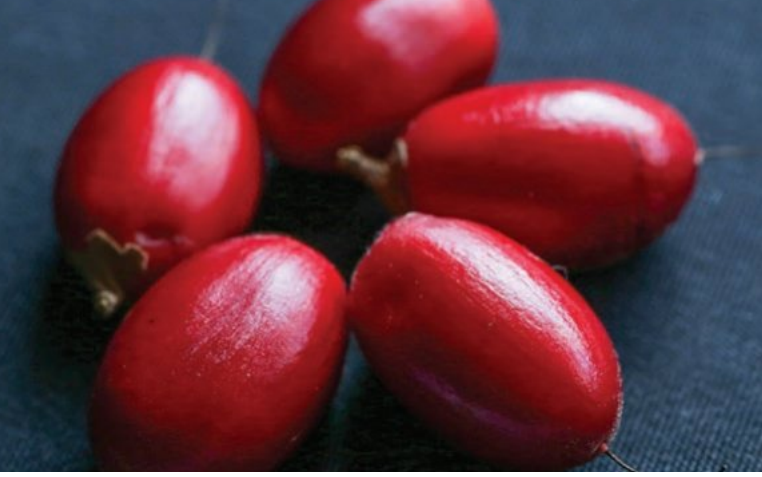
This protein has a remarkable ability to modify taste perception. After miraculin enters the mouth, it causes sour and acidic foods to taste sweet instead. This effect can last for approximately 20 minutes.
Mechanism of action
Miraculin works through a pH-dependent mechanism involving sweet taste receptors on the tongue.
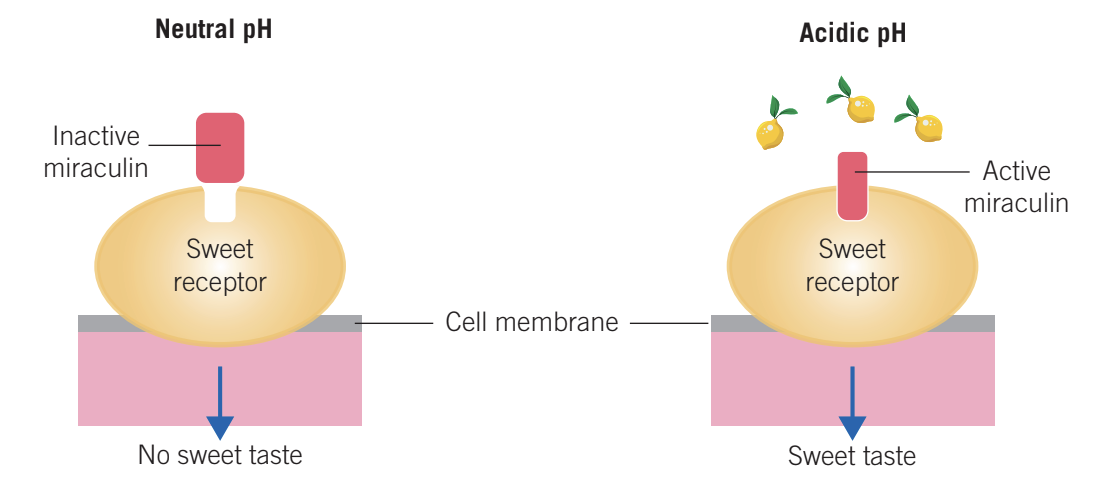
When miraculin first enters the mouth, it binds to sweet receptors in the papillae. However, at neutral pH (the normal pH of saliva), the miraculin protein remains inactive. In this state, it does not trigger the sweet receptors, so neutral or alkaline foods (such as water or bananas) taste normal.
Important
The pH-Dependent Activation Mechanism
The key to understanding miraculin is pH:
- At neutral pH (normal saliva): Miraculin is bound but inactive - foods taste normal
- At acidic pH (after eating sour foods): Miraculin changes shape and becomes active - sour foods taste sweet
This means miraculin only works when you eat something acidic!
The taste-changing effect only begins when the mouth becomes acidic. When you consume something sour or acidic (like lemon juice, vinegar, or coffee), the pH level in your mouth drops. This acidic environment causes the miraculin protein to change its shape. In its new shape, miraculin can activate the sweet receptor, which then sends a "sweet taste" signal to the brain.
This means that whilst miraculin is active in your mouth (for about 20 minutes), any acidic food will taste sweet. For example, vinegar can taste like sugar syrup, and lemons lose their sourness and taste like sweet candy.
Benefits and applications
The ability of miraculin to alter taste perception offers several potential benefits:
Health applications: People who crave sweet foods but need to reduce sugar intake could use miraculin with naturally sour fruits like lemons or grapefruits to satisfy their sweet tooth without consuming added sugars.
Helping supertasters: Supertasters who find certain healthy foods too bitter (such as vegetables or coffee) might benefit from miraculin. By making these foods taste sweeter, miraculin could help supertasters maintain a more balanced and varied diet.
Medical applications: Some medical conditions and treatments (such as chemotherapy) can affect taste perception, making foods taste unpleasant or metallic. Miraculin might help improve the palatability of foods for these individuals, helping them maintain adequate nutrition.
Managing food aversions: For anyone with strong taste aversions to particular healthy foods, miraculin provides a way to modify the taste temporarily, potentially helping them develop a more balanced diet.
Note
The applications of miraculin extend beyond novelty experiences - it has genuine potential to help people maintain healthier diets by making bitter or sour healthy foods more palatable without adding sugar or artificial sweeteners.
Summary
Key Points to Remember:
-
Taste perception varies significantly between individuals due to genetic differences in papillae density on the tongue.
-
Supertasters (25% of population) have more than 35 taste buds in a small area and experience heightened sensitivity to bitter and sweet tastes, whilst non-tasters (25% of population) have fewer than 15 taste buds and require more intense flavours to enjoy food.
-
Our judgement of flavour can be distorted when top-down processing (visual expectations) conflicts with bottom-up processing (actual taste sensations), as demonstrated by food illusions in modern cuisine.
-
Miraculin is a pH-dependent protein that binds to sweet receptors and only activates them in acidic conditions, causing sour foods to taste sweet for approximately 20 minutes.
-
Understanding the fallibility of gustatory perception has practical applications, including helping people with taste sensitivities maintain healthier, more balanced diets.