Vision and Taste Distortions (VCE SSCE Psychology): Revision Notes
📚Revision Notes
Vision and Taste Distortions
Introduction to perceptual distortions
Perception is the complex process through which the brain interprets sensory data collected by our sensory organs. Under typical circumstances, our five senses (smell, hearing, sight, touch and taste) work together to provide us with separate but related information about the same experience. However, perception can sometimes differ from what is commonly experienced.
Note
Perceptual distortions occur when an individual's perceptual interpretation of a stimulus varies from how it is commonly perceived. These distortions can arise when sensory data is processed in a way that differs from the neurotypical experience.
Two notable examples of perceptual distortions are synaesthesia and spatial neglect, which demonstrate how the brain can process sensory information in unusual ways.
Synaesthesia
What is synaesthesia?
Synaesthesia is a rare condition in which certain sensations are perceived using another sensory system. For example, a person with synaesthesia might see colours when they hear sounds, or taste specific flavours when they read certain words. This cross-wiring of sensory experiences was first described in the late nineteenth century and has been an active area of research ever since.
Note
Current estimates suggest that synaesthesia affects up to 1 in 200 people. Despite being associated with perceptual distortion, synaesthesia is not classified as a perceptual disorder because there is no loss of ability. In fact, research suggests there may be some benefit to having synaesthesia, as it is closely associated with creativity.
Types of synaesthesia
The exact number of different types of synaesthesia remains uncertain, but there may be upwards of 80 distinct types. These include:
- Ordinal linguistic personification: individuals view ordered sequences (such as days, weeks, numbers or letters) as having personalities. For example, each day of the week might be associated with a different personality trait.
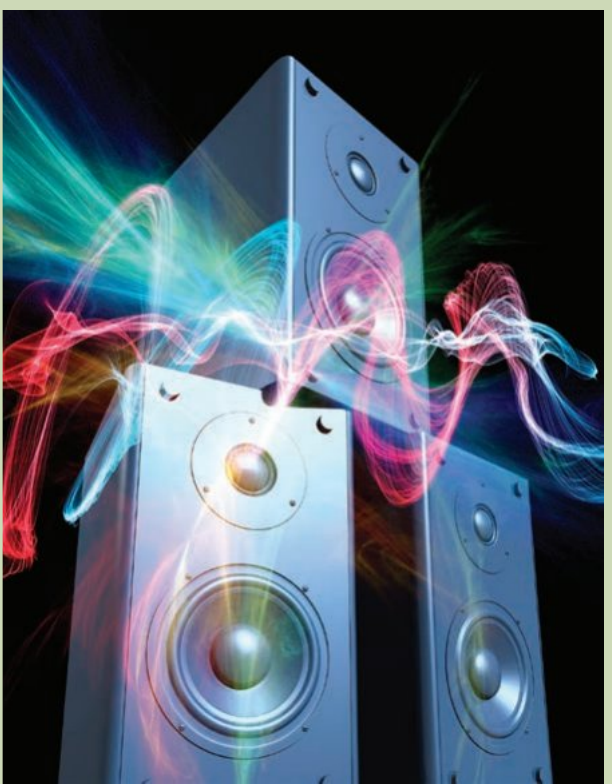
- Chromaesthesia: individuals simultaneously sense sounds and colours. For instance, lighter colours might be heard as higher octaves, while darker colours are perceived as lower octaves.
- Grapheme-colour synaesthesia: individuals perceive graphemes (letters and numbers) as being different colours.
- Lexical-gustatory synaesthesia: individuals perceive words as having tastes. For example, the name of a certain road might taste like a fried breakfast.
Grapheme-colour synaesthesia
In grapheme-colour synaesthesia, written letters and numbers (graphemes) are associated with colours. This association is consistent and predictable for each individual. Experiments have demonstrated that this is a genuine immediate perception, rather than a memory or learned association.
Example
Example: Experiencing Grapheme-Colour Synaesthesia
A person with grapheme-colour synaesthesia might see a certain colour when they read an 's' or '9'. This perception may also occur at a higher level, with whole words in sentences perceived as a certain colour, rather than every individual letter experiencing this effect.
For instance, someone might consistently see:
- The letter 's' as bright red
- The number '9' as deep blue
- The word "Monday" as yellow (based on the dominant letter colours)
Research has found that grapheme-colour synaesthesia is associated with cognitive benefits, including improved reading comprehension and enhanced memory.
Lexical-gustatory synaesthesia
A person with lexical-gustatory synaesthesia experiences sensations of taste when they perceive certain words. For example, someone might taste onions when they hear, read, say or even just think the word 'Monday'. These word-taste combinations differ between individuals; however, as with grapheme-colour synaesthesia, the experience is consistent and predictable for each person. They will always experience the same taste perception in the presence of a certain word.
Note
For some individuals, only a few lexical items may trigger a gustatory perception. However, for others, thousands of words may have an associated taste. The intensity and specificity of these associations vary considerably between individuals.
Causes of synaesthesia
A person can be born with synaesthesia or develop it later in life. The condition can be inherited through genes or acquired due to injury or drug use. Additionally, if a person has one form of synaesthesia, they are likely to have other forms as well.
Important
Neural Basis of Synaesthesia
Research suggests that people with synaesthesia may have excess neural connections compared to their neurotypical counterparts. This could be due to less synaptic pruning occurring during their early developmental years.
Synaptic pruning is the process by which unnecessary neural connections are eliminated, and reduced pruning could result in the cross-wiring of sensory pathways that characterises synaesthesia.
Spatial neglect
What is spatial neglect?
Spatial neglect (also called hemispatial neglect, unilateral neglect or neglect syndrome) is a neurological condition involving an inability to attend to sensory stimuli on one side of the body. This condition commonly develops as a consequence of stroke, particularly when it affects the right hemisphere of the brain.
Note
It is estimated that spatial neglect may follow stroke affecting the right hemisphere in 50-80% of cases. Individuals with this condition are unable to attend to one side of their body or perceive visual stimuli in one side of their visual field. The most common type of spatial neglect is unilateral neglect, which involves a loss of attention or vision on one side, usually the left.
Hemispheric specialisation and spatial neglect
To understand why the left side of the body is typically affected in spatial neglect, we need to understand the concept of hemispheric specialisation. This refers to when one cerebral hemisphere has a specialised function that is not possessed, or is controlled to a lesser extent, by the other hemisphere.
Some specialised functions of the body are primarily controlled by certain regions of the brain. For example, the production of speech is largely controlled by Broca's area, located in the frontal lobe. Damage to that area of the brain can cause problems in speech production.
Important
Why the Left Side is Typically Affected
In the case of distributing spatial attention (prioritising certain areas within the visual field to selectively process visual information), this function is largely controlled by the right hemisphere of the brain. When damage is sustained to this part of the brain, spatial neglect can result.
Specifically, the person loses the ability to attend to (and thus process stimuli from) certain areas of the body. The most common causes of brain injury leading to spatial neglect are stroke, disease and accidents.
Effect on perception of taste
Research has found that while some people do experience neglect of taste sensation due to spatial neglect, the damage has to be quite extensive to have a functional impact. This is because olfaction (smell) and taste are not dominated by any particular region of the brain, or by either hemisphere. That is, these functions do not have hemispheric specialisation.
Note
Resilience of Taste Perception
Even if only one nostril or part of the tongue is attending to the sensory stimuli, the sensory information can still be processed, and the taste can be perceived as normal. This demonstrates an important difference between spatial neglect's effects on different sensory systems.
Effect on visual perception and functioning
Experiencing spatial neglect can have a considerable impact on one's quality of life due to the impairment of functioning. The inability to perceive part of their world means that people with this condition can be more prone to accidents (for example, they may walk into objects they cannot perceive).
Important
Safety and Daily Living Challenges
A noise coming from the affected side, or someone appearing from that side, may startle them because they had no awareness of the stimulus. They may also:
- Overlook dressing part of their body (such as putting on their left sock and shoe)
- Not perceive part of a meal and thus not eat it
- Not understand a film because they have only been able to perceive part of the screen
- In some cases, not be able to move or use the affected part or side of their body
- May even deny that region exists
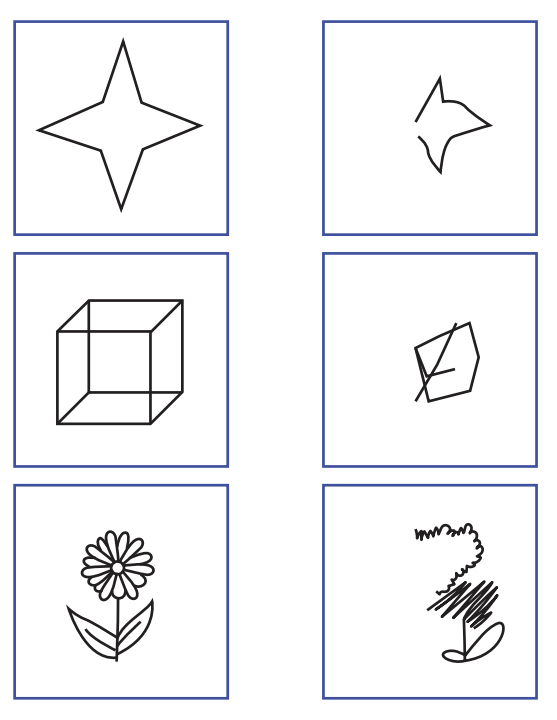
The figure above demonstrates how a person with unilateral spatial neglect affecting their left field of vision performed on a test that asked them to copy some images. Notice how they do not perceive, and thus do not draw, the left side of the images. This provides clear visual evidence of how spatial neglect affects visual perception.
Treatment for spatial neglect
Spatial neglect, although disabling, is often temporary. Neuroplasticity means that, with treatment, it is possible to reroute neural connections and recover functioning. Available treatments focus on developing the person's ability to attend to the neglected region, although there is no recognised best approach for achieving this.
Example
Example Treatment Approaches
Treatment examples include:
- A therapist might play a game with the person that involves them using their neglected limb
- In the case of a neglected arm, the good arm might be restricted in some way, encouraging the use of the neglected arm
- To correct visual neglect, a treatment involving the use of a prism lens on the right eye can be used, which forces the wearer to look to the left, increasing attention to the neglected field of vision
Note
Medicinal treatments, which usually involve the neurotransmitter dopamine, have returned mixed results. Overall, there is no universal approach to therapy, and treatment plans are often individualised to the specific needs and presentation of each person.
Summary
Key Points to Remember:
- Perceptual distortions occur when sensory data is processed differently from the neurotypical experience
- Synaesthesia affects approximately 1 in 200 people and involves cross-wiring of sensory experiences (such as seeing colours when hearing sounds)
- Grapheme-colour synaesthesia associates letters and numbers with colours, whilst lexical-gustatory synaesthesia associates words with tastes
- Spatial neglect typically affects 50-80% of people who experience a stroke in the right hemisphere and involves inability to attend to one side of the body
- The right hemisphere controls spatial attention, which is why right hemisphere damage typically results in left-sided neglect
- Spatial neglect can often be treated through neuroplasticity-based therapies that encourage attention to the neglected region