Approaches to Understand Learning (VCE SSCE Psychology): Revision Notes
📚Revision Notes
Aboriginal and Torres Strait Islander Ways of Knowing
Introduction: understanding Indigenous knowledge systems
Indigenous ways of knowing represent sophisticated learning systems developed over tens of thousands of years. These systems differ from Western educational approaches in how knowledge is acquired, shared, and understood.
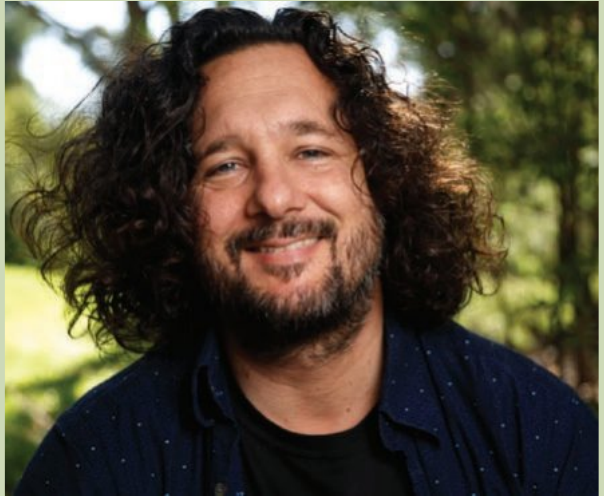
Tyson Yunkaporta, an academic and researcher from the Apalech Clan in far north Queensland, highlights a common problem in discussions about Indigenous knowledge. Many conferences and presentations acknowledge that Indigenous peoples have lived sustainably for thousands of years, but they rarely explain how these knowledge systems work. The focus tends to be on what Indigenous people know rather than how they think and learn.
Note
Yunkaporta argues that true engagement requires understanding Indigenous thought processes, not just acknowledging connection to land. When Western and Indigenous knowledge systems work together respectfully, based on reciprocity rather than competition, they can develop innovative solutions to complex problems like sustainability.
Overview of Indigenous community systems
What are Indigenous communities?
Indigenous refers to First Australians and First Peoples of any country. There are Indigenous communities in 90 countries around the world, each with their own systematic way of knowing and learning.
Aboriginal and Torres Strait Islander peoples describes the Australian Indigenous population, which includes Aboriginal peoples, Torres Strait Islander peoples, and people who have both Aboriginal and Torres Strait Islander heritage.
Community means a group of people who live in the same location or who share an interest or characteristic in common, and who interact or have the potential to interact.
Ways of knowing are methods through which knowledge becomes apparent to us.
Characteristics of Indigenous knowledge systems
Indigenous worldviews are highly integrated. Each aspect of culture, history, and society connects with all other aspects. This integration contrasts with Western approaches, which tend to compartmentalise knowledge into separate disciplines.
Key differences between Indigenous and non-Indigenous knowledge systems include:
- Integration vs separation: Indigenous cultures treat scientific knowledge and artistic expression as interconnected aspects of one culture. Western culture typically separates them into distinct fields.
- Daily life and learning: Indigenous cultures combine teaching about how to learn with teaching about how to live. Traditional Western schools usually separate these aspects.
- Community responsibility: Each member of an Indigenous community is responsible for both daily life activities and teaching the next generation.
- Knowledge transmission: Indigenous artwork often communicates scientific knowledge passed through generations, demonstrating the integration of different knowledge areas.
Local, national, and global scales
Indigenous knowledge systems operate at three interconnected levels:
Global communities include all Indigenous peoples - the first people of any country.
National communities include specific Indigenous groups within countries, such as the Maya people in Guatemala, Lakota people in the United States, Māori in New Zealand, and Aboriginal and Torres Strait Islander peoples in Australia.
Local communities exist within national groups, each with their own language, historical stories, decision-making processes, and skills. The AIATSIS Map of Indigenous Australia shows this diversity across the continent.
Important
It is important to avoid generalisations. The starting point for any discussion of Indigenous ways of knowing must be the local Aboriginal and Torres Strait Islander community. Examples given in educational materials may be specific to particular communities and should always be checked against local cultural practices.
Historical context: barriers to knowledge sharing
Past research practices
There is potential for valuable knowledge transfer from Indigenous communities to Western communities. However, historic barriers dating back to colonisation have eroded trust between communities. This trust needs rebuilding to enable knowledge exchange.
Historically, research involving Indigenous communities has been inappropriate for several reasons:
- Researchers rarely obtained informed consent from participants
- Power differences between researchers and participants led to exploitation
- Research aims often served the purposes of colonial control rather than community benefit
- Early colonisation focused on "classifying and labelling" Indigenous peoples in attempts to manage them
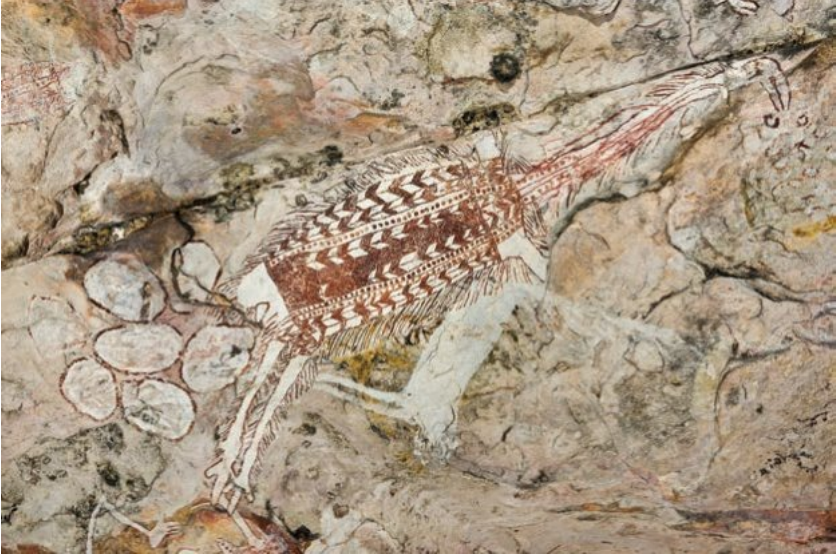
The Stolen Generations
A perpetuating belief existed that Indigenous peoples embodied a "problem" to be solved and that they were "passive objects requiring assistance from external experts". Non-Indigenous leaders believed their understanding of community integration was superior. This led to the forced removal of First Nations children from their communities and placement in non-Indigenous communities, causing severe psychological harm. These children became known as the Stolen Generations.
Note
First Nations refers to Indigenous people of Australia, also called First Peoples.
Important
This practice demonstrates how research based on culturally insensitive knowledge systems causes damage. For non-Indigenous Australians to learn and appreciate ways of knowing, they need to build on the relationships and complexity of Indigenous knowledge systems.
Continuing challenges
Unfortunately, culturally insensitive research designs and methodologies have continued. These approaches fail to recognise and accommodate the systems of knowing and learning that are part of Indigenous peoples and communities. True engagement requires respectful dialogue, appropriate research ethics, and genuine partnership with Indigenous communities.
Connection to Country
Connection to Country describes how Indigenous ways of knowing are rooted in deep respect for the ecology and the importance of the connected relationship with the land.
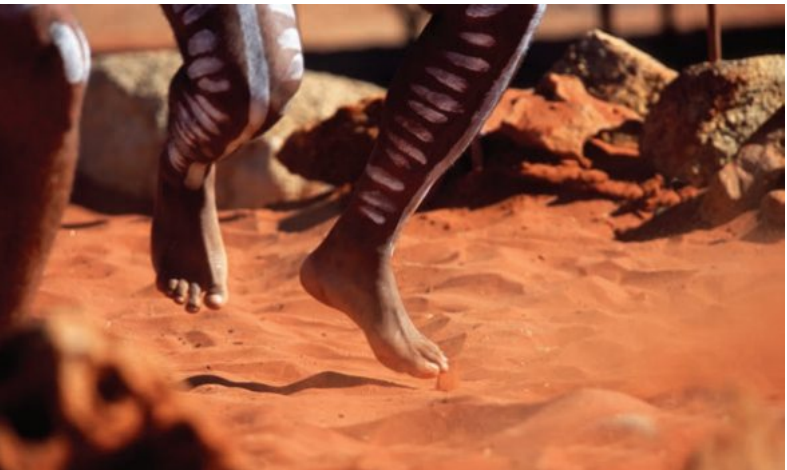
The phrase "Indigenous ways of knowing" displays the intricate nature and diversity of Indigenous learning and teaching systems. It guides people in how to explore the abundance of knowledge in Indigenous communities. The concept reminds everyone that learning exists in human connections and relationships, but also in all objects of creation: plants, animals, land, and natural resources.
Characteristics of connection to Country
Indigenous ways of knowing are sophisticated and intricate. The practice of learning and knowing concepts for each Indigenous community is based on the specific location of the land. Alongside the importance of land are the language, protocols, and culture surrounding each way of knowing. This means concepts and constructs may look different from one First Nations community to another.
Note
Nevertheless, all Indigenous ways of knowing share roots in:
- Deep respect for ecology
- Understanding the importance of connected relationships with land
- Recognition that actions today impact future generations
- Respect for how people walk on the earth and interact with all living things
First Nations peoples believe that when there is an offering of respect, learning can move forward. This principle applies to relationships with people, land, and all living things.
The 8 Ways framework
The 8 Ways framework provides one example of Indigenous learning approaches. This framework comes from a NSW Department of Education project.
Important
It is important to remember this is one example from a particular community. While some principles may be shared with other Indigenous ways of knowing, it should not be assumed to have broad acceptance across all communities.
The framework emphasises that Indigenous perspectives are found in how knowledge is transmitted, not just in Indigenous content. The eight interconnected approaches work together in the learning process.
1. Story sharing: learning through narrative
Narrative is a story which in a cultural context may be delivered in a variety of ways including performance, song and dance.
Yarn is an Indigenous system of learning that involves continually sharing stories.
This approach involves continually sharing stories (including stories told in song) and connecting through shared personal stories of the past, present, and future. Within First Nations culture and community, this is known as "yarning" and is a way to gain knowledge and learn.
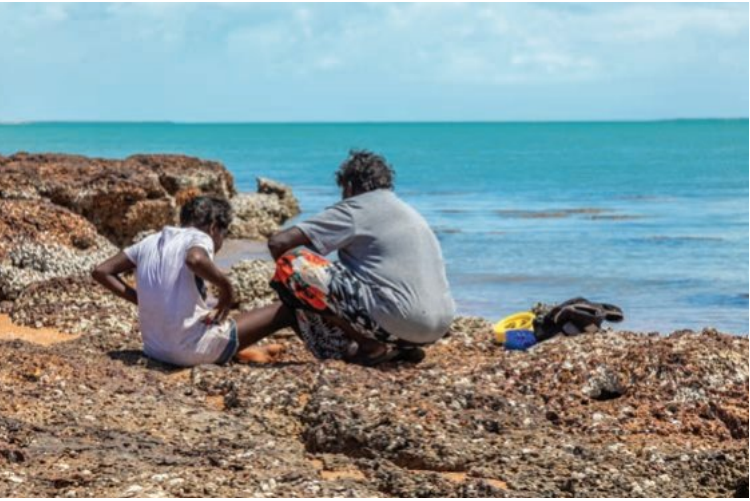
Yarning allows learning to be built upon real-world experience rather than through print-based text and screens. Stories from yarning sessions should be repeatedly used, expressed, and incorporated into everyday conversation to encourage learning.
Note
Storytelling involves both speaking and listening - to Elders past, present and future, to each other within the community, and to individual stories. This reciprocal process creates shared understanding and connection.
2. Learning maps: visualising and mapping processes
Learning map refers to images or visuals used to map out processes for learners.
This approach involves creating learning maps - picturing a pathway and creating a deliberate visual plan for learners to follow. Learning maps usually follow a story and involve discussion-based procedures to create the map, indicating the direction to take in that learning sequence.
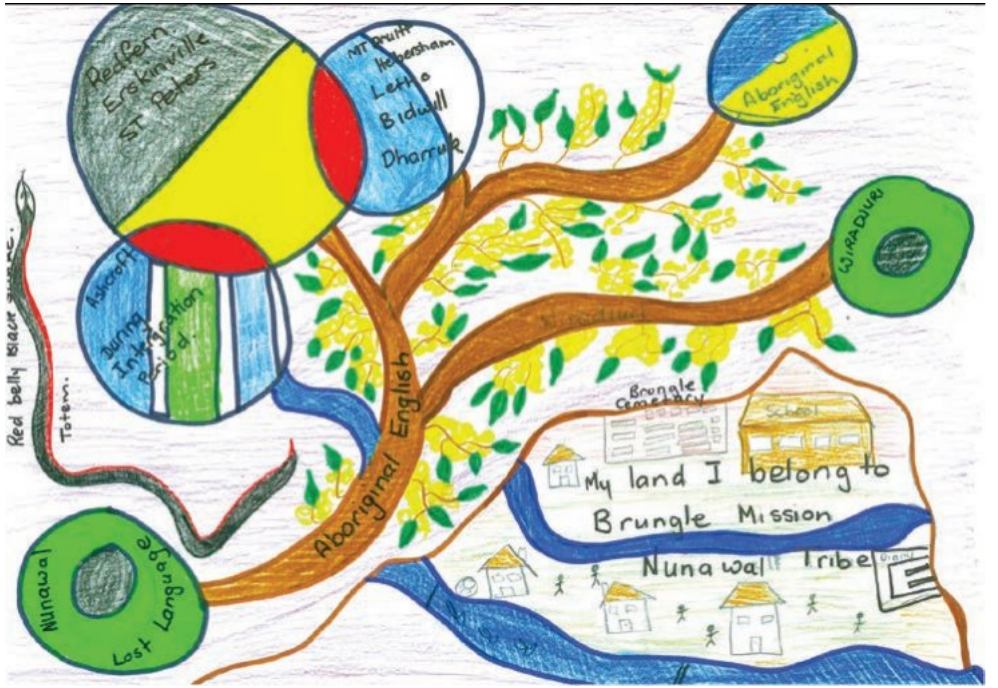
Images are at the forefront of these plans and make up most of the maps. Learning maps can be created for various purposes, including curriculum plans at schools, directions to locations, plans for a family's future, or storytelling.
3. Non-verbal: see, think, act, create, move without words
Kinaesthetic means to do with body movement or sensation.
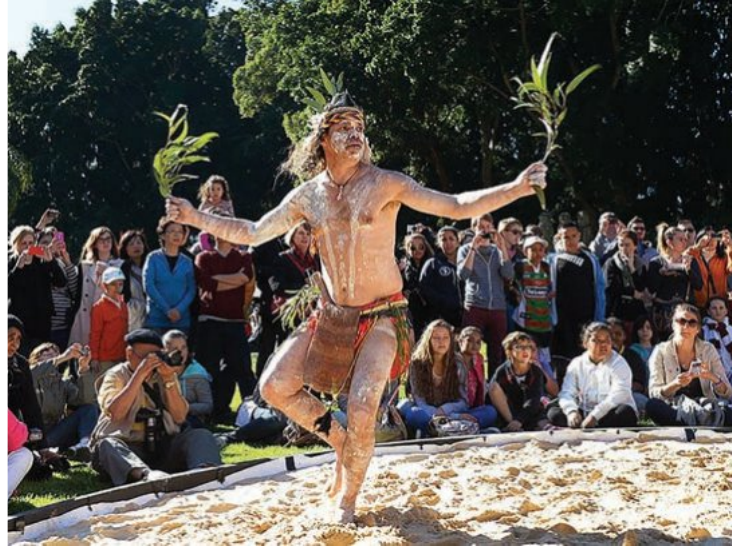
This approach uses non-verbal kinaesthetic methods. People see, think, act, mime, make, and share without words. Instead, they use dance, facial expressions, gestures, and kinaesthetic skills to help them think and learn.
Note
Repetition is important for learning through this approach. Skills are used repeatedly, frequently using similar rhythms, tones, or movements.
Example
Learning Through Movement
A dance could be created and performed to help learn about how animals grow and develop in the wild, or to demonstrate fishing techniques. The physical movements help embed the knowledge through bodily experience and repetition.
4. Symbols and images: understanding concepts through art and metaphor
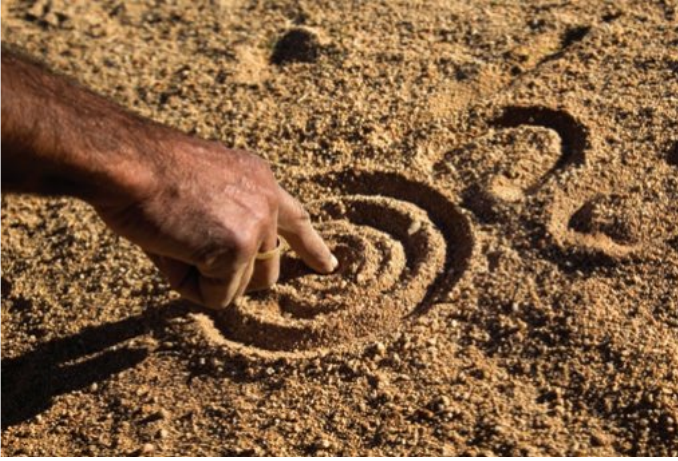
This approach involves keeping and sharing knowledge through symbols and images in the form of art and drawings. The images and drawings are central to the learning and can be a way of communicating without drawing too.
Drawings can vary greatly:
- Some take moments to create, others take days
- Some are simple, others are complex
- Some exist only briefly before being rubbed out and never drawn again - these drawings are only for those people at that time to understand and know
Example
Temporary Sand Communications
Drawings might be made in the sand to have a conversation with someone and share experiences of a recent exploration. These temporary communications carry meaning for those present at that moment, demonstrating how knowledge can be context-specific and time-limited.
5. Land links: place-based learning
Place-based learning means learning drawn from the landscape with profound connections to ancestral and personal relationships with place.
This approach involves making connections with nature. Ecological and place-based learning is drawn from the living landscape within a framework of profound ancestral and personal relationships with place. The land itself becomes the teacher, with lessons embedded in the environment.
6. Non-linear: indirect, innovative and interdisciplinary approaches
In non-linear learning, there are different phases of learning that can be learned in the order that best suits that moment. The learner puts different ideas together and creates new knowledge, producing original thoughts and understanding through lateral cognitive processing.
Example
Non-Linear Grammar Lesson
When learning about grammar in an English class, learners might:
- Share jokes about grammar
- Practise writing grammar
- Sing a song about grammar
- Discuss the complexities of grammar
- Discuss the history of grammar
- Share more jokes about the culture of grammar
- Have deeper discussion about the meaning of grammar
The grammar lesson uses an indirect, innovative, and interdisciplinary approach to learning, moving between activities in the order that serves the learning process best.
7. Deconstruct/reconstruct: modelling and scaffolding
This approach involves looking at a whole process or concept before examining parts in detail. Learners may watch a complete process to understand its purpose and what it produces, and only then learn individual steps or skills that make it up.
Note
This "watch then do" approach allows learners to understand context and purpose before focusing on component skills. It provides a holistic understanding before breaking down complex processes into manageable parts.
8. Community links: connecting learning to local values and needs
This approach involves bringing new knowledge to help the community (or "mob"). The knowledge being learned is based on local viewpoints and will benefit the community. This connection to community benefits both the community and the learner because the learning experience has real-life purpose.
Example
Community-Connected Learning
A class could:
- Research the local lake and its significance to the land and area
- Share findings at their school assembly
- Learn a song about the lake
- Perform at the local festival to share knowledge and build community
This approach ensures learning serves practical purposes and strengthens community bonds while creating meaningful educational experiences.
Growing the community helps to build teams to continue learning from in the future.
Summary
Key Points to Remember:
-
Indigenous ways of knowing are sophisticated systems developed over thousands of years, with learning embedded in relationships between people, land, and all living things.
-
Connection to Country is central to Indigenous knowledge systems, rooted in deep respect for ecology and recognising that actions today impact future generations.
-
Indigenous and Western knowledge systems differ in their approach: Indigenous systems integrate different areas of knowledge, while Western systems tend to compartmentalise them into separate disciplines.
-
Historical barriers from colonisation, including inappropriate research practices and the Stolen Generations, have eroded trust between Indigenous and non-Indigenous communities, requiring rebuilding through respectful partnership.
-
The 8 Ways framework (story sharing, learning maps, non-verbal, symbols and images, land links, non-linear, deconstruct/reconstruct, and community links) provides one example of Indigenous learning approaches, but generalisations must be avoided as each local community has its own specific knowledge systems.