Social Influence and Groups (VCE SSCE Psychology): Revision Notes
📚Revision Notes
Social Influence and Groups
The 2011 London riots
In August 2011, a series of violent riots erupted across London and other parts of England following the fatal shooting of Mark Duggan by police. What began as a peaceful protest outside Tottenham Police Station quickly escalated into widespread rioting, looting and arson attacks across the city.

The riots provide a striking example of how group dynamics can influence individual behaviour. Lance Francis, who was later imprisoned for firebombing a police station, described feeling as though "something came over people" during the riots. He stated: "There was a mist in the air... We were like a rabid pack of dogs." Francis reported that even rival gangs called truces to join the chaos, and that "everyone's heart went black that day."
Similarly, Katie Lovett, convicted of looting, admitted being swept up in the "free for all" nature of the riots, acting without considering consequences. Both individuals later expressed shock at their own behaviour when they saw news coverage and reflected on events.
Note
This case study demonstrates a key principle of social psychology: individuals in groups can behave in ways they would never consider alone. The rioters' descriptions of feeling swept up by the crowd and acting without conscious thought illustrate how powerful social influence can override personal values and individual decision-making.
What is social influence?
Social influence refers to how people change their behaviour or attitudes due to the direct or indirect influence of others. This is a fundamental concept in social psychology, which examines how individuals think about, interact with, and are influenced by other people's thoughts, feelings and behaviours.

Important
The term 'social influence' might initially seem negative, as we like to believe we are independent thinkers capable of making our own decisions. However, humans are inherently social creatures, and it is natural that we are affected by those around us. Social influence is not something to fear or avoid - it's simply part of being human.
Social influence operates on a spectrum from weak to strong, and from positive to negative. It shapes our daily interactions in countless ways.
Examples of social influence include:
- Tidying your room before a friend visits to make a good impression
- Changing your opinion to match those of your peer group
- Modifying your behaviour based on who is observing you
- Conforming to group norms in different social settings
The influence groups exert on individuals can be obvious (such as following a teacher's instructions) or subtle (such as gradually adopting the opinions of your friendship group).
Groups and collectives
What is a group?
A group consists of two or more people who interact with and influence one another and work towards a common goal. This definition includes three essential characteristics:
- Interaction - members communicate and engage with each other
- Mutual influence - members affect each other's thoughts, feelings and behaviours
- Common goal - members share a purpose or objective
Note
For a collection of people to qualify as a group, members must also feel they belong to that group. For example, 20 people watching the same film in a cinema would not constitute a group because they typically do not interact with or influence each other during that time.
What is a collective?
A collective describes a collection of people who exert minimal influence on each other and do not interact with every other person present. Although they may gather at the same time and place for similar reasons, and may be influenced by external factors in comparable ways, they lack the defining characteristics of a group.
The cinema audience mentioned above would be classified as a collective rather than a group, as attendees generally watch the film independently without interacting with or influencing fellow audience members.

Example
Distinguishing Groups from Collectives
Consider the two scenarios shown above:
The Rowing Team (Group):
- Members interact continuously during training and competition
- Each member's actions directly influence the others' performance
- They share a common goal of rowing in unison and winning races
- They feel a strong sense of belonging to the team
The Concert Audience (Collective):
- Individual audience members may not interact with most others present
- One person's behaviour has minimal influence on other attendees
- While they share the experience of watching the performance, they don't work towards a common goal together
- They don't necessarily feel belonging to a unified group
Status within groups
Within any group, each member occupies a particular status. Status refers to the level of importance (whether real or imagined) that group members perceive regarding another member's position within that group.
Consider your family or your English class. In your family, your mother or father likely holds the highest status, whilst your pet might have the lowest. In your classroom, your teacher probably has the highest status. These status differences are not merely symbolic - they affect how group members interact and the influence they can exert.
Note
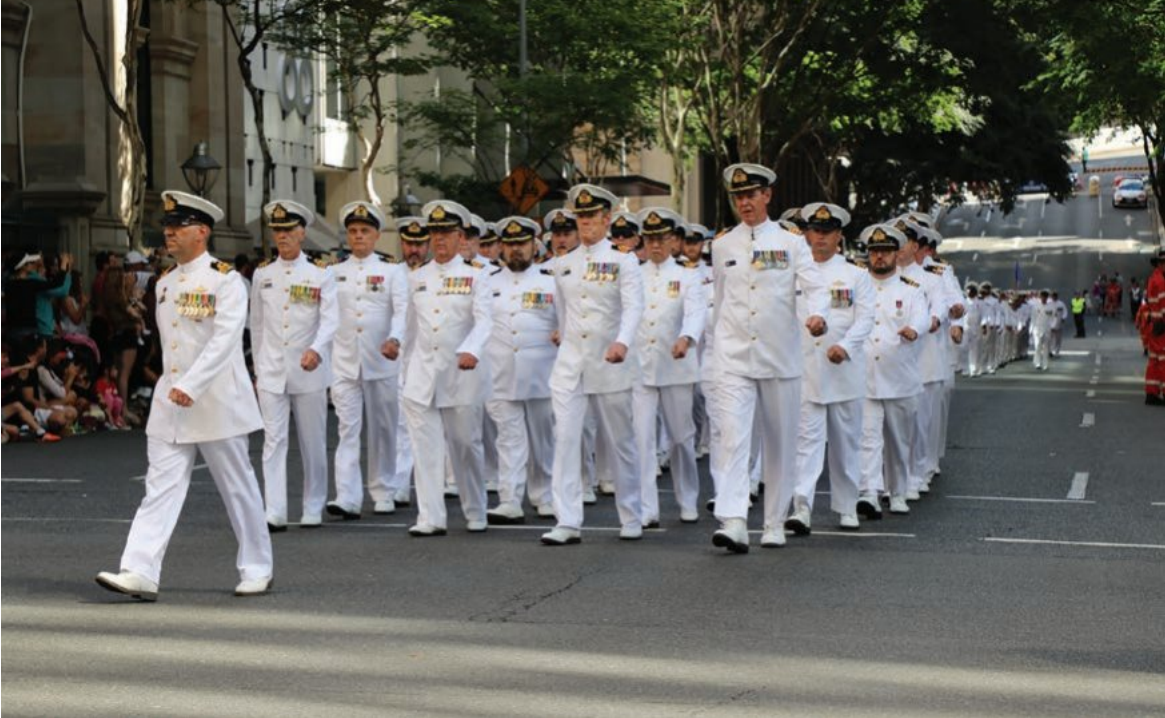
Armed forces provide a clear example of status hierarchies. In the Royal Australian Navy, a commanding officer holds considerably higher status than an ordinary sailor, and this status difference directly affects their respective roles, responsibilities and authority within the organisation. The visible rank insignia make status immediately recognizable to all group members.
Power within groups
Status is closely linked to power, which refers to an individual's ability to control or strongly influence the thoughts, feelings and behaviour of another person or group. Power is a natural component of most human relationships and interactions, though participants may not always be aware of how power operates in their relationships.
Important
Power is not inherently negative. It functions as part of everyday social interactions and helps maintain order and structure in society. The key is how power is used - responsibly or irresponsibly.
Consider these everyday examples:
- Parents have the power to provide pocket money in exchange for completing chores
- Teachers have the power to assign detention for missed homework
- Emergency vehicles have the power to stop traffic to reach incidents quickly
Individuals typically employ different types of power in different situations, often using multiple types simultaneously to influence others.
Types of power
Psychologists have identified six distinct types of power that individuals and organisations can wield:
| Type of power | Definition | Example |
|---|---|---|
| Coercive power | The ability to punish others for non-compliance | Police officers have coercive power to enforce laws and impose penalties |
| Expert power | Power derived from possessing specialist knowledge and skills | IT consultants and technicians have expert power due to their technical expertise |
| Informational power | Power based on having useful information that is not readily available elsewhere | Librarians have informational power through their knowledge of information sources and systems |
| Legitimate power | Power stemming from a formally recognised position in an organisation that grants rights over others | Members of parliament have legitimate power through their elected positions |
| Referent power | Power arising from being idolised or admired as a role model | Religious leaders such as the Pope have referent power, as do celebrities and influential public figures |
| Reward power | The ability to reward behaviour positively or remove negative consequences | Parents have reward power through their ability to grant privileges or provide treats |
Example
Multiple Types of Power: The Pope
The Pope provides an excellent illustration of how one person can possess multiple types of power simultaneously:
- Referent power: The Pope is admired and idolised by millions of Catholics worldwide who view him as a spiritual role model and moral authority
- Legitimate power: He holds the highest official position within the Catholic Church hierarchy, giving him formal authority to make decisions affecting the church
- Expert power: His extensive theological knowledge and religious expertise give him authority to interpret religious doctrine
This combination of power types makes the Pope one of the most influential religious figures globally, capable of affecting the beliefs and behaviours of billions of people.
Roles within groups
Status and power within groups are intrinsically linked to roles. A role is the behaviour adopted by an individual, or assigned to them, that influences how they function in different situations.
Each person occupies multiple roles throughout their daily life. A single individual might simultaneously be a mother, daughter, friend and IT consultant. Some roles are temporary (such as being a student), whilst others are permanent (such as being a parent or sibling).
Note
Roles are essential to group dynamics because they establish expectations about how individuals should behave in particular situations. These expectations are often unspoken but powerfully influence behaviour. For instance, when you enter a classroom, you automatically adopt your "student" role and behave accordingly - you don't need explicit instructions to know you should sit at a desk rather than at the teacher's desk.
Once someone assumes a role, other group members typically expect them to behave in ways consistent with that role. For instance, in a school setting, students expect teachers to:
- Deliver lessons and explain content
- Set homework assignments
- Mark assessments promptly and fairly
These role expectations powerfully influence individual behaviour within groups, particularly when the role confers considerable status and power. People tend to modify their behaviour to align with the expectations associated with their role, even when those expectations are not explicitly stated.
Remember!
Summary
Key Concepts to Remember:
-
Social influence describes how our behaviour and attitudes change due to the direct or indirect influence of others - it operates along a continuum from weak to strong and positive to negative.
-
Groups require three key elements: interaction between members, mutual influence amongst members, and work towards a common goal. Without these elements, a collection of people is merely a collective.
-
Status refers to the perceived importance of a group member's position, which directly affects the power they can exercise over others' thoughts, feelings and behaviours.
-
There are six types of power: coercive (punishment), expert (specialist knowledge), informational (exclusive information), legitimate (formal position), referent (admiration), and reward (positive reinforcement).
-
Roles establish behavioural expectations within groups, and individuals typically modify their behaviour to align with role expectations, especially when roles carry high status and power.