Avoiding Cognitive Dissonance Using Cognitive Biases (VCE SSCE Psychology): Revision Notes
📚Revision Notes
Avoiding Cognitive Dissonance Using Cognitive Biases
Introduction: When prophecy fails
Social psychologist Leon Festinger conducted groundbreaking research in the 1950s that laid the foundation for our understanding of cognitive dissonance. His work began with studying a small UFO cult in the United States called the Seekers. The cult leader convinced her followers that she had received a message from a planet called Clarion, warning that a flood would destroy large areas of Earth on 21 December 1954. The cult members were promised rescue by flying saucer before the catastrophe.

Members demonstrated extreme commitment to this belief by selling their possessions, abandoning their careers, and severing relationships with non-believers. When the predicted date arrived and nothing happened, Festinger observed how cult members coped with this failure. Some members found excuses (claiming the date was wrong) and actually became firmer in their beliefs, whilst others became disillusioned and left the cult.
Note
This research led Festinger to publish his influential 1956 book When Prophecy Fails: A Social and Psychological Study of a Modern Group That Predicted the Destruction of the World, followed by A Theory of Cognitive Dissonance in 1957, which established one of the most influential theories in social psychology.
What is cognitive dissonance?
Cognitive dissonance refers to the psychological discomfort people experience when they hold conflicting beliefs, or when their behaviours contradict their beliefs. This uncomfortable feeling motivates people to reduce or eliminate the inconsistency.
Understanding consistent and inconsistent attitudes
To understand cognitive dissonance, we must first examine the tri-component model of attitudes. This model suggests that attitudes consist of three components: affective (feelings), behavioural (actions), and cognitive (beliefs). When all three components align, we have a consistent attitude. When at least one component conflicts with the others, we experience an inconsistent attitude.
Example
Examples of Consistent vs Inconsistent Attitudes
Consistent attitude: You believe good grades are required to get into your preferred university course (cognitive component), you work hard in and outside class (behavioural component), and you enjoy going to school (affective component). All three components align harmoniously.
Inconsistent attitude: You know that dental hygiene is important (cognitive component), but you feel anxious due to the sound of a dental drill (affective component), and consequently refuse to go to the dentist (behavioural component). Here, your knowledge conflicts with your feelings and behaviour.
How cognitive dissonance develops
Cognitive dissonance typically arises when new information challenges existing beliefs or when we behave in ways that contradict our values. Consider the example of John, an avid environmentalist who serves as president of his school's environmental club and participates in climate change marches. When John attends a lecture on the negative environmental effects of certain animal products, he discovers that products he regularly uses contribute significantly to climate change. This realisation creates tension because it threatens his identity as an environmental champion.
The psychological discomfort John experiences manifests as an unpleasant feeling in his stomach and an identity crisis. To resolve this discomfort, John quickly concludes that the speaker must not know what they're talking about. He also rationalises that his other pro-environmental actions must compensate for his use of animal products. Through these mental gymnastics, John's mind is put at ease.


Factors influencing the intensity of cognitive dissonance
Not everyone experiences cognitive dissonance to the same degree. Several factors affect the intensity of dissonance:
- Type of belief: More personal beliefs generate greater dissonance than impersonal ones
- Value of beliefs: Beliefs that people value more highly cause greater dissonance when challenged
- Level of conflict: A greater conflict between beliefs produces stronger dissonance
Note
Some individuals are less concerned about consistency and therefore experience less cognitive dissonance than those who place high importance on maintaining consistent beliefs and behaviours.
Why reducing cognitive dissonance matters
The experience of dissonance is psychologically unpleasant. People who experience cognitive dissonance are not only motivated to avoid it, but they also work hard to reduce or eliminate it. The stronger the discrepancy between thoughts and behaviours, the greater the motivation to reduce the dissonance. People generally choose the easiest course of action to resolve this discomfort, and interestingly, this process can occur without complete conscious awareness.

Cognitive dissonance can theoretically be reduced by adjusting attitudes or behaviours to remove the conflict. In John's case, he could reduce his usage of animal products or change his pro-environmental attitude. However, such changes are difficult to make, which is why people often turn to cognitive biases as an easier alternative.
Important
The consequences of avoiding dissonance can be harmful to personal and working lives. Attempting to avoid dissonance might prevent us from accepting new information and ideas, thereby stopping us from changing harmful actions. For example, a smoker who ignores information about health risks due to cognitive dissonance may continue smoking despite knowing the dangers.
How cognitive bias reduces cognitive dissonance
Cognitive dissonance cannot be completely avoided because beliefs continuously form and evolve, creating inevitable inconsistencies. However, cognitive dissonance is often reduced through cognitive bias—systematic errors in thinking that lead us to misinterpret information and affect the rationality and accuracy of our decisions and judgements.
Cognitive biases tend to be subconscious and automatic. They represent mental processes we use for quicker and more efficient decision-making, employing heuristics (mental shortcuts) that emerge mostly from social pressures and emotions. Various cognitive biases serve as mechanisms to reduce the uncomfortable feelings associated with cognitive dissonance.
Actor-observer bias
The actor-observer bias involves attributing our own bad behaviour or negative experiences to external factors, whilst attributing others' bad behaviour or negative experiences to their internal characteristics. This bias helps reduce cognitive dissonance by shifting blame away from ourselves.
Example
Actor-Observer Bias in Action
In John's case, the actor-observer bias might lead him to think he has no choice but to use animal products due to his circumstances (he cannot obtain alternatives). However, when considering the same action performed by someone else, this bias might lead John to believe that person made that choice because they are not a true environmental supporter. By externalising his own behaviour whilst internalising others' behaviour, John protects his self-image and reduces dissonance.
Anchoring bias
Anchoring bias refers to the tendency to rely too heavily on the first piece of information we learn when making decisions. This initial information serves as an "anchor" that influences subsequent judgements, even when that anchor is irrelevant or arbitrary.
Example
Worked Example: The Computer Purchase
You see a computer advertised online for £2000. At a local computer store, the shop assistant offers a discount to £1750. You quickly accept because you're saving £250. However, the next day you discover the computer selling for £1300 at another store—£700 less than the original price and £450 less than what you paid. The initial £2000 price served as your anchor, making the first discount seem more attractive than it actually was.
In John's environmentalist example, the anchor of his bias was the scope of environmental issues he knew about first. He ultimately placed less value on the animal product issues he heard about later in the lecture, because his initial understanding of environmental priorities served as his reference point.
Note
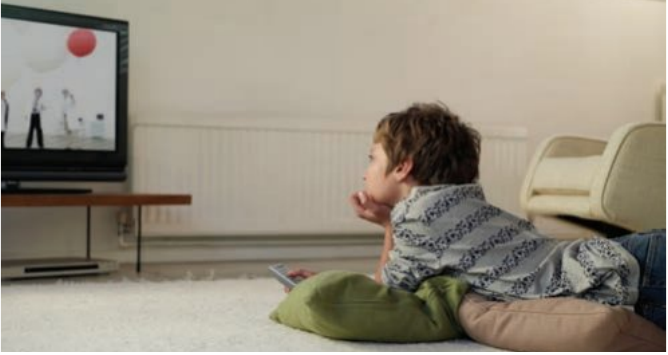
Parents who watched lots of television when they were younger might consider it more acceptable for their children to watch TV for extended periods, because their childhood experience serves as the anchor. Conversely, parents who did not have social media during their youth may limit their children's use of it more strictly.
Attentional bias
Attentional bias describes our tendency to pay attention to some things whilst ignoring others, thereby limiting our options. This selective attention can be influenced by external factors (such as the people around us) or our internal state (such as emotional state or tiredness). Attentional bias affects what we perceive and the decisions we make based on those perceptions.

If we hold a strong attitude and believe that campervans offer a cheaper holiday option, we might only pay attention to evidence supporting this viewpoint whilst ignoring contradictory information about costs.
For John, attentional bias reduces dissonance by causing him to focus selectively on information. When he learns that his behaviour (using animal products) conflicts with his pro-environmental opinion, he might only pay attention to news reports discussing other aspects of environmental sustainability. He would simultaneously ignore reports identifying animal products as a major cause of negative environmental effects.
Example
Attentional Bias and Binge Drinking
Someone who knows binge drinking carries health risks but drinks heavily on weekends experiences dissonance. Attentional bias reduces this discomfort by causing them to focus on evidence suggesting binge drinking is not as unhealthy as initially thought, whilst allowing them to ignore evidence of its risks. A person might suddenly notice an increased number of food advertisements when hungry because their internal state (hunger) biases their attention towards food-related stimuli.
The Stroop effect and attentional bias
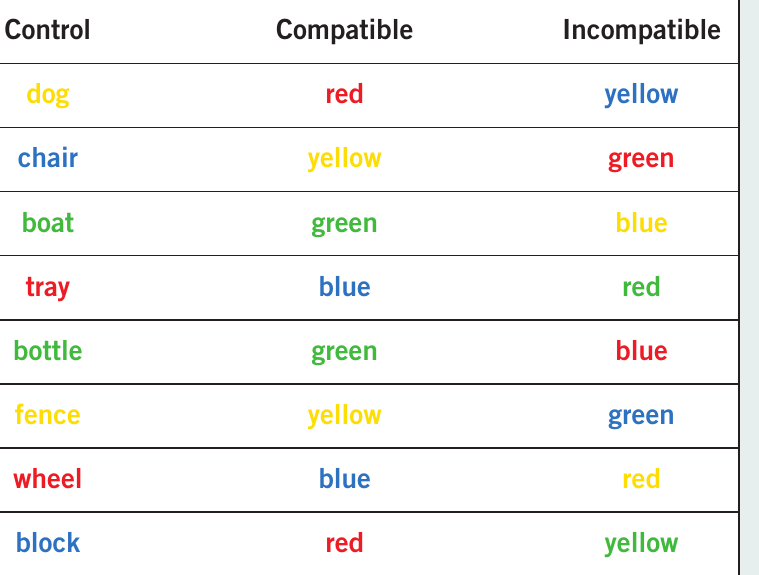
The Stroop effect demonstrates attentional bias through a simple test. When asked to name the colour of words, people take longer when the word and colour are incompatible (e.g., the word "red" written in blue) compared to when they are compatible (e.g., the word "red" written in red).
Note
This occurs because naming incompatible colours requires more attention to override the automatic reading response. The Stroop effect illustrates how our attention can be biased by competing information, with some information requiring more cognitive effort to process than others.
Confirmation bias
Confirmation bias represents the tendency to seek, favour, or remember information that supports an existing belief rather than contrary information. When people with this bias look for new information, they might research from only sources they know support their view rather than from a range of sources. They might also recall information that upholds their view rather than more relevant information that challenges it.
Example
Confirmation Bias Examples
The Smoker: A person who smokes and knows it causes lung cancer experiences cognitive dissonance. However, encountering information such as "the mechanism of how smoking causes lung cancer has not been definitively proved" might reduce their dissonance. They actively seek information confirming their desire to continue smoking whilst dismissing contradictory evidence.
The Conspiracy Theorist: Someone who runs a website claiming September 11 was a hoax encounters evidence causing them to doubt their belief, creating dissonance. To reduce this discomfort, they might seek additional information from other conspiracy theory websites rather than from sources with different perspectives. This selective information-gathering reinforces their existing beliefs and reduces the uncomfortable feeling of cognitive dissonance.
Important
People who believe vaccines are unsafe or ineffective often use confirmation bias to reinforce their views and minimise cognitive dissonance. They seek out and remember information supporting their anti-vaccine stance whilst dismissing or forgetting scientific evidence demonstrating vaccine safety and efficacy.
False-consensus bias
False-consensus bias describes the tendency to overestimate how much others share our opinions or beliefs. This cognitive bias leads us to believe our opinions are common and represent the norm, as we estimate that our beliefs are more prevalent than alternative beliefs.
Suppose you think a film is terrible and assume everyone else shares this opinion. This exemplifies false-consensus bias. The bias makes us feel positively about ourselves, as if we belong to a popular group. In John's environmentalist example, he might think that most people believe in environmental sustainability and use the same animal products as him. This assumption allows him to feel his attitudes and behaviours are correct, reducing the discomfort of cognitive dissonance by assuring himself that most people hold the same position.
Note
We see false-consensus bias in action when attending a concert and expecting everyone who attended to have enjoyed themselves because we did. People tend to be more susceptible to this bias regarding issues important to them (such as political beliefs) rather than less important matters (such as food preferences).
Functional fixedness
Functional fixedness is a cognitive bias involving the tendency to regard tools, objects, processes, or technology as having only one function or working in a specific way. This bias prevents us from improvising solutions to problems and limits creativity and new ideas in problem-solving.
Example
The Missing Hammer
Imagine needing to hammer nails into a wooden shelf but being unable to find a hammer. A friend suggests using a heavy metal wrench instead. Your surprise at this suggestion reflects functional fixedness—you had not considered that objects designed for one purpose could serve another.
How might functional fixedness influence John's situation? If John rigidly thinks that meat must be the main tasty component at a barbecue and vegetables can only be healthy salad, he might miss the idea of serving barbecued sweetcorn, capsicum, aubergine, or pumpkin as main dishes. His fixed view of food functions prevents him from seeing alternative solutions that would reduce his meat consumption.
Note
Functional fixedness occurs due to preconceived notions about object functions. Paperclips serve to hold papers together, and empty bottles hold liquids—but both can be repurposed for numerous creative applications if we overcome this cognitive bias.
Misinformation effect
The misinformation effect describes a cognitive bias in which information received after an event interferes with a person's original memory of the event. New information can even be remembered as having occurred during the original event, effectively altering memory.
Research has demonstrated that certain information people receive after an event can interfere with their original memory. In John's context, suppose that after the lecture, he reads countless articles stating that animal products do not significantly affect the environment. The misinformation effect might make him remember the lecture as concluding with this information instead of its actual message, thereby reducing his cognitive dissonance.
Important
This bias is particularly concerning because it can change our recollection of important events. A married couple arguing about whether they had chocolate or lemon cake at their wedding might both genuinely believe their version due to misinformation encountered after the wedding.
Optimism bias
Optimism bias refers to our tendency to underestimate the chances of negative events happening whilst overestimating the chances of positive events happening. Research has found that approximately 80% of people exhibit this bias about most topics, which explains why we indulge in risky behaviours like smoking and fail to do what benefits us, such as exercising, saving money, and wearing sunscreen.
The optimism bias does offer some benefits. Research demonstrates that people who believe they are unlikely to fail and more likely to succeed have better self-esteem, lower stress levels, and better overall wellbeing. However, this bias reduces cognitive dissonance when it overcomes the conflict caused by thoughts that something will turn out badly.

In John's case, optimism bias might make him think that new technology will be developed to make animal production more sustainable and less environmentally impactful, allowing him to continue his current behaviour without guilt.
Example
Mike's Dietary Challenge
Mike visits his doctor and learns he must change his high-sugar and high-fat diet or risk a heart attack. Mike resolves to eat more fruits and vegetables and fewer sweets. During the first week, he succeeds and even exercises daily. However, during the second week, a terrible day at work prompts him to buy a cheeseburger meal with chips and ice cream. Mike begins feeling guilty but then reminds himself that one slip-up will not cause a heart attack. Optimism bias makes him think he will likely be fine even with more dietary lapses.
Note
The optimism bias might cause someone to be late for work because they were overly optimistic about how long it would take to get ready after a long night out. They underestimated the negative consequences of inadequate preparation time.
Self-serving bias
The self-serving bias highlights our tendency to blame external factors when negative events happen to us, whilst giving our own personality or skills credit when positive events occur. This bias focuses on what happens to you personally, though it relates to the actor-observer bias which considers both your experiences and others' experiences.
In John's case, self-serving bias might lead him to believe he supports environmental causes because he is fundamentally a good person (internal attribution for positive behaviour). Conversely, if he is not doing enough for these causes, self-serving bias might lead him to believe external factors prevent him from doing so, protecting his self-image.
Example
Self-Serving Bias in Practice
The Accident: Someone who prides themselves on being an excellent driver has an accident, creating cognitive dissonance with this self-image. By attributing the accident's cause to the other driver (external attribution), the person reduces their cognitive dissonance and maintains their positive self-perception.
The Job Interview: A job applicant might believe he was hired because of his achievements, qualifications, and excellent interview (internal attribution for success). When asked about a previous job rejection, he says the interviewer did not like him (external attribution for failure), protecting his self-esteem through self-serving bias.
Dunning-Kruger effect
The Dunning-Kruger effect describes a cognitive bias in which people with low skills or ability in a specific area overestimate their abilities and performance, whilst people with high skills or ability underestimate their abilities and performance. This effect is usually measured by comparing objective performance tests with self-assessments.

Example
Overconfidence in Action
Approximately 80% of people believe their driving skills are above average—a mathematically impossible statistic. This overconfidence exemplifies the Dunning-Kruger effect. At one software engineering company, 42% of employees predicted they would be ranked in the top 5%, demonstrating widespread overestimation of abilities.
One contributing cause of the Dunning-Kruger effect is that people who lack knowledge or skill in an area simply do not have sufficient experience. They do not know the range of high performance or their place relative to it. Other cognitive biases, such as the self-serving bias or optimism bias, may also contribute to this effect.
In John's environmentalist example, the Dunning-Kruger effect may reduce his cognitive dissonance by allowing him to overestimate his understanding of environmental science. This inflated sense of expertise enables him to dismiss the lecture, believing there was nothing new for him to learn.
Note
The opposite manifestation—high performers who genuinely do not realise their abilities—might occur because skills and abilities come easily to these individuals. They may not realise how difficult a task or skill is for others, leading them to underestimate their own exceptional performance.
An inexperienced chess player might believe he is skilled enough to win against a more experienced opponent but ends up overestimating himself due to the Dunning-Kruger effect. His lack of experience prevents him from accurately assessing the skill level required for success.
Summary
Key Points to Remember:
-
Cognitive dissonance is the uncomfortable feeling we experience when our beliefs conflict with each other or with our behaviours, motivating us to reduce this discomfort through various strategies.
-
Several factors influence the intensity of cognitive dissonance, including the type of belief (personal vs impersonal), the value placed on the belief, and the level of conflict between beliefs.
-
Cognitive biases serve as automatic, often subconscious mechanisms that help reduce cognitive dissonance by distorting how we process information and make decisions.
-
Different cognitive biases operate through distinct mechanisms: anchoring bias makes us rely too heavily on initial information, confirmation bias leads us to seek supporting evidence, false-consensus bias makes us overestimate agreement, and functional fixedness limits our problem-solving creativity.
-
Understanding cognitive biases is essential because whilst they help reduce psychological discomfort, they can also prevent us from accepting important information, changing harmful behaviours, and making rational decisions.