The Roles of Specific Regions of the Brain in Long-Term Memory (VCE SSCE Psychology): Revision Notes
📚Revision Notes
The Roles of Specific Regions of the Brain in Long-Term Memory
Introduction to memory and the brain
Long-term memories are not stored in a single location within the brain. Instead, they are encoded and stored across multiple brain regions, which are connected through networks of neural pathways. This distributed storage system allows different aspects of a memory to be processed and retained by specialised brain structures.
Note
The case of Clive Wearing illustrates the importance of specific brain regions in memory formation. In 1985, Wearing contracted a viral infection that damaged the parts of his brain responsible for memory. At 46 years old, he was left with a memory span of only seconds, described as the most devastating case of amnesia ever recorded. Whilst Wearing could perceive sights and sounds normally, he could not retain these impressions for more than a few seconds, making it impossible for him to form new long-term memories. He could not recognise his doctors or remember what he had just read. Despite this severe impairment, Wearing retained the ability to play the piano and remember some family members, such as his wife Deborah. This selective preservation of certain memories whilst losing others demonstrates that different types of memories are processed by different brain regions.

Research based on cases like Clive Wearing has enabled scientists to identify which parts of the brain are involved in different aspects of memory formation, storage and retrieval. In this topic, we will explore the different types of long-term memory and examine the specific brain regions that process them.
Types of long-term memory
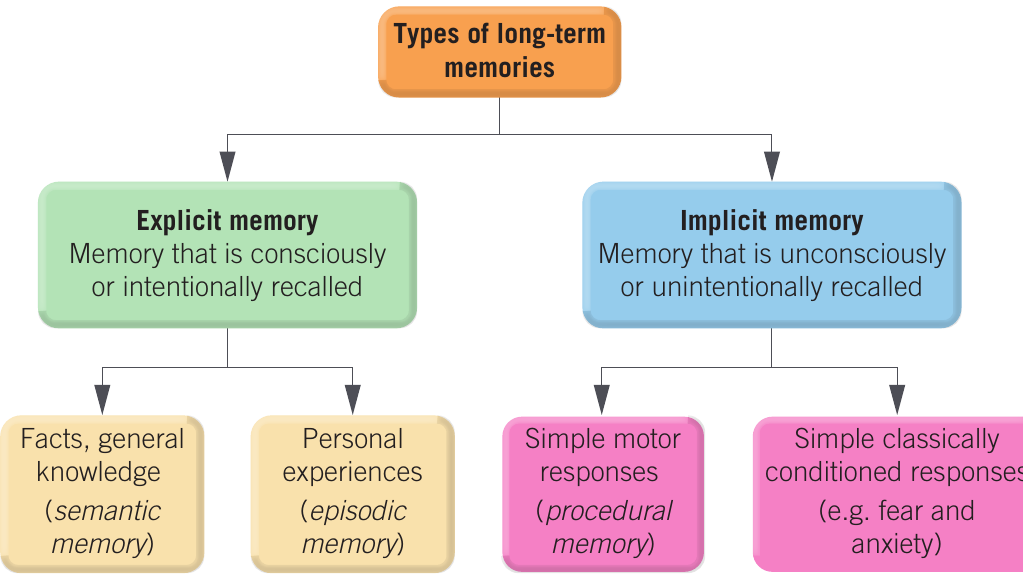
Long-term memory can be categorised into two main types: explicit memory and implicit memory. Both types involve information retrieved from long-term storage, but they differ in how that retrieval occurs and what kind of information is stored.
Explicit memory
Explicit memory occurs when information can be consciously or intentionally retrieved and stated. This type of memory is also known as declarative memory, or 'knowing that' information, because it tends to be expressed in words or symbols and is easily verbalised.
There are two main types of explicit memory:
Semantic memory refers to the memory of facts, worldly knowledge or general knowledge. Examples include remembering the duration of short-term memory, knowing who the first Prime Minister of Australia was, or recalling that Paris is the capital of France. Semantic memories are context-independent, meaning you may not remember when or where you learned the information.
Episodic memory refers to the memory of specific events or personal experiences. Examples include remembering what you did on your last holiday, what you normally do when you get home from school, or who sat next to you at Christmas dinner. Episodic memories are context-dependent, containing information about the time and place where the event occurred.

Implicit memory
Implicit memory does not require conscious or intentional retrieval. Implicit memories are referred to as non-declarative or 'how to' knowledge because they include memory of stored routines and emotional responses. These memories differ from explicit memory because it can be very difficult to verbalise the precise sequence of actions required to perform a task. For instance, explaining exactly how to eat with a knife and fork or how to ride a bicycle is challenging, even though you can perform these actions automatically.
There are two main types of implicit memory:
Procedural memory involves knowledge of skills, habits or actions. Examples include knowing how to type, arrange flowers, style your hair, bake a cake, or ride a bicycle. These memories guide our motor behaviours and become automatic with practice.
Conditioned emotional response occurs when a learned emotional reaction develops in response to a stimulus or event with which you have formed an association. These responses typically involve negative emotions such as fear or anger, but can also involve strong positive emotions such as happiness or excitement. For example, if you experience fear whenever you visit the dentist because of previous painful dental work, this is a classically conditioned response. These responses are considered implicit because we cannot consciously control the experience of fear or excitement when exposed to the associated stimulus.

The following diagram summarises the classification of long-term memories:
Brain regions involved in memory
Five brain regions play major roles in encoding and storing implicit and explicit long-term memories: the hippocampus, amygdala, neocortex, basal ganglia and cerebellum. Each region has specialised functions that contribute to different aspects of memory formation and retrieval.
Hippocampus
The hippocampus is located in the temporal lobe, within the midbrain (beneath the cerebral cortex). It is a finger-sized structure that resembles a wishbone, with the lower part forming two structures, one in each hemisphere of the brain.
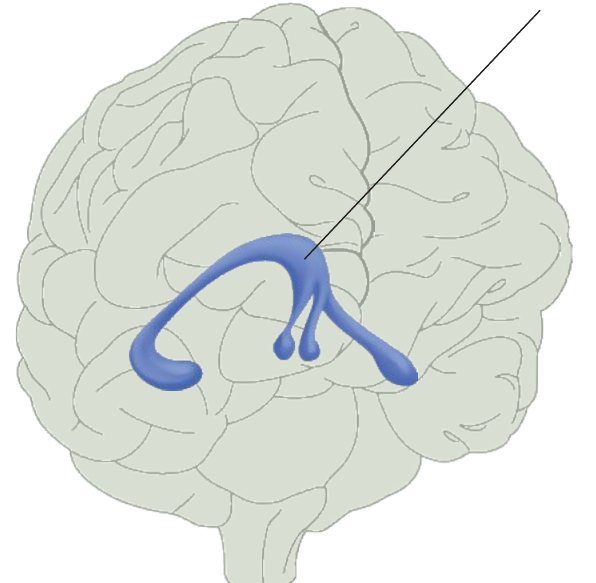
The hippocampus has several key roles in memory processing:
Encoding, consolidation and retrieval of explicit memories: The hippocampus forms (encodes) and stabilises (consolidates) explicit memories, then retrieves them into conscious awareness when needed. For example, when you board a plane for a holiday, you need to know your seat number. Your hippocampus encodes and consolidates the memory of this number. When you enter the plane, your hippocampus retrieves the seat number into your conscious awareness so you can locate it easily.
Important
Transfer of explicit memories for permanent storage: The hippocampus transfers newly encoded explicit memories to relevant parts of the brain for long-term storage. It sends memories to the neocortex, where they are stored permanently. Clive Wearing's damaged hippocampus prevented this transfer process, which is why he could not create new permanent memories despite being able to process sensory information normally.
Note
Research by German scientist Himmer and colleagues (2019) demonstrates that memory transfer occurs during sleep. In their study, German participants performed better in a recall task if they had slept for more than eight hours after 12 hours of learning a list of German words.
Interaction with the amygdala to link emotions to explicit memories: When you experience an emotionally arousing event, your hippocampus encodes the explicit details of the event (where, when, who was present), whilst the amygdala encodes the emotions associated with it. When you retrieve the memory from the neocortex later, the hippocampus's activity during memory formation enables recall of the contextual details. Meanwhile, your amygdala becomes activated during retrieval, allowing you to re-experience the emotions you felt during the event. Sympathetic nervous system reactions such as increased heart rate, goose bumps and sweating that were linked to the memory may also recur.
Neocortex
The brain is mostly covered by a thin, wrinkly layer of neural tissue, 2.5 millimetres thick, called the cerebral cortex. The neocortex is the top layer of the cerebral cortex and is involved in high-order mental processes such as language, attention and memory. The neocortex is divided into two hemispheres, each containing four lobes: frontal, parietal, temporal and occipital. These lobes have different functions and are all involved in memory.
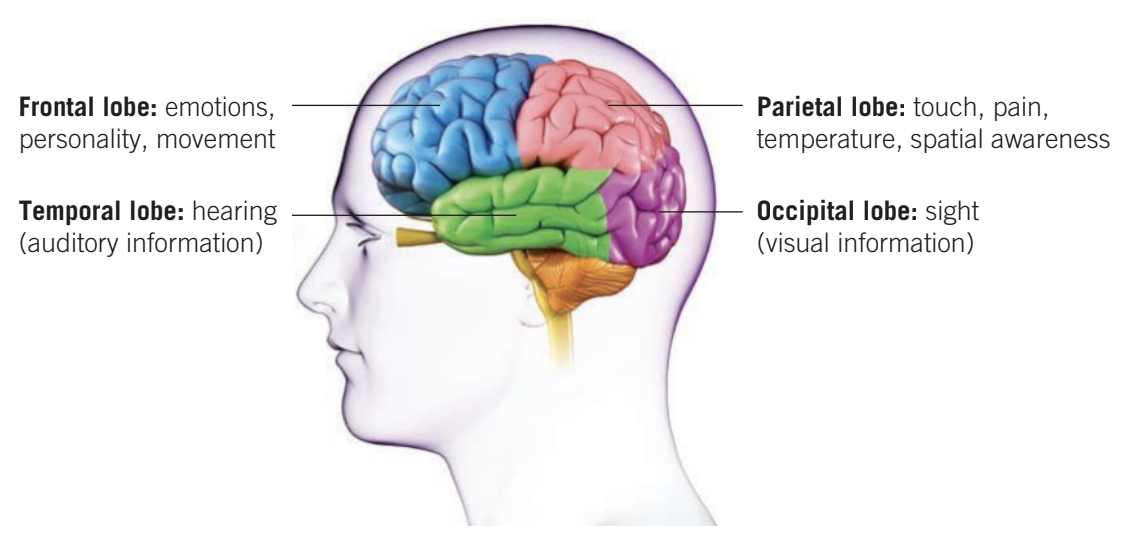
Although the hippocampus encodes information and sends it for storage, the neocortex is the part of the brain that actually stores explicit memories for extended periods. Memories are widely distributed throughout the cortex and are usually permanently stored in the areas where the sensory input was first processed.
Example
Distributed Memory Storage: Concert Experience
If you attend a concert, each sensory component of the memory is stored in a different part of the brain:
- The sound of the music is stored in the temporal lobe
- The vision of the musicians is stored in the occipital lobe
- The sensation of people brushing against you on the dance floor is stored in the parietal lobe
These different components of the memory are linked by neural networks to prevent them from remaining as separate, fragmented pieces. When required, the separate parts are brought together, reconstructed and retrieved into consciousness as a single, integrated memory.
This reconstruction process is analogous to putting together a jigsaw puzzle, where individual pieces come together to form a complete picture.
Amygdala
The amygdala lies behind the temple, deep beneath the cerebral cortex. It is an almond-shaped cluster of neurons attached to the hippocampus, with one amygdala present in each hemisphere.
The amygdala is responsible for regulating emotions such as fear and aggression, which enhances the significance of events. It plays a crucial part in the memorability of experiences because memory storage is influenced by the initiation of the fight-or-flight-or-freeze response and the release of stress hormones. The amygdala helps store memories of events and emotions so that you can recognise similar situations in the future, particularly when what happened is linked to survival.
Example
Emotional Memory Formation: Dog Bite
If you have been bitten by a dog, you may have felt a surge of adrenaline and an increased heart rate, along with other signs of a stress response. This heightened physiological reaction might increase your alertness around dogs in the future.
Your amygdala encodes the emotion of fear that you experienced when the dog bit you, and then activates the hippocampus to encode the explicit details of the event as significant. This interaction ensures that both the emotional and factual aspects of the memory are preserved.

Important
The amygdala is also responsible for encoding implicit memories related to emotions. Being bitten by a dog would be a frightening event. Your amygdala encodes the emotion of fear that you experienced when the dog bit you, and then activates the hippocampus to encode the explicit details of the event as significant. This interaction ensures that both the emotional and factual aspects of the memory are preserved.
Basal ganglia
The basal ganglia are a group of structures located deep within the cerebral hemispheres. These structures have primary roles in learning, procedural memory, routine behaviours and emotions.
Note
Much of what is known about the function of the basal ganglia has resulted from case studies of people who have sustained damage to this specific brain region. One such case is Eugene Pauly, who in 1992 suffered from a disease that destroyed his hippocampus. Despite being unable to remember things consciously, Pauly could go for walks alone and find his way back home. He was also able to create new routines and habits. The part of the brain responsible for forming and guiding habits is the basal ganglia, which had not been affected by the disease.
Formation of implicit procedural memory (habits): One of the basal ganglia's main roles is the encoding of implicit procedural memory, specifically habits. The basal ganglia work to form habits by associating movement with reward or reinforcement.
The basal ganglia become active when we move a part of our body in a new way in response to a cue. For example, we might encounter roadworks on our journey home and take a different route that gets us home more quickly. Another example is learning a new cooking skill to impress a friend, which results in preparing a delicious meal. When we feel a sense of accomplishment from trying something new, or when the action results in a positive outcome, the association between the reward and the action is recognised. The reward signals to the basal ganglia that the behaviour is useful and worth remembering for future use.
One model for this process is the habit loop, which involves a cycle of cue and reward. Whenever the loop is repeated, the behaviour related to the sequence of movement is strengthened and becomes more precise and efficient. This makes repetitive behaviours automatic, which frees up our brain to focus on other, more complex decisions. For example, we might automatically take the quicker route home from work or school, leaving our brain free to focus on our schoolwork or what we might cook for dinner.
Planning and control of fine motor movements: The basal ganglia are also responsible for planning and controlling fine motor movements related to a sequence of goal-directed behaviour, enabling it to be performed in a fluid manner. Holding and writing with a pencil seems like a smooth motion, but if you recorded this action and slowed it down, it would appear as hundreds of discrete, defined 'steps'. Every small step uses trial and error to find the best movement for the overall behaviour.
Note
The basal ganglia achieve this by communicating with other brain regions to acquire motor and cognitive skills gradually through practice. Specifically, the basal ganglia receive input from the cerebral cortex, requesting them to perform a complex sequence of steps and movements required for a skill or goal. The basal ganglia consider this 'plan' and refine it to include more appropriate or efficient movements. They then send two simultaneous messages to other brain regions (such as the cerebral cortex and cerebellum). The release of dopamine stimulates a message to facilitate the correct movements, whilst the release of GABA (gamma-aminobutyric acid) stimulates a message to inhibit competing movements. This 'loop' is primarily active when a sequence of movement has been well learned and can be executed seamlessly without conscious recollection of the prior learning episode or the rules underlying the task.

Cerebellum
The cerebellum is a cauliflower-shaped structure located at the base of the brain alongside the brain stem. It forms part of the hindbrain, which consists of structures that control bodily functions operating without conscious effort.
The cerebellum has a role in the encoding and temporary storage of implicit procedural memories for motor skills, more specifically for those created by classical conditioning. For example, the cerebellum encodes simple reflexes acquired through classical conditioning, such as blinking in response to the sound of a bell. Without a functioning cerebellum, people cannot develop certain conditioned reflexes. When researchers disrupted nerve pathways in the cerebellum of rabbits, the rabbits became unable to learn a conditioned eye-blink response.

Important
The cerebellum also plays a role in coordinating fine muscle movements and regulating posture and balance. For example, when you learn to play football, your cerebellum fine-tunes the coordination of your feet when you are running or kicking a goal. This should not be confused with the role of the basal ganglia, which ensure that when you kick a goal or head-butt the ball, the series of movements occurs in a fluid, fast and smooth manner. Similarly, your cerebellum forms and temporarily stores the memory of how to engage in this task.
Summary of brain region roles in memory
The following diagram provides a comprehensive overview of how the five brain regions contribute to encoding, storing and retrieving different types of long-term memories:
- Hippocampus: Encodes, consolidates and retrieves explicit memories (both semantic and episodic); transfers these memories to the neocortex for permanent storage
- Neocortex: Stores explicit memories in a distributed fashion across different lobes, based on the sensory modality of the information
- Amygdala: Encodes implicit memories related to emotions, particularly fear; works with the hippocampus to link emotions to explicit memories of events
- Basal ganglia: Encodes implicit procedural memories, particularly habits formed through reward association; controls fine motor movements in goal-directed sequences
- Cerebellum: Encodes and temporarily stores implicit procedural memories related to classically conditioned reflexes; coordinates fine muscle movements and regulates posture and balance
Summary
Key Points to Remember:
- Long-term memories are stored across multiple brain regions connected by neural pathways, not in a single location.
- Explicit memory (declarative) involves conscious retrieval and includes semantic memory (facts) and episodic memory (personal experiences).
- Implicit memory (non-declarative) involves unconscious retrieval and includes procedural memory (skills/habits) and conditioned emotional responses.
- The hippocampus encodes, consolidates and retrieves explicit memories, then transfers them to the neocortex for permanent storage.
- The amygdala encodes the emotional significance of events and implicit emotional memories, working with the hippocampus to create emotionally-charged memories.
- The basal ganglia form habits through the habit loop (cue-routine-reward-repetition) and control fine motor movements in well-learned sequences.
- The cerebellum encodes classically conditioned reflexes and coordinates fine muscle movements, whilst the neocortex stores explicit memories distributed across its different lobes based on sensory modality.