Neurotransmitters (VCE SSCE Psychology): Revision Notes
📚Revision Notes
Neurotransmitters
Introduction to neural communication
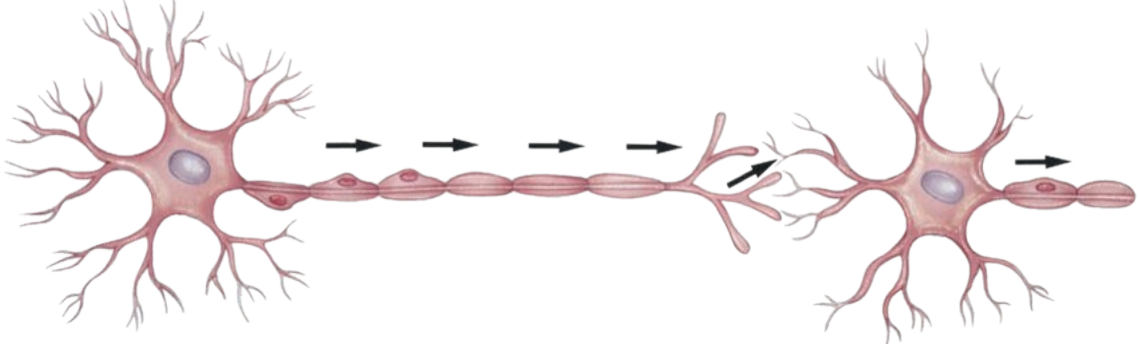
The nervous system relies on specialised cells called neurons to transmit information throughout the body. A neuron is an individual nerve cell specialised to receive, process and transmit information within the nervous system. When neurons communicate with each other, this process is known as neural transmission, which involves an electrical impulse (action potential) travelling through the neuron.
Note
Neurons can be activated by various stimuli, including sensory information such as pressure, heat or light, or by chemical signals from other cells. These chemical signals are called neurotransmitters, which play a vital role in how neurons communicate with each other and with other cells in the body.
The synapse and neural transmission
Structure of the synapse
Communication between neurons occurs at a junction called a synapse. This is the point of communication between two neurons or between a neuron and a target cell such as a muscle or gland. The synapse consists of three main components:
- The axon terminal of the presynaptic neuron (the neuron sending the signal)
- The synaptic gap (a small space between neurons)
- The dendrite of the post-synaptic neuron (the neuron receiving the signal)
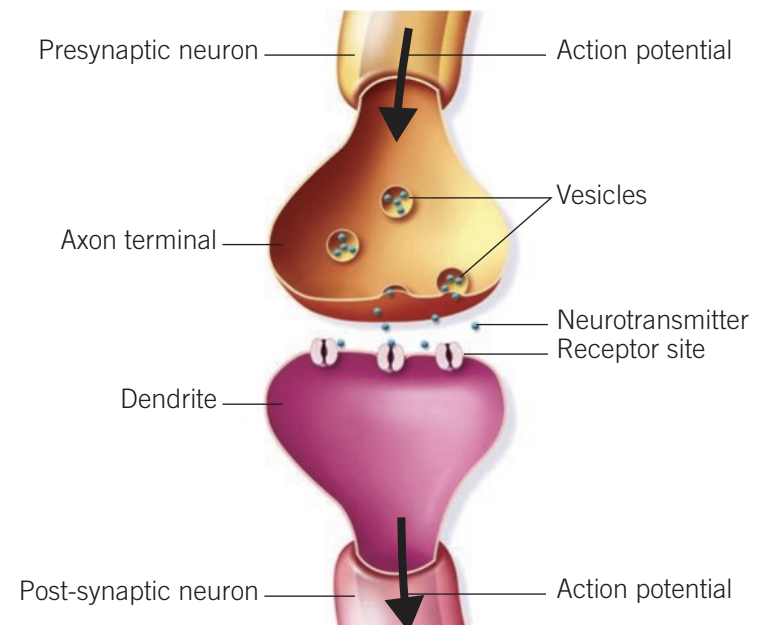
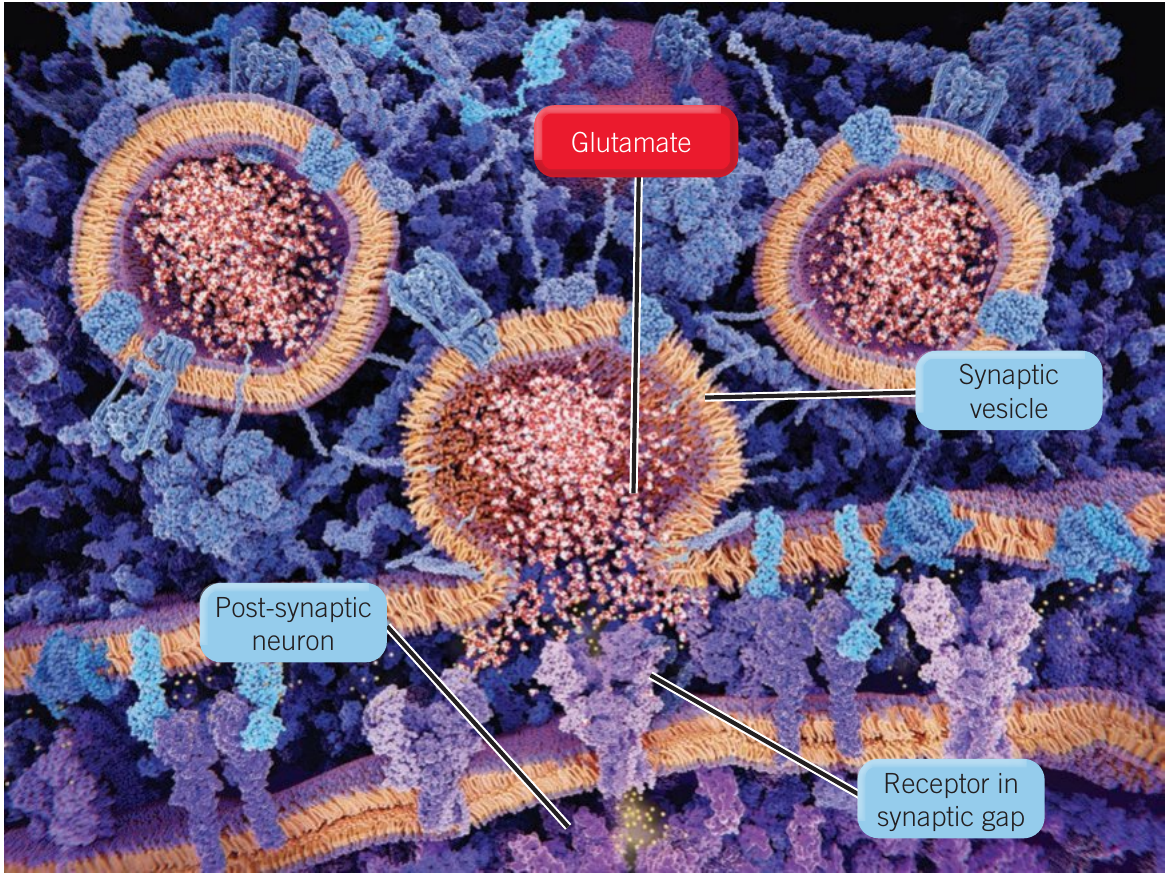
Within the axon terminal of the presynaptic neuron are many synaptic vesicles. These are membrane-bound spheres that contain neurotransmitter molecules. The synaptic gap is the small space between the axon terminal of the presynaptic neuron and the membrane of the post-synaptic neuron. On the dendrites of the post-synaptic neuron are receptor sites, which are membrane proteins that receive and detect specific neurotransmitters.
What are neurotransmitters?
Neurotransmitters are chemicals produced by neurons that carry messages to other neurons or cells within the nervous system, including muscles, organs and glands. Each neurotransmitter can only bind to specific receptor sites, much like a key fitting into a lock. This specificity ensures that signals are transmitted accurately throughout the nervous system.
Note
The lock-and-key mechanism of neurotransmitters and receptor sites is crucial for ensuring precise communication in the nervous system. Just as only the correct key can open a specific lock, only specific neurotransmitters can bind to their matching receptor sites.
The process of neural transmission
Example
The Neural Transmission Process: Step-by-Step
Neural transmission across a synapse follows a specific sequence of events:
- An action potential (electrical impulse) travels down the axon of the presynaptic neuron and reaches the axon terminal
- This triggers chemical changes within the axon terminal
- The synaptic vesicles merge with the membrane of the axon terminal
- Neurotransmitters are released from the vesicles into the synaptic gap
- The neurotransmitters travel across the synaptic gap
- They bind to receptor sites on the dendrites of the post-synaptic neuron
- This binding makes the post-synaptic neuron either more likely or less likely to fire its own action potential
The effect of a neurotransmitter depends on its type. Neurotransmitters can have either excitatory or inhibitory effects on the post-synaptic neuron.
Excitatory neurotransmitters
Excitatory effects
An excitatory effect refers to the increased likelihood that the post-synaptic neuron will fire an action potential or neural impulse. Excitatory neurotransmitters stimulate or activate the post-synaptic neuron, making it more likely to transmit a signal to the next neuron in the pathway.
Glutamate
Glutamate is the main excitatory neurotransmitter in the nervous system. When glutamate binds to receptor sites on a post-synaptic neuron, it increases the probability that the neuron will fire an action potential, thereby activating neural activity in the brain.
Role in learning and memory
Glutamate plays an important role in learning and the formation of memories in the brain. It stimulates essential structural and functional changes to the connections between neurons.
Example
How Glutamate Strengthens Memory Pathways
The mechanism works as follows:
- Glutamate is released when a neural pathway associated with a particular experience is activated
- For example, when learning a new concept, glutamate is released in the neural pathway associated with that information
- Each time the memory is retrieved (through revision, practice or discussion), this pathway is reactivated
- Repeated activation strengthens the neural connections within this pathway
- Without regular retrieval or practice, the neural pathway weakens over time
Note
These changes to the strength of neural connections are referred to as synaptic plasticity. The strengthening or weakening of synapses depends on how frequently they are activated, demonstrating the principle of "use it or lose it" in memory formation.
Inhibitory neurotransmitters
Inhibitory effects
An inhibitory effect refers to the decreased likelihood that the post-synaptic neuron will fire an action potential or neural impulse. Inhibitory neurotransmitters suppress or slow down the activity of the post-synaptic neuron, making it less likely to fire.
GABA (gamma-aminobutyric acid)
Gamma-aminobutyric acid (GABA) is the main inhibitory neurotransmitter in the nervous system. When GABA binds to receptor sites on a post-synaptic neuron, it reduces the likelihood that the neuron will fire, thereby suppressing neural activity in the brain.
Role in maintaining balance
The brain requires a careful balance between different neurotransmitters to function properly. Too much or too little of certain neurotransmitters can be harmful to neuronal functioning. GABA plays a vital role in this balance by counteracting the excitatory effects of glutamate.
Important
Consequences of Insufficient GABA
Without sufficient levels of GABA, the activation of post-synaptic neurons may become excessive. This occurs because the excitatory effects of glutamate take over without GABA to regulate them. This imbalance is often associated with:
- Hyperactivity in various brain regions
- Mental disorders such as anxiety
- Increased physiological arousal (increased heart rate, faster breathing)
- Heightened sympathetic nervous system activation
When the brain's neurochemistry is properly balanced, the inhibitory action of GABA counterbalances the excitatory activity of glutamate, and vice versa. This balance is essential for normal brain function and mental health.
Comparison of glutamate and GABA
| Feature | Glutamate (excitatory) | GABA (inhibitory) |
|---|---|---|
| Effect on post-synaptic neuron | Makes it more likely to fire | Makes it less likely to fire |
| Action on neural activity | Stimulates and activates | Suppresses and slows down |
| Primary role | Main excitatory neurotransmitter in the CNS | Main inhibitory neurotransmitter in the CNS |
| Involvement | Learning, memory formation, synaptic plasticity | Preventing over-activation, anxiety regulation |
| Associated conditions | Over-activation may contribute to neural damage | Low levels linked to anxiety and specific phobias |
Important
The balance between excitatory neurotransmitters (such as glutamate) and inhibitory neurotransmitters (such as GABA) is essential for proper brain function. When this balance is disrupted, it can lead to various mental health conditions and neurological disorders.
Remember!
Summary
Key Points to Remember:
- Neurons communicate through neural transmission, which involves electrical impulses (action potentials) and chemical signals (neurotransmitters)
- The synapse is the junction between neurons where communication occurs, consisting of the axon terminal, synaptic gap and dendrite with receptor sites
- Glutamate is the main excitatory neurotransmitter that increases the likelihood of the post-synaptic neuron firing and plays a key role in learning and memory formation
- GABA is the main inhibitory neurotransmitter that decreases the likelihood of the post-synaptic neuron firing and helps prevent over-activation in the brain
- The brain requires a careful balance between excitatory and inhibitory neurotransmitters for proper functioning, with imbalances potentially leading to conditions such as anxiety