Synaptic Plasticity (VCE SSCE Psychology): Revision Notes
📚Revision Notes
Synaptic Plasticity
Introduction to synaptic plasticity
When we learn something new and form memories, relatively permanent or stable connections between neurons are established. These connections involve specific changes within the synapse, the junction between neurons. These changes are called synaptic plasticity, which can result in either strengthening or weakening of neural connections based on how frequently the pathway is activated.
Synaptic plasticity is the fundamental mechanism underlying memory formation and learning. It differs from the broader concept of neural plasticity (or neuroplasticity), which refers to the brain's overall ability to change, grow and reorganise its neural networks. Synaptic plasticity specifically focuses on changes occurring at individual synapses between neurons.
Note
While neural plasticity describes the brain's overall capacity to reorganise and adapt, synaptic plasticity is more specific—it refers to the changes happening at the microscopic level between individual neurons at their connection points (synapses).
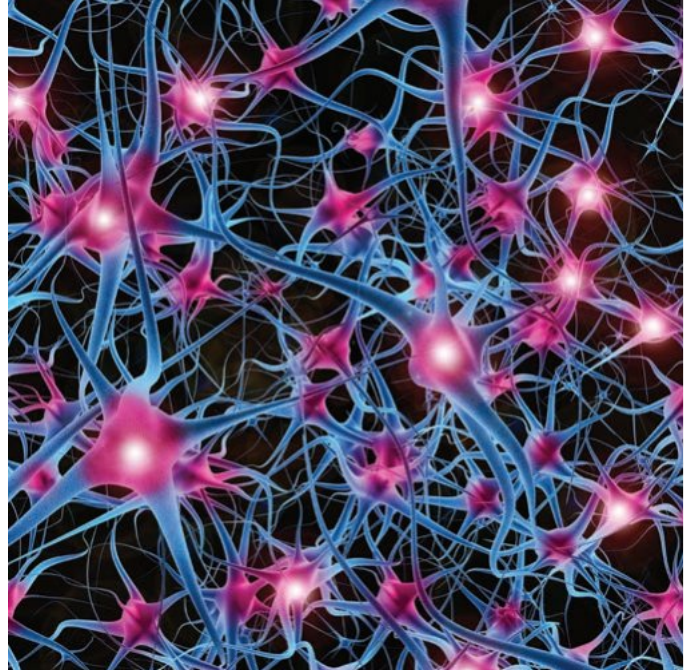
The role of neurotransmitters in synaptic plasticity
The neurotransmitter glutamate plays an essential role in synaptic plasticity. When a neural pathway associated with an experience is activated during learning, glutamate is released at the synapse. As an excitatory neurotransmitter, glutamate stimulates activity within the pathway and promotes neural connectivity. The repeated release of glutamate strengthens the connection, making memories more robust and easier to retrieve.
Long-term potentiation
Long-term potentiation (LTP) is a process involving the relatively permanent strengthening of synaptic connections that occurs when a neural pathway is repeatedly activated. Through LTP, neural connections become more efficient, making it easier to retrieve learned information or perform practiced skills.
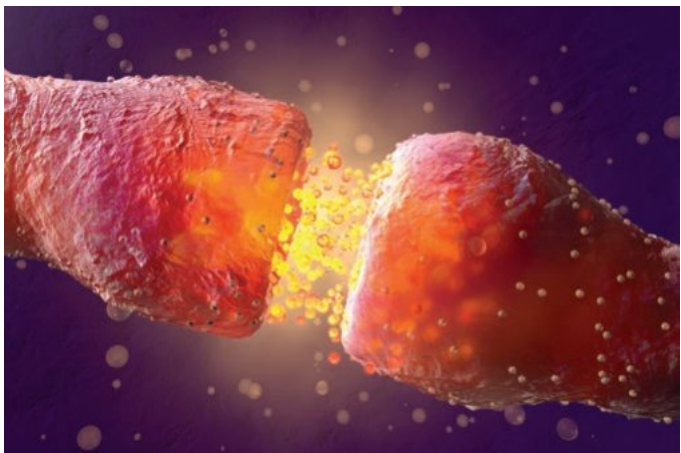
The process works through repeated activation of specific neural pathways. For example, when learning a new tennis serving technique, the first attempts may feel awkward and require conscious effort. However, each time the technique is practised, the neural pathway associated with this skill is activated. Glutamate is released at the synapses within this pathway, and through repeated activation, the synaptic connections strengthen. Over time, the serving technique becomes more automatic and easier to execute because the strengthened neural pathway allows for more efficient signal transmission.
Important
LTP results in long-lasting changes at the synapse. These changes enable faster and more reliable transmission of signals between neurons, which is experienced as improved skill performance or easier memory recall.
Long-term depression
Long-term depression (LTD) is essentially the opposite of LTP. It involves the relatively permanent weakening of synaptic connections, typically resulting from repeatedly low levels of activation in a neural pathway. While this might sound negative, LTD serves an important function in helping the brain adapt and optimise neural pathways.
LTD allows the brain to eliminate or 'prune' neural connections that are no longer useful or efficient. This process is essential for brain development and learning throughout life. By weakening underused connections, the brain can allocate resources more efficiently and maintain optimal neural functioning.

Note
Continuing with the tennis serving example: when a coach teaches a new serving technique, the neural pathway associated with the old technique begins to receive lower levels of stimulation. As the player practises the new technique more and the old technique less, LTD weakens the connections in the pathway for the old serving method. Eventually, this pathway may be pruned away entirely, allowing the brain to commit fully to the more efficient new technique.
How LTP and LTD work together
LTP and LTD do not work in isolation. Instead, they function together to create more efficient neural pathways through synaptic plasticity. The brain operates somewhat like a sculptor, starting with more neural material than necessary and then carving away the excess to achieve optimal design and function.
When learning new information or skills, both processes occur simultaneously. LTP strengthens the connections in the new pathway being formed, whilst LTD weakens connections in old or less efficient pathways. This combined action results in neural pathways that are more direct, efficient and capable of rapid signal transmission. The outcome is improved learning, better memory consolidation, and more efficient skill performance.
Important
Both LTP and LTD are involved in the consolidation of long-term memories in specific brain regions, particularly the hippocampus. This consolidation process transforms new, fragile memories into stable, long-lasting ones that can be reliably retrieved.
Modifications resulting from LTP and LTD
The processes of LTP and LTD lead to specific, observable modifications in neural structure and connectivity. Three key modifications are sprouting, rerouting and pruning. These changes work together to optimise brain function and make learning more efficient.
Sprouting
Sprouting involves the growth of axon and dendrite fibres at the synapse. This process results in physical changes to the structure and appearance of neurons, making them look 'bushier' under microscopic examination.
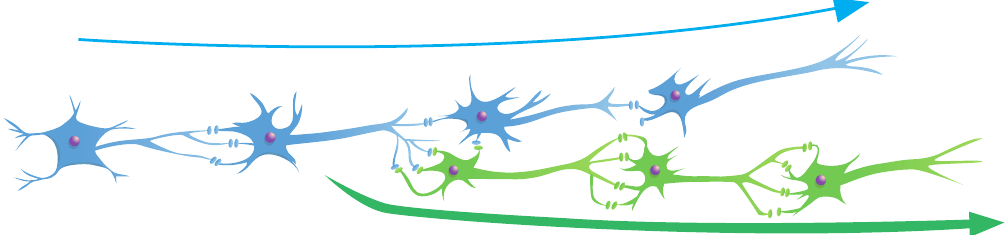
When sprouting occurs following learning and memory formation, several specific changes can be observed:
Dendritic spines grow on the post-synaptic neuron. These are small protrusions that extend from the dendrites, increasing the surface area available for receiving signals. The growth of dendritic spines makes the dendrites appear bushier and increases the number of potential connection points with other neurons.
Filigree appendages develop on the axon terminal of the pre-synaptic neuron. These are fine, branching extensions that grow from the end of the axon. Like dendritic spines, filigree appendages increase the potential for connections between neurons.
Synaptogenesis occurs when dendritic spines and filigree appendages meet and form new synapses. This is the creation of entirely new connection points between neurons. Synaptogenesis increases the overall number of synapses in the pathway, enhancing the potential for signal transmission and making the memory or skill more robust.
Note
These structural changes are not temporary. Once sprouting has occurred and new synapses have formed through synaptogenesis, the changes can be relatively permanent, particularly if the pathway continues to be activated regularly. This explains why well-practised skills and frequently reviewed information become increasingly stable in memory.
Rerouting
Rerouting involves the formation of new neural connections to establish alternative neural pathways. Humans constantly adapt behaviours and learn more efficient ways of performing tasks, which typically requires the brain to create new routes for information processing.
Consider learning a new technique for a familiar skill. The original technique would have established a well-defined neural pathway, strengthened over time through LTP. When learning an improved technique, the brain does not simply override the old pathway. Instead, it creates an alternative route—a new neural pathway associated with the new technique.
During this transition, the original pathway may undergo modification through LTD as it receives less activation. Simultaneously, the alternative pathway develops and strengthens through LTP. Sprouting also commonly occurs during rerouting, as the neurons in the new pathway form additional connections to strengthen and stabilise the alternative route.
Note
Rerouting demonstrates the brain's remarkable flexibility. Rather than being locked into established patterns, the brain can create new pathways when needed, allowing for continuous learning and adaptation throughout life. This process is particularly important when recovering from injury, learning new skills, or breaking old habits.
Pruning
Synaptic pruning involves the removal of excess neurons and synaptic connections to increase the efficiency of neuronal transmissions. Like a gardener pruning branches from a fruit tree to improve the quality of the remaining fruit, the brain eliminates unnecessary connections to optimise neural function.
During learning, particularly in the early stages, the brain often creates more connections than ultimately needed. Excess dendritic spines and filigree appendages form as the pathway is repeatedly activated. Over time, through continued practice and use, the brain identifies which connections are most efficient and which routes provide the most direct path for signal transmission.
LTD plays a key role in pruning by weakening connections that are used less frequently. Once the brain has established the optimal pathway for a particular skill or memory, excess branches can be pruned away. This elimination of redundant connections makes neural communication more direct and efficient.
Important
Pruning is not a sign of neural decline but rather neural refinement. By removing excess connections, the brain reduces 'neural noise' and ensures that signals travel along the most efficient routes possible. This process continues throughout life, though it is particularly active during childhood and adolescence when the brain undergoes extensive reorganisation.
The combination of sprouting (creating connections), rerouting (establishing alternatives), and pruning (removing excess) allows the brain to continuously optimise its neural networks for maximum efficiency.
Real-world application: neural plasticity and recovery from brain damage

The principles of synaptic plasticity have important applications in recovery from brain injury. A case study of a woman named Cheryl demonstrates how the brain can reorganise and adapt through neural plasticity.
Example
Real-World Application: Cheryl's Recovery Through Neural Plasticity
At 39 years old, Cheryl suffered damage to 98% of her vestibular system following an infection from a routine operation. The vestibular system coordinates neural messages about head position, eye movement and postural balance. The extensive damage left Cheryl unable to maintain stability, describing the sensation as feeling like "a wet noodle" moving without control.
Initially, doctors offered little hope, explaining that because neurons in her brain were not communicating properly across synapses, there was limited treatment available. However, a team of neuroscience specialists, including psychiatrist Dr Norman Doidge, developed an innovative intervention using principles of neural plasticity.
The Intervention: The intervention involved a specially designed helmet fitted with motion sensors and connected to a mouthpiece. When Cheryl wore this device, movements of her head triggered corresponding sensations on her tongue. If she began falling forward, she felt sensations at the tip of her tongue; if her head tilted sideways, the sensations moved to the corresponding side of her tongue.
The Results: Through repeated use of this device, Cheryl's brain was able to establish new neural pathways. The tongue sensations provided alternative sensory input that her brain could use to coordinate head position, eye movement and balance. Through synaptic plasticity—involving LTP to strengthen these new pathways and LTD to modify existing connections—her brain gradually learned to process this new type of sensory information.
Over time, Cheryl needed the helmet less frequently as the new neural pathways became stronger and more efficient. Eventually, her brain regained substantial control over postural balance and head coordination, enabling her to live relatively normally and perform daily tasks such as driving. This case demonstrates the remarkable capacity of the brain to reorganise through synaptic plasticity when provided with appropriate stimulation and practice.
Remember!
Summary
Key Points to Remember:
-
Synaptic plasticity refers to changes occurring at synapses that enable learning through strengthening or weakening connections between neurons.
-
Long-term potentiation (LTP) strengthens synaptic connections through repeated activation of neural pathways, making memories stronger and skills easier to perform.
-
Long-term depression (LTD) weakens underused synaptic connections, allowing the brain to eliminate inefficient pathways and adapt to new learning.
-
LTP and LTD work together to create more efficient neural pathways by simultaneously strengthening useful connections and weakening redundant ones.
-
Sprouting, rerouting and pruning are three key modifications that result from synaptic plasticity: sprouting creates new connections through dendritic spines and filigree appendages, rerouting establishes alternative pathways, and pruning eliminates excess connections to optimise efficiency.