The Central and Peripheral Nervous Systems (VCE SSCE Psychology): Revision Notes
📚Revision Notes
The Central and Peripheral Nervous Systems
Introduction to the nervous system organization
The human nervous system is a complex network responsible for processing information and coordinating responses throughout the body. It consists of two major divisions: the central nervous system (CNS) and the peripheral nervous system (PNS). Each division has specific roles and subdivisions that work together to enable both conscious actions and unconscious bodily functions.
Central nervous system
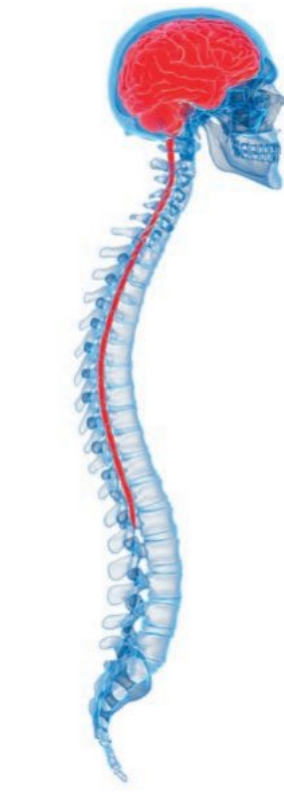
The central nervous system comprises the brain and spinal cord. These structures occupy a central position in the body and serve as the primary processing centre for all incoming sensory information and outgoing motor commands. The CNS integrates and coordinates sensory input, then initiates appropriate motor responses. These responses can be conscious (such as voluntary movements) or unconscious (such as reflexes and automatic functions like heart rate regulation).
Brain
The brain is an extraordinarily complex organ containing approximately 86 billion neurons. It performs multiple essential functions that enable human behaviour and mental processes. The brain receives sensory information from throughout the body, processes this information, and coordinates appropriate responses. These responses include voluntary movements, emotional reactions, and conscious thought processes.
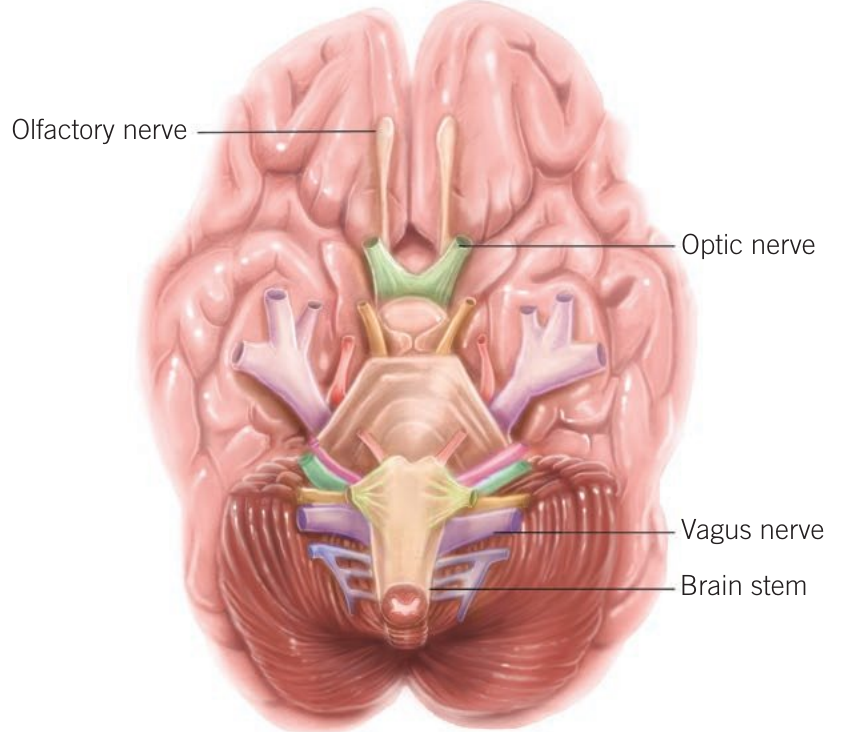
Beyond conscious functions, the brain also regulates numerous processes without conscious awareness. These include breathing, temperature regulation, hunger responses, and various other homeostatic functions that maintain internal balance. The brain communicates with the rest of the body through two main pathways: the spinal cord with its associated spinal nerves, and cranial nerves that connect directly to specific organs and muscles.
Note
Cranial Nerves and the PNS
Cranial nerves provide direct connections between the brain and various structures. For example, the olfactory nerve connects to the nasal cavity for smell, the optic nerve connects to the eyes for vision, and the vagus nerve extends to the stomach and intestinal tract to control digestion. There are 12 pairs of cranial nerves in total, and these are considered part of the peripheral nervous system despite originating from the brain.
Spinal cord
The spinal cord is a 45-centimetre-long extension of the brain stem. It consists of a dense bundle of nerve fibres that form a critical communication pathway between the brain and the body. The spinal cord connects directly to the peripheral nervous system through 31 pairs of spinal nerves that branch out to various regions of the body.
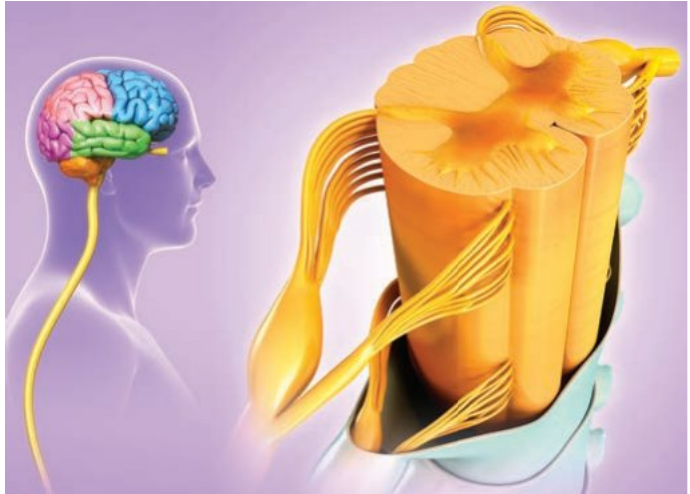
These spinal nerves contain bundles of nerve fibres with different functions. Some fibres connect to sensory receptors throughout the body and carry sensory (afferent) information towards the spinal cord and ultimately to the brain. Other fibres connect to motor (efferent) pathways that carry motor commands from the brain through the spinal cord to muscles in the extremities.
Note
Two Main Roles of the Spinal Cord
The spinal cord performs two main roles:
First, it carries incoming sensory information from the peripheral nervous system towards the brain for processing. For example, when you hold a ball, sensory information about touch and pressure from the skin on your hands travels up the spinal cord to the brain.
Second, it carries motor information initiated by the brain towards the peripheral nervous system. For instance, when playing football, instructions about how to move your hands and legs to kick the ball travel from the brain down the spinal cord to the appropriate muscles.
Important
Spinal Reflexes: An Important Exception
An important exception to these typical functions occurs during spinal reflexes. In these situations, the spinal cord can coordinate responses without requiring input from the brain, allowing for rapid protective reactions.
Spinal reflexes
A spinal reflex is an involuntary and unconscious response to a stimulus that involves the spinal cord but occurs without conscious brain input. These reflexes evolved as survival mechanisms because they allow extremely rapid responses to potentially harmful situations.
Example
Classic Example: The Candle Flame Reflex
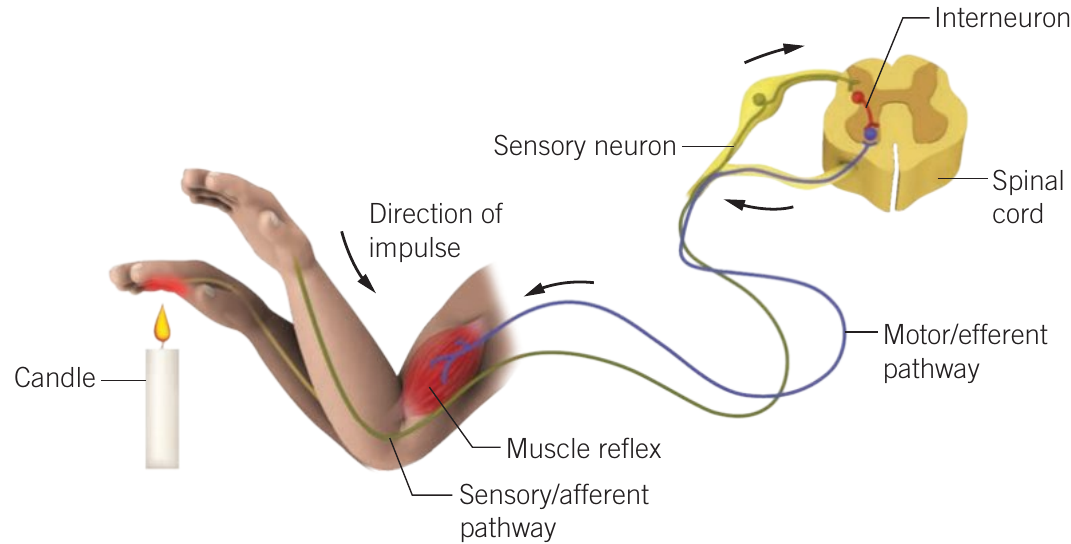
The classic example involves pulling your finger away from a candle flame before you consciously register that you are being burned. This demonstrates how spinal reflexes can protect us faster than conscious thought would allow.
Spinal reflex process
Spinal reflexes follow a specific sequence of five steps, each involving different components of the nervous system. Understanding this sequence helps explain how the body can respond to threats more quickly than would be possible if the signal had to travel all the way to the brain for processing.
Step 1: Sensory stimulus detection
Sensory receptors detect the stimulus. These receptors are specialised nerve endings located throughout the body that respond to specific types of stimulation. When stimulated, they produce an afferent (sensory) impulse. In the candle example, sensory receptors in the fingertips detect the heat from the flame.
Step 2: Sensory transmission
Sensory neurons carry the sensory signal towards the spinal cord. These nerve cells transmit sensory information throughout the nervous system. In the candle example, sensory neurons in the arm carry information about the heat stimulus up towards the spinal cord.
Step 3: Interneuron processing
The sensory information reaches interneurons in the spinal cord. These nerve cells connect motor and sensory neurons by relaying information between them. Crucially, in a spinal reflex, the interneurons initiate an adaptive motor response without requiring input from the brain. This allows the response to occur more quickly than if the signal had to travel to the brain and back. The interneurons in the spinal cord initiate the motor movement to remove the hand from the flame and avoid a burn.
Important
Why Spinal Reflexes Are So Fast
The key advantage of spinal reflexes is speed. By bypassing the brain, the response occurs in a fraction of a second – much faster than if the signal had to travel to the brain for processing and decision-making. This rapid response can be life-saving in dangerous situations.
Step 4: Motor transmission
Information about the motor movement is relayed to motor neurons. These nerve cells transmit motor impulses from the spinal cord to skeletal muscles and smooth muscles throughout the body. A motor impulse travels via motor neurons to the muscles in the arm.
Step 5: Muscle response
The muscles are activated to perform the required movement. In the candle example, the hand withdraws from the flame in an upwards motion, protecting the person from a burn.
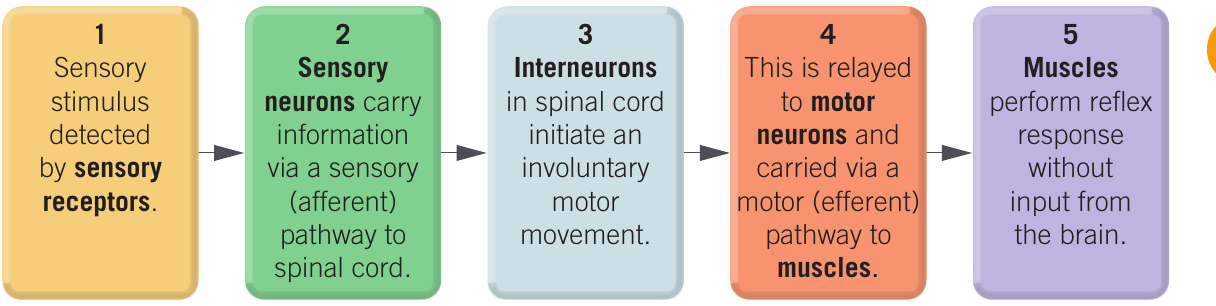
This entire sequence occurs in a fraction of a second, demonstrating the efficiency of spinal reflexes as protective mechanisms. The knee-jerk reflex (patella reflex) is another example of a spinal reflex that occurs when the tendon below the kneecap is tapped, causing the lower leg to kick forward automatically.
Peripheral nervous system
The peripheral nervous system consists of all nerves outside the CNS. This includes cranial nerves extending from the brain and spinal nerves extending from the spinal cord. The main function of the peripheral nervous system is to carry messages between the CNS and the muscles, organs, and glands throughout the body.
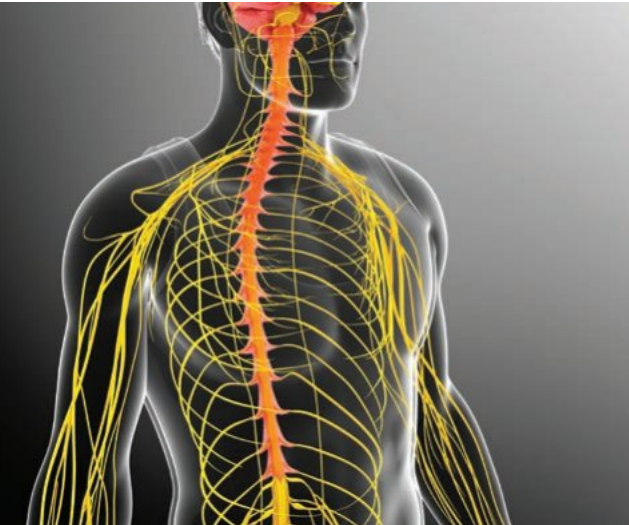
The peripheral nervous system has two major subdivisions with distinct functions: the somatic nervous system and the autonomic nervous system. Each subdivision plays a specific role in enabling different types of responses and maintaining different bodily functions.
Somatic nervous system
The somatic nervous system, sometimes called the "voluntary nervous system", is a subdivision of the peripheral nervous system that contains both sensory (afferent) neurons and motor (efferent) neurons. It enables communication between the body and the CNS in two distinct ways.
Sensory (afferent) function
The somatic nervous system carries sensory information to the CNS (brain and spinal cord). Sensory receptors and sensory neurons in this system gather information collected by the five senses: sight, smell, hearing, taste, and touch. This information is then communicated to the CNS for processing.
Example
Sensory Function in Action
When reading this text, visual information travels from your eyes through the somatic nervous system to your brain. Similarly, if you are touching paper or using a mouse, tactile sensations travel through sensory neurons in the somatic nervous system to your CNS.
Motor (efferent) function
The somatic nervous system carries motor information from the CNS to the body. Motor neurons in this system are responsible for voluntary movements. They communicate movement commands from the CNS back to the body's muscles, organs, and glands. These motor neurons specifically direct the action of skeletal muscles, which are attached to the skeleton and enable voluntary movement. Examples include picking up an object, kicking a ball, or running.
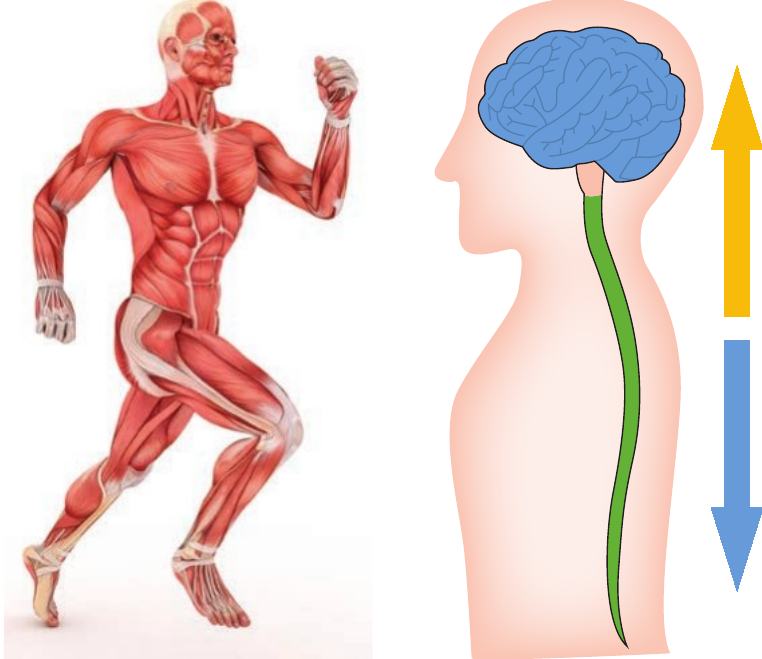
The somatic nervous system therefore serves as the communication pathway for conscious, voluntary interactions between the body and the environment. It allows us to perceive our surroundings through our senses and to respond with deliberate, controlled movements.
Autonomic nervous system
The autonomic nervous system controls the body's internal environment in an autonomous or self-regulated manner. This means it performs most of its functions without conscious awareness or deliberate control. The autonomic nervous system connects directly to internal organs, glands, and visceral muscles (smooth, involuntary muscles found in blood vessels, the stomach, digestive tract, and other internal organs).
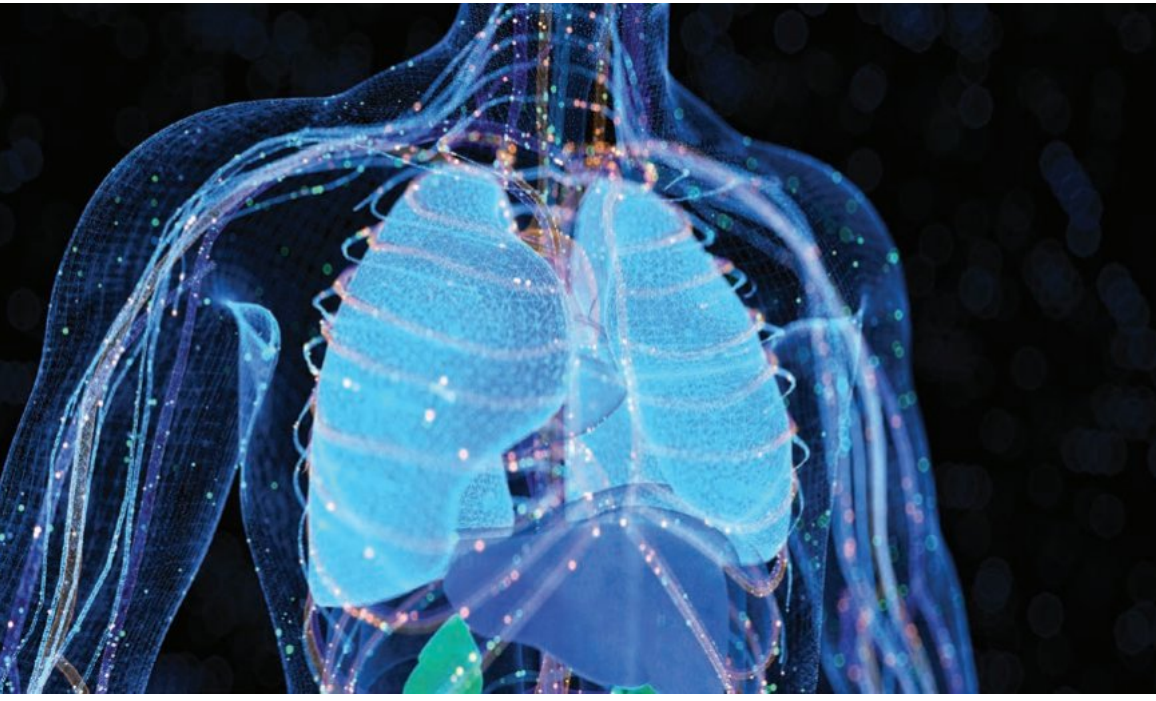
This system is responsible for basic life processes that continue without conscious thought. These include digestion, respiration, heart rate, and blood pressure. The autonomic nervous system constantly provides feedback to the CNS about these processes, making adjustments as needed to maintain homeostasis (internal balance).
The autonomic nervous system plays a particularly important role during stress, fear, and anger. In these situations, the two subdivisions of the autonomic nervous system demonstrate their complementary functions. The sympathetic nervous system dominates during threat responses, whilst the parasympathetic nervous system dominates during calm periods and recovery.
Sympathetic nervous system
The sympathetic nervous system is the subdivision that responds to perceived threats and stressful stimuli. Its main function is to increase arousal and ready the body for quick action. This is commonly known as the fight-or-flight-or-freeze response.
When the sympathetic nervous system is activated, it produces several coordinated physiological changes:
- Pupils dilate to allow more light into the eyes, improving vision
- Heart rate, blood pressure, and breathing rates increase to accelerate oxygen delivery to muscles
- Energy is diverted away from non-essential functions (such as digestion) towards muscles needed for action
- Sugar and fat are released into the bloodstream to provide quick energy
These changes prepare the body to respond effectively to threats or challenges.
Example
Sympathetic Activation: Skydiving
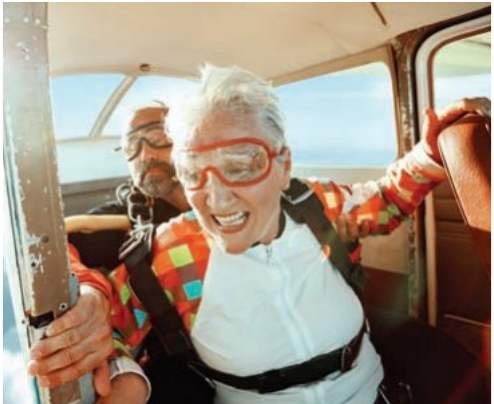
When a person prepares to jump out of an aeroplane, their sympathetic nervous system activates, releasing adrenaline, dilating pupils, increasing heart rate, and redirecting energy from digestion to the muscles. This prepares the body for the intense physical demands of the jump.
Parasympathetic nervous system
The parasympathetic nervous system has two main functions that work to maintain internal balance and counteract sympathetic activation.
Function 1: Maintaining homeostasis
The parasympathetic nervous system maintains a balanced internal state during normal, non-threatening situations. This includes regulating blood sugar levels, controlling saliva secretion, and managing waste elimination. It keeps body temperature around 37.5°C and ensures digestive processes continue smoothly.
Function 2: Returning to calm
After a stressful or threatening situation, the parasympathetic nervous system counterbalances the energising effects of the sympathetic nervous system. It lowers arousal and restores the body to a calm state.
Example
Parasympathetic Response: After the Jump
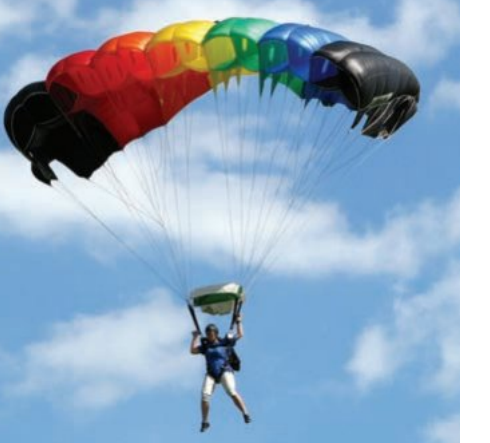
After a person jumps from an aeroplane and their parachute opens, the parasympathetic nervous system gradually decreases heart rate, constricts the bronchi in the lungs, and constricts the pupils. These are opposite effects to those produced by the sympathetic nervous system during the threat response.
Note
Memory Aid: Parasympathetic = Parachute
A helpful memory aid is that "parasympathetic sounds like parachute" – just as a parachute slows your descent, the parasympathetic system slows your arousal and returns you to a calm state.
Important
The Lingering Effect of Arousal
It is important to note that the parasympathetic nervous system can be slower in returning the body to baseline than the sympathetic system is at activating it. This occurs because hormones such as adrenaline, initially released by sympathetic activation, take time to be cleared from the bloodstream. This produces a lingering effect where you may continue to feel aroused even after a threat has passed.
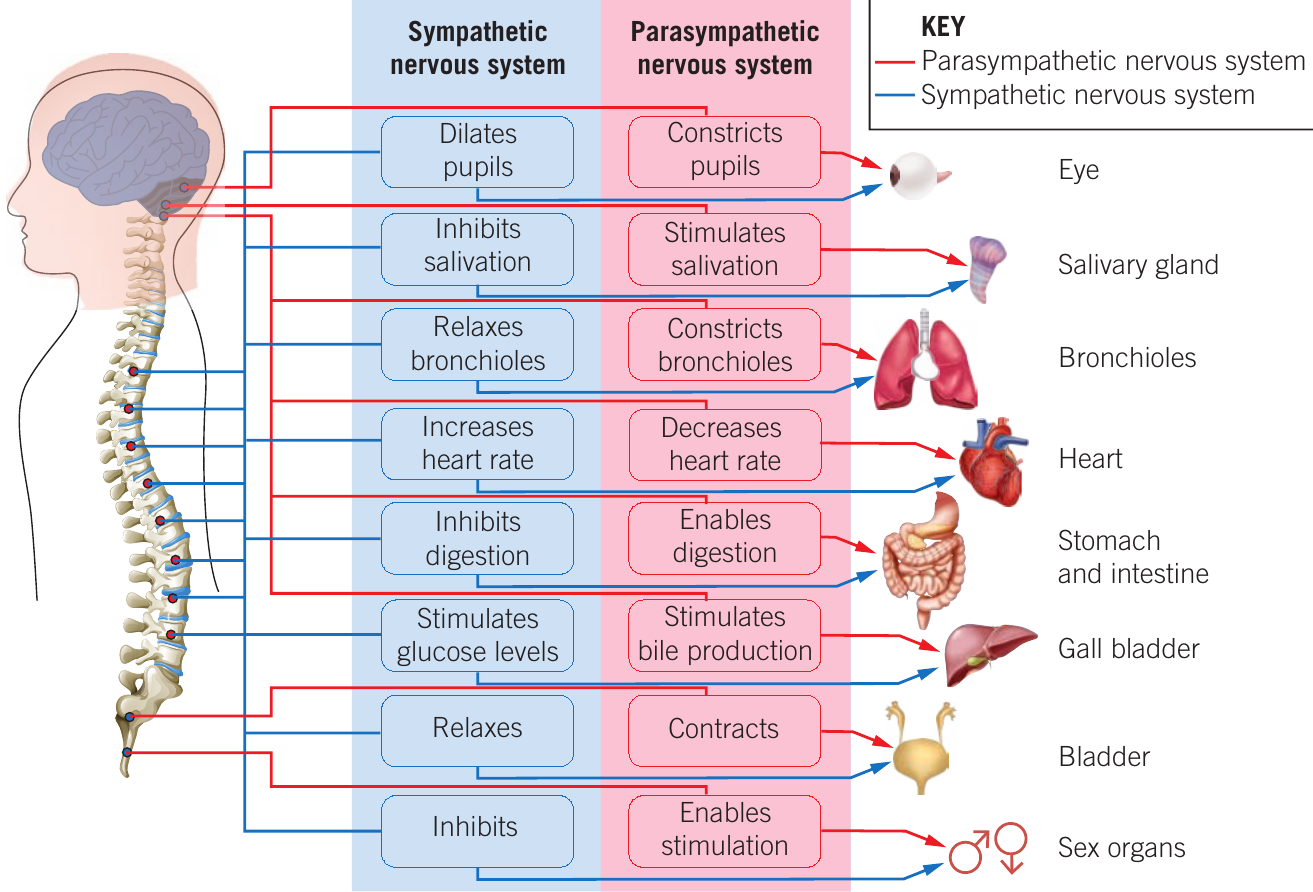
The table summarises the opposing functions of these two autonomic subdivisions across various organ systems.
Conscious and unconscious responses
The nervous system enables two fundamentally different types of responses: conscious responses that require awareness, and unconscious responses that occur automatically without awareness. Understanding the distinction between these response types helps clarify how different parts of the nervous system contribute to behaviour.
Unconscious responses
Unconscious responses are any responses of the nervous system that do not require awareness. Several characteristics distinguish unconscious responses from conscious ones.
Characteristics of unconscious responses:
- Occur without awareness or conscious thought
- Tend to be simpler, usually involving a single response to a stimulus
- Generally do not require learning (they are innate)
- Can occur without conscious input from the brain
- Include involuntary functions regulated by the autonomic nervous system
Examples of unconscious responses include:
- Reflexes such as sneezing or coughing
- Spinal reflexes such as withdrawing your hand from a hot object
- Thermoregulation responses like shivering when cold or sweating when hot
- Blushing when embarrassed
- Digestion of food in the gut
- Blinking

Conscious responses
Conscious responses are any responses of the nervous system that require awareness. These responses differ from unconscious responses in several important ways.
Characteristics of conscious responses:
- Involve awareness of the stimulus and/or response
- Tend to be more complex, often involving a series of responses
- Can involve learning and improvement with practice
- Require conscious input from the CNS (particularly the brain)
- Can involve decision-making or choice
- Include voluntary responses performed by the somatic nervous system
Examples of conscious responses include:
- Putting on a jumper when feeling cold
- Scratching an itch
- Throwing a ball
- Recalling what you ate for breakfast
- Calculating a mathematical problem
- Writing an essay
Example
Conscious Response: Quenching Thirst
When you feel thirsty and decide to pour yourself a drink, this represents a conscious response. The action requires awareness and involves a series of coordinated movements: walking to the fridge, selecting your drink, and pouring it into a glass. Each step involves conscious processing and voluntary muscle control.
Comparing conscious and unconscious responses
| Conscious responses | Unconscious responses |
|---|---|
| Involve awareness | Do not involve awareness |
| More complex, involving a series of responses | Simpler, usually involving a single response to a stimulus |
| Can involve learning | Generally do not involve learning |
| Require conscious input from the brain, such as decision-making or choice | Can occur without conscious input from the brain |
| Can include voluntary responses, such as movements performed by the somatic nervous system | Can include involuntary functions, such as those regulated by the autonomic nervous system |
| Examples: walking or picking something up | Examples: breathing, digestion, blinking, and spinal reflexes |
Note
Why This Distinction Matters
Understanding this distinction helps explain why certain responses can occur very rapidly (unconscious, automatic responses) whilst others require more time for processing and execution (conscious, deliberate responses). Both types of responses are essential for survival and effective functioning in the environment.
Summary
Key Points to Remember:
-
The nervous system has two major divisions: the central nervous system (CNS) comprising the brain and spinal cord, and the peripheral nervous system (PNS) comprising all nerves outside the CNS.
-
The CNS processes and coordinates all sensory information and initiates motor responses, whilst the PNS carries messages between the CNS and the body's muscles, organs, and glands.
-
Spinal reflexes are unconscious, involuntary responses that occur without brain input, following a five-step process involving sensory receptors, sensory neurons, interneurons, motor neurons, and muscle responses.
-
The somatic nervous system (part of the PNS) has two functions: carrying sensory information to the CNS and carrying motor commands from the CNS to skeletal muscles for voluntary movements.
-
The autonomic nervous system (part of the PNS) has two complementary subdivisions: the sympathetic nervous system increases arousal during threats (fight-or-flight response), whilst the parasympathetic nervous system maintains homeostasis and returns the body to calm after stress.