Biological Drawing (AQA A-Level Biology): Revision Notes
📚Revision Notes
Biological Drawing
Biological drawing serves as a fundamental method for developing observational skills in biology. These drawings help students record and analyse what they observe, making it an essential practical skill for A-Level studies.
Essential drawing requirements
All biological drawings must follow specific technical requirements to ensure accuracy and clarity. Drawings must always be completed using a pencil rather than pen, as pencil allows for corrections and produces cleaner lines. The pencil must maintain a sharp point throughout the drawing process, since fine detail cannot be accurately represented with a blunt tip.
Important
Critical Equipment Requirements: Always use a pencil (never pen) and maintain a sharp point throughout. This is non-negotiable for achieving the precision required in scientific biological drawings.
Line quality is particularly important. Draw clear, continuous outlines for all structures without any colouring or shading. The relative sizes of different structures should reflect their actual proportions as observed. When proportional accuracy becomes challenging, construction lines or frames can help maintain correct scale relationships.
Labelling and annotation standards
Proper labelling transforms a simple drawing into a scientific diagram. Use label lines that extend directly from the structure to the label text. These lines must never cross each other or obscure any part of the drawing itself. Each label should connect to a specific structure with precision.
Note
Professional Labelling Standards: Every completed drawing requires an explanatory title that clearly describes what has been illustrated. Additionally, include an indication of the real size of the structures shown or specify the magnification used during observation.
Common errors to avoid
Several frequent mistakes can significantly reduce the quality and scientific value of biological drawings:
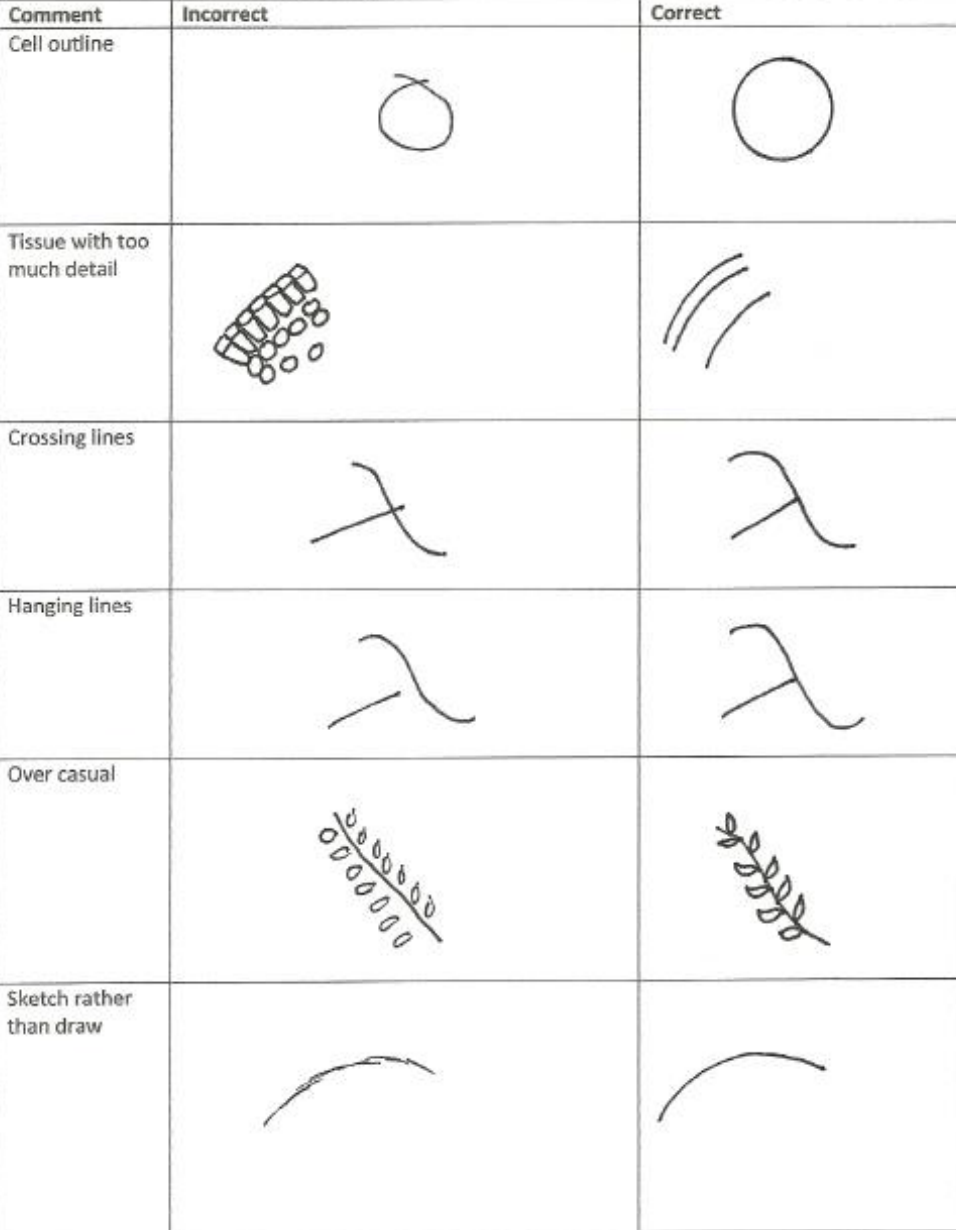
Important
Avoid These Common Mistakes: The following errors can severely compromise the scientific value of your biological drawings. Pay careful attention to these areas during your drawing process.
Types of biological drawing
Cell drawing
Cell drawings focus on showing the internal components of individual cells as observed through an optical microscope. These drawings should include sufficient detail to identify cellular structures clearly, but should typically represent no more than two or three complete cells. This limitation prevents overcrowding and maintains clarity of individual cellular features.
Example
Worked Example: Cell Drawing Approach
Step 1: Select 2-3 representative cells from your field of view
Step 2: Draw smooth, continuous outlines for cell boundaries
Step 3: Add internal structures with clear, precise lines
Step 4: Label key organelles with non-crossing label lines
Tissue map
A tissue map illustrates the location and distribution of different tissue types within an organ or complete organism. Rather than showing cellular detail, these drawings emphasise the outline of each tissue type and their spatial relationships. Since cell differentiation often appears unclear under the microscope, students must apply their background knowledge to interpret and accurately represent what they observe.
Body plan
Body plan drawings create morphological representations of specimens following dissection procedures. These drawings should provide a realistic depiction of the main body structures that have been exposed during dissection. Focus on drawing a smaller section thoroughly rather than attempting a complete but poorly executed illustration.
Note
Quality Over Quantity: When creating body plan drawings, it's better to illustrate fewer structures with high accuracy and detail than to attempt a comprehensive but rushed drawing of the entire specimen.
Summary
Key Points to Remember:
- Always use a sharp pencil for all biological drawings - fine detail requires precision tools
- Maintain accurate relative sizes between structures to reflect true biological proportions
- Label clearly with non-crossing lines that connect directly to specific structures
- Include both an explanatory title and size/magnification information for scientific accuracy
- Focus on quality over quantity - detailed representation of fewer elements is preferable to rushed, incomplete drawings