A Global Sense of Place (AQA A-Level Geography): Revision Notes
📚Revision Notes
A Global Sense of Place
Introduction: How we connect to places
People form strong connections with places at different scales. These connections help shape our identity and sense of belonging. At a national level, shared elements create collective identity:
- Common language
- National anthems
- Flags and symbols
- Cultural and sporting events
Note
Understanding the relationship between place and identity is fundamental to geography. Our personal and collective identities are deeply intertwined with the places we inhabit, visit, and value.
Religion also plays an important role in creating sense of place. Local religious buildings (churches, mosques, synagogues) bring communities together, whilst larger sacred sites like Mecca or Bethlehem attract pilgrims from across the world.
Places also gain meaning through political action. Iconic locations become symbols of movements and change. For example, Tahrir Square in Cairo became the focal point of the 2011 Egyptian Revolution against President Hosni Mubarak. Despite government attempts to ban protests, the square became a powerful symbol of democratic aspirations.
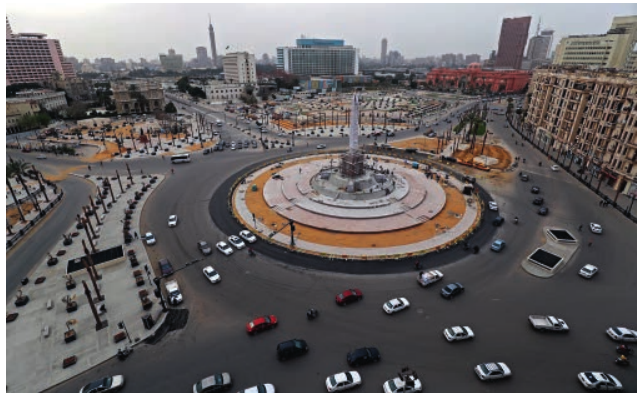
In London, climate change activists from Extinction Rebellion chose Parliament Square for peaceful protests from 2018 onwards, using the symbolic power of the location to draw attention to their cause.
Doreen Massey's theory of place
The economic and social geographer Doreen Massey developed an influential theory about how we should understand places. She challenged traditional thinking and introduced the concept of a 'global sense of place'.
Important
Global sense of place is the understanding that places are not isolated or fixed. Instead, they are dynamic locations with multiple meanings that are constantly shaped by connections to the wider world.
Places are dynamic, not static
Massey argued against viewing places as unchanging or frozen in time. She believed places are constantly evolving through:
- New people arriving and leaving
- Changing economic activities
- Cultural exchange and influence
- Political and social developments
- Technological connections
Note
This was a radical departure from traditional geographic thinking, which often treated places as if they had fixed, unchanging characteristics. Massey's dynamic view recognises that places are always in a state of becoming, never simply being.
This means the character of a place today is different from what it was yesterday, and will be different again tomorrow.
Places have multiple identities
Rather than having a single, fixed identity, places possess various characteristics simultaneously. A single location might be:
- A residential area for some people
- A workplace for others
- A shopping destination
- A cultural meeting point
- A site of historical significance
These different meanings coexist and overlap, creating a rich, complex character.
Example
Understanding Multiple Identities in Practice
Consider a high street in your local town. During the day, it functions as:
- A commercial zone for business owners
- A shopping area for consumers
- A commuting route for workers
In the evening, the same street transforms into:
- A social space for dining and entertainment
- A quieter residential boundary for nearby homes
- A cultural venue for nightlife
Each person experiences and values this place differently, demonstrating how multiple identities can coexist in the same physical location.
Places are unbounded
Massey rejected the idea that places must have clear borders or boundaries. She argued that places extend beyond their physical limits through connections and relationships. A local area is shaped by:
- Goods imported from around the world
- People with diverse origins and backgrounds
- Media and cultural influences from other countries
- Economic ties to distant locations
- Digital connections that transcend physical space
Understanding place through global connections
Massey used her own neighbourhood to illustrate these concepts. She described walking down Kilburn High Road in north-west London, an ordinary shopping street that reveals extraordinary global connections:
Example
Massey's Kilburn High Road: A Local Place with Global Connections
Massey observed her local shopping centre and noted:
- A shop displaying saris and Indian clothing in the window, with life-sized models and reams of cloth
- Advertisements for Bollywood concerts at Wembley Arena featuring international performers
- Notices inviting Hindu community members to religious events
- A Muslim newsagent deeply affected by political events in the Gulf region
Through this everyday example, Massey demonstrated that even the most ordinary local place reflects influences from across the globe. The street is simultaneously:
- A local shopping centre for residents
- Part of London's urban landscape
- Connected to India through commerce and culture
- Linked to Middle Eastern politics and conflicts
- A meeting point for diverse communities
Important
Massey's Key Insight
"What we need, it seems to me, is a global sense of the local, a global sense of place."
This means understanding that local places can only be properly understood by recognising their connections to places beyond. No place exists in isolation - every location is shaped by its relationships with the wider world.
Globalisation and place
The relationship between globalisation and place is complex and debated.
The homogenisation concern
Some geographers worry that globalisation diminishes what makes places special. The forces of global capitalism can:
- Replace local businesses with international chains
- Erode distinctive local cultures and traditions
- Create standardised places that look similar worldwide
- Reduce diversity in architecture, retail, and culture
Important
The Threat of Homogenisation
This process creates homogenised places - locations that have lost their unique character and become similar to places everywhere else. Examples include:
- High streets dominated by the same multinational retailers
- Shopping centres with identical stores
- Standardised housing developments
- International airport terminals that feel the same worldwide
Critics argue this erosion of local distinctiveness means places are losing the very characteristics that make them meaningful and special to their communities.
The enrichment perspective
However, Massey's theory suggests an alternative view. Global connections can enrich places by:
- Bringing diverse cultures together
- Creating new hybrid identities and cultures
- Increasing variety in food, music, and traditions
- Fostering understanding between different communities
- Adding layers of meaning and complexity
Note
Rather than destroying local character, global connections might create new, evolving forms of local identity that are more dynamic and inclusive. From this perspective, globalisation doesn't necessarily make places the same - instead, it can create unique combinations of global influences that produce distinctive local cultures.
Summary
Key Points to Remember
-
Places are dynamic and constantly changing - they are not frozen in time or static, but continuously evolve through new influences and connections.
-
Places have multiple identities simultaneously - different people experience and understand the same place in various ways, creating complex, layered meanings.
-
Places lack fixed boundaries - they extend beyond physical borders through social, economic, and cultural connections to the wider world.
-
Local places reflect global influences - as Massey's Kilburn High Road example shows, even ordinary streets demonstrate international connections through shops, residents, and cultural activities.
-
Globalisation's impact is debated - whilst some argue it creates homogenised, standardised places, others suggest it enriches local areas by bringing diverse global influences together in unique combinations.