Globalisation of Place (AQA A-Level Geography): Revision Notes
📚Revision Notes
Globalisation of Place
Introduction
Globalisation has profoundly affected the character and identity of places around the world. Some argue that global capitalism has reduced the importance of place, creating standardised environments that look similar everywhere. Others highlight how communities resist this trend and how places adapt global influences in unique ways.
A global sense of place
Geographer Doreen Massey developed an important concept called the "global sense of place." She challenged the traditional view that places are static and bounded, arguing instead that places are fundamentally different in nature.
Massey's theory proposes that places are:
- Dynamic - constantly changing and evolving
- Connected - shaped by influences from across the world
- Multiple - containing diverse identities without fixed boundaries
Massey used her local area to demonstrate how even a single street reflects global connections. She described how a typical high street might contain:
- Shops selling products from around the world
- Restaurants representing different cultures and cuisines
- Diverse communities with various cultural backgrounds
- Global brands alongside local businesses
This illustrates that understanding a place requires looking beyond its physical boundaries to see its connections with the wider world. Massey concluded that "what we need is a global sense of the local, a global sense of place."
Important
The global sense of place concept recognises that places cannot be understood in isolation. They are shaped by constant flows of people, ideas, capital and culture from across the world. This challenges the notion that places have fixed, unchanging identities.
Globalisation of place
Homogenisation and clone towns
Globalisation has led to increasing similarities between places worldwide. The spread of global capitalism has created standardised environments that some argue erode local cultures and produce homogenised places.
Evidence of this homogenisation includes:
- Global chain stores appearing on high streets everywhere (Starbucks, Costa, McDonald's)
- Identical shopping centres and retail parks
- Standardised architecture and urban design
- Similar entertainment and leisure facilities
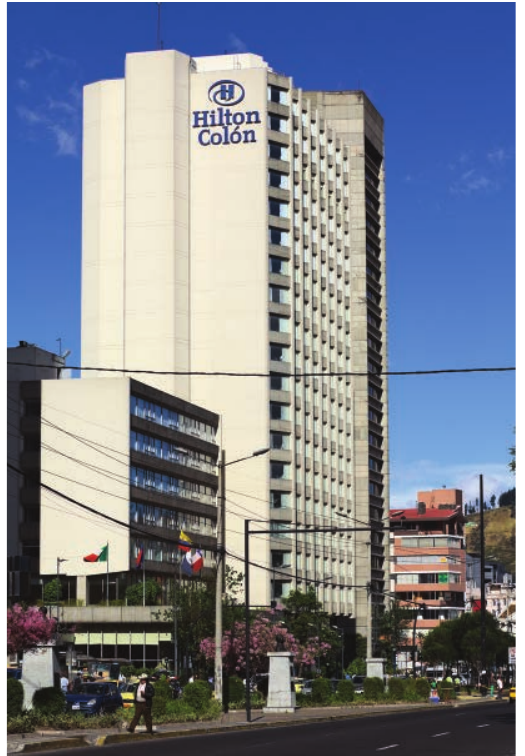
Note
Global hotel chains and multinational corporations create similar experiences regardless of location. This can make it difficult to distinguish one place from another, leading to what some describe as a loss of place identity.
Author James Kunstler described this phenomenon as creating a "geography of nowhere" - places covering huge areas of countryside with identical shopping centres, car parks and roads.
Important
A clone town is a settlement where the high street is dominated by chain stores, creating a standardised appearance with little local distinctiveness. Placelessness describes environments that lack unique character and could be anywhere.
In the UK, the term "clone town" specifically refers to settlements where chain stores have replaced independent local businesses, removing the distinctive character that once defined each place.
Case study: Resistance to globalisation in Totnes
Example
Case Study: The Clonestopping Campaign in Totnes (2012)
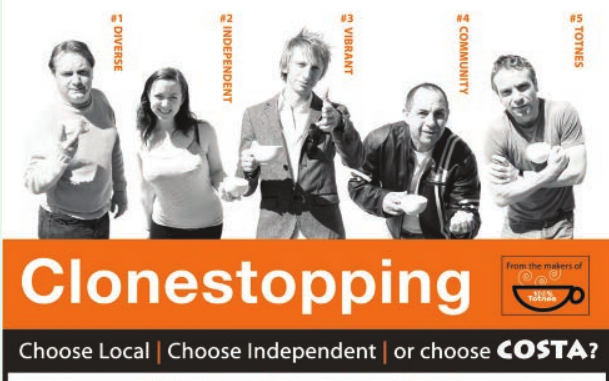
Background: Totnes, a market town in South Devon, provides a powerful example of community resistance to clone town development. In 2012, the coffee chain Costa announced plans to open an outlet in Totnes. The proposal sparked significant community opposition.
Community response:
- Within weeks, three-quarters of the town's population signed a petition
- Residents stated they supported the independent high street
- The opposition was not anti-capitalist but rather a defence of community character
- Locals took pride in independently-owned outlets and wanted to prevent Totnes becoming a "clone town"
Outcome:
- After an eight-month campaign, Costa dropped their plans
- The company later announced: "Costa has recognised the strength of feeling in Totnes against national brands and taken into account the specific circumstances of Totnes"
- However, in 2019, a coffee shop from a different national chain did open in Totnes
Significance: This case demonstrates that community opposition to global brands can sometimes succeed. However, it also shows there may be some inevitability to clone town development over time.
Localisation of place
Localisation represents a deliberate response to globalisation, emphasising local goods, services and economic systems. Place has become a political symbol for communities fighting against global capitalism.
Strategies for localisation
Note
Local currencies: Some communities have introduced local currencies to encourage shopping locally and keep money circulating within the local economy. This represents an active strategy to resist the homogenising effects of globalisation.
- Totnes led the way in 2007 by introducing a local currency
- The Bristol Pound was launched in 2012
- In 2020, Bristol explored creating an e-wallet and local alternatives to GooglePay or ApplePay
- Totnes' local currency ended in 2019
These initiatives aim to strengthen local economies by encouraging residents to spend money at independent businesses rather than chains that extract profits from the area.
Supporting independent businesses: Communities actively promote local shops, cafés and services over national chains. This maintains distinctive local character and keeps economic benefits within the community.
Glocalisation
Not all global companies simply impose identical products everywhere. Many multinational corporations increasingly adapt their offerings to suit local markets and cultures.
Important
Glocalisation describes the process where multinational companies adapt their brand and products to fit the local marketplace, respecting local cultures and preferences. This represents a middle ground between complete globalisation and complete localisation.
McDonald's as an example
McDonald's operates over 38,000 restaurants in more than 100 countries. To increase profits, the company has adapted its approach in different locations:
Menu adaptations:
- In Hindu-majority countries, beef has been removed from the menu (as cows are sacred in Hinduism)
- In Muslim-majority countries, pork has been removed (as pork is forbidden in Islam)
- In countries with strong coffee cultures, the number of McCafés has increased
This demonstrates that even powerful global corporations must respect local cultural values and preferences to succeed. Glocalisation represents a middle ground between complete globalisation and complete localisation.
Summary
Key Points to Remember:
-
Doreen Massey's global sense of place shows that places are dynamic and shaped by global connections, not static or bounded
-
Globalisation has created homogenised places through chain stores and standardised development, leading to "clone towns" with little distinctive character
-
The Totnes case study (2012) demonstrates successful community resistance, with three-quarters of residents opposing Costa coffee to protect local identity
-
Localisation strategies include local currencies and supporting independent businesses to keep money in local economies and maintain place distinctiveness
-
Glocalisation shows that even global corporations like McDonald's must adapt to local cultures, removing beef in Hindu countries and pork in Muslim countries