Meaning and Representation (AQA A-Level Geography): Revision Notes
📚Revision Notes
Meaning and Representation
Introduction
Places are constantly evolving through the movement of people, ideas, wealth and information. Understanding how places change requires us to explore two key dimensions:
- Meaning - how individuals and communities personally perceive and connect with places
- Representation - how places are portrayed and presented to wider society
These dimensions change over time and vary between different people and communities. They shape how we understand and engage with the world around us.
Key terminology
Note
Agents of change are the people and organisations that impact a place through their activities. These include residents, community groups, businesses, local and central government, and the media. They play a crucial role in shaping what places become.
Note
Meaning refers to the individual or collective perceptions that people hold about a place. This is deeply personal and shaped by lived experience.
Note
Perception of place describes how a place is viewed or regarded by people. Media coverage and personal experiences both influence this perception.
Note
Representation is how a place is portrayed or 'seen' in wider society. This includes depictions in media, literature, art and popular culture.
Meanings of place
Sense of place
Sense of place develops through our direct interaction with a location. When we live, work or visit somewhere, we build 'real-life' experiences and memories that create meaning.
Key aspects of sense of place:
- It is the meaning we personally attribute to a place through our connection with it
- Personal experiences and memories are central to developing this sense
- For children, emotional attachment is often the most important factor shaping their understanding of place
- 'Home' is typically the most significant place for people due to these emotional connections
Note
Why sense of place matters:
Research demonstrates that developing a strong sense of place has several benefits:
- Connecting with our surroundings helps us understand and appreciate local resources
- It supports the development of personal identity
- A strong sense of place can inspire stewardship and environmental care
- It nurtures empathy and understanding of others' perspectives
Think about places that were important to you as a child. Perhaps a favourite park or your childhood home? The memories and significance attached to these locations demonstrate how sense of place shapes our understanding of the world.
Perception of place
Whilst sense of place comes from direct experience, perception of place is shaped by what we hear, see or read about a location. This can be influenced by media representation or information from other sources.
Example
Example: Dartmoor National Park
Dartmoor in Devon is closely associated with ideas of nature and wilderness in various artistic and literary works. Arthur Conan Doyle's novel The Hound of the Baskervilles (1902) is one famous example. These cultural representations continue to shape how many people imagine the moor - as wild and remote.
However, this perception hides important human activities that have taken place there, including:
- Mining
- Farming
- Quarrying
- Military training
This example shows how representation can create a particular perception that may not fully reflect reality.
Case study: Belfast - one place, two representations?
Belfast, the capital city of Northern Ireland, demonstrates how a single place can have multiple, contrasting representations. With 340,000 inhabitants, Belfast serves as the region's economic powerhouse. The city has a complex history - it was once the world's largest producer of linen and was where the Titanic was built.
Representation 1: Creative and cultural Belfast
Belfast's city centre has undergone major redevelopment, with different areas rebranded as 'quarters' to emphasise their unique character and culture. The Titanic Quarter represents one of Europe's largest brownfield regeneration projects.
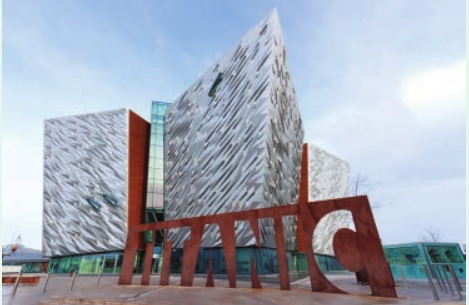
This representation showcases Belfast as:
- A creative and cultural hub
- Home to the Titanic Studios with over 100 companies, including major corporations
- A cosmopolitan, open and welcoming city
- A thriving tourist destination (5.2 million visitor nights in 2018, contributing £400 million to the local economy)
Note
The evidence suggests Belfast has successfully changed its international image. Visitors are now attracted by the city's culture and vibrancy rather than being deterred by past events. The Titanic Belfast Centre alone attracts over four million visitors from 145 countries.
Representation 2: Political and historical Belfast
The second representation connects to Belfast's complex political history, characterised by high levels of religious segregation and conflict during the 30-year period known as 'The Troubles'.
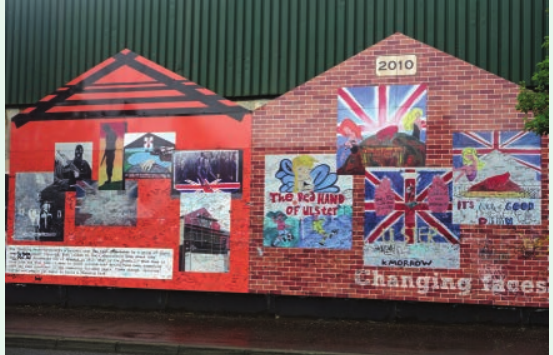
This representation highlights:
- Peace walls constructed to separate Protestant and Catholic communities
- Political murals and parades that reference the city's divided past
- Images of bombs, bullets and balaclavas that dominated newspapers in the late twentieth century
- A city still working to move beyond historical disputes and divisions
Many peace walls now feature murals that tourists visit, and some write their own messages of peace and hope. However, these walls remain symbols of a city grappling with its past.
Understanding multiple representations
Important
Key Principles:
These contrasting representations of Belfast illustrate important principles:
- Different groups attach different values and meanings to the same place
- People hold different views on a place's present and future development
- Representation shapes how outsiders perceive and understand a place
- Places can be portrayed in multiple, sometimes contradictory ways
Both representations reflect genuine aspects of Belfast, but they tell very different stories about the city's identity and character.
Remember!
Summary
Key Points to Remember:
- Meaning develops through personal experience and connection with place, whilst representation is how a place is portrayed to wider society
- Sense of place is shaped by lived experiences, memories and emotional attachment - think about your own important places
- Perception of place can be influenced by media and cultural representations, which may not always show the full picture
- Agents of change (residents, businesses, government, media) all play roles in shaping what places become
- Places can have multiple, contrasting representations that reflect different values and perspectives - Belfast demonstrates this clearly