Atmospheric Pollution (AQA A-Level Geography): Revision Notes
📚Revision Notes
Atmospheric pollution
Introduction to urban environmental issues
Cities face significant environmental challenges that impact both people and the planet. Environmental problems tend to be most severe in poorer cities that are experiencing rapid population growth. These challenges affect the most vulnerable groups within urban societies most severely.
The main environmental concerns in urban areas include pollution of air and water, as well as waste disposal issues. Additionally, urbanisation is leading to a loss of land and therefore natural habitats.
Note
By 2030, it is estimated that urban land area will have expanded by as much as 3.3 million square kilometres globally. This represents an area roughly equivalent to the entire landmass of India, highlighting the massive scale of urban expansion and its environmental implications.
This section focuses on atmospheric pollution as one of the biggest environmental threats facing twenty-first century cities.
What is atmospheric pollution?
When harmful particles and toxic gases are released into the air, this creates atmospheric pollution. This has a negative impact on human health and wellbeing.
Important
Atmospheric pollution is caused by the release of particles and noxious gases into the atmosphere, which can have negative effects on human health.
According to the World Health Organisation (WHO), urban air pollution was 2.5 times higher than recommended safe levels in approximately half of the urban populations being monitored in 2014. This represents a serious public health crisis affecting billions of people worldwide.
Health impacts of air pollution
The consequences of breathing polluted air are severe and far-reaching. Each year, approximately 4.2 million people die prematurely from conditions linked to poor air quality. The main health conditions caused by atmospheric pollution include:
- Stroke – damage to the brain caused by interrupted blood supply
- Heart disease – cardiovascular problems affecting the heart muscle
- Lung cancer – malignant growth in lung tissue
- Chronic respiratory diseases – long-term breathing problems such as asthma and bronchitis
Important
Around 91 per cent of the world's population lives in places where air quality levels exceed WHO limits. This means the vast majority of people globally are breathing air that is harmful to their health.
In London, an estimated 3,799 people died prematurely from air pollutants in 2019. The main culprits were nitrogen dioxide and fine PM2.5 particles.
Example
Worked Example: Impact of Air Quality Management
In 2010, London recorded 9,400 premature deaths from air pollution. By 2019, this figure had decreased to 3,799 premature deaths.
This represents a reduction of approximately 60% over nine years, demonstrating that effective management strategies can significantly improve urban air quality and save lives.
Case study: Dhaka's air pollution
Dhaka, the capital city of Bangladesh, provides a striking example of severe urban air pollution in a rapidly developing megacity.
Background and context
Dhaka is the world's fastest-growing megacity, with as many as 400,000 new migrants arriving each year. The city is located on the bank of the Buriganga River and developed as an important trading centre. Whilst Dhaka has a diverse economy, high literacy rate and rapidly developing infrastructure, it faces major urban challenges including poverty, crime, congestion and political violence.
However, one of the biggest problems is air pollution. In 2020, Dhaka topped the list of cities with the worst atmospheric pollution globally. On many occasions, the pollution is categorised as 'hazardous'.
Sources of pollution
The pollution in Dhaka is caused mainly by two key sources:
Vehicle emissions: The two-stroke engines used in auto-rickshaws (baby-taxis), tempos, mini-trucks and motorcycles have been identified as highly polluting. Estimates suggest that about 90 per cent of the vehicles that travel Dhaka's streets daily are faulty and emit smoke far exceeding the prescribed limit.
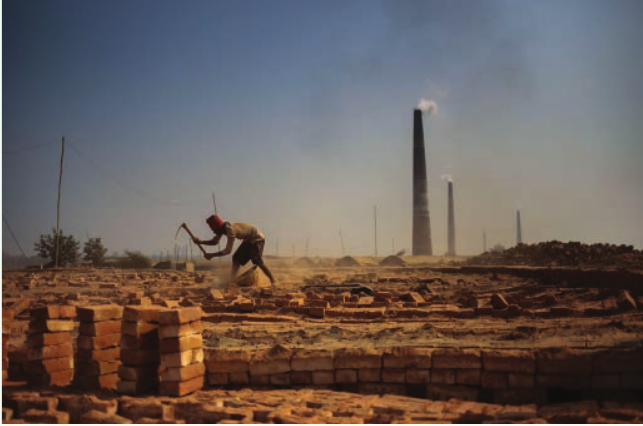
Industrial practices: Pollution comes from factories in and around the periphery of Dhaka, manufacturing products including textiles, fertilisers, pesticides and pharmaceuticals. According to a 2011 World Bank report, brick-making kilns account for about 40 per cent of Dhaka's fine-particle air pollution.
Impacts and responses
The kilns cause 750 premature deaths each year from cancer and cardiopulmonary disease. In 2010, the national government ordered a shutdown of fixed-chimney kilns by July 2013.
Note
Facing opposition from kiln owners, the government has extended that deadline several times, demonstrating the challenge of balancing environmental protection with economic interests. This highlights a common dilemma in developing nations where economic development and environmental protection can appear to be in conflict.
Understanding pollution episodes
Human activity produces pollutants, but what happens to these pollutants once they are released depends on weather conditions. During wet or windy conditions, pollution concentrations remain relatively low. Rain washes pollutants away and wind disperses them over a wider area.
However, during periods of still, hot weather, pollutants can accumulate to dangerous concentrations. These events are known as pollution episodes.
Important
During pollution episodes, harmful amounts of pollution build up in the atmosphere, creating serious health risks for urban populations, particularly vulnerable groups such as:
- Children
- Elderly people
- Those with existing respiratory conditions
These episodes typically occur during periods of still, hot weather when there is insufficient wind to disperse pollutants and no rain to wash them away.
Managing air pollution
Various strategies can be implemented to improve air quality in urban areas. These approaches work by either reducing the amount of pollution produced or by helping to disperse and absorb pollutants already in the atmosphere.
Key management strategies
Energy-efficient housing: Ensuring that houses are energy efficient reduces the amount of fuel needed for heating and cooling. This decreases emissions from power generation and domestic heating systems.
Public transport provision: When urban development is well served by public transport routes, fewer people rely on private vehicles. This significantly reduces vehicle emissions, which are a major source of urban air pollution.
Safe street design: Creating streets that are appealing and safe for pedestrians and cyclists encourages people to choose active travel over motorised transport. This not only reduces emissions but also provides health benefits through increased physical activity.
Effective waste management: When waste is well managed, less material is burned or left to decompose in ways that release pollutants into the atmosphere.
The role of green spaces
Parks and woodland areas play a crucial role in managing air quality. Trees and plants absorb pollutants and produce oxygen through photosynthesis.
Note
The environmental company AECOM has calculated that London's 8.3 million trees provide \£95 million worth of air filtration every year in terms of health benefits avoided. These green spaces serve as a catalyst for local economic development and the promotion of healthy urban lifestyles.
This demonstrates the multiple benefits of urban green spaces – they not only improve air quality but also contribute to economic development and public health through recreation and exercise opportunities.
Technology and monitoring
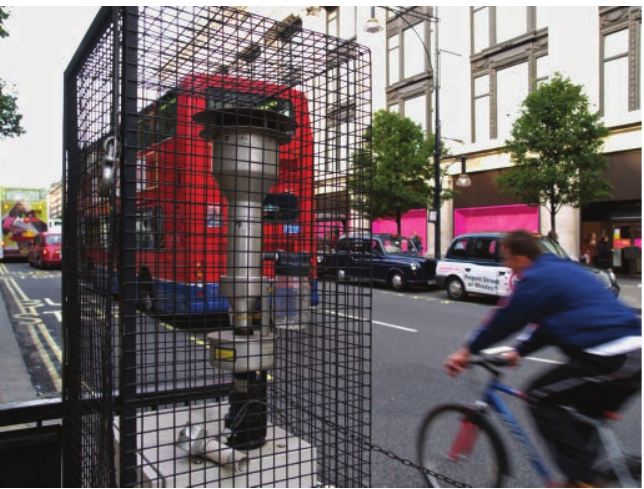
City pollution levels are monitored continuously using sophisticated monitoring stations. This data allows authorities and the public to examine geographical patterns and take appropriate action during periods of high pollution.
In London, monitoring stations track pollution levels across the city. The data is made publicly available through services like www.londonair.org.uk, which provides a 'nowcast' showing current pollution levels in detail across London. This information is compared with the government's Air Pollution Index.
The Daily Air Quality Index (DAQI) provides details on pollution levels in the UK and offers recommended actions and health advice. For European cities, the Urban Air Quality Index is updated every hour and allows comparison of air quality over a 24-hour period.
Note
Social media is increasingly used to convey information to the general public. For example, UK-AIR provides automated tweets about current and forecast air quality, including warnings about episodes of poor air quality. This helps people make informed decisions about outdoor activities and take precautions when necessary.
Challenges in lower-income countries
There are greater concerns about air pollution in low- and middle-income countries, which often lack the finances and legislation to adequately tackle the problem.
Over 90 per cent of air pollution in these countries is attributed to vehicle emissions. This is due to several factors:
- High numbers of older vehicles on the roads
- Poor vehicle maintenance standards
- Low fuel quality that produces more pollutants when burned
Note
More recently, international schemes such as the UN Partnership for Clean Fuels and Vehicles aim to improve air quality in these regions. There has been greater investment in improving road quality, and commitments have been made to promote non-motorised journeys such as walking and cycling.
These initiatives represent a shift towards recognising air pollution as a global issue requiring international cooperation and support.
Summary
Key Points to Remember:
-
Atmospheric pollution is caused by harmful particles and gases released into the air, affecting human health through stroke, heart disease, lung cancer and respiratory diseases.
-
Around 91% of the world's population lives in areas where air quality exceeds WHO safe limits, with approximately 4.2 million premature deaths occurring annually due to air pollution.
-
Dhaka exemplifies severe urban air pollution in a rapidly growing megacity, with vehicle emissions and brick kilns being the primary pollution sources, causing 750 premature deaths yearly.
-
Management strategies include promoting public transport, creating pedestrian-friendly streets, ensuring energy-efficient housing, and maintaining green spaces – London's trees provide \£95 million in health benefits through air filtration.
-
Continuous monitoring using technology and social media helps inform the public about pollution levels, enabling people to take protective action during pollution episodes when still, hot weather causes pollutants to accumulate.