Causes of Urban Growth (AQA A-Level Geography): Revision Notes
📚Revision Notes
Causes of Urban Growth
Understanding why cities grow is essential to studying contemporary urban environments. Over the past 30 years, the world has witnessed rapid urban expansion, particularly in Asia. This growth creates both opportunities and challenges for millions of people.
Understanding megacities and urban growth
The development of megacities has been one of the most striking features of recent decades. These massive urban centres have grown at an unprecedented rate.
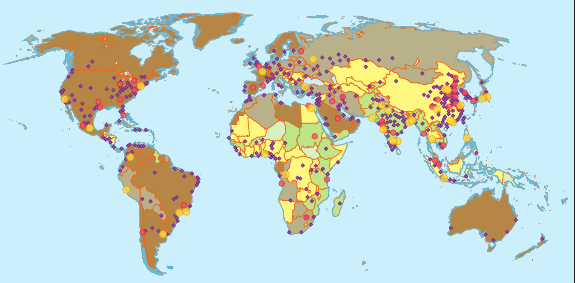
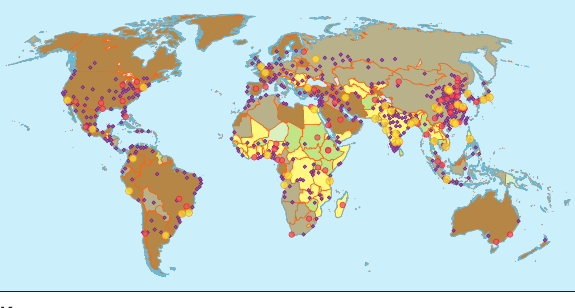
In 1990, there were just 10 megacities worldwide. By 2020, this number had tripled to 30. The United Nations predicts there will be 43 megacities by 2030, housing over 13% of the global population. This growth is concentrated heavily in Asia, where cities like Tokyo, Delhi, Shanghai, and Mumbai have populations exceeding 20 million people.
Note
Tokyo stood as the world's largest city in 2015 with over 37.4 million inhabitants. Eight other cities joined this elite group with populations over 20 million: Delhi, Shanghai, São Paulo, Mexico City, Dhaka, Cairo, Beijing, and Mumbai. Looking ahead, Delhi's population is projected to increase by more than 10 million between 2018 and 2030, whilst Tokyo is expected to decline by almost 900,000.
Important
Key Definitions
Megacity – A city or urban agglomeration (an urban area incorporating several large towns or cities) with a population of more than 10 million people. London achieved megacity status in 2013 when counting residents in the Greater London area.
Metacity – A conurbation with more than 20 million people. The Chinese government plans to merge nine cities in the Pearl River Delta, creating an urban area 26 times larger than Greater London.
Urban growth – An increase in the number of urban dwellers. Classifications vary by country but usually include criteria such as population size, population density, average distance between buildings, and legal or administrative boundaries.
Urbanisation – An increase in the proportion of a country's population that lives in towns and cities. The two main causes are natural population growth and migration from rural to urban areas.
The two main causes of urbanisation
Urbanisation plays a crucial role in human affairs. It has historically been linked to other important economic and social transformations that bring greater geographic mobility, lower fertility rates, and longer life expectancy.
Cities hold significant economic and political power. They contain much of a nation's economic activity, government institutions, businesses, and transport networks. They offer higher levels of education, better healthcare, easier access to social services, and greater opportunities for cultural and political participation.
Example
Urban Economic Power: São Paulo and Nairobi
São Paulo, Brazil's financial capital, represented 10.7% of all Brazilian GDP in 2020. It was also home to 63% of the transnational corporations operating in Brazil.
Similarly, Nairobi, Kenya, with just 8.4% of the country's population, accounted for almost 20% of Kenya's GDP.
These examples demonstrate how cities concentrate economic activity and power far beyond their population share.
Natural population growth
Urban areas attract younger people, creating relatively young age profiles in cities. This demographic pattern is a key driver of urban growth.
Traditionally across the world, it has been young adults aged 15-40 years who migrate to cities seeking higher paid jobs, better educational opportunities, and greater social and cultural diversity. Between 2001 and 2011, the population of large city centres in England and Wales more than doubled. Residents aged 22-29 nearly tripled to make up almost half of the total population.
These migrants are typically in their fertile years – the period during which people have children. This means birth rates in cities are higher than in surrounding rural areas.
Example
'Nappy Valley' in London
In London, an area stretching from Clapham (south of the River Thames) westwards to Fulham (north of the river) has been termed 'Nappy Valley'. This nickname reflects the high proportion of young families living there.
Previously, professional couples with young children would move to the suburbs when they could afford it. However, rising costs and time involved in commuting have encouraged more young families to remain in the city, contributing to natural population increase.
Rural-urban migration
The movement of people from countryside to cities is often explained using 'push' and 'pull' factors.
Push factors drive people away from rural areas. These are particularly important in low-income countries where rural poverty is severe.
Pull factors attract people to urban areas. These offer the prospect of improved living standards and opportunities.
Push factors: Why people leave rural areas
Push factors are largely driven by poverty and hardship in rural areas:
-
Population growth – The same area of agricultural land must support increasing numbers of people. This leads to over-farming, soil erosion, and declining crop yields.
-
Agricultural problems – Low rainfall can cause desertification. Systems of inheritance may subdivide land into plots too small to support a family. Debt on loans taken out for agricultural improvements can become overwhelming.
-
Inadequate healthcare – High levels of local diseases combined with poor medical provision make rural life difficult, particularly for families with young children.
-
Global agriculture – Farming is increasingly organised on a global scale. Land previously used to grow food for local people is now used to produce cash crops for sale to higher income countries. Many traditional rural communities have been driven off their land and into cities.
-
Natural disasters – Floods, tropical storms, and earthquakes force people to flee rural areas. Many do not return once they have relocated.
-
Wars and civil strife – Armed conflict drives people from their land, seeking safety in urban areas.
Important
Push Factors in Low-Income Countries
In low-income nations, push factors are more important than pull factors. The severity of rural poverty, agricultural problems, and disasters drives people from rural areas more strongly than urban attractions pull them. This is a crucial distinction when understanding migration patterns in different economic contexts.
Pull factors: Why people move to cities
Pull factors represent the opportunities and attractions of urban life:
-
Employment opportunities – Factories and service industries (such as hotels) offer jobs with better pay than agricultural work in rural areas. There is increasingly high demand for unskilled labour in cities.
-
Informal sector earnings – Many people earn money through informal economic activities, such as selling goods on the street or providing transport services (taxi or rickshaw driver).
-
Better social provisions – Cities offer improved access to basic needs including education and healthcare. They also provide entertainment and tourism facilities.
-
Perceived quality of life – Cities are often portrayed attractively in the media, creating an appealing image that draws people in.
Summary
Key Points to Remember:
-
Two main causes: Urbanisation results from natural population growth and rural-urban migration.
-
Natural growth matters: Young migrants in their fertile years have children in cities, creating higher birth rates than in surrounding rural areas.
-
Push factors dominate in poorer countries: In low-income nations, poverty, agricultural problems, and disasters drive people from rural areas more strongly than urban attractions pull them.
-
Pull factors offer prospects: Employment, earnings from informal work, better social services, and improved quality of life attract people to cities.
-
Megacities are growing rapidly: There were 30 megacities in 2020, projected to reach 43 by 2030, concentrated mainly in Asia.