Consequences of Urbanisation and Urban Growth (AQA A-Level Geography): Revision Notes
📚Revision Notes
Consequences of Urbanisation and Urban Growth
Urban areas worldwide face similar challenges regardless of their economic status, including housing problems, traffic congestion, waste management difficulties, crime, and pollution. However, the specific nature and severity of these issues often relate to the geographical characteristics of each city, such as its topography, climate, and function. This section explores the major consequences that result from rapid urbanisation and urban growth.
Note
The challenges faced by cities vary significantly based on their geographical context. A coastal city will face different issues than a landlocked mountain city, and a tropical climate presents different waste management challenges than a temperate one. Understanding these geographical factors is essential for developing effective urban planning solutions.
Urban sprawl

Important
Urban sprawl describes the outward expansion of an urban area into the surrounding countryside. This process is closely linked to urbanisation and suburbanisation, and typically occurs in an unplanned and unregulated manner.
Urban sprawl creates numerous negative impacts on both the environment and urban functionality:
Infrastructure and economic costs
Expanding urban areas require extensive infrastructure networks. New roads, water pipes, electricity cables, and telecommunications wires must be installed across low-density rural areas. This is economically inefficient compared to serving compact urban developments with the same number of households. The costs of providing services to sprawling suburbs are significantly higher per person.
Environmental damage
The spread of urban development into rural areas is recognised as one of the primary causes of wildlife habitat destruction. Natural ecosystems are fragmented or completely destroyed as concrete and asphalt replace green spaces. This biodiversity loss has long-term ecological consequences.
Transport and pollution impacts
Urban sprawl increases commuting distances between suburbs and city centres, leading to greater fuel consumption and traffic congestion. The car-dependent lifestyle associated with sprawl results in increased fossil fuel consumption and higher emissions of greenhouse gases. These areas also tend to experience elevated temperatures due to the urban heat island effect, where built-up areas retain more heat than natural landscapes.
Loss of agricultural land
As cities expand outwards, valuable farmland and open spaces disappear. This reduces local food production sources and increases food miles – the distance food must travel from production to consumption. Communities become more dependent on food transported from distant locations.
Water management problems
Covering the countryside with impermeable surfaces such as concrete and tarmac prevents rainwater from naturally soaking into the ground and replenishing groundwater aquifers. Instead, water runs off quickly, which can lead to increased flood risk in both urban and downstream rural areas. The natural water cycle is disrupted.
Decentralisation and homogenisation
An important consequence of sprawl has been the movement of people, industry, and retail businesses outward from city centres. This process, known as decentralisation, has been blamed for the decline of traditional retail in many city centres. As businesses relocate to suburban areas and edge locations, cities become increasingly similar to one another, resulting in what geographers call homogenisation of the landscape.
Note
Decentralisation doesn't just affect retail. It impacts employment patterns, commuting times, and the vitality of city centres. When major employers move to suburban locations, it can create "dead zones" in city centres outside of business hours, reducing safety and community engagement.
Edge cities
In many urban areas, particularly in the United States, large edge-of-city complexes have developed containing shopping centres and leisure facilities. In some cases, completely new self-contained settlements have emerged beyond the original city boundary. These are known as edge cities – they function as cities in their own right with their own employment, retail, and residential areas.
Shortage of housing in lower-income countries
Population density in urban areas tends to be high, and one major consequence is a shortage of accommodation. This leads to the presence of extensive areas of informal and often inadequate housing. These settlements typically develop on the edge of cities or in areas of low land value that are vulnerable to environmental hazards such as flooding or landslides. They may also be found adjacent to transport networks or in areas experiencing high levels of air, noise, or water pollution.
These settlements generally have limited access to basic infrastructure including water supply, electricity, and waste disposal systems. They also lack essential services such as health centres and schools.
Global statistics on slum populations
Important
In 2017, it was estimated that approximately 900 million people lived in slums worldwide. However, when all different types of informal settlements are included in the count, this figure rises dramatically to 1.6 billion people. This represents 25 per cent of the world's urban population – meaning one in four city dwellers lives in inadequate housing conditions.
Projections indicate the problem is worsening. By 2030, it is estimated that one in four people globally will live in a slum or other informal settlement. The scale of the challenge is immense – Mumbai alone had more than 41 million slum dwellers in 2020. Throughout India, the number of people residing in slums is estimated to be 104 million, representing nine per cent of the total population.
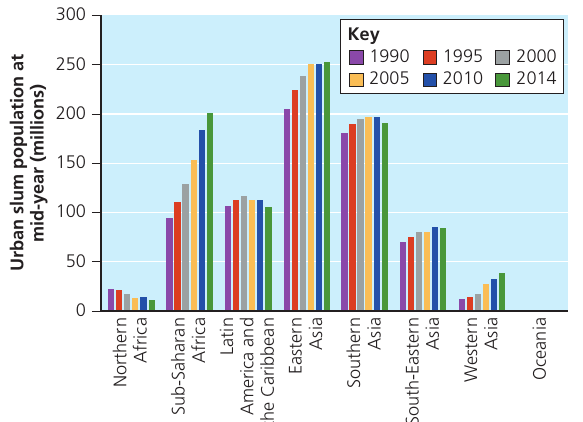
The bar chart above demonstrates how the proportion of people living in urban slums has changed across different world regions between 1990 and 2014. The patterns vary significantly by region. For example, in Sub-Saharan Africa, slum populations continued to grow at an increasing rate, whilst in other regions the rate slowed down or even declined (such as in Northern Africa). These changes should be viewed positively in the context of the Millennium Development Goal 7 (Ensure environmental sustainability), which aimed to improve the lives of slum dwellers.
Note
Between 2000 and 2014, UN reports indicate that more than 320 million people living in slums gained access to improved water sources, better sanitation facilities, or more durable and less crowded housing. However, the total number of people living in slums continued to increase, highlighting that while progress is being made, the scale of urbanisation outpaces improvement efforts.
One of the targets in the post-2015 sustainable development goals is to 'ensure access for all to adequate, safe and affordable housing and basic services, and upgrade slums by 2030.'
Terminology for informal settlements
Informal settlements are known by different terms depending on their location:
- In the hills of Rio de Janeiro, Brazil, they are called favelas
- In parts of India, they are known as bustees
- In West Africa, they are called bidonvilles
The term 'slum housing' itself has been criticised by some as a political label. In Mumbai, for example, settlements such as Shivaji Nagar and Dharavi are referred to by some residents as 'homegrown neighbourhoods'. The argument is that these areas developed gradually by the people who live there, with help from local construction artisans, and usually with minimal or no support from government authorities.
Approaches to addressing informal settlements
Historically, the most extreme strategy adopted by authorities was to eradicate slums completely. However, this approach simply relocated the problem elsewhere rather than solving it. A more common and constructive approach has been to acknowledge the existence of slums and provide assistance in the form of building materials or basic services.
These 'self-help' or 'site and service' schemes have proved remarkably successful in some cities. However, the quantity and quality of housing remains inadequate in most urban areas around the world.
Note
More recent initiatives have focused on slum upgrading programmes. These seek to improve existing slums in partnership with local non-governmental organisations (NGOs) and development organisations. The programmes focus on securing rights for dwellers, formalising land tenure rights, and providing basic amenities such as electricity, clean water, and waste disposal systems.
One notable organisation is Shack/Slum Dwellers International (SDI), which gives a voice to those living in informal settlements and links up poor communities across Africa, Asia, and Latin America. The organisation's philosophy is that slum dwellers should share their knowledge and expertise so they are not excluded from the economic and political processes happening in their cities.
Case study: Dharavi, Mumbai, India
Example
Case Study: Dharavi, Mumbai, India
Setting and population
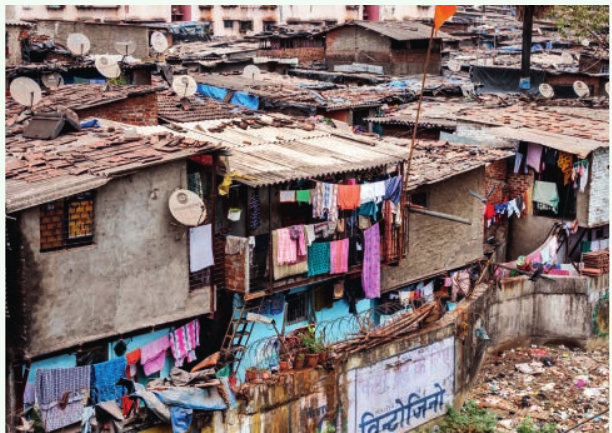
Dharavi, home to more than one million people, is Asia's largest slum. It is located on prime real estate in the centre of Mumbai. Many of the residents are second-generation residents, whose parents moved there many years ago.
Physical characteristics
The maze of narrow dirty lanes, open sewers, and tightly packed huts is vastly different from its origins as a fishing village. Most of the huts have a constant supply of electricity, often have a gas stove for cooking, and many even have a small colour television with a cable connection.
Economic activity
Dharavi is a thriving hub of small-scale manufacturing industries. Small manufacturing units produce leather goods, aluminium bricks, pottery, and also recycle plastics for both the Indian and international markets. This demonstrates that informal settlements can be economically productive areas rather than simply places of poverty.
Redevelopment plans
The state government has developed a $1.1 billion plan to redevelop the area and transform it into a modern township, complete with proper housing, shopping complexes, hospitals, and schools. However, such plans raise questions about whether the existing community character and economic networks can be preserved during redevelopment.
Shortage of affordable housing in higher-income cities
Whilst lower-income countries struggle with slums and informal settlements, higher-income cities face a different housing crisis – affordability. The shortage of affordable housing has become a critical problem in many wealthy cities as rising demand for accommodation has led to dramatic increases in both house prices and rental costs.
The London example
Example
Example: London's Housing Crisis
In London, average house prices rose by almost 70 per cent between 2010 and 2019. This dramatic increase was fuelled by several factors:
- In-migration of people seeking employment and opportunities
- Gentrification – the buying and renovating of properties by wealthy individuals, often in previously run-down areas
- The purchasing of properties by wealthy foreign investors
London's status as a major global hub and the presence of overseas investors who buy properties to diversify their international portfolios have pushed prices beyond the reach of many ordinary workers. Many essential workers such as teachers, nurses, and emergency service personnel can no longer afford to live in the city where they work.
Lack of urban services and waste disposal
Financial constraints in lower-income countries often result in a shortage of basic urban services such as clean water and reliable electricity. The maintenance of essential infrastructure such as roads, sewers, and drainage systems is also limited. This infrastructure deficit can result in traffic congestion, polluted watercourses, flooding, and the rapid spread of disease.
Water and electricity shortages
Important
In India, old pipeline infrastructure has not kept pace with urbanisation. As a result, in 2015, only five out of every ten units of piped water actually reached households in 42 Indian cities and towns, including New Delhi. The remainder was lost through leaks and illegal connections.
Waste disposal challenges
Waste disposal poses a further significant problem. The amount of waste increases year-on-year, but there are economic, physical, and environmental constraints on its disposal.
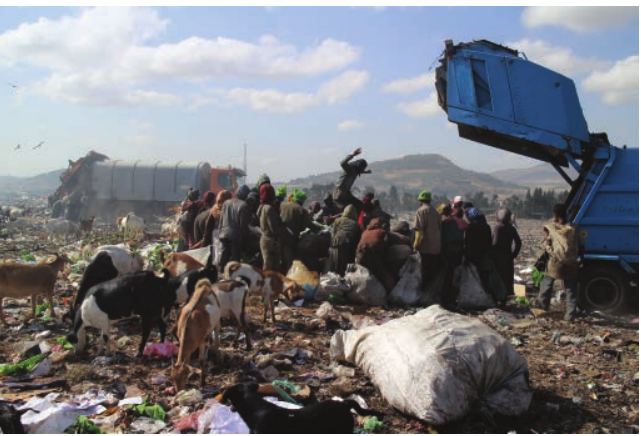
In Addis Ababa, Ethiopia, the city authority is only able to deal with two-thirds of the rubbish created by the rapidly growing urban population. The remainder is either left to private contractors to collect or is simply dumped on streets and in rivers, creating a huge health hazard.
At Koshe, a huge landfill site on the edge of the city, families live in makeshift housing and search for anything they can use for themselves, or resell.
Informal recycling economy
In other cities, refuse is seen as an opportunity to generate income. In Nairobi, recycling forms an important part of the everyday economy:
- Old car tyres are cut up and used to make cheap sandals
- Washing machine doors are repurposed as kitchen bowls, and the drums serve as storage units
- Glass bottles are collected and returned to stores for refilling
- Food waste is collected and fed to animals or composted for use on vegetable plots
- Tin cans and old oil drums are used to make charcoal stoves, lamps, buckets, and metal tips for ploughs
Note
Whilst this informal recycling demonstrates resourcefulness and helps divert waste from landfills, it does not address the fundamental problem of inadequate formal waste management systems. These informal recyclers often work in dangerous conditions without proper safety equipment or health protections.
Unemployment and under-employment
Since a high proportion of the people who move to cities are relatively young, there is considerable pressure on urban economies to create sufficient employment opportunities. Unemployment rates in cities are typically high, although official statistics are difficult to obtain. Many migrants eventually find employment in informal work such as street hawking or selling goods from small stalls.
Important
Under-employment refers to a situation in which a person is not doing work that makes full use of their skills and abilities. This commonly occurs when a migrant moves to a new city and cannot immediately find work that matches their qualifications or experience.
Under-employment represents wasted human potential and can lead to social problems including poverty, frustration, and inequality.
Transport issues
The processes of urbanisation and suburbanisation have led to increased traffic in cities across the world. This has created more congestion and pollution, which damages human health and results in billions of pounds in lost productivity.
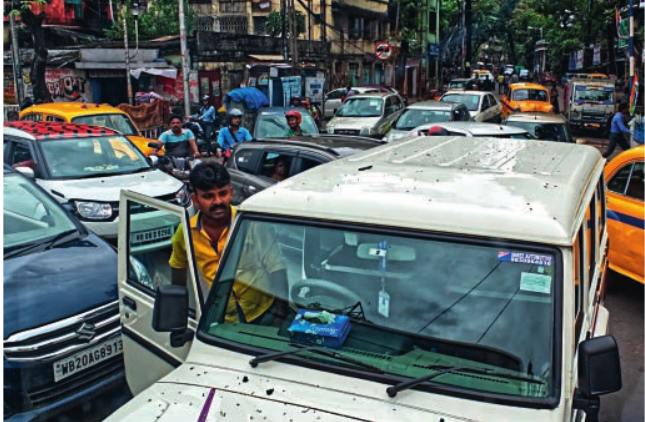
The spread of houses into the suburbs and beyond has created surges of morning and evening commuters. Traffic flows increase during peak hours for shopping, entertainment, and other commercial services, adding to the congestion problem.
Failed solutions
During the car boom of the 1960s, city planners built more and wider roads as a solution to traffic problems. However, this approach did not work as intended. The more roads that were created, the more cars they attracted.
Important
A 1997 study in California found that new, additional traffic will fill up to 90 per cent of any increase in road capacity within just five years. No matter how much money is spent on traffic infrastructure, congestion and parking problems seem to worsen rather than improve.
Health and economic impacts
Traffic congestion has serious consequences:
- Air pollution from vehicle emissions damages respiratory health
- Noise pollution affects mental wellbeing
- Lost productivity costs billions annually
- Fuel is wasted whilst vehicles sit in traffic
- Stress levels increase for commuters
Contemporary urban processes
Higher-income countries have experienced a much slower rate of urbanisation in recent decades, and some cities have even witnessed a decline in population numbers. Rather than moving into urban areas as was typical during the industrial periods, a more significant trend has been the movement outwards from city centres.
Important
Suburbanisation is the movement of people from living in the inner parts of a city to living on the outer edges. It has been facilitated by the development of transport networks and the increase in ownership of private cars. These changes have allowed people to commute to work from greater distances.
Historical development in the UK
The towns and cities of the UK demonstrate the effects of past suburbanisation patterns. Different periods have left distinctive marks on the urban landscape:
1930s: Ribbon development
In the 1930s, there were few planning controls and urban growth took place alongside main roads. This was known as ribbon development. By the 1940s, this uncontrolled growth between the 'ribbons' became a cause for concern.
1940s: Green belts
Concern about unchecked urban sprawl led to the creation of green belts – designated areas of open space and low-density land use around towns where further development was strictly controlled. The purpose was to prevent towns from merging into one continuous urban area and to preserve countryside for recreation and agriculture.
Note
Green belts serve multiple functions beyond preventing urban sprawl. They provide recreational spaces for urban populations, protect agricultural land, preserve biodiversity, and help maintain the distinct identities of neighbouring towns and cities.
1950s and 1960s: Council housing expansion
Large-scale construction of council housing took place on the only land available at the time – the suburban fringe. This period saw significant expansion of suburban areas.
1970s onwards: Home ownership growth
From the 1970s, there was a move towards home ownership. This led to private housing estates being built, also on the urban fringe. Building in these areas allowed houses to have more land for gardens and provided more public open space compared to dense inner-city development.
Recent developments: Edge cities
As car ownership grew, the edge of towns, where more land was available for car parking and expansion, became the favoured location for new offices, factories, and shopping outlets. In a number of cases, strict control of green belt development was ignored, leading to the emergence of edge cities.
In recent years, new housing estates have been built in suburban areas, along with local shopping centres and other amenities, continuing the pattern of outward urban growth.
Key terms
Important
Counter-urbanisation – The movement of people from large urban areas into smaller urban areas or into rural areas, thereby leapfrogging over the rural-urban fringe. It can mean daily commuting, but can also require lifestyle changes and the increased use of ICT.
Important
Decentralisation – The movement of population and industry from the urban centre to outlying areas. Also refers to the movement of government institutions or headquarters of businesses away from the central/core areas of a country.
Important
Deindustrialisation – The loss of jobs in the manufacturing sector, which occurred in the UK in the second half of the twentieth century.
Important
Edge city – A self-contained settlement which has emerged beyond the original city boundary and developed as a city in its own right.
Important
Gentrification – The buying and renovating of properties, often in more run-down areas, by wealthier individuals.
Important
Urban resurgence – Urban resurgence refers to the regeneration, both economic and structural, of an urban area which has suffered a period of decline. This is often initiated by redevelopment schemes but is also due to wider social, economic and demographic processes.
Remember!
Summary
Key Points to Remember:
-
Urban sprawl creates multiple environmental problems including habitat loss, increased pollution, loss of farmland, and inefficient infrastructure provision. It represents uncontrolled urban expansion into rural areas.
-
Housing shortages affect cities worldwide but take different forms: lower-income countries face crises of informal settlements and slums (affecting 900 million people in 2017), whilst higher-income cities struggle with affordability issues driven by gentrification and investment.
-
Infrastructure deficits in developing cities mean many residents lack access to basic services such as clean water, electricity, and waste disposal. In India, only 50% of piped water reached households in 42 cities in 2015.
-
Traffic congestion worsens despite road building programmes because new roads simply attract more vehicles. A 1997 California study found that 90% of new road capacity fills up within five years.
-
Suburbanisation has been the dominant trend in higher-income countries since the mid-twentieth century, driven by improved transport networks, car ownership, and the desire for more living space. This has created green belts, edge cities, and increased commuting patterns.