Megacities (AQA A-Level Geography): Revision Notes
📚Revision Notes
Megacities
What are megacities?
Over the last 30 years, one of the most striking features of global development has been the rapid growth of megacities. These are urban areas with populations exceeding 10 million people.
The numbers tell a remarkable story:
- In 1990, there were only 10 megacities worldwide
- By 2020, this had tripled to 30 megacities
- By 2030, the UN predicts there will be 43 megacities
- This means that over 13% of the global population will live in megacities
Note
This dramatic increase in megacities represents one of the most significant demographic shifts in human history. The concentration of such large populations in single urban areas creates unique challenges and opportunities for urban planning, infrastructure development, and resource management.
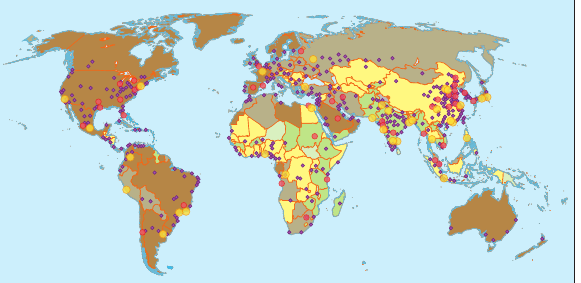
Geographic distribution
Megacities are not evenly distributed across the globe. The development of megacities is heavily concentrated in Asia, which hosts the majority of these massive urban centres.
Examples of major megacities:
- Tokyo - The world's largest city in 2015 with over 37.4 million inhabitants
- Delhi - Projected to increase by more than 10 million people between 2018 and 2030
- Shanghai - One of China's largest megacities with over 20 million residents
- São Paulo - South America's largest megacity
- Mexico City - Major megacity in North America
- Dhaka - Rapidly growing megacity in South Asia
- Cairo - Africa's largest megacity
- Beijing - Another major Chinese megacity
- Mumbai - India's most populous megacity
All of these cities have populations exceeding 20 million and continue to grow rapidly.
Note
The concentration of megacities in Asia reflects the region's rapid economic development and industrialisation over recent decades. This geographical pattern highlights the close relationship between economic growth and urbanisation, particularly in emerging economies.
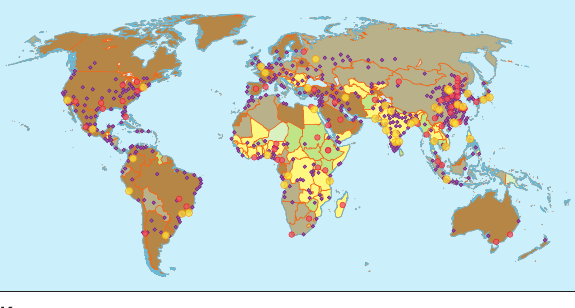
From megacities to metacities
Important
A metacity is a conurbation (continuous built-up area) of more than 20 million people.
The Chinese government has ambitious plans to create enormous urban areas by merging multiple cities. One example is the Pearl River Delta project, which aims to create an urban area 26 times larger than Greater London. Such developments represent a new scale of urbanisation.
Key definitions
Important
A megacity is a city or urban agglomeration (an urban area incorporating several large towns or cities) with a population of more than 10 million people. According to the UN, London achieved megacity status in 2013 by including residents in the Greater London area.
Important
Urban growth refers to an increase in the number of urban dwellers. Classifications of urban dwellers vary from country to country and usually include one or more of these criteria:
- Population size
- Population density
- Average distance between buildings within a settlement
- Legal and/or administrative boundaries
Important
Urbanisation is an increase in the proportion of a country's population that lives in towns and cities. The two main causes of urbanisation are:
- Natural population growth
- Migration into urban areas from rural areas
The causes of urban growth
The process of urbanisation plays a crucial role in human affairs and has shaped the modern world. Historically, urbanisation has been closely linked to other major economic and social transformations.
Understanding why cities grow requires examining both push and pull factors:
- Natural population growth occurs when birth rates exceed death rates within urban areas
- Rural-to-urban migration happens when people move from countryside to cities seeking better opportunities
These two processes work together to drive the rapid expansion of megacities, particularly in developing regions where both factors are strong.
Note
The Interconnected Nature of Growth
Natural population growth and rural-to-urban migration reinforce each other in a cycle of urban expansion. As cities grow larger, they attract more migrants seeking economic opportunities, which in turn increases the urban population base and leads to even more natural growth. This creates a self-reinforcing pattern of urbanisation.
Global trends and projections

The three world maps (1990, 2018, and projected 2030) reveal important patterns:
1990 baseline:
- Megacities were relatively rare
- Urban population concentrated in specific regions
- Europe and North America showed high urbanisation percentages
2018 developments:
- Significant increase in urban population worldwide
- Asia experienced explosive megacity growth
- Multiple new megacities emerged in developing regions
2030 projections:
- Continued rapid urbanisation, especially in Asia and Africa
- More cities reaching megacity status
- Tokyo projected to decline by almost 900,000 people
- Delhi expected to grow by over 10 million people
Note
These projections highlight that urbanisation is not uniform - some cities will continue explosive growth whilst others may stabilise or even decline. This variation reflects different stages of development, changing economic conditions, and demographic transitions occurring at different rates across the globe.
Important
A Critical Distinction
Not all megacities follow the same trajectory. While many developing-world cities continue to experience rapid population growth, some developed-world megacities like Tokyo are beginning to see population decline. This reflects different demographic patterns, including aging populations and lower birth rates in developed countries.
Summary
Key Points to Remember:
- Megacity = 10 million+ people; Metacity = 20 million+ people
- In 1990 there were only 10 megacities, but by 2030 there will be 43 megacities worldwide
- Asia is home to the majority of megacities, including Tokyo (the world's largest city with 37.4+ million people)
- The two main causes of urbanisation are natural population growth and rural-to-urban migration
- Not all megacities will continue to grow - Tokyo is projected to decline by 900,000 people by 2030, whilst Delhi will grow by over 10 million