Temperatures: the Urban Heat Island Effect (AQA A-Level Geography): Revision Notes
📚Revision Notes
Temperatures: the Urban Heat Island Effect
What is an urban heat island?
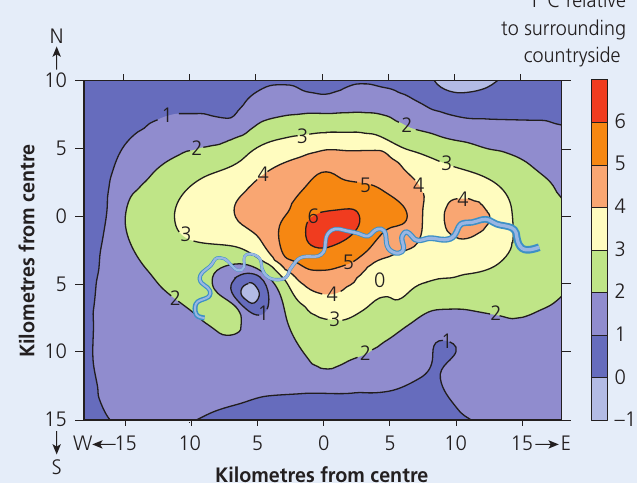
Cities and suburban areas tend to be warmer than the surrounding countryside. This temperature difference is called the urban heat island effect (UHI). The temperature variation can be significant - a city with one million or more inhabitants may experience annual mean temperatures that are 1 to 3°C higher than its rural surroundings. On calm, clear days, this difference can reach as much as 12°C.
Important
Urban Heat Island (UHI)
An urban heat island is an urban or suburban area that experiences significantly higher temperatures than the surrounding rural areas due to human activities and the built environment.
The intensity of urban heat islands varies depending on several factors:
- Season and weather conditions
- Sun intensity
- Amount of ground cover
- Size of the urban area
Surface temperatures are typically highest during summer months. Smaller urban areas still produce heat islands, but the effect becomes less pronounced as city size decreases.
Note
The urban heat island effect is not constant - it varies throughout the day and year. The most intense temperature differences often occur during calm, clear nights when heat trapped in urban materials is slowly released while rural areas cool down rapidly.
Temperature patterns across urban areas
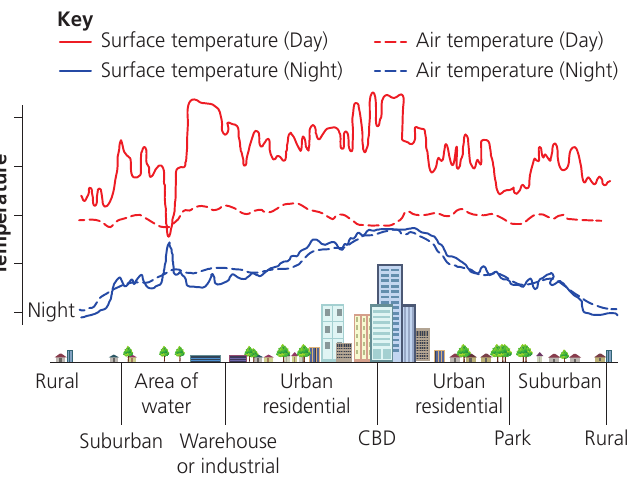
Temperature varies significantly as you move from rural areas through to the city centre. The diagram above shows how both surface and air temperatures change across different zones:
- Rural areas: Baseline temperatures, coolest zones
- Suburban zones: Gradual temperature increase
- Warehouse/industrial areas: Significant temperature peaks
- Urban residential areas: Elevated temperatures
- CBD (Central Business District): Highest temperatures, particularly in the afternoon
- Parks and water bodies: Cooler zones within the urban area
Key patterns:
- Urban temperatures are typically highest in the mid-afternoon over the CBD
- Secondary temperature peaks occur over heavily built-up areas such as industrial zones
- The temperature range from rural fringe to city centre is often greatest at night
- Air temperatures over water bodies show very little variation
- Surface temperatures fluctuate much more dramatically than air temperatures
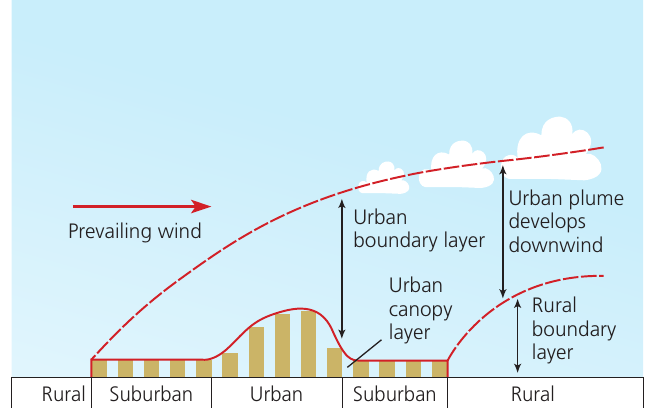
The urban boundary layer (UBL) forms a dome of warmer air that can extend as a plume downwind of the city. This dome develops above the urban canopy layer (the layer at street level between buildings).
Note
The urban boundary layer can extend hundreds of metres above the city surface, creating a distinct microclimate that affects local weather patterns, air quality, and even cloud formation downwind of urban areas.
Causes of urban heat islands
Cities are warmer than rural areas due to several interconnected factors:
1. Low albedo of urban surfaces
Albedo refers to how much solar radiation a surface reflects. Urban surfaces tend to have much lower albedo than natural rural surfaces, meaning they absorb more heat.
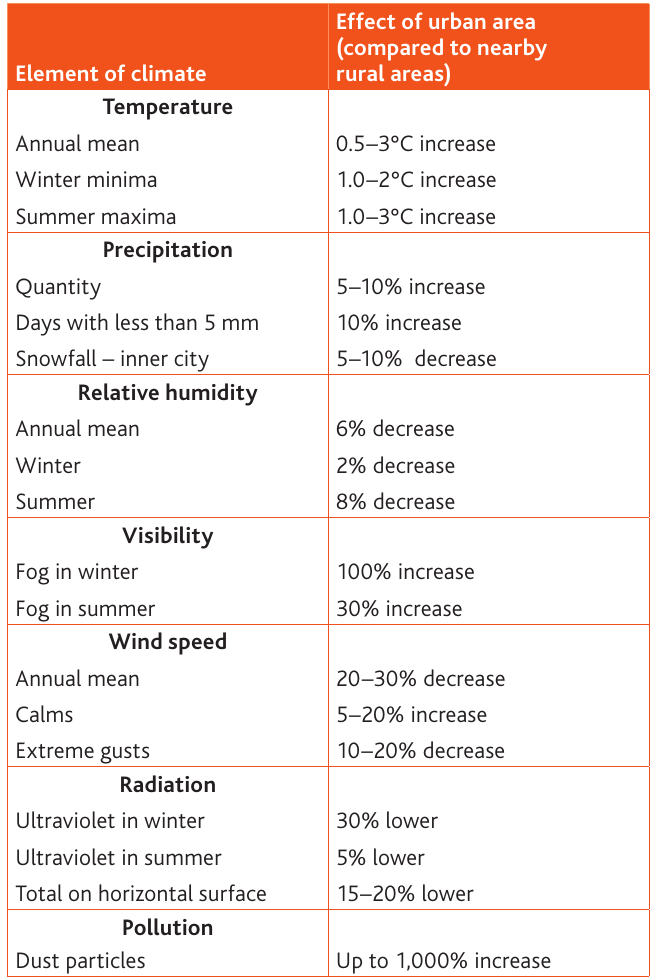
Common urban materials and their albedo values:
- Asphalt roads: 0.05–0.20 (very low reflectivity)
- Concrete: 0.10–0.35
- Brick/Stone: 0.20–0.40
- Coloured paint: 0.15–0.35
- White paint: 0.50–0.90 (high reflectivity)
- Grass/vegetation: 0.16–0.26 (rural areas)
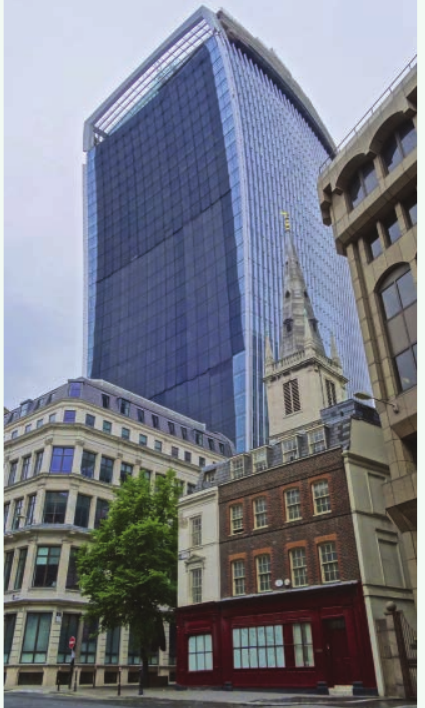
Materials like concrete, brick, and tarmac absorb large quantities of heat during the day. Much of this heat is stored and slowly released at night, keeping urban areas warm long after sunset. Buildings with large windows have high reflective capacity and can concentrate heating effects by reflecting energy downwards to surrounding streets.
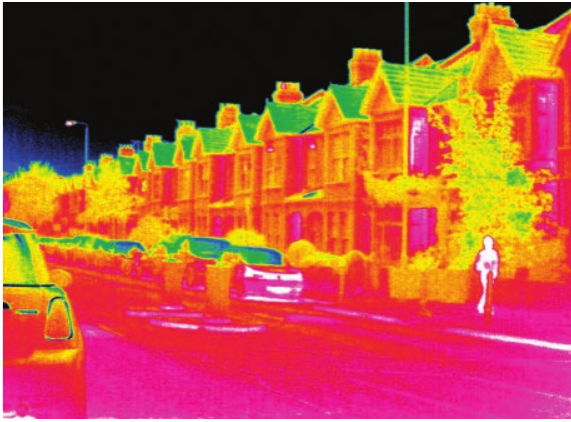
Note
This thermal image clearly shows how buildings and roads emit significantly more heat than lighter surfaces and vegetation. The hottest areas appear in red and yellow, whilst cooler areas are shown in blue and purple. The stark visual contrast demonstrates why material choice is so critical in urban planning.
2. Air pollution and the "pollution dome"
Air pollution from industries and vehicles increases cloud cover and creates a "pollution dome" over cities. This dome:
- Allows short-wave solar radiation to enter
- Absorbs and reflects outgoing long-wave radiation back to the surface
- Traps heat within the urban area
Important
The pollution dome acts like a thermal blanket over cities. While it allows incoming solar radiation to pass through, it traps outgoing long-wave radiation, preventing heat from escaping into the atmosphere. This greenhouse-like effect significantly amplifies urban temperatures, especially at night.
3. Reduced vegetation and evapotranspiration
Urban areas are designed to remove surface water quickly through drainage systems. This significantly reduces cooling by evaporation. With less vegetation, there is also reduced evapotranspiration (water loss from plants), which would normally have a cooling effect.
Note
In natural environments, evapotranspiration from vegetation acts as a natural air conditioning system. As water evaporates from plant leaves, it absorbs heat energy from the surrounding air, creating a cooling effect. Urban areas with minimal green space lose this crucial cooling mechanism.
4. Heat from buildings, vehicles, and industry
Heat sources from human activities include:
- Industries, buildings, and vehicles burning fossil fuels
- Air conditioning units releasing hot air into the atmosphere
- Body heat from large populations in confined spaces
Although air conditioning regulates indoor temperatures, the units pump hot air outside, contributing to higher outdoor temperatures.
Important
The Air Conditioning Paradox
While air conditioning provides relief indoors, it creates a vicious cycle: cooling buildings generates heat outdoors, which makes outdoor temperatures even hotter, leading to increased demand for air conditioning. This cycle can intensify urban heat islands during peak summer periods.
5. Reduced wind speeds and trapped heat
High-rise buildings and varied building heights create turbulence and reduce overall wind speeds in urban areas (typically 20-30% lower than rural areas). When streets are positioned perpendicular to prevailing winds, this reduces ventilation and prevents heat and pollutants from being dispersed. Heat becomes trapped in "street canyons" between tall buildings.
Urban climate effects beyond temperature
Effects on local climate
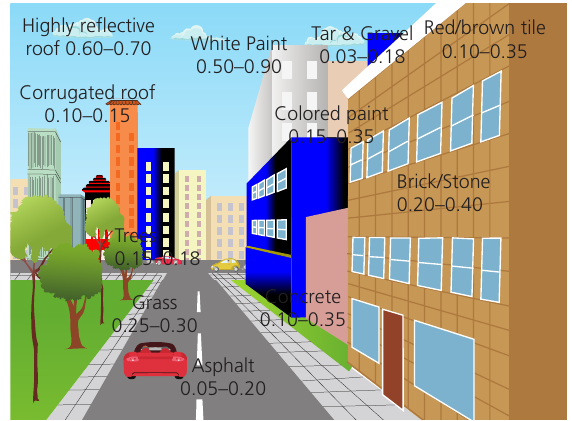
Urban areas affect multiple climate elements compared to nearby rural areas:
Temperature changes:
- Annual mean: 0.5–3°C increase
- Winter minimum: 1.0–2°C increase
- Summer maximum: 1.0–3°C increase
Precipitation changes:
- Quantity: 5–10% increase
- Days with less than 5mm rainfall: 10% increase
- Snowfall (inner city): 5–10% decrease
Humidity changes:
- Annual mean: 6% decrease
- Winter: 2% decrease
- Summer: 8% decrease
Visibility changes:
- Fog in winter: 100% increase
- Fog in summer: 30% increase
Wind speed changes:
- Annual mean: 20–30% decrease
- Calm conditions: 5–20% increase
- Extreme gusts: 10–20% decrease
Radiation changes:
- Ultraviolet in winter: 30% lower
- Ultraviolet in summer: 5% lower
- Total on horizontal surface: 15–20% lower
Pollution:
- Dust particles: Up to 1,000% increase
Note
These changes create a distinct urban microclimate. Notice how cities experience less overall wind movement, reduced humidity, and increased fog formation - all factors that can trap heat and pollution near ground level. The dramatic increase in dust particles also contributes to respiratory health problems.
Why is the urban heat island a matter of concern?
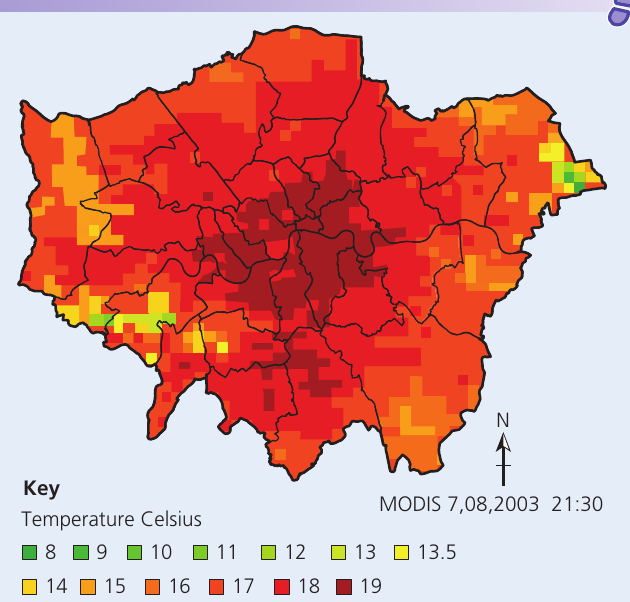
Research in London and other major cities has highlighted several serious concerns about urban heat islands:
Health impacts
As temperatures rise during summer months, conditions can become dangerously uncomfortable:
- Heat stroke cases increase
- Asthma rates worsen
- Organ damage becomes more common
- Death rates increase during extreme heat events
Important
Critical Health Risks
During the European heatwave of 2019, Paris recorded temperatures of 42.6°C. Of the 1,435 heat-related deaths in France that year, most occurred in Paris. The hot, still, anticyclonic weather conditions responsible for intense UHI events can persist for days, creating life-threatening situations for vulnerable populations including the elderly, young children, and those with pre-existing health conditions.
Air quality problems
Higher temperatures accelerate chemical reactions that produce ozone and smog. Lower wind speeds mean heat and pollution become trapped within the city, creating dangerous air quality conditions.
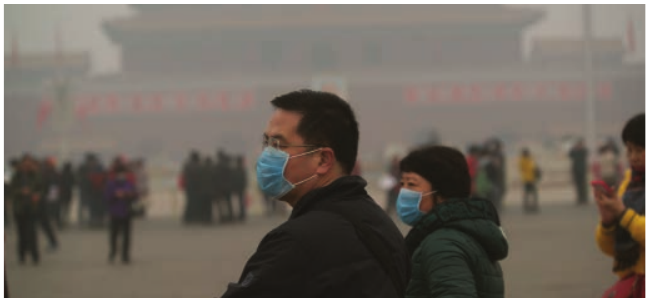
Cities like New Delhi and Beijing regularly experience severe winter fogs combined with high pollution levels - a phenomenon sometimes called "airpocalypse" due to its high death toll. The term describes the toxic smog created when fog traps pollutants.
Increased energy demands
Excessive heat increases the strain on energy supplies for cooling and air conditioning systems. This creates additional costs for residents and businesses.
Note
Higher energy demands during heat waves can lead to power grid failures and blackouts, which in turn disable air conditioning systems when they're needed most. This creates dangerous feedback loops during extreme heat events.
Water supply pressures
In warmer periods, the added heat from urban heat islands leads to:
- Increased water consumption by residents and businesses
- Extra strain on water supply infrastructure
- Potential water-use restrictions
- Higher evapotranspiration rates (plants and trees extract water from soil at greater rates than normal)
Environmental changes
- Earlier flowering times for plants and trees
- Prolonged growing seasons causing discomfort and longer allergy seasons
- Higher reproduction rates of pests and insects
- Greater potential for algal blooms in water courses due to rising temperatures
- Increased risk of deterioration of historical monuments and buildings through temperature-related chemical weathering
Climate change amplification
Climate change is expected to intensify the urban heat island effect in most urban areas, making these problems more severe in the future.
Important
Urban heat islands and climate change create a dangerous positive feedback loop. As global temperatures rise, UHI effects become more intense. This leads to increased energy use for cooling, which produces more greenhouse gas emissions, further accelerating climate change. Breaking this cycle requires urgent action in urban planning and design.
Strategies for managing the urban heat island
Urban planning and design are increasingly focused on strategies to reduce the UHI effect:
Cool surfaces
Cool roofs are constructed from materials with high albedo. They absorb and store less solar energy during the day, meaning they do not become major emitters of heat at night. Similarly, cool roads and pavements use reflective coats and seals to reduce heat absorption.
Note
Studies show that increasing surface albedo by just 0.1 can reduce surface temperatures by several degrees Celsius. White or light-colored roofing materials can reflect up to 80-90% of solar radiation, compared to dark materials that may absorb up to 95% of incoming solar energy.
Green roads
Green roads feature more porous surfaces that allow water to seep through and grass to grow. This approach reduces the amount of heat absorbed by the road surface whilst also improving drainage and biodiversity.
Green roofs
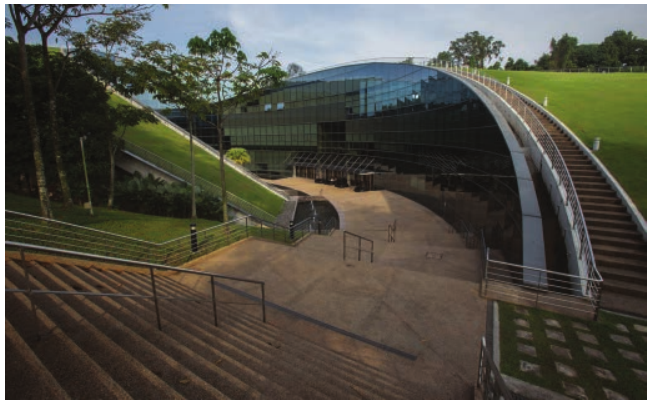
Green roofs consist of a growing medium (soil and plants) planted over a waterproof membrane. Benefits include:
- Reducing rooftop temperatures by 20–40°C on sunny days
- Acting as insulators to reduce heat loss from buildings
- Reducing rainwater run-off
- Increasing urban biodiversity by providing habitat for birds and small animals
Example
Worked Example: Green Roof Temperature Reduction
Scenario: A traditional dark-colored flat roof reaches 70°C on a sunny summer day.
Step 1: Calculate the temperature reduction with a green roof Temperature reduction = 20–40°C (typical range)
Step 2: Determine the new surface temperature New temperature = 70°C - 30°C (using mid-range value) New temperature = 40°C
Result: The green roof reduces the surface temperature from 70°C to approximately 40°C, a reduction of over 40%. This significantly decreases heat radiated into the surrounding urban environment.
Urban greening
Planting trees and vegetation in urban areas provides multiple benefits:
- Shade reduces surface peak temperatures (reductions of 5–20°C are possible)
- Natural cooling effect through evapotranspiration
- Trees lower overall air temperatures in urban parks
- Carbon storage reduces atmospheric CO₂
- Reduces urban flooding by intercepting rainfall
- Filters pollutants from the air
Many cities worldwide are expanding their urban parks and tree-planting programmes.
Note
A single mature tree can transpire up to 400 litres of water per day, creating a cooling effect equivalent to two domestic air conditioning units running for 20 hours. Urban forests and tree-lined streets can reduce air temperatures by 2–8°C compared to areas without vegetation.
Sky view factor
Sky view factor describes the relative openness between buildings in an urban area. A restricted sky view (narrow streets with tall buildings) reduces heat escape from street and building surfaces. This contributes to heat accumulation within "street canyons" and increases air temperatures.
When streets are angled perpendicular to prevailing winds, ventilation is further reduced, trapping heat and pollutants between buildings during intense UHI events. Urban planning can address this by:
- Varying building heights
- Creating wider streets
- Ensuring street orientation allows for air flow
Important
Street Canyon Effect
Narrow streets lined with tall buildings create "urban canyons" where heat becomes trapped. These canyons can be several degrees warmer than more open areas of the city. During heat waves, proper street design and building orientation can mean the difference between manageable and dangerous temperatures.
Cool cars
The interior of light-coloured cars does not heat up as much as darker vehicles due to higher reflectivity. This reduces the need for air conditioning and decreases the amount of heat emitted into surrounding air.
Other urban climate effects
Precipitation
Rainfall can be higher over urban areas than rural areas. This occurs partly because higher urban temperatures encourage the development of lower pressure over cities relative to the surrounding area. Several factors contribute to increased precipitation:
Convection processes:
- The urban heat island generates convection
- Rapid evapotranspiration from heated ground surfaces produces cumulus cloud formation
- Convectional weather patterns develop
Building effects:
- High-rise buildings and mixed building heights induce air turbulence
- This promotes increased vertical air motion
Air convergence:
- Low pressure caused by rising air draws surface winds from surrounding rural areas
- This air converges and is forced to rise over the higher urban canopy
- Similar to orographic (mountain) processes, air moving over cities may split and converge downwind, forming clouds
Pollution effects:
- City pollution increases cloud formation and rainfall
- Pollutants act as hygroscopic (water-attracting) nuclei, assisting raindrop formation
- Pollution may enhance lightning as cloud droplets take on different electrical charges
- Cities produce large amounts of water vapour from industrial sources and power stations
Note
Studies show rainfall downwind of major urban areas can be as much as 20% greater than in upwind areas. Heating of the surface and overlying air creates atmospheric instability that encourages air to rise, cool, and condense into rain falling downwind of the city.
Convection rainfall tends to be heavier and more frequent in urban areas, as does the incidence of thunder and lightning.
Fog
The occurrence of fog increased dramatically with industrialisation. Records from London show approximately 20 days of fog per year in the early 1700s, rising to over 50 days by the end of the 1800s.
By the 1950s, particles in city air in developed countries were much more numerous than in rural areas. These particles acted as condensation nuclei and encouraged fog formation at night, usually under high-pressure weather conditions.
Note
The Impact of Clean Air Legislation
In the UK, the Clean Air Acts of the 1950s resulted in:
- Dramatic reduction in smoke production
- Decrease in particulate emissions
- Significant decrease in the number of foggy days
However, cities experiencing more recent industrialisation are now encountering increased fog events. Winter fog combined with polluted air creates particularly hazardous conditions for health.
Summary and key takeaways
Summary
Key Points to Remember:
-
Urban heat islands occur because cities are significantly warmer (1-12°C) than surrounding rural areas due to human activities and building materials
-
Low albedo surfaces (asphalt, concrete, brick) absorb more solar energy during the day and release it slowly at night, keeping cities warm
-
Reduced vegetation means less cooling from evapotranspiration, whilst pollution creates a dome that traps heat over cities
-
Health concerns include increased heat stroke, respiratory problems, and deaths during extreme heat events, particularly affecting vulnerable populations
-
Management strategies include:
- Cool roofs and roads with high albedo materials
- Green roofs that can reduce surface temperatures by 20–40°C
- Urban greening with trees and parks for natural cooling
- Improved street design to allow better ventilation
- Strategic building orientation to maximize airflow
-
Urban heat islands create a distinct microclimate with reduced wind speeds, increased precipitation, lower humidity, and significantly worse air quality
-
Climate change is expected to intensify UHI effects, making mitigation strategies increasingly urgent for cities worldwide