Water Pollution (AQA A-Level Geography): Revision Notes
📚Revision Notes
Water Pollution
What is water pollution?
Water pollution occurs when harmful substances enter and contaminate water bodies such as rivers, lakes, oceans, aquifers and groundwater. This happens when pollutants are released into water without proper treatment to remove these dangerous compounds.
In urban environments, water pollution is particularly problematic. Cities have extensive areas of hard surfaces like roads, pavements and buildings that water cannot penetrate. These impermeable surfaces increase the volume of rainwater flowing over streets and into drainage systems. As this water flows, it collects and carries numerous pollutants including oils, heavy metals, rubber particles and other contaminants from motor vehicles into waterways and streams.
Note
The reduction in natural water absorption also affects groundwater quality and quantity. When less water soaks into the ground, groundwater levels drop. Additionally, stormwater flowing through urban areas can overwhelm combined systems that handle both rainwater and sewage.
When these systems exceed their capacity during heavy rainfall, untreated sewage may be released directly into rivers and streams. Research indicates that urban stormwater can be just as contaminated as untreated domestic wastewater.
Important
Water pollution sources can be divided into point sources (pollutants entering from specific, identifiable locations like factory discharge pipes) and non-point sources (pollutants entering from widespread areas like agricultural runoff).
Causes of water pollution in urban areas
Urban areas generate water pollution through several key pathways:
-
Surface run-off from streets: Rainwater flowing over roads and pavements carries oil, heavy metals and other contaminants from motor vehicles into water systems
-
Industrial waste: Factories and industrial sites may discharge waste products that have not been properly treated before release
-
Untreated or poorly treated sewage: Sewage with low dissolved oxygen content and high levels of pollutants such as nitrates, phosphorus and bacteria. Even treated sewage still contains some pollutants when discharged into rivers
-
Rubbish dumps, toxic waste and chemical storage: These facilities can leak pollutants into surrounding water sources through the soil or directly into water bodies
-
Intentional dumping: Deliberate disposal of hazardous substances into water systems
-
Air pollution impacts: Pollutants from the atmosphere can be deposited through rain, leading to nitrogen and ammonium contamination. This atmospheric deposition alters water chemistry in the affected area
Consequences of water pollution
Water pollution creates serious problems for both human populations and natural ecosystems. The scale of the issue is enormous: over 1.2 billion people worldwide lack access to clean water. Waterborne infections account for 80 per cent of all infectious diseases globally.
Health impacts
Water pollution affects human health in several ways:
-
Heavy metals from industrial processes can slow child development, cause birth defects and may be carcinogenic (cancer-causing)
-
Industrial waste often contains toxic compounds that damage the health of aquatic animals and people who consume contaminated fish. These toxins can cause immune system suppression, reproductive failure or poisoning
-
Microbial pollutants from sewage lead to infectious diseases affecting both aquatic life and terrestrial life through contaminated drinking water. Microbial water pollution causes diseases such as cholera and typhoid fever, which are a major cause of infant mortality in low-income countries
Environmental impacts
The environmental consequences of water pollution are equally severe:
-
Nutrients and organic matter cause an increase in aerobic algae, which deplete oxygen from the water. This process, called eutrophication, can lead to the suffocation of fish and other aquatic organisms
-
Suspended particles in freshwater reduce drinking water quality for humans and degrade the aquatic environment for marine life. These particles also reduce sunlight penetration, disrupting the growth of photosynthetic plants and micro-organisms
-
Ecosystem damage: Water pollution creates breeding grounds for malaria-carrying mosquitoes and damages ecosystems, potentially leading to species extinction
Note
The combined effect of these pollutants creates a cycle of environmental degradation. When water quality declines, entire ecosystems can collapse, affecting not just aquatic life but also the human communities that depend on these water sources for drinking, agriculture, and livelihoods.
Water problems in India
Example
Case Study: Water Pollution in India
India experiences chronic and severe water pollution problems. In 2019, estimates suggested that around 70 per cent of surface water in India was unfit for human consumption. The primary cause of this contamination is the massive quantity of domestic sewage generated by rapidly expanding towns and cities.
The Problem: A survey of 27 cities found that untreated sewage flowing in open drains was causing serious deterioration of groundwater quality, with knock-on impacts to human health. Vector-borne diseases such as cholera, dysentery, jaundice and diarrhoea are widespread. Water pollution was also found to be a major cause of poor nutrition and under-development in children.
Infrastructure Challenges: According to the World Health Organisation, more than 87 per cent of people in India's cities (compared with 33 per cent in rural areas) now have access to a toilet. However, it is the leaking and incomplete sewage systems that are leading to the contamination of rivers and lakes. The World Bank believes that such releases of pollution upstream lower economic growth in downstream areas, reducing GDP growth in these regions by up to a third.
Local Solutions: In the city of Ahmedabad, the state council introduced a scheme in which children are being paid to use public toilets. Open defecation is a problem where people do not have access to proper sanitation. The number of public toilets has also been increased to prevent human waste running into wells and streams, contaminating water that may then be used for drinking or bathing.
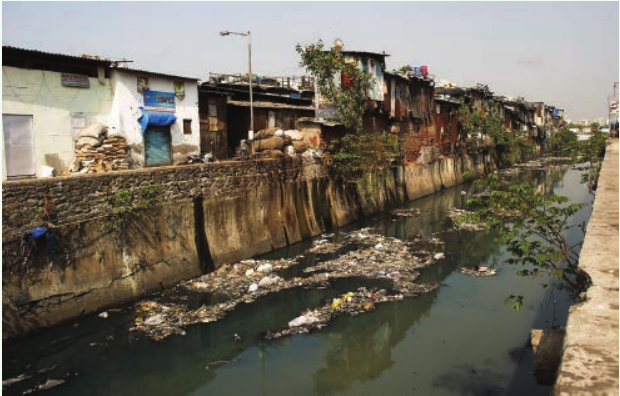
Government Response: Steps are being taken to tackle India's water problems. Prime Minister Narendra Modi has made cleaning the Ganges, the river that is holy to Hindus, a key policy goal. There are also plans for infrastructural improvements and wastewater recycling in cities across the country.
Managing water pollution
Improving water quality requires strategies to prevent, treat and remediate water pollution. Ideally, pollutants are prevented from entering watercourses in the first place. However, the reality is that potential pollutants are treated before they are discharged. The final and often most expensive strategy is when polluted watercourses are restored through remediation.
Approaches in high-income countries
In most high-income countries, water quality improvement focuses on two main approaches:
-
Construction of water-treatment facilities and wastewater plants: These facilities process water before it is released back into the environment
-
Regulations aimed at point source polluters: Industries which release water pollution into receiving waters or sewer systems that flow into treatment plants must comply with strict standards
Important
The most difficult water-quality challenge is dealing with non-point source pollution. This is pollution which results from precipitation run-off from a wide range of sources including fertilisers and pesticides from agriculture, and chemicals and toxins from urban settlements. These pollutants are difficult to regulate because they come from dispersed locations rather than identifiable points.
Lack of money and inadequate technology in low-income countries have resulted in much lower water quality standards. Effective legislation is often absent and enforcement of pollution controls is limited.
Key water pollution strategies
Low-impact development (LID)
Important
Low-impact development (LID) is a stormwater management approach that helps to reduce stormwater run-off, done primarily through the use of vegetation and permeable surfaces to allow infiltration of water into the ground.
This approach uses several techniques:
- Permeable streets and pavements allow water to soak into the soil rather than flow directly into sewers
- 'Green' roofs, rain gardens and more urban parks enable water to infiltrate into soils
- Filtering stormwater through vegetation and soil has been shown to reduce organic pollutants, oils and heavy metals by more than 90 per cent
Legislation, regulation and enforcement
Many different anti-pollution laws and agreements exist worldwide. However, these laws need to be enforced effectively. Some cities have adopted incentive-based approaches:
Note
Incentive-Based Pollution Control:
- Charging polluters per unit of pollution
- Charges start low but increase if pollution continues
- Creates an incentive to reduce discharges and purchase wastewater treatment technologies
- Regulation works in a similar way: factories are allowed to discharge only limited amounts of carefully controlled pollutants
- By slowly reducing permitted discharge levels year by year, pollution levels are reduced
Education and awareness
The more people know about the causes and effects of pollution, the more likely they will avoid adding to the problem. In 2014, Wessex Water used mobile billboards in hotspot areas urging its customers to get behind a campaign encouraging people to bin wet wipes rather than flush them down the toilet. Wet wipes are a common cause of sewer blockages since they do not decompose like toilet paper.
Improvements in sewage and wastewater processing
Upgrading sewage infrastructure prevents untreated waste from entering water bodies. This includes expanding treatment capacity and updating ageing systems.
Appropriate technology
Note
One example of appropriate technology is the Janicki omniprocessor - a small-scale innovation aimed at providing clean water in low-income countries. The omniprocessor first boils raw 'sewer sludge', during which the water vapour is separated from the solids. Those solids are then put into a fire, producing steam that drives an engine producing electricity for the system, the processor and for the local community. Finally, the water is put through a cleaning system to produce drinking water.
The Thames Tideway Tunnel
Example
Case Study: The Thames Tideway Tunnel, London
The Problem: Much of London is served by a combined sewerage system, collecting sewage from homes as well as rainwater runoff from roads, roofs and pavements. The interceptor sewers, constructed by Sir Joseph Bazalgette following the 'Great Stink' of 1858, are still the backbone of London's sewer network today. However, they are struggling to cope with the expanding population and the demands of modern-day living.
During periods of heavy rain, the Victorian drainage system discharges raw sewage directly into the River Thames, killing large quantities of fish and other aquatic life and threatening public health. In 2013 alone, 55 million tonnes of raw sewage was washed into the river.
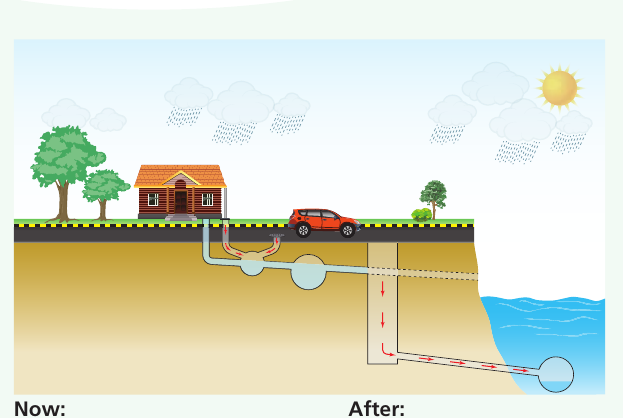
The Solution: The Thames Tideway Tunnel is under construction to upgrade London's sewerage system. A specialised tunnel boring machine (TBM) has been used to excavate a circular tunnel, seven metres in diameter, using a rotating cutterhead. It simultaneously creates a tunnel wall using concrete segments. The completed tunnel will be 25 kilometres long and up to 65 metres deep.
The Process: The tunnel will take the sewage to the Becton sewage treatment works in the Essex marshes. After thoroughly cleaning, it will be released into the Thames. It is hoped that the whole scheme will be completed in 2025.
Expected Outcomes: This major infrastructure project will help prevent the tidal River Thames from being polluted with untreated sewage, which can stay in the river for up to three months before the tide finally takes it out to sea.
Dereliction
Important
Dereliction refers to the state of having been abandoned and become dilapidated (fallen into disrepair). In urban areas, derelict buildings are often associated with former industrial sites or run-down housing estates.
In the UK, de-industrialisation led to many people leaving the inner city and industrial buildings being abandoned. Alongside this, services such as public houses and shops may also have become vacant as areas became subject to urban decline.
Impacts of dereliction
Dereliction has negative impacts on the surrounding area:
- Crime and vandalism rates tend to be higher
- House prices fall and out-migration of residents takes place
- The high costs involved in urban renewal often discourage authorities and individuals from renovation or rebuilding
- The presence of listed buildings, which are subject to considerable planning regulation, can significantly increase the investment needed
Health risks
Derelict land can pose significant risks to human health. Contamination from industrial processes lives on in an environment long after the industry that produced or used those chemicals has gone.
Note
In Glasgow, research has linked proximity to contaminated derelict sites with health problems such as low birth weight infants, heart disease, cancer and respiratory disease. Many of the industries prevalent in Glasgow during the industrial period were 'dirty' ones, with high usage of toxic and dangerous chemicals and significant environmental degradation.
Summary
Key Points to Remember:
-
Water pollution occurs when harmful substances enter water bodies without adequate treatment, affecting rivers, lakes, oceans and groundwater
-
Urban areas create particular problems due to impermeable surfaces that increase run-off, carrying pollutants like oils and heavy metals into water systems
-
Consequences are severe: over 1.2 billion people lack clean water, 80% of infectious diseases are waterborne, and pollution causes ecosystem damage and species extinction
-
Management strategies include:
- LID (Low-Impact Development) using permeable surfaces and vegetation
- Legislation and enforcement with incentive-based approaches
- Education and awareness campaigns
- Improved sewage processing and infrastructure upgrades
- Appropriate technology suited to local contexts
-
Case studies demonstrate both problems and solutions:
- India faces chronic water pollution with 70% of surface water unfit for consumption due to inadequate sewage systems
- London's Thames Tideway Tunnel shows how infrastructure investment can address combined sewerage overflow issues with a 25-kilometre tunnel system