Population and the Environment (AQA A-Level Geography): Revision Notes
📚Revision Notes
Environmental Variables and Links to Disease
The natural environment plays a significant role in the occurrence and spread of diseases. Understanding how environmental factors influence health patterns is crucial for public health planning and disease prevention. Different environmental variables - from climate and weather patterns to water quality and air pollution - create conditions that either promote or inhibit disease transmission.
Climate and disease patterns
How climate affects disease incidence
Climate conditions have direct connections to disease patterns worldwide. The natural environment influences health in multiple ways:
Weather patterns create conditions that either support or hinder disease transmission. For example, drought can lead to crop failure and reduced food intake, potentially causing famine. Conversely, heavy rainfall or tropical storms can trigger flooding, which brings its own health challenges including water-borne illnesses and respiratory infections.
Note
Temperature and humidity levels are critical factors that determine how long pathogens survive in the environment and how quickly disease vectors (such as mosquitoes) reproduce and spread infection. These environmental conditions directly influence disease transmission rates in affected regions.
Seasonal affective disorder
Important
Seasonal Affective Disorder (SAD)
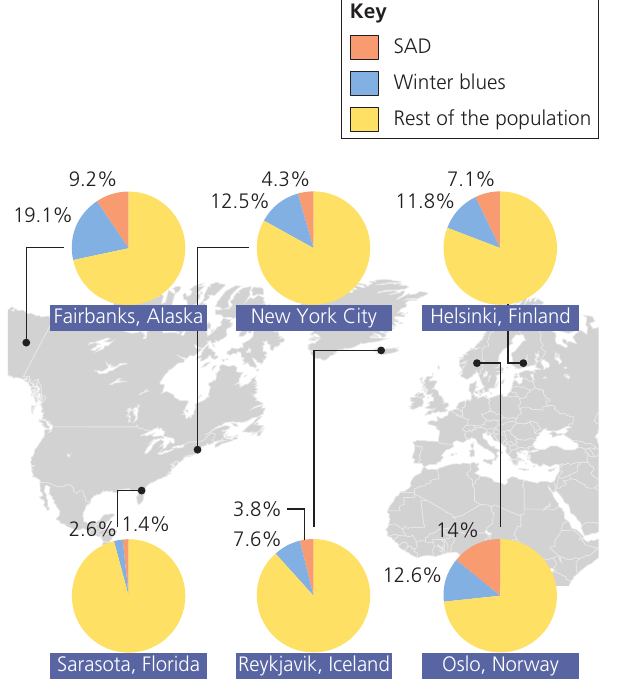
Seasonal Affective Disorder (SAD) is a form of depression that follows a seasonal pattern. Episodes of depression typically occur at the same time each year, most commonly during winter months. This condition has been connected to reduced exposure to sunlight during shorter days.
The prevalence of SAD varies significantly with latitude (distance from the equator):
- Fairbanks, Alaska experiences rates of 9.2% SAD and 19.1% winter blues
- Oslo, Norway shows 14% SAD and 12.6% winter blues
- Sarasota, Florida has much lower rates: 1.4% SAD and 2.6% winter blues
This geographical pattern demonstrates how environmental factors (specifically sunlight exposure) directly affect mental health outcomes.
Climate and infectious diseases
Weather conditions have well-documented effects on how infectious diseases spread and survive:
Rainfall and disease transmission:
- Extended periods of heavy rainfall create opportunities for vector-borne diseases to spread more easily
- Mild temperature periods over longer durations increase the transmission potential of vector-borne diseases, as disease-carrying insects become more infectious in warmer conditions
- Vector-borne viruses need time to reproduce inside their hosts, but if temperatures become too cold (slowing reproduction) or too hot (killing the vector), transmission decreases
Note
Temperature effects on airborne diseases:
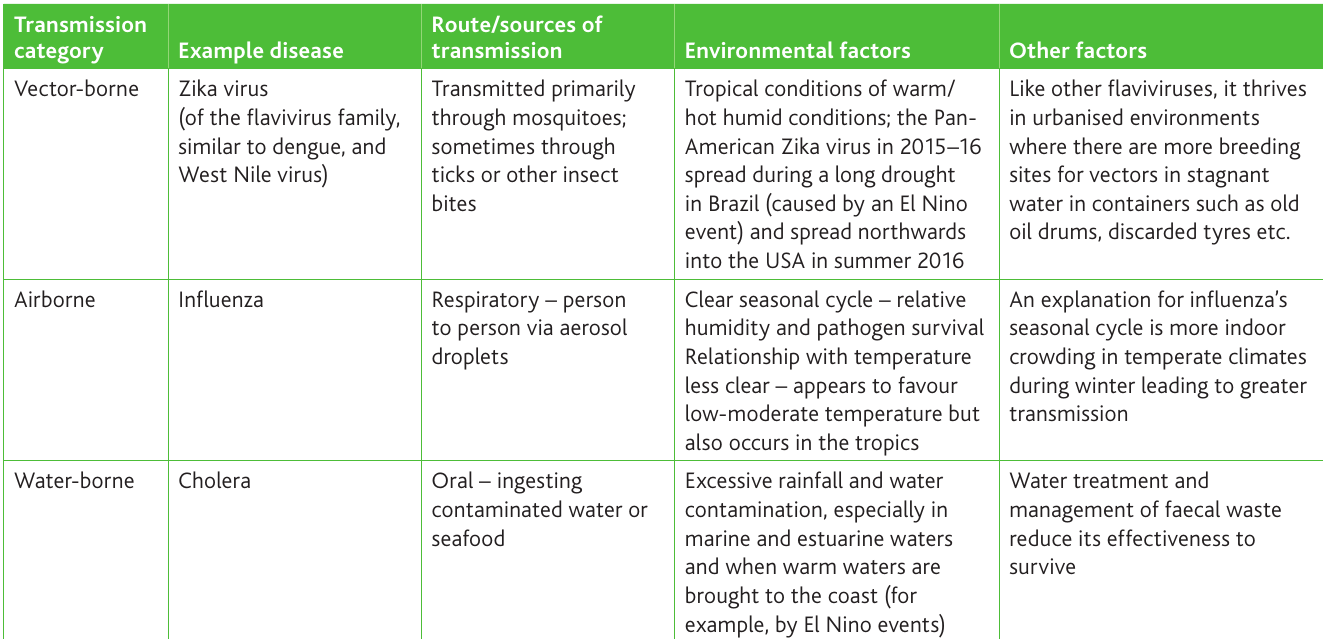
Airborne respiratory diseases like influenza thrive in temperate winters when temperatures are lower (but not extremely cold) and conditions are damper. An explanation for influenza's seasonal pattern relates to increased indoor crowding in temperate climates during winter, which enables greater transmission.
Specific disease examples:
Example
Worked Example: Coccidioidomycosis (Valley Fever)
Coccidioidomycosis (Valley Fever) - a chronic lung disease - demonstrates how multiple climate factors interact. Outbreaks occur under 'grow and blow' conditions:
Step 1: Growth Phase Wet weather encourages fungal growth (Coccidioides) in the soil
Step 2: Dispersal Phase Subsequent dry weather increases spore transmission through wind and dust
Step 3: Infection When spores are inhaled, they cause disease in susceptible individuals
This pattern shows how sequential weather conditions create the perfect environment for disease transmission.
Important
Understanding disease transmission categories
Diseases can be classified by how they spread:
- Vector-borne diseases: Transmitted through organisms like mosquitoes (e.g., Zika virus)
- Airborne diseases: Spread through respiratory droplets (e.g., Influenza)
- Water-borne diseases: Spread through contaminated water (e.g., Cholera)
Understanding these categories helps public health officials develop targeted prevention strategies for each transmission type.
Climate change and disease
Climate change presents another important consideration, particularly for vector-borne viruses such as Zika. As climatic conditions shift, the geographical distribution of disease vectors expands into new regions. This process is facilitated by changing conditions, placing populations with limited immunity at risk in areas previously unaffected by these diseases.
Note
The 2015-16 Zika Outbreak
The Pan-American Zika virus outbreak in 2015-16 spread during a prolonged drought in Brazil (caused by an El Niño event) and spread northwards into the USA in summer 2016. Tropical conditions of warmth and humid heat provided ideal conditions for mosquito breeding in stagnant water found in containers like old oil drums and discarded tyres.
This outbreak demonstrates how climate events and human-modified environments combine to create conditions favourable for disease transmission.
Topography, drainage and health
The physical landscape and water drainage patterns significantly influence disease distribution in many regions.
In numerous low-income countries across Asia, high concentrations of people occupy the flood plains of major rivers such as the Ganges, Yangtze and Mekong. These populations are attracted by:
- Flat land suitable for agriculture
- Seasonal flooding that enables rice cultivation
Flooding can be beneficial during normal years (providing water for crops). However, flooding also creates serious health risks:
Note
Health impacts of flooding:
- In 2018, flooding affected more people than any other environmental hazard and was responsible for 24% of all deaths from natural disasters
- Floods predominantly occur in low-income countries and tropical regions where health impacts are most significant
- Large numbers of people become displaced, and death tolls can be substantial
- Floods contaminate freshwater supplies and increase the risk of water-borne diseases
- Flooding creates breeding grounds for disease-carrying insects such as mosquitoes
- Increased rates of diarrhoea (including cholera and dysentery), respiratory infections, hepatitis A and E, typhoid and leptospirosis have been reported following floods in developing areas
Other environmental hazards
Environmental hazards beyond climate also impact disease patterns. Earthquakes can have major effects on disease incidence, especially in low-income countries.
The secondary environmental effects of earthquakes on public health vary depending on several factors:
- The magnitude of the earthquake
- The nature of the built environment
- Secondary physical effects such as tsunamis or landslides
Important
Risk factors that increase disease after earthquakes:
- Damage to health facilities and transport infrastructure disrupts disease prevention and treatment services, affecting medical supplies and availability of emergency equipment
- Absence of health workers who may struggle to reach functioning health facilities
- Deteriorating weather conditions and lack of shelter
- Prolonged exposure to large dust clouds generated by landslides or inhalation of tsunami water
- Increased risk of communicable diseases in overcrowded emergency shelters
- Increased exposure to disease vectors
- Weakened immune systems of young children and elderly people
- Lack of screening for blood-borne infections before blood transfusions or emergency surgery
Critical post-earthquake infectious diseases include cholera, pneumonia and tetanus.
Air quality and health
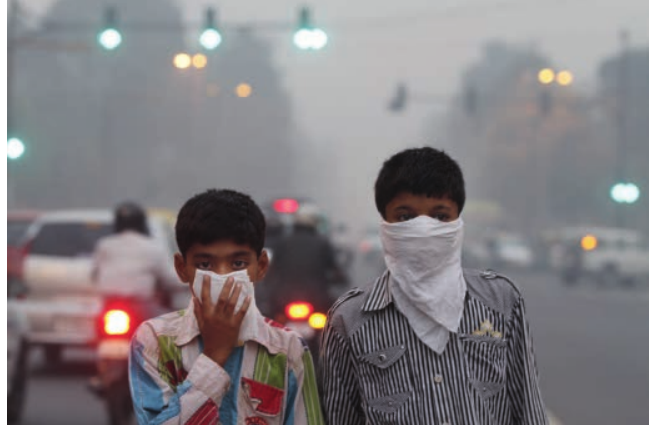
Ambient (outdoor) air pollution represents a major environmental health threat with potential to affect everyone in both developed and developing countries. According to WHO, air pollution is now the world's largest single environmental health threat. Terms such as 'airpocalypse' have been used to describe the increasing number of deaths and poor health associated with polluted air.
Types and sources of air pollution
Important
Particulate matter (PM)
Particulate matter includes photochemical smog and gases such as sulphur dioxide. Photochemical smog is a haze (rather than a dense smog) caused by the reaction of pollutants to sunlight and comprises mainly nitrogen oxides and ozone. Particulate matter includes solid particles and liquid droplets in the air, created by vehicle emissions, industrial processes (including energy generation), forest fires and burning waste.
PM is measured by size:
- PM₁₀: particles less than 10 microns in diameter
- PM₂.₅: particles less than 2.5 microns in diameter
Fine particulate matter (PM₂.₅) has the greatest effect on human health. Smaller particles have a greater probability of being inhaled more deeply. If inhaled in large quantities, they can penetrate deep into the lungs causing infections, which can ultimately be fatal.
Health impacts of air pollution
Air pollution causes and exacerbates numerous diseases, ranging from asthma to cancer, pulmonary illnesses and heart disease:
Global statistics:
- In 2017, 4.2 million deaths were caused by ambient air pollution
- Worldwide, ambient air pollution is estimated to cause approximately 16% of lung cancer deaths, 25% of chronic obstructive pulmonary disease (COPD) deaths, about 17% of heart disease and stroke deaths, and about 26% of lower respiratory infection deaths
Note
Regional disparities:
People living in low- and middle-income countries are disproportionately affected. Globally, air pollution contributed to 9% of all deaths in 2017, ranging from a low of 2% across high-income countries to close to 15% across many countries in south and east Asia. (India, Bangladesh, Nepal and China were the worst affected.)
In the past decade, some rapidly growing African cities are showing very high air pollution levels as they start to industrialise, notably Luanda in Angola and Kampala in Uganda.
The concentration of particulate matter in micrograms per cubic metre measures the level of ambient air pollution. A Greenpeace report published in 2019 analysed air pollution readings from 3,000 cities around the world and found that 22 of the 30 most polluted cities were in India, with Delhi ranked as the most polluted capital. Every city in Africa and the Middle East measured in the report exceeded WHO health guidelines for air pollution, as did 99% of cities in south Asia and 89% in east Asia.
Controlling air pollution
Most sources of outdoor air pollution can be controlled by individuals and through action from authorities and policymakers (from city to international level). Policies and investments which support cleaner transport, power generation and industry, energy-efficient housing and better municipal waste management would reduce key sources of urban outdoor air pollution.
Note
Rural air pollution in developing regions can be tackled by reducing emissions from agricultural waste incineration, forest fires and certain agro-forestry activities (such as charcoal production). By reducing air pollution levels, countries would reduce the burden of disease.
Indoor air pollution
In addition to outdoor air pollution, the use of fuelwood for indoor cooking and heating produces harmful pollutants which negatively affect the health of millions of people around the world. Exposure to smoke increases the risk of respiratory infections, lung cancer, cardiovascular disease and cataracts.
In low-income countries, 2.5 billion rural households use solid fuels, with a high preference for fuelwood. In 2017, WHO reported that 3.8 million deaths were attributable to household air pollution. This amounts to 6.9% of global mortality and almost all of it is in low- and middle-income countries.
Important
Women and children tend to be most at risk because they spend more time in fuelwood-burning environments. However, unlike ambient air pollution, the death rate caused by household air pollution is falling quite rapidly because of raised awareness of the problem. Government and NGO-led education programmes and the provision of alternative fuels have contributed to improved indoor pollution control.
Water quality and health
Water pollution and poor water quality have important impacts on health and can lead to many diseases. WHO claims two million deaths annually are attributable to unsafe water and poor sanitation and hygiene.
Water-related diseases and health impacts
Diarrhoeal diseases:
Diarrhoeal diseases such as cholera are caused by bacteria and chemicals in water that people drink. Inadequate drinking water, sanitation and hygiene are estimated to cause 829,000 diarrhoeal disease deaths per year (WHO, 2017).
Diarrhoea is a leading cause of malnutrition and the second leading cause of death in children under five years old. WHO reported a 60% fall in cholera cases in 2018 as key endemic countries claimed gains in cholera control.
Note
Excessive rainfall can cause sewage system outflow, leading to water contamination and the outbreak of both viral (for example, norovirus) and bacterial (for example, cholera) infections. Water treatment and management of faecal waste reduces the effectiveness of cholera to survive.
Schistosomiasis:
Schistosomiasis is an acute and chronic disease caused by parasitic worms. Part of their lifecycle occurs in water, and people are infected during exposure to infested water. Over 240 million people are sufferers.
Legionnaires' disease:
Legionellosis (or Legionnaire's disease) is a respiratory disease caused by bacteria which infect the lungs and cause a severe form of pneumonia. The most common form of transmission is inhalation of tiny droplets (aerosols) of water that contains the bacteria causing the infection. It is uncommon but is usually caught from the water supply of public buildings such as hotels, where the bacteria have collected in the water supply or air conditioning system. Infection can also occur by aspiration of contaminated water, particularly in susceptible hospital patients.
Cancer and toxic exposure:
Millions are exposed to unsafe levels of naturally-occurring arsenic and fluoride, which can cause cancer and tooth/skeletal damage.
Water pollution sources
Human sewage is one of the main pollutants of water. Toilets may drain into a simple hole in the ground (latrine) or a drop over a water source. The same water may then be used for drinking, washing and watering animals.
Note
WaterAid estimate that 785 million people live without ready access to safe drinking water and 485,000 children under five die every year from diarrhoea caused by unsafe water and poor sanitation.
Water resource management and health
Much of the burden of water-related diseases (particularly water-related vector-borne diseases) is caused by methods of water resource development and management.
In parts of the world, attempts to manage water supplies through dam construction, irrigation development and flood control have led to adverse health impacts from water pollution causing significant preventable disease.
Example
Worked Example: Malaria-spreading mosquitoes
Stagnant waters created by man-made reservoirs in sub-Saharan Africa create the perfect conditions for malaria-spreading Anopheles mosquitoes to breed and multiply.
The Problem: A recent study found that cases of malaria in high risk areas across the region are associated with people living in the vicinity of a reservoir.
The Mechanism:
- Reservoirs create stagnant water bodies
- Stagnant water provides ideal breeding grounds
- Mosquito populations multiply rapidly
- Increased mosquito numbers lead to higher malaria transmission rates
This demonstrates how well-intentioned infrastructure projects can have unintended health consequences.
Even attempts at more sustainable strategies such as increasing the use of wastewater in agriculture (grey water), which is important for livelihood opportunities, are also associated with serious public health risks. In areas without separate sewage systems, wastewater can contain faecal matter (black water).
Improvements in water quality
Most of the diseases and health problems related to water quality are preventable and relatively affordable, giving plentiful opportunities to improve health and reduce disease, even in the world's poorest countries.
In 2017, 2.1% (1.2 million) of all global deaths were caused by diseases relating to an unsafe water supply, though this was as much as 6% in low-income countries. Much progress has been made because of the focus provided by the Millennium Development Goals (MDGs). The number of children dying from diarrhoeal diseases has fallen steadily and between 2000 and 2017, 1.6 billion people gained access to an improved drinking water supply.
Note
Practical measures have included:
- Better tools and procedures to improve and protect drinking water quality at the community and urban level, for example, through Water Safety Plans (including better education and awareness to reduce faecal contamination and disinfecting supplies with chlorine)
- Availability of simple and inexpensive approaches to treat and safely store water at the household level (for example, boiling and covered storage)
As the world focuses its attention on the Sustainable Development Goals (SDGs), controlling human exposure to waterborne pathogens associated with faecal waste remains a priority in attaining the goal of safe drinking water and sanitation for all (SDG 6).
Other water contaminants
There are many other contaminants which are detrimental to human health. Oil spills can contaminate land and water, leading to digestive problems and diarrhoea.
Example
Case Example: Niger Delta
In the Niger Delta, oil spills, waste dumping and gas flaring are endemic and this type of pollution has damaged the soil, water and air quality for decades.
Impact: Hundreds of thousands of people have been affected, particularly the poorest and those who rely on traditional livelihoods such as fishing and agriculture.
This case demonstrates how industrial pollution can have long-term, widespread effects on both environmental and human health, particularly affecting vulnerable populations.
Remember!
Summary
Key Points to Remember:
-
Climate affects disease in multiple ways: Temperature, rainfall and humidity influence both disease transmission and the survival of pathogens and disease vectors in the environment.
-
Environmental factors vary by income level: Low-income countries face greater health burdens from infectious diseases linked to environmental conditions, whilst high-income countries deal more with chronic diseases.
-
Air pollution is a global health crisis: Both outdoor and indoor air pollution cause millions of deaths annually, with particulate matter (PM₂.₅) being particularly harmful to human health.
-
Water quality remains a critical issue: Unsafe water and poor sanitation cause approximately 2 million deaths per year, but improvements through practical interventions have saved millions of lives since 2000.
-
Environmental hazards create disease risks: Natural disasters like earthquakes and floods increase disease incidence by damaging infrastructure, displacing populations, and creating conditions favourable for pathogen spread.