Characteristics of Zonal Soils (AQA A-Level Geography): Revision Notes
📚Revision Notes
Characteristics of Zonal Soils
What is Soil?
Soil consists of a mixture of different components that work together to create a living system. These components include:
- Solids: minerals and organic matter
- Liquids: water containing dissolved nutrients
- Gases: air pockets within the soil structure
Note
Soil is made up of a mixture of solids (minerals and organic matter), liquids and gases that occur on the land surface. It is characterised by one or both of the following: horizons, or layers, that are distinguishable from the initial material as a result of additions, losses, transfers and transformations of energy and matter; the ability to support rooted plants in a natural environment.
Soil is distinguished by two key characteristics that define its nature:
Horizons or layers: These are distinct bands within the soil that differ from the original parent material. They form through processes of addition, loss, transfer and transformation of energy and matter over time.
Plant support capacity: Soil provides the physical and nutritional environment needed to support rooted plants in their natural habitat.
Essential Functions of Soil
Soil performs five critical functions that make it vital for both ecosystems and human activities:
Cycling nutrients: Soil acts as a storage facility and transformation centre for essential elements. Carbon, nitrogen, phosphorus and many other nutrients are held within the soil, where they undergo chemical changes and cycle through the ecosystem.
Regulating water: Soil controls the movement and distribution of water in the environment. It determines where rainfall goes, how snowmelt is absorbed, and where irrigation water is directed.
Sustaining plant and animal life: The diversity and productivity of living organisms depend directly on soil quality. Healthy soil supports rich ecosystems both above and below ground.
Filtering and buffering pollutants: Soil acts as a natural purification system. Minerals and microbes within the soil filter harmful substances, buffer against sudden changes, immobilise contaminants, and break down or detoxify potential organic and inorganic pollutants.
Physical stability and support: The structure of soil provides a stable medium that anchors plant roots and supports their growth.
Note
Mnemonic for the Five Functions: "Can Really Support Farming Permanently"
- Cycling nutrients
- Regulating water
- Sustaining life
- Filtering pollutants
- Physical support
Understanding Zonal Soils
Important
A zonal soil is a major soil type that covers a wide geographical region or zone. These soils are well developed and mature, having formed over very long time periods from the parent material beneath them.
Zonal soils exist in a state of dynamic equilibrium with their environment, meaning they have developed in balance with climate conditions, vegetation cover, and parent material composition.
Together, these factors create the foundation for the climatic climax community - the stable ecosystem that naturally occurs in that region. Within any zonal soil area, there are variations caused by local factors such as drainage, slope and specific parent materials.
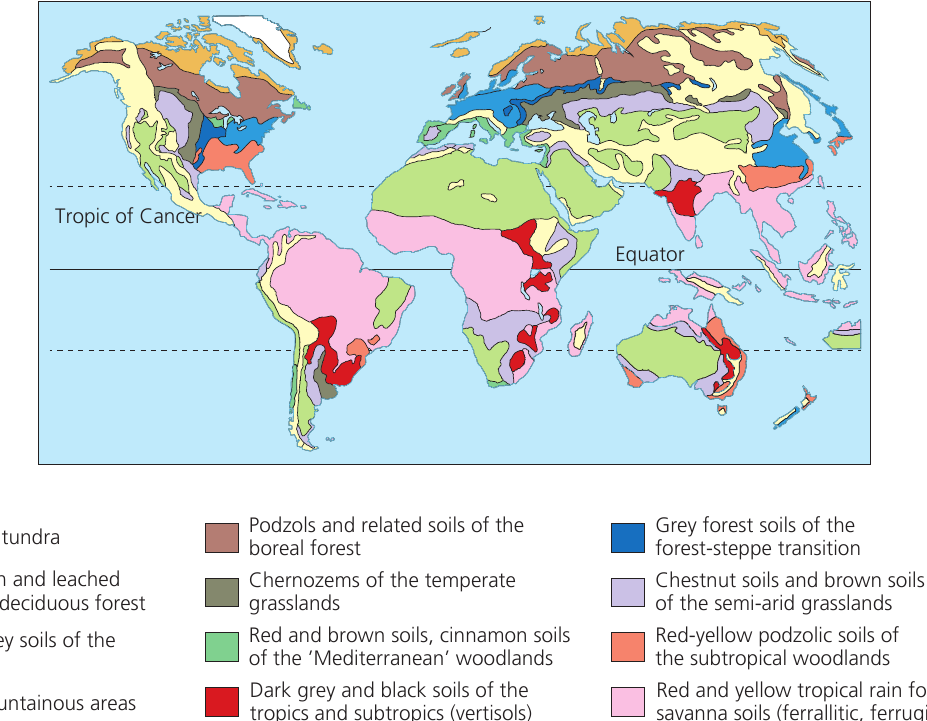
The map above shows how different zonal soil types are distributed across the world's continents. Each colour represents a major soil group that has developed in response to the climate and vegetation of that region.
Major Zonal Soil Types
Zonal Soil 1: Chernozem
Chernozems are distinctive deep black soils that contain abundant organic matter. The name comes from the Russian language, meaning "black earth". These soils have several important characteristics:
Physical properties:
- Deep black colour throughout the profile
- Depth exceeding one metre
- Clay-like structure that retains water effectively
- High percentage of organic matter
- Elevated natural levels of nutrients, particularly phosphorus
Note
Mnemonic for Chernozem Features: "BLOW"
- Black colour
- Loess parent material
- Organic-rich
- Water-retaining structure
Formation and location: Chernozems develop from wind-blown sediments called loess. Their mineral content is derived from these fine particles transported by wind over long distances.
These soils form in regions with specific climate and vegetation conditions:
- Continental climate patterns (cold winters alternating with hot summers)
- Flat or gently undulating plains
- Natural climax vegetation of tall grasses covering the landscape
Chernozems cover approximately 230 million hectares globally. They are predominantly found in the middle latitude steppes of Eurasia and North America.
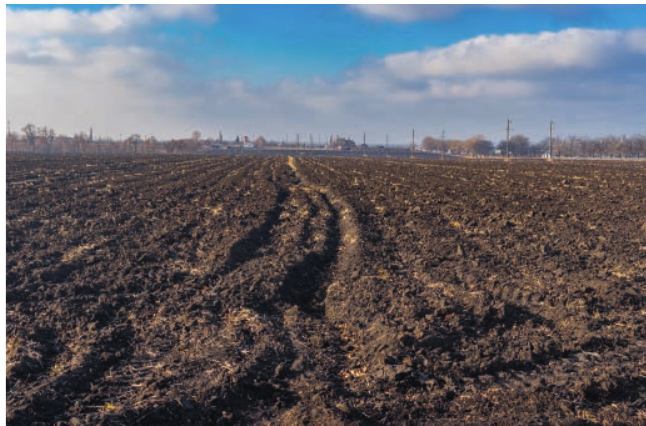
Agricultural significance: Historically, the people inhabiting chernozem regions (such as Native Americans on the North American prairies and Eurasian nomads on the steppes) were nomadic herders who gathered wild plants. The exceptional natural fertility of chernozems and their favourable topography now attract modern agriculture.
These soils permit diverse agricultural uses, including:
- Arable cropping with supplemental irrigation during dry summers
- Cattle ranching operations
Example
Agricultural Example: Ukraine's Black Earth Region
The steppes of Ukraine provide an excellent example of chernozem utilisation. The climate allows cultivation in both winter and spring seasons. A single harvest takes place between July and October.
Advantages of extended growing period:
- Enables farmers to spread out planting and fieldwork
- Facilitates crop rotation practices
- Maximises productivity from the fertile soil
Major crops cultivated:
- Cereals: wheat, barley, maize
- Oilseed plants: sunflower, oilseed rape, soybean
- Root vegetables: potatoes
Zonal Soil 2: Red and Yellow Latosols of Tropical Rainforests
Latosols represent the opposite extreme to chernozems in terms of fertility. These soils develop in hot, wet climates beneath thick forest cover. Whilst they appear to support lush vegetation, latosols are actually very infertile.
Important
Critical Difference from Chernozems
Most organic nutrients in latosol regions are stored in the vegetation itself, not in the soil. This means the soil profile has limited nutrient content and requires specific management strategies for sustainable use.
Traditional farming method - shifting cultivation: Indigenous peoples of regions like the Quicha and Kayapo of the Amazon Basin have developed a sustainable approach to farming these poor soils:
- Small areas of vegetation are cleared
- The cleared material is burned, and the ash provides nutrients to the infertile soil
- The land is farmed for two to three years
- The area is then abandoned, allowing both forest and soil to regenerate
- Farmers move to another area and repeat the process
Note
This system allows recovery time for both the forest ecosystem and the soil. However, it can only support small, scattered populations. The rainforests have historically remained sparsely populated as a result.
Modern pressures: In recent decades, both impoverished settlers and large-scale ranchers have moved into rainforest areas. Extensive tracts of forest have been cleared. The causes and impacts of this clearance on both the natural environment and human populations are significant concerns.
Soil Problems and Their Management
Soil Erosion
Important
Soil erosion is defined as the wearing away of the top layer of soil, known as topsoil. This is the most critical layer for agriculture because it contains the highest concentrations of organic matter and nutrient-rich materials.
Topsoil is what farmers depend upon for successful crop growth and grazing. Both water and wind can cause soil erosion, though water erosion is generally considered the more serious threat.
Scale of the problem: Global estimates suggest that approximately 36 billion tonnes of topsoil are lost annually due to water erosion and deforestation. The FAO (Food and Agriculture Organization) estimates that between five and seven million hectares of productive agricultural land are lost each year through erosion and related land degradation processes.
Causes and transport mechanisms: Soil can be eroded and transported away from fields through various processes involving both rainfall and wind action.
Note
Impacts on Soil Fertility
Repeated erosion progressively reduces soil fertility through several mechanisms:
- Removal of topsoil: The nutrient-rich and organic matter-laden top layer is stripped away
- Reduced rooting depth: Less soil remains available for roots to penetrate and for water storage needed by growing crops
- Decreased infiltration: Water enters the soil less readily, which increases surface run-off and creates further erosion
Consequences for farming: These changes lead to multiple problems:
- Loss of seeds, seedlings, fertilisers (nitrates) and pesticides from fields
- Young plants may be "sandblasted" by wind erosion
- Increased difficulty and fuel consumption in farming operations
- Greater man-hours required for crop irrigation
Environmental damage: Beyond the farm gate, erosion causes broader environmental problems:
- Sediment deposition onto roads, neighbouring land, drains and ditches
- Degraded water quality in rivers, streams and lakes due to excess sediment inputs
Summary
Key Points to Remember:
- Soil is a complex mixture of minerals, organic matter, water and gases organised into distinct horizontal layers called horizons
- Zonal soils are mature soil types that develop over long periods in dynamic equilibrium with climate, vegetation and parent material across wide regions
- Chernozems are deep, black, organic-rich soils of temperate grasslands that are highly fertile and excellent for agriculture
- Latosols of tropical rainforests appear fertile but store most nutrients in vegetation rather than soil, requiring shifting cultivation for sustainable use
- Soil erosion removes nutrient-rich topsoil through water and wind action, reducing fertility and causing environmental damage, with approximately 36 billion tonnes of topsoil lost globally each year