Health Impacts of Global Environmental Change (AQA A-Level Geography): Revision Notes
📚Revision Notes
Health Impacts of Global Environmental Change
Introduction
The Earth's physical environment is undergoing significant transformation, particularly affecting the atmosphere and climate. These environmental changes have direct and indirect consequences for human health worldwide. Understanding these health impacts is crucial for planning public health responses and mitigation strategies.
Note
This document examines the major pathways through which environmental changes affect human health, from ozone depletion and UV radiation exposure to climate change impacts on disease transmission and food security. Each section explores specific health risks and provides evidence from case studies and global statistics.
Ozone depletion
The breakdown of ozone molecules in the atmosphere represents a relatively recent environmental challenge. Ozone (also called triatomic oxygen, O₃) exists naturally in the stratosphere, where it performs a vital protective function.
Causes of ozone depletion
Human-made chemicals, particularly chlorofluorocarbons (CFCs), are the primary cause of ozone depletion. These chemicals were widely used in:
- Refrigeration systems
- Insulation materials
- Spray-can propellants
When CFCs reach the stratosphere, they undergo chemical reactions that break down ozone molecules. This destruction occurs mainly in the extreme cold conditions of the polar stratosphere during late winter and early spring.
How ozone protects us
The stratospheric ozone layer acts as a natural filter, blocking much of the Sun's incoming ultraviolet radiation (UVR). This is particularly important because shorter wavelength UV radiation is more biologically damaging. When the ozone layer becomes depleted, more harmful UV rays penetrate through to Earth's surface, affecting humans, plants and animals.
Note
Ultraviolet radiation (UVR) refers to electromagnetic radiation from the Sun with shorter wavelengths than visible light. It can damage DNA in living cells and cause various health problems with prolonged exposure.
Health consequences of increased UV exposure
Prolonged exposure to UV radiation creates several serious health risks:
- Increased prevalence of skin cancers
- Cataract formation in the eyes
- Higher rates of other eye diseases
- Weakened immune system function, making people more susceptible to infectious diseases
Skin cancer
Exposure to the Sun's UV radiation is the primary cause of most skin cancers. This can result from long-term cumulative exposure or short bursts of intense exposure that cause burning.
How UV radiation causes skin cancer
Ultraviolet light in sunlight damages the DNA within skin cells. Over time, this damage can lead to uncontrolled cell growth and cancer development.
Types of skin cancer
There are two main categories:
Important
Non-melanoma cancers (including basal cell carcinomas) represent the most common form globally, with over one million cases diagnosed each year. Whilst serious, these are generally less dangerous than melanomas.
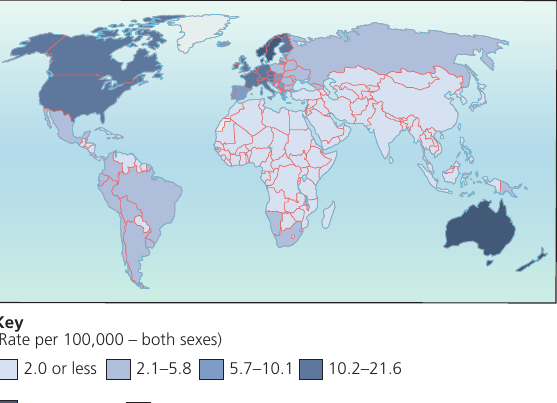
Malignant melanoma is less frequently occurring but poses greater danger because it spreads more readily to other organs if left untreated. Incidence rates have risen faster than most other cancer types over the past 50 years, with over 300,000 cases worldwide in 2018.
Populations at higher risk
Certain groups face elevated risk of developing skin cancer:
- Fair-skinned individuals: Those with less melanin pigment have reduced natural protection
- Elderly people: Cumulative lifetime UV exposure increases risk with age
- Lower latitude residents: People living closer to the equator receive higher UV radiation levels
- Males: Incidence rates are slightly higher among men, possibly because more men work in outdoor occupations
Geographic patterns
Australia and New Zealand have the highest skin cancer rates globally, with 33.6 and 33.3 cases per 100,000 people respectively. This pattern results from a combination of factors:
- Predominantly light-skinned populations
- Lower latitudes with high UV radiation levels
- Cultural emphasis on outdoor activities and lifestyle
Australia case study
The scale of the skin cancer problem in Australia is particularly severe:
- At least two out of three Australians will receive a diagnosis of some form of skin cancer by age 70
- Approximately 2,000 Australians die from skin cancer annually
- Of all new cancers diagnosed each year in Australia, roughly 80% are skin cancers
- Malignant melanomas represent 11% of new skin cancer cases but contribute to 3% of all cancer deaths
- The economic burden is substantial, with treatment costs reaching around $900 million in 2017 for diagnosis, treatment and pathology services
Cataracts
Cataracts represent a significant cause of visual impairment worldwide, creating substantial public health challenges, especially in less developed regions.
Note
Cataracts are a form of eye damage causing loss of transparency in the eye's lens, leading to progressively cloudy vision and potentially complete blindness if left untreated.
Multiple causes
Various factors can lead to cataract formation:
- Natural ageing processes
- Diabetes complications
- Smoke from burning fuelwood and cigarettes
- Poor nutrition, particularly vitamin A deficiency
The UV radiation link
Research demonstrates that UV radiation damages different parts of the eye, including the lens, cornea, retina and conjunctiva. This exposure appears to be a major risk factor in cataract development. Cataracts rank as the leading cause of blindness globally, especially in less developed countries where surgical intervention is often inaccessible.
How cataracts develop
Proteins in the eye's lens can unravel, tangle together and accumulate pigments that cloud the lens. Over time, this cloudiness worsens, eventually leading to blindness. Increased ozone depletion means anyone spending significant time outdoors faces risk of eye damage from UV radiation.
Factors affecting UV exposure risk
Several factors determine the extent of UV exposure risk:
Note
- Geographic location: UV levels are greater in lower latitudes, particularly within or near the tropics
- Altitude: UV levels increase at higher altitudes where the atmosphere is thinner
- Time of day: UV levels peak when the Sun is high in the sky, typically between 10 a.m. and 2 p.m.
- Setting: UV levels are greater in wide open spaces, especially around highly reflective surfaces like snow and sand. Urban settings with tall buildings provide more shade and protection
Important
UV radiation remains dangerous even on hazy or overcast days because it is invisible and can penetrate clouds. High-quality sunglasses that block harmful UV radiation provide effective protection. 'Wrap around' styles offer better coverage by preventing sunlight from entering around the sides.
Treatment and global burden
The only effective treatment for cataracts involves surgical removal of the cloudy lens and replacement with a clear plastic intraocular lens implant. Whilst this surgery is highly effective at restoring vision, it severely diminishes the eyesight of millions worldwide. Rural populations in developing countries face disproportionate impact because they often cannot access or afford preventive measures or surgical treatment. A sustained 10% depletion of the ozone layer is expected to result in nearly two million new cataract cases globally each year.
Climate change
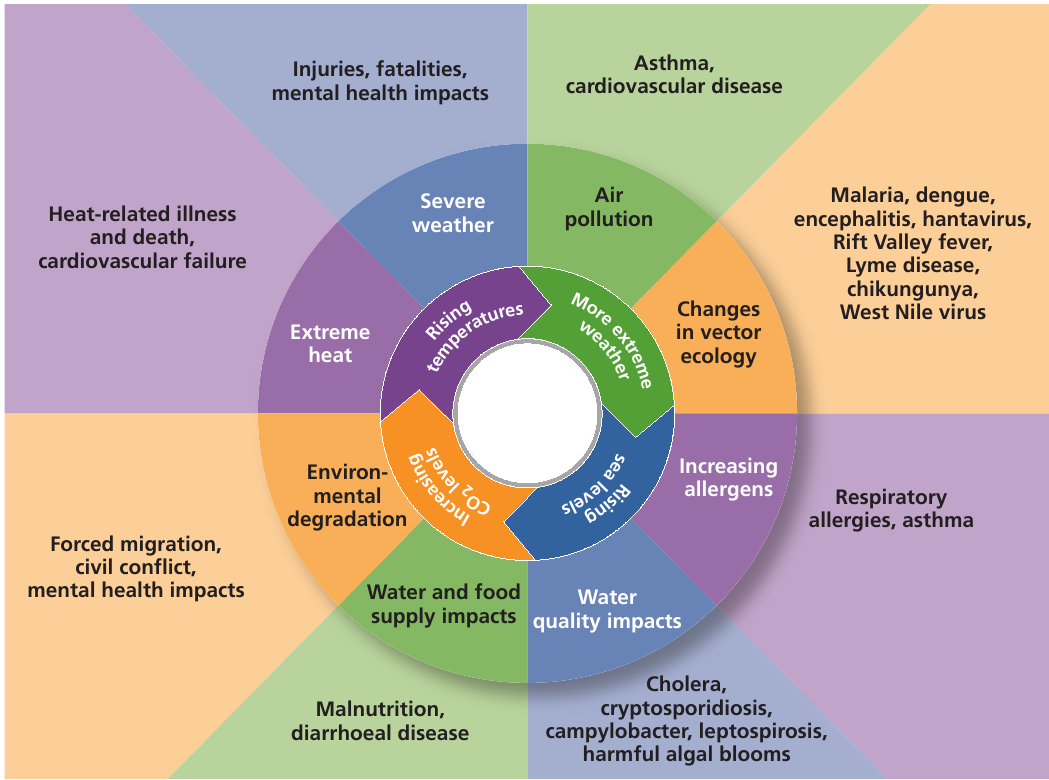
Changing climatic conditions create three distinct categories of health impacts, each affecting human populations differently depending on their vulnerability.
Direct health impacts
These result from increases in frequency or severity of extreme weather events:
Storms create risks including:
- Dangerous flooding
- High winds
- Other immediate physical threats
Warmer average temperatures lead to:
- Hotter days becoming more common
- More frequent heat waves
- Heat waves lasting longer
Environmental change impacts
Consequences of environmental change and ecological disruption include:
Air and water quality: Increased concentrations of unhealthy pollutants affect respiratory and cardiovascular health
Vector-borne disease spread: Changes in temperature and precipitation patterns can alter the geographic distribution of diseases like malaria, dengue and Lyme disease. Warmer conditions allow disease-carrying organisms to survive in previously unsuitable areas.
Impacts on displaced populations
Climate-induced economic dislocation, environmental decline and conflict situations create health consequences for demoralised populations:
Infectious disease epidemics: Greater frequency following floods and storms that disrupt sanitation systems
Nutritional and psychological effects: Substantial traumatic, nutritional or psychological health impacts following population displacement from sea level rise or increased storm activity
Overall assessment
Important
Although global warming may bring some localised benefits (such as fewer winter deaths in temperate climates and increased food production in certain areas), the World Health Organization suggests that overall health effects will likely be overwhelmingly negative. Between 2030 and 2050, they estimate there will be approximately 250,000 additional deaths per year from malnutrition, malaria, diarrhoea and heat stress.
Vulnerability factors
For each potential impact of climate change, certain groups face particularly high vulnerability. This depends on factors such as:
- Population density
- Level of economic development
- Food availability
- Income level
- Distribution systems
- Local environmental conditions
- Pre-existing health status
- Quality and availability of public healthcare
The elderly and those living in poverty face the greatest risk of being harmed by thermal extremes.
Thermal stress
Climate change affects mortality rates through changes in temperature at both extremes, impacting cardiovascular and respiratory systems.
Heatwaves
Heatwaves create multiple serious health risks through several mechanisms.
Primary risks include:
- Dehydration
- Overheating
- Heat exhaustion
- Heatstroke
Note
Particularly vulnerable groups:
- Very young children
- Elderly people
- Those who are seriously ill
These groups are especially at risk when weather becomes very hot.
European heatwave 2003 case study
Northern and western Europe experienced more frequent heatwaves in recent decades. During August 2003, an unprecedented heatwave struck France and Spain. High temperatures persisted for three weeks, resulting in 15,000 excess deaths. The World Health Organization reported 70,000 excess deaths across the whole of Europe during the same period. The elderly were disproportionately affected in both cases.
UK heatwave 2019
Nearly 900 excess deaths occurred in the UK during summer 2019 from heatwaves. During a six-day heatwave in late August, 320 people died. Once again, elderly people were disproportionately affected.
Heatwave impacts beyond direct mortality
Heatwaves can lead directly or indirectly to other health risks:
Note
Photochemical smogs: UV light reacts with nitrogen dioxide in the atmosphere to form ground level ozone, nitric acids and other pollutants. These cause eye irritation and respiratory problems.
Algal blooms: Growth of blue-green algae in water courses can cause problems for aquatic life, including fish. Toxic algal blooms create problems for public recreational water activities.
Environmental health issues: Problems including odour, dust and vermin infestation may require mitigation through more frequent waste collections and extra pollution controls at landfills and waste treatment facilities.
Wildfires: Increased fire risk threatens both property and health.
Water shortages: Reduced water availability affects health and sanitation.
Urban heat island effect
Heatwaves have a much bigger health impact in cities than in surrounding suburban and rural areas. The impact on mortality from heat stress may be more significant in developing-country cities (such as Mexico City or New Delhi) where populations are especially vulnerable as they lack resources to deal with heatwaves.
Cold spells
In many temperate countries, clear seasonal variation exists in mortality rates. Death rates in winter can be as much as 25% higher than in summer. Extremes of cold severely impact those suffering with cardiovascular and respiratory diseases, leading to increased mortality. Over 34% of excess winter deaths in the UK were caused by respiratory diseases in 2017-18.
However, annual outbreaks of winter diseases such as influenza, which significantly influence winter mortality rates, are not strongly associated with cold temperatures.
Future projections
Climate change is likely to bring milder winters in temperate regions. Research indicates that for most cities studied, global climate change will likely lead to reduced mortality rates due to decreasing winter mortality. This effect is most pronounced for cardiovascular mortality in elderly people in cities which currently experience temperate or cold climates.
Important
There is conflicting evidence about whether decreases in winter mortality are greater or less than increases in summer deaths due to heatwaves. Severe cold is thought to have a larger impact on mortality than extreme heat, but other factors affecting winter mortality suggest that negative impacts of more frequent heatwaves outweigh benefits of fewer cold days. The net impact on mortality is likely to vary between populations.
Vector-borne diseases
Vector-borne diseases are transmitted by organisms (vectors) such as mosquitoes and ticks. Climate change is altering the geographic distribution of these diseases, expanding their range into previously unaffected areas.
Determinants of disease transmission
Important factors controlling vector-borne disease transmission include:
- Vector survival and reproduction rates
- The vector's biting rate
- The pathogen's incubation rate within the vector organism
Vectors, pathogens and host organisms each survive and reproduce within specific ranges of optimal climatic conditions. Temperature and precipitation are the most important factors, while altitude, wind and daylight duration are also significant.
Climate change impacts on disease distribution
Important
Any changes in temperature and rainfall patterns resulting from global climate change will alter the geographic distribution of optimal conditions for most vectors. The once limited geographic ranges of many vector-borne diseases are expanding, spurred largely by human-induced climate factors.
By 2100, it is estimated that average global temperatures will have risen by 1.5-5°C. This increases the likelihood of many vector-borne diseases establishing in new areas. The greatest effect on disease transmission is likely to be observed at the extremes of the temperature range at which transmission occurs. For many diseases, these temperatures lie in the range 14-18°C at the lower end and about 35-40°C at the upper end.
Malaria and dengue
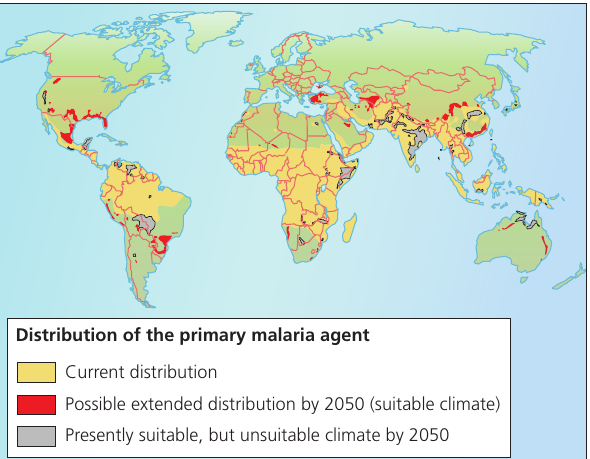
These represent the most important vector-borne diseases in the tropics and subtropics. Populations living at the present margins of malaria and dengue distribution, without effective primary healthcare, will be most susceptible if these diseases expand their geographic range in a warmer world.
The Aedes mosquito vector of dengue (which also carries other viruses including yellow fever and Zika) is sensitive to climatic conditions. Studies suggest that climate change could expose an additional one billion people to dengue transmission by the end of the century.
Note
Figure 10.70 shows that malaria is likely to spread by 2050, based on climate change models. Yellow areas indicate the current distribution of malaria. Red areas show where climate will become conducive to malaria by 2050. Other areas may become free of malaria as climate changes.
Climatic anomalies associated with the El Niño-Southern Oscillation phenomenon (resulting in drought and floods) are also expected to increase in frequency and intensity. These have been linked to outbreaks of malaria in Africa, Asia and South America.
Lyme disease
Lyme disease (Lyme borreliosis) is the most common vector-borne disease in temperate climates of the northern hemisphere, including the USA and Europe. The Borrelia bacteria is transmitted to humans by the bite of infected deer ticks of the Ixodes genus. It is an emerging vector-borne disease thought to be associated with warmer and more humid conditions.
West Nile Virus
West Nile Virus (WNV) is an emergent disease transmitted by Culex species of mosquito. It has a different climatic tolerance range and can survive in more temperate regions. Human infections attributable to WNV have been reported in many countries worldwide for over 50 years.
Since 1997, it spread widely. In 1999, the virus reached New York, resulting in a large and dramatic outbreak that spread throughout the USA in following years. Since its introduction into the USA, the virus has spread and is now widely established from Canada to Venezuela.
Important
The WNV outbreak in the USA (1999-2010) highlighted the fact that establishment of vector-borne diseases outside their current habitat represents a serious danger to the world.
Zika virus
Zika virus infection is caused by the bite of an infected Aedes mosquito, usually causing rash, mild fever, conjunctivitis and muscle pain. Another emergent disease, the virus was isolated in 1947 in the Zika forest in Uganda. It remained mainly in Africa (with only sporadic outbreaks in Asia) until 2014 when Chile notified the WHO of the virus on Easter Island.
In 2015, Zika spread into South and Central America and the Caribbean. After peaking in the Americas in 2016, it has since declined there. In 2019, the WHO reported 87 countries with evidence of mosquito-borne transmission. These countries were located in Africa, the Americas, South East Asia and the Western Pacific.
Agricultural productivity
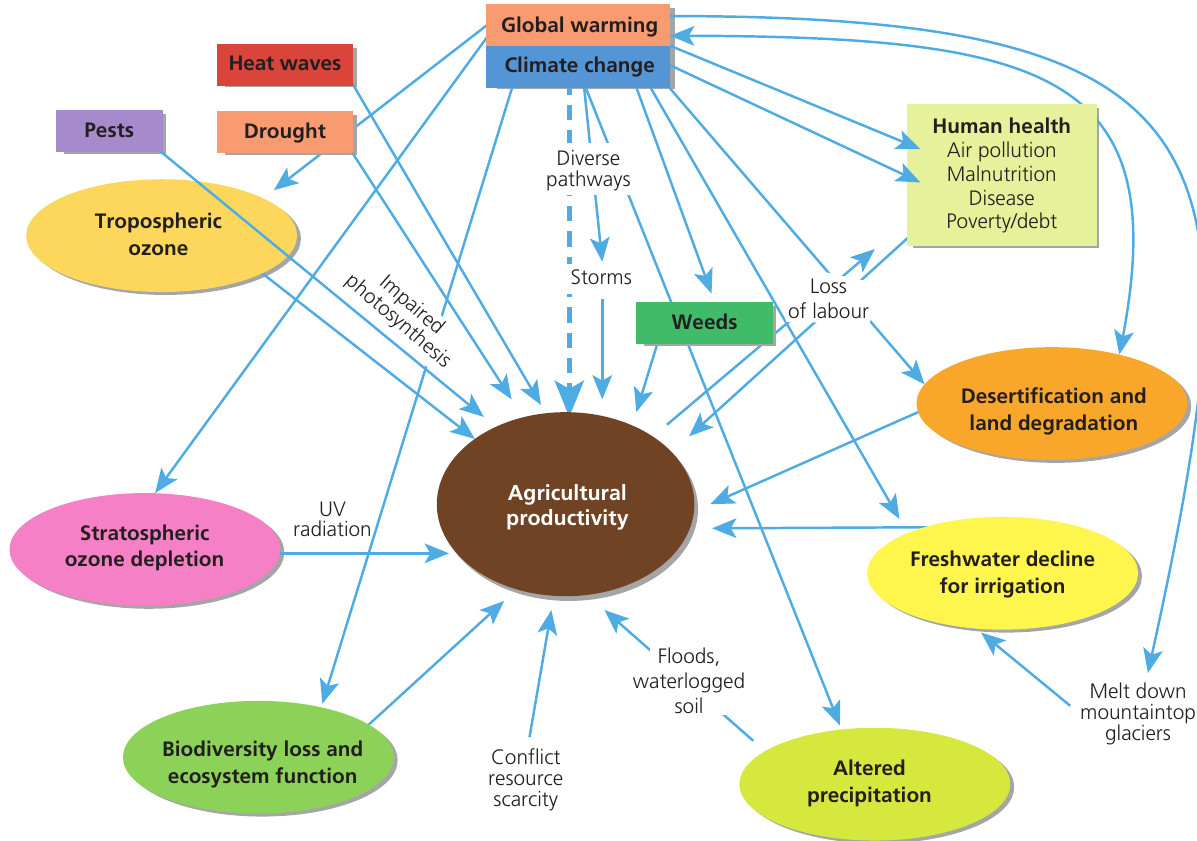
Climate change affects agricultural production through both direct and indirect pathways, with consequences for food security and human nutrition globally.
Direct impacts on crop yields
Higher growing season temperatures will significantly affect agricultural yields, farm incomes and food security. There will be gains and losses depending on the location of the growing region.
Potential gains in mid and high latitudes:
- Crop yields are projected to increase and extend northwards
- Particularly beneficial for cereals and cool season seed crops such as oil seed rape
- Crops like maize, sunflower and soya beans could become viable further north and at higher altitudes
- Yields could increase by as much as 30% by the 2050s
- Potentially large gains in agricultural land for regions such as Russia, owing to longer planting seasons and more favourable growing conditions (amounting to a 64% increase over 245 million hectares by the 2080s)
- These gains may be tempered by an increase in drought conditions, rendering extensive irrigation programmes necessary
Challenges in adaptation:
Important
Without adaptations by farmers, climate change may not necessarily confer benefits to productivity. For example, an increase in the mean growing season temperature will bring forward the harvest time of current varieties and possibly reduce final yield without adaptation to a longer growing season.
Areas where productivity will decline:
- In areas where temperatures are already close to the physiological limits for crops (such as seasonally arid regions), higher temperatures will be detrimental
- Increased heat stress on crops and water loss by evaporation
- Significant modifications to crop strains and/or farming methods may be necessary if agricultural production is to be feasible in such conditions
Impact of rainfall changes:
- Varying rainfall patterns will have a significant impact on productivity
- The impact of climate change on regional precipitation is difficult to forecast, but there is confidence in projections of a general increase in high-latitude rainfall, especially in winter
- An overall decrease expected in many parts of the tropics and subtropics
Indirect impacts
Climate change affects agriculture adversely through several indirect pathways:
Note
Pests and diseases: Indications are that pests such as aphids and weevil larvae respond positively to higher levels of CO₂. Increased temperatures also reduce the overwintering mortality of many pests, enabling earlier and more widespread dispersion.
Water availability changes: Water for irrigation is often extracted from rivers which depend upon distant climatic conditions. For example, agriculture along the Nile in Egypt depends on rainfall in the upper reaches of the river in the Ethiopian Highlands or Rwandan mountains.
Sea level rise: Vulnerability of crop productivity is greatest where large-scale sea-level rise occurs in conjunction with low-lying coastal agriculture. It may result in saltwater incursion into aquifers used for irrigation and soil salinisation, damaging fertile farmland near to river deltas.
Regional impacts conclusion
Because different crops show different sensitivities to temperature change, there are still uncertainties about yields for given levels of global warming. For example, it is thought that a 2°C warming in the mid-latitudes could increase wheat production there by 10%, whereas at low latitudes the same amount of warming may decrease yields by around the same amount.
Nutritional standards
The impact of climate change on global food production will have uncertain and varying consequences for human health and nutrition. Effects can be viewed from different perspectives depending on levels of development.
Developed regions
Increasing food prices may lower the nutritional quality of dietary intakes, exacerbate obesity and amplify health inequalities. Changes in agricultural production resulting from new crop and livestock species may lead to use of different pesticides and veterinary medicines. This in turn affects the transfer mechanisms through which contaminants move from the environment into food, with implications for food safety and nutritional content.
Note
The complementary promotion of healthier diets and climate change mitigation may increase consumption of foods whose production reduces greenhouse gas emissions. For example, reducing red meat consumption will have positive health effects, including reducing levels of saturated fat in the diet and lowering risk of cancers in the digestive system (though it reduces iron and zinc intake). It has the additional benefit of freeing more arable land to grow crops for human consumption.
Developed countries may be able to adapt to the food safety consequences of climate change, although the ability to respond to nutritional challenges is less certain.
Developing regions
Nations experiencing rapid economic growth often go through a 'nutrition transition' where increased affluence guides the population to a more 'westernised' diet. China, in particular, has seen a significant shift from primarily cereal consumption (mainly rice) to more meat consumption.
This will have mixed nutritional results for populations. Although it has not come as a result of climate change, it will exacerbate the effects through 'positive feedback'. Increased livestock production will increase methane emissions, requires more land usage for fodder production and so more clearance of forests.
Least developed regions
Important
These regions are the most vulnerable to loss of production due to climate change. A study by UNICEF found clear farming links between climate change and the nutritional status and migration patterns of populations.
The predictability of rainfall is critical for rain-fed agriculture. Climate change has given an unpredictable combination of extended periods of rainfall (leading to floods) and droughts, both of which have resulted in crop failure. When crops fail, farmers may sell livestock as an economic default, which can lead to iron and zinc deficiencies in the diet.
Another important aspect of climate-induced crop failure is an over-reliance on fewer crops which are less likely to fail. Exclusive diets of particular crops lead to specific forms of malnutrition.
Summary
Key Points to Remember:
-
Ozone depletion increases UV radiation reaching Earth's surface, causing skin cancer and cataracts. Australia and New Zealand have the world's highest skin cancer rates (33+ per 100,000), and UV exposure causes nearly 2 million new cataract cases globally each year.
-
Climate change creates three types of health impacts: direct impacts from extreme weather (heatwaves, storms), environmental changes affecting air quality and disease vectors, and consequences for displaced populations. The WHO estimates 250,000 additional annual deaths from climate-related causes between 2030-2050.
-
Heatwaves are increasingly dangerous, particularly for elderly people and those in poverty. The 2003 European heatwave caused 70,000 excess deaths, whilst the UK saw nearly 900 excess deaths from heatwaves in 2019. However, milder winters may reduce cold-related mortality in temperate regions.
-
Vector-borne diseases are expanding their geographic range due to climate change. Malaria and dengue may spread to new areas by 2050, potentially exposing an additional one billion people to dengue. Temperature rises of 1.5-5°C by 2100 will create suitable conditions for disease transmission in previously unaffected regions.
-
Agricultural productivity faces mixed impacts from climate change. Mid and high latitude regions may see crop yield increases up to 30%, whilst areas near physiological temperature limits for crops will experience declining productivity. These changes affect global food security and nutritional standards, with least developed regions most vulnerable to malnutrition.