Prospects for Global Population Change (AQA A-Level Geography): Revision Notes
📚Revision Notes
Prospects for Global Population Change
Overview of global population trends
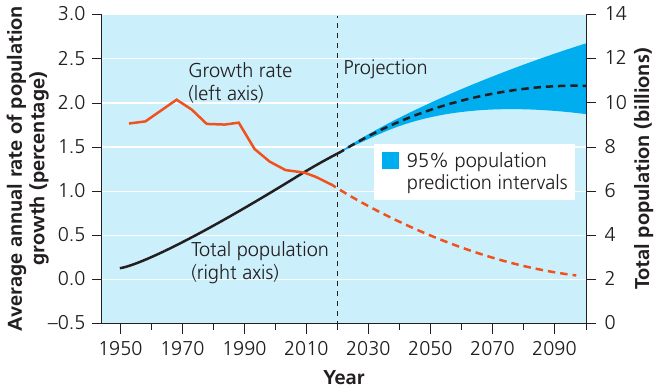
During the twenty-first century, the world's population is expected to grow much more slowly than in the previous century. The United Nations estimates that global population will reach approximately 10.9 billion by 2100, representing a growth of around 75% from current levels. This is a dramatic contrast to the twentieth century, when population exploded from 1.6 billion in 1900 to 6.1 billion in 2000 - an increase of nearly 400%.
The reason for this slower growth is simple: population growth rates are declining. The peak growth rate occurred in the late 1960s at approximately 2.09% per year. Since then, it has steadily fallen to around 1% today, and projections suggest it will continue to decrease throughout this century.
Note
The dramatic slowdown in growth rates from 2.09% to 1% represents a fundamental shift in global demographic patterns. This deceleration is one of the most significant changes in human population dynamics in history.
Drivers of world population growth
Understanding future population change requires examining the two main factors that determine how populations grow or shrink: fertility rates and life expectancy. These drivers work together to shape demographic trends, with fertility rates determining how many people are born and life expectancy determining how long they live.
Fertility rates
Total fertility rate is the average number of children that would be born to a woman over her lifetime. It is the key factor in the demographic transition that each country experiences as it develops.
Fertility rates have been declining globally for several decades. In the 1960s, the global average fertility rate was five children per woman. Today, this has fallen to approximately 2.5 children per woman. The United Nations forecasts that this downward trend will continue, with fertility expected to reach 1.9 children per woman by 2100.

Important
Why Replacement Fertility Matters
The replacement fertility rate of approximately 2.1 children per woman is a critical threshold. When fertility falls to this level, populations stabilise rather than grow. Once it drops below this threshold, population growth becomes less significant as a driver of future change. This explains why countries with fertility rates below 2.1 experience slowing or negative population growth, even with increasing life expectancy.
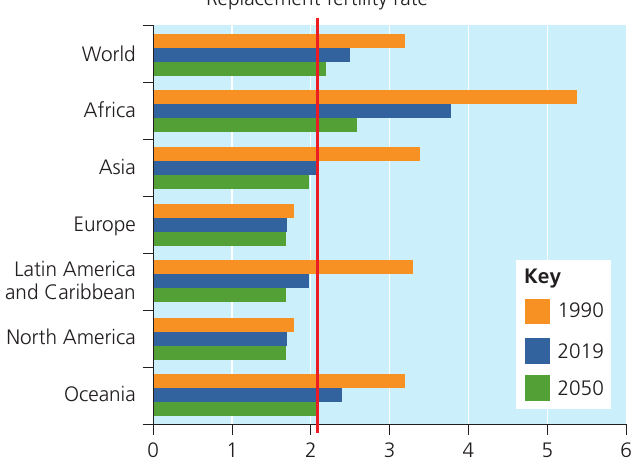
The chart above shows significant regional variations in fertility rates. Africa continues to have the highest fertility rates, although these are declining. Europe, by contrast, has fertility rates well below replacement level. Asia, Latin America and the Caribbean, North America, and Oceania all show fertility rates approaching or below the replacement threshold of 2.1.
Life expectancy
Improvements in living standards, healthcare, and medical science have enabled more children to survive into adulthood and more adults to live longer. The transfer of medical knowledge through non-governmental organisations has improved survival chances even in some of the world's poorest countries. As a result, average life expectancy is increasing rapidly worldwide.
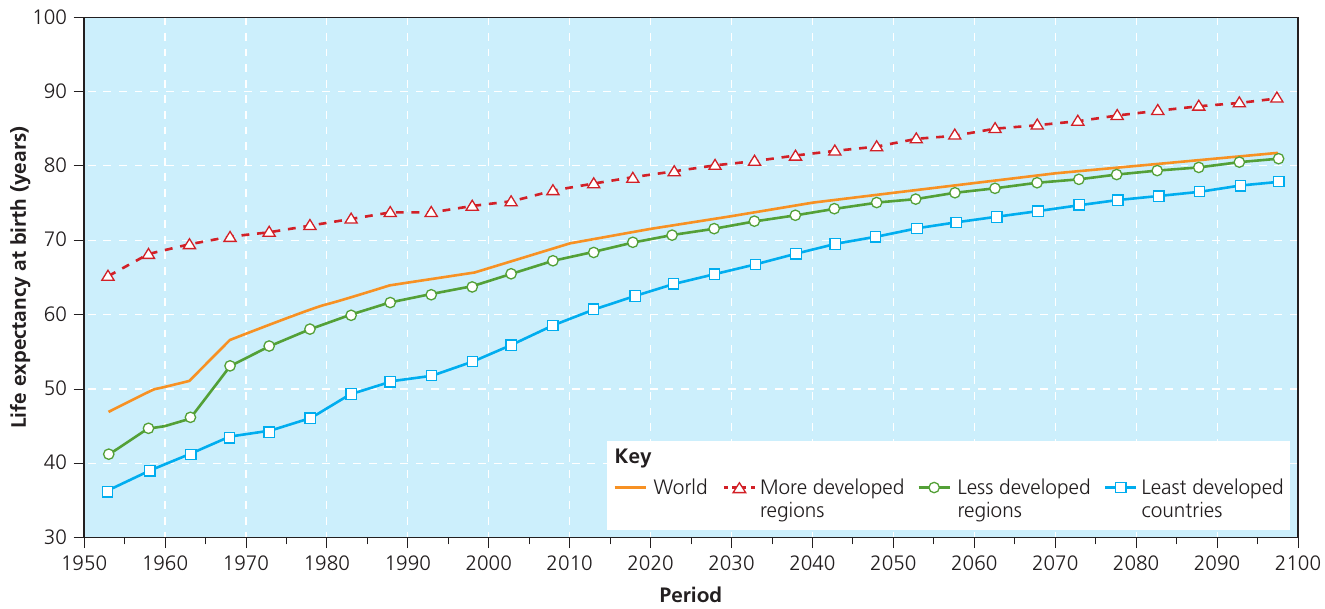
This rising life expectancy has become the main driver of population growth in recent decades. More people are surviving into older age, which increases total population size even when fewer babies are being born. The gap in life expectancy between more developed and less developed regions is gradually narrowing, although significant differences remain. By 2100, global average life expectancy is projected to reach approximately 77 years, with even the least developed countries expected to achieve life expectancies around 78 years.
Note
Narrowing the Longevity Gap
While life expectancy is improving globally, significant disparities persist. In 2019, life expectancy in least developed countries was more than ten years below the global average. However, the trend shows convergence - the gap is closing as medical knowledge and healthcare improvements spread to poorer regions through international cooperation and development programmes.
Predicting future population size
Future population growth depends heavily on the path that fertility rates take. Because of this uncertainty, the UN Population Division creates multiple projection scenarios based on different assumptions about how fertility might change. These projections help policymakers and researchers understand the range of possible futures and plan accordingly.
UN projection variants
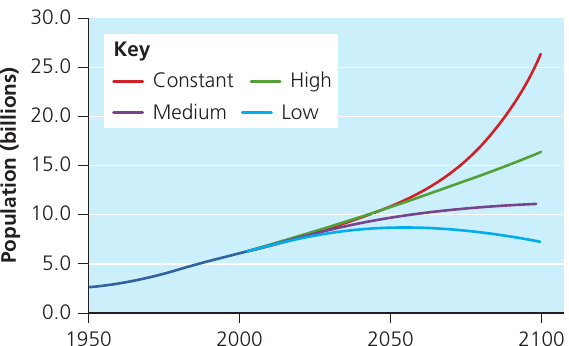
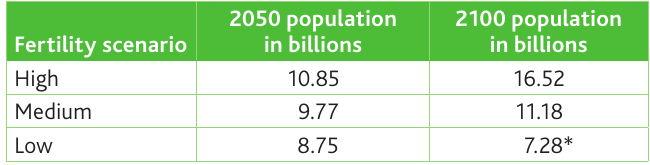
In 2017, the UN presented four different variants of population projections:
-
Constant variant: Assumes fertility rates remain at current levels. This is considered unrealistic as it suggests no further demographic transition would occur.
-
Medium variant: The most likely scenario and the basis for UN projections. This assumes fertility rates will continue to decline gradually across all regions.
-
High and low variants: These assume fertility rates in each country are 0.5 children higher or 0.5 children lower than the medium variant prediction.
Important
Understanding Projection Uncertainty
The differences between these scenarios are substantial. By 2050, projections range from 8.75 billion (low variant) to 10.85 billion (high variant) - a difference of 2.1 billion people. By 2100, this divergence becomes even more dramatic, with projections ranging from 7.28 billion to 16.52 billion - a spread of 9.24 billion people.
This enormous range highlights two critical points:
- Small changes in fertility rates can have massive long-term impacts on population size
- There is considerable uncertainty about future growth, particularly beyond 2050
The UN regularly reviews and updates its projections every two years, and the 2019 report predicted a 2100 population of 10.90 billion, with a 95% chance of falling between 9.40 and 12.70 billion.
Alternative projections
Several research groups develop their own population projections using different methods. In 2014, the Wittgenstein Centre for Demography (part of the International Institute for Applied Systems Analysis) produced projections that were notably lower than the UN's estimates. Their model included a crucial variable not fully incorporated into UN projections: the level of education within populations.
Example
The IIASA Alternative Scenario
The IIASA projections suggest a different trajectory than UN estimates:
- World population will reach 8.3 billion by 2030
- It will peak at 9.4 billion around 2070
- Population will then decline to 9 billion by 2100
This represents a population approximately 2 billion lower than the UN medium variant projection for 2100.
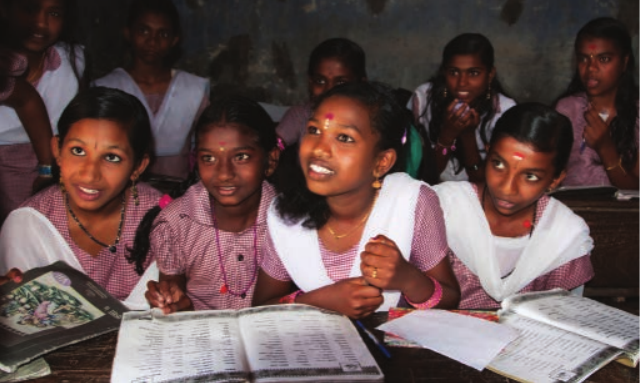
This differs significantly from UN projections because education - particularly female education - has a strong negative correlation with fertility rates and child mortality. Countries that invest heavily in education, especially for girls, tend to experience more rapid fertility decline. This relationship is particularly evident in regions like sub-Saharan Africa, where the pace of fertility decline has been slower than in other regions, partly due to the slower introduction of compulsory female education for older age groups.
Important
The Education Factor
Research consistently shows that female education is one of the most powerful factors in reducing fertility rates. Women with higher levels of education tend to:
- Have fewer children
- Have children later in life
- Experience lower child mortality rates
- Have better access to healthcare and family planning
The UN has acknowledged the importance of education and investments in education are supported by the Sustainable Development Goals (SDGs).
However, uncertainty remains about whether low fertility rates will be sustained in countries that have already achieved low fertility levels. The medium variant level of fertility currently appears most likely based on trends in high-fertility populations experiencing development-related fertility decline.
Summary of prospects
Despite the variety of forecasts about future global population change, several common themes emerge from the UN's World Population Prospects reports. These findings represent the current scientific consensus on global demographic trends and highlight both the certainties and uncertainties in population projections.
Summary
Key Findings from UN World Population Prospects
-
Slowing growth rates: World population growth will continue to decelerate, although the exact rate of deceleration is difficult to predict with certainty.
-
Regional concentration: The most rapid population increases will occur in sub-Saharan Africa, which is projected to account for more than half of global population growth between 2020 and 2050.
-
Momentum effect: Two-thirds of projected population growth until 2050 will be driven by people currently alive, even if fertility in high-fertility countries were to fall immediately to replacement levels. This demographic momentum results from the large number of young people who will reach childbearing age.
-
Population decline: Between 2019 and 2050, the populations of 55 countries or regions are projected to decrease by 1% or more due to sustained low fertility levels and, in some cases, high rates of emigration. These countries are mostly located in Europe, Japan, China, and other parts of Asia and the Americas.
-
Ageing populations: Countries with declining populations face significant challenges related to ageing. The world's population is growing older, with those aged 65 and over representing the fastest-growing age group. Between 2020 and 2050, this age group will nearly double from 9% to 16% of the global population. In 2018, for the first time in history, people aged 65 or over outnumbered children under five years of age.
-
Increasing longevity: Average global life expectancy at birth will continue rising, reaching 77.1 years by 2050. Despite significant progress in closing the longevity gap between countries, large differences remain. In 2019, life expectancy in least developed countries was more than ten years below the global average.
-
Falling fertility: Global total fertility rates will continue to fall towards or below the replacement rate of approximately 2.1 children per woman in most regions.
-
Shifting rankings: India is projected to surpass China as the world's most populous country by 2027, reflecting China's rapid fertility decline and India's continued moderate population growth.
Projected regional distributions
Global population distribution will change significantly during the twenty-first century. The most dramatic shift will be the growing proportion of the world's population living in Africa, whilst Europe's share will decline substantially. These regional changes will have profound implications for global migration patterns, resource distribution, economic development, and international relations.
Key regional trends
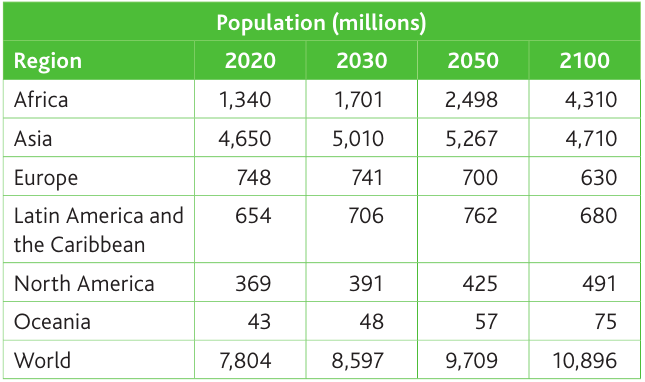
Africa will experience by far the most dramatic population growth of any continent. The population is projected to increase from 1,340 million in 2020 to 4,310 million by 2100 - more than tripling in size. More than half of all global population growth from 2020 to 2050 is expected to occur in Africa. This growth is concentrated in sub-Saharan Africa, where fertility rates remain well above replacement level, although they are gradually declining.
Important
Africa's Demographic Transformation
Africa's massive population growth presents both challenges and opportunities:
- By 2100, Africa is projected to contain approximately 40% of the world's population, compared to just 17% in 2020
- This represents a fundamental shift in global population distribution
- The region will require massive investments in infrastructure, education, healthcare, and employment to support this growing population
- Meeting the Sustainable Development Goals in Africa will be critical for global demographic stability
Asia currently contains the world's largest population at 4,650 million people. Growth will continue but at a much slower rate, reaching a peak of around 5,267 million by 2050 before declining slightly to 4,710 million by 2100. This pattern reflects Asia's demographic diversity - some countries like China are already experiencing population decline, whilst others like India continue to grow.
Europe faces population decline throughout the century. From 748 million in 2020, the population is projected to fall to 630 million by 2100. This decline results from sustained below-replacement fertility and population ageing. Many European countries are already experiencing natural population decrease, offset only partially by immigration.
Latin America and the Caribbean will see modest growth from 654 million to 680 million between 2020 and 2100. Population is expected to peak around mid-century before beginning a slow decline, similar to the pattern observed in more developed regions.
North America will experience moderate, steady growth from 369 million to 491 million, driven partly by relatively higher fertility rates than Europe and continued immigration.
Oceania represents the smallest continental population but will grow proportionally from 43 million to 75 million by 2100.
Note
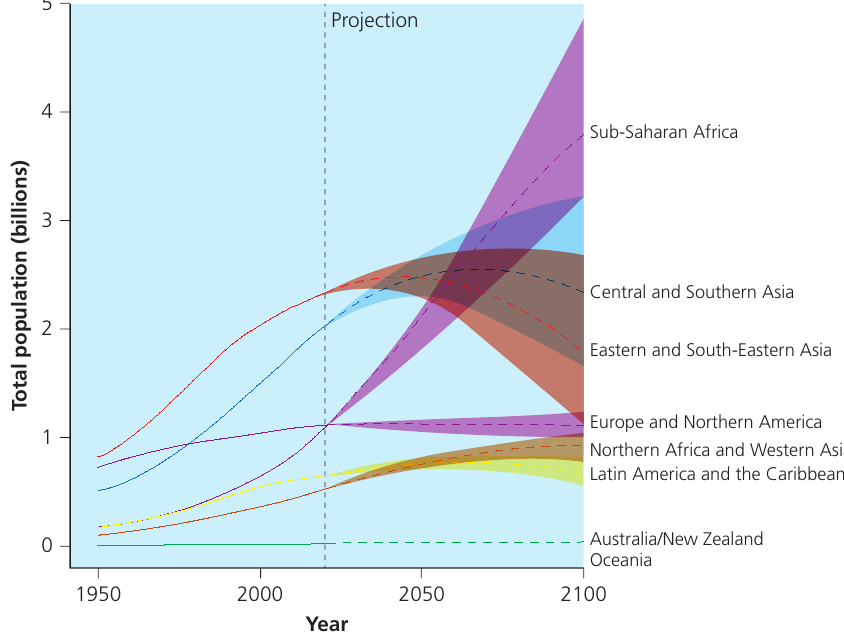
The stacked area chart above visually demonstrates how dramatically sub-Saharan Africa's share of world population will increase, whilst other regions plateau or decline. This visualization makes clear the magnitude of the demographic shift that will reshape global population distribution over the coming decades.
Remember!
Summary
Essential Takeaways: Global Population Prospects
-
Two main drivers: World population growth is determined by fertility rates (declining globally) and life expectancy (increasing globally). Together, these factors shape all demographic trends.
-
Slower 21st century growth: The world will grow by approximately 75% this century (to 10.9 billion), compared to 400% growth in the 20th century, due to falling fertility rates. This represents a historic demographic transition.
-
Africa dominates future growth: More than half of global population increase between 2020 and 2050 will occur in Africa, with the continent's population projected to triple by 2100 from 1.34 billion to 4.31 billion.
-
Uncertainty remains significant: UN projections for 2100 range from 7.28 billion (low variant) to 16.52 billion (high variant), showing how sensitive long-term forecasts are to fertility rate assumptions. Small changes in fertility can have massive long-term impacts.
-
Education matters: Alternative projections (like IIASA's) that account for education levels predict lower population peaks around 9.4 billion, highlighting the crucial role of female education in reducing fertility rates. This factor may prove decisive in determining actual population trajectories.
-
Replacement fertility rate: The critical threshold of approximately 2.1 children per woman determines whether populations grow, stabilise, or decline. Understanding this concept is essential for interpreting demographic projections.