Case Study: Energy Mixes - Niger, Iceland and France (AQA A-Level Geography): Revision Notes
📚Revision Notes
Case Study: Energy Mixes - Niger, Iceland and France
Understanding energy mixes
Different countries use different combinations of energy sources based on their natural resources, economic development, geographic location and political choices. This is called their energy mix. This case study explores three contrasting countries: Niger (a developing nation), Iceland (a renewable energy leader) and France (a nuclear power giant).
Important
Energy mix
The combination of different energy sources that a country uses to meet its energy needs. This includes both primary energy (energy in its natural form) and the electricity generated from these sources.
Niger - Energy poverty in a resource-rich nation
Niger presents a challenging case study of a country with significant energy potential but limited capacity to develop it. The nation's energy situation reflects broader development challenges facing many African countries.
Current energy supply
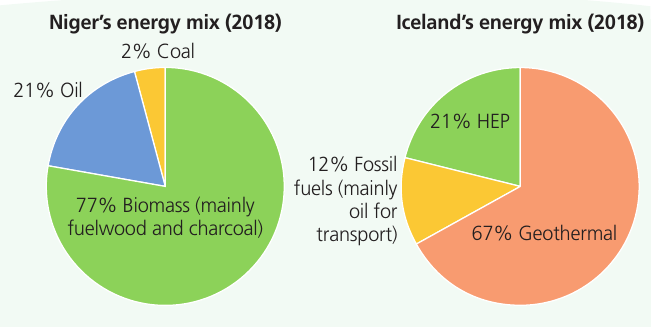
In 2018, Niger's total primary energy supply was 3,100 million tonnes of oil equivalent (mtoe). The energy mix was heavily skewed towards traditional sources:
- 77% biomass - primarily fuelwood, charcoal and animal waste
- 21% oil
- 2% coal
This biomass dependency is concentrated in rural areas, where 84% of Niger's population lives. These communities rely almost entirely on fuelwood and charcoal for their heating and cooking needs. Access to modern energy is severely limited - only one in five people (20%) has access to electricity, making Niger one of the least electrified countries globally.
Energy consumption patterns
The way energy is consumed in Niger differs markedly from developed nations:
- Households: 82% of energy consumption
- Transport (mainly road): 14% of energy consumption
- Industry, mining and commercial/public services: Remaining 4%
Note
The dominance of household consumption reflects the basic energy needs of a predominantly rural population using biomass for daily cooking and heating. Niger has this energy mix because there is minimal use for electricity except in urban centres. The main energy requirement is for cooking and heating, and firewood remains the cheapest and most readily available option for rural communities.
Development constraints
Despite being one of the world's top ten uranium producers, Niger lacks the wealth and technical expertise to develop its own nuclear energy programme. The country also possesses significant undeveloped oil reserves and could use these to supplement energy supply for transport and power generation sectors.
Important
Energy Development Paradox
Niger is a poor country and cannot afford to develop much of its energy potential without external assistance from organisations like the World Bank. The country relies on electricity imports for a significant portion of its supply, creating energy insecurity and dependence on neighbouring nations.
Future potential
There are encouraging signs for Niger's energy future:
Hydroelectric power: The Kandaji HEP station on the Niger River began construction in 2019 and is expected to open in 2025. This represents considerable potential for developing more sustainable electricity generation.
Solar and wind energy: Niger has substantial potential for renewable energy development, particularly solar power given its location in the Sahel region. However, this development is reliant on external support, particularly from the US government through Power Africa, an organisation that supports the energy sector and encourages electricity development in rural areas.
Iceland - Harnessing the power of geology
Iceland stands in stark contrast to Niger, demonstrating how natural resources combined with economic capacity can create an almost entirely renewable energy system.
Current energy supply
Iceland's 2018 energy mix showcases impressive renewable energy utilisation:
- 67% geothermal energy
- 21% hydroelectric power (HEP)
- 12% fossil fuels (mainly oil for transport)
Note
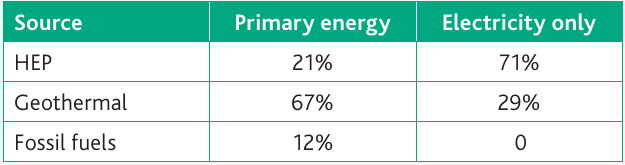
The table above reveals an interesting pattern in how Iceland uses its energy sources. While geothermal dominates overall primary energy (67%), when looking at electricity generation specifically, hydroelectric power provides the majority (71%). This reflects how geothermal is used extensively for direct heating applications, whilst HEP is preferred for electricity generation.
Why Iceland's renewable energy works
Several interconnected factors explain Iceland's remarkable renewable energy achievement:
Geographic advantages: Iceland straddles a plate margin, making it geologically active with abundant geothermal energy resources. The country experiences frequent volcanic activity and has numerous hot springs that can be tapped for energy. Additionally, Iceland is a mountainous country with plentiful water supply and significant rainfall, creating ideal conditions for hydroelectric power generation with falling water.
Economic capacity: As an advanced, developed country with a relatively small population (around 350,000), Iceland can afford the sophisticated technology required to harness its geothermal potential and construct dams for HEP. The initial infrastructure costs are substantial, but Iceland's affluent economy can support these investments.
Important
Iceland's Energy Profile
Iceland has one of the highest energy consumption rates per capita of any country globally. However, it simultaneously ranks as one of the lowest carbon emitters because it only uses fossil fuels for transport. All other energy needs - heating, electricity and industrial processes - are met through renewable sources.
This combination of natural endowment, technological capacity and political commitment has enabled Iceland to develop an energy system that other nations aspire to replicate.
France - The nuclear power model
France represents a third distinct approach to energy security, built around nuclear energy following strategic decisions made decades ago.
Nuclear dominance
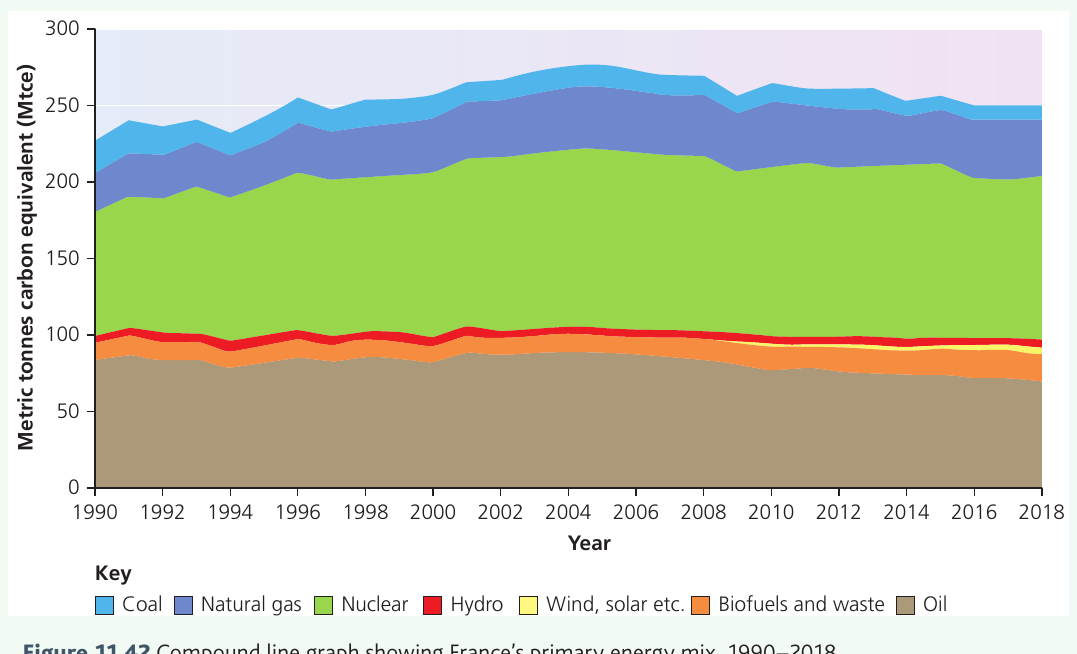
France derives 40% of its primary energy from 59 nuclear power stations scattered across the country. When focusing specifically on electricity generation, nuclear's contribution is even more impressive - 72% of France's electricity comes from nuclear power. This surplus capacity allows France to export electricity to neighbouring countries, making it a net energy exporter.
Note
The graph above illustrates how France's energy mix has evolved from 1990 to 2018. Nuclear power has remained consistently dominant throughout this period, occupying roughly 100-120 million tonnes of carbon equivalent. Oil has remained relatively stable, whilst coal and natural gas play smaller roles.
Historical context - Why nuclear?
France's commitment to nuclear energy was a strategic response to the 1970s oil price rises. Following these oil shocks, the French government decided to develop nuclear capacity as a way to achieve greater energy security. This was a less controversial choice for determining energy security at that time compared to today's climate concerns.
Several factors supported this nuclear development:
Resource constraints: France has a shortage of fossil fuel reserves, especially oil and gas. Importing these fuels created economic vulnerability and dependency on other nations.
Physical conditions: France's geography proved suitable for developing nuclear energy. The country has many large rivers that provide the substantial cooling water required for nuclear reactors. Nuclear power stations need constant cooling to prevent overheating, making riverside locations essential.
Energy transition challenges
France now faces significant challenges as many nuclear reactors approach the end of their operational lifetime. The country has begun an ambitious energy transition under the Energy and Climate Change Law 2019, which aims to gradually replace lost nuclear capacity with non-hydro renewable technologies such as wind and solar power.
Important
The Nuclear Transition Challenge
This transition represents a major shift in French energy policy. Whilst nuclear provided energy security and low-carbon electricity for decades, the ageing infrastructure requires either expensive refurbishment or replacement with alternative sources. The transition will need to maintain energy security whilst addressing climate concerns and decommissioning costs.
Comparing the three countries
These three case studies illustrate how energy mixes reflect a country's:
- Economic development level: Niger cannot afford to develop its energy potential; Iceland and France can invest in advanced technology
- Natural resource endowment: Iceland's geology provides geothermal and hydro potential; Niger has uranium but cannot use it
- Historical and political decisions: France chose nuclear in response to 1970s oil crisis; Iceland prioritised renewables
- Geographic and climatic factors: Iceland's volcanic activity and rainfall; France's rivers for cooling; Niger's solar potential
- Population and consumption patterns: Iceland's small affluent population; Niger's rural poor majority; France's large developed nation needs
The pie charts comparing Niger and Iceland show the dramatic difference between a nation dependent on traditional biomass and one harnessing modern renewables. France's graph demonstrates how political choices can create long-term energy path dependencies that shape a nation's mix for generations.
Summary
Key Points to Remember:
-
Niger relies on 77% biomass (mainly fuelwood and charcoal) because it is poor, predominantly rural, and lacks infrastructure to develop its uranium, oil, solar and HEP potential despite external support from organisations like Power Africa
-
Iceland achieves 88% renewable energy (67% geothermal, 21% HEP) by exploiting its geological position on a plate margin and mountainous terrain, combined with wealth to invest in advanced technology
-
France generates 72% of electricity from 59 nuclear power stations, a strategic choice made after 1970s oil price rises, but now faces energy transition challenges as reactors age
-
Energy mixes are shaped by natural resources, economic capacity, political decisions and geography - not just resource availability alone
-
Developing countries like Niger face energy poverty despite having energy resources, whilst developed nations like Iceland and France can afford to develop their energy potential