Sustainability Issues (AQA A-Level Geography): Revision Notes
📚Revision Notes
Sustainability issues
Understanding the environmental impacts of energy resources is crucial for achieving sustainable energy security. While all energy sources have some environmental footprint, the type and scale of impacts vary significantly between renewable and non-renewable sources. Non-renewable energy sources, particularly fossil fuels, create substantial environmental challenges across their entire lifecycle.
Environmental impacts across the energy lifecycle
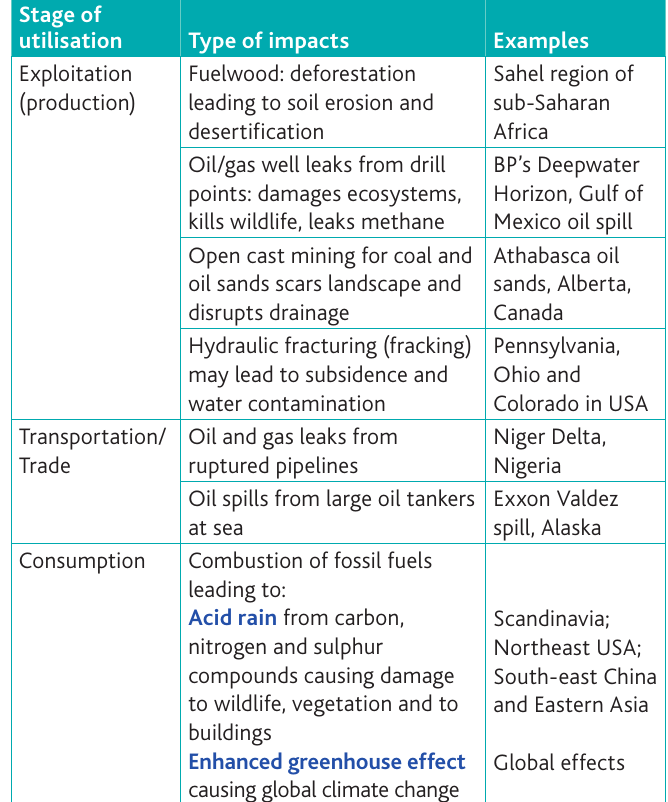
Environmental damage from energy resources occurs across three key stages: exploitation/production, transportation/trade, and consumption. Each stage presents distinct sustainability challenges that affect ecosystems, human health and the global climate.
Note
The three-stage lifecycle framework helps us understand where and how environmental damage occurs:
- Production stage: Direct damage to ecosystems during extraction
- Transportation stage: Risks during movement of energy resources
- Consumption stage: Atmospheric pollution from burning fuels
Exploitation and production stage
The extraction and production of energy resources causes significant localised environmental damage:
Biomass exploitation: In developing countries, particularly rural areas of sub-Saharan Africa, people depend heavily on fuelwood (biomass) for cooking and heating. The shortage of fuel supplies has driven widespread removal of woodland. This deforestation triggers a cascade of environmental problems:
Important
The Deforestation Cascade Effect:
- Reduced rainfall interception leads to less water infiltrating into the soil
- Faster surface run-off increases soil erosion by water and wind
- Progressive desertification of affected areas
This demonstrates how one environmental impact can trigger multiple interconnected problems.
Fossil fuel extraction: Oil and gas drilling operations damage ecosystems through various mechanisms:
- Well leaks from drill points kill wildlife, release methane and harm surrounding ecosystems
- Examples include the BP Deepwater Horizon disaster in the Gulf of Mexico and oil spills in Alaska
Mining operations: Open cast mining for coal and oil sands creates severe landscape damage:
- Large-scale scarring of the landscape
- Disruption of natural drainage patterns
- The Athabasca oil sands development in Alberta, Canada represents one of the most extensive mining operations globally
Hydraulic fracturing: Also known as fracking, this technique extracts oil and gas from shale rock formations. Operations in Pennsylvania, Ohio and Colorado in the USA have raised concerns about:
- Land subsidence (ground sinking)
- Contamination of groundwater supplies with chemicals used in the fracking process
Transportation and trade stage
Moving energy resources from production sites to consumers creates additional environmental risks:
Pipeline leaks: Ruptured pipelines release oil and gas into the environment. The Niger Delta in Nigeria has experienced numerous pipeline leaks, causing extensive pollution to land and water systems.
Oil tanker spills: Large-scale accidents at sea create catastrophic marine pollution. The Exxon Valdez spill in Alaska remains one of the most damaging oil spills in history, devastating marine ecosystems.
Consumption stage
The burning of fossil fuels to produce energy creates two major atmospheric pollution problems:
Acid rain: Results from carbon, nitrogen and sulphur compounds released during combustion. These pollutants cause:
- Damage to wildlife and vegetation
- Harm to buildings and monuments
- Regional impacts affecting areas far from the pollution source (Scandinavia, Northeast USA, South China, Eastern Asia)
Enhanced greenhouse effect: The combustion of fossil fuels releases greenhouse gases that drive global climate change, creating worldwide environmental consequences.
Acid rain

Note
Definition: Acid rain – Precipitation that has been made acidic by certain pollutants in the air.
During the 1980s and 1990s, Western Europe and Eastern North America faced a significant environmental crisis caused by acid rain. The impacts were particularly notable because areas suffering the most damage were often not the original sources of pollution.
Important
Acid rain represents a 'migrating' pollution problem. For example, Scandinavia experienced severe acid rain effects from polluting sources in the UK and Germany. This demonstrates how environmental impacts can cross national borders, making international cooperation essential.
Acid rain is now less of an environmental issue in the USA and Europe thanks to effective government regulation and pollution control measures. However, the problem has shifted geographically and is now widespread in South and East Asia, with pollution originating from rapid industrialisation in India and China.
Causes of acid rain
The main sources of acid deposition are:
- Burning of fossil fuels in power stations
- Exhaust fumes from motor vehicles
Formation process
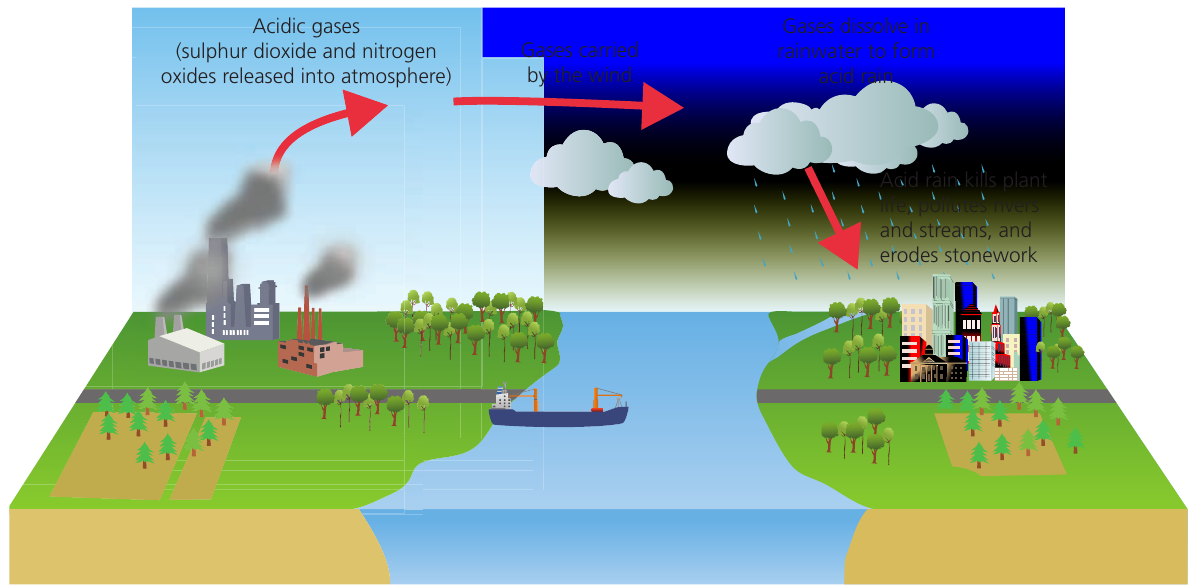
Acid rain forms through a series of atmospheric chemical reactions:
Example
Formation Process of Acid Rain:
Step 1: Fossil fuel combustion releases pollutants including sulphur dioxide (SO₂) and nitrogen oxide (NOₓ)
Step 2: These chemicals react with precipitation, mist and clouds in the atmosphere
Step 3: This produces wet deposits of sulphuric acid (H₂SO₄), nitric acid (HNO₃) and compounds of ammonia
Step 4: These acidic compounds fall to Earth when it rains
Environmental impacts of acid rain
Acid rain creates multiple forms of environmental damage:
- Forest damage: Kills trees, particularly conifer species, causing yellowing of needles
- Soil contamination: Leaches toxic metals such as aluminium from soils, which then accumulate in rivers and lakes
- Aquatic ecosystem damage: Harms fish populations and damages freshwater ecosystems
- Building deterioration: Damages buildings and monuments by accelerating weathering, particularly affecting limestone structures
- Human health: Causes respiratory complaints including bronchitis
Reducing acid rain impacts
Various strategies can reduce acid rain deposition:
Note
Technological Solutions:
- Vehicle technology: Catalytic converters on cars significantly reduce NOₓ emissions from exhausts
- Fuel quality: Burning fossil fuels with lower sulphur content reduces sulphur dioxide emissions
- Power station technology: 'Scrubbers' and flue gas desulphurisation (FGD) equipment remove sulphur from emissions at coal-fired power stations
Strategic Approaches:
- Energy transition: Switching from coal to cleaner sources of energy for electricity generation
- Energy conservation: Reducing electricity use decreases demand and therefore emissions from power generation
Short-term Measures:
- Liming: Adding lime to lakes neutralises acidity - however, this is only a short-term measure that does not solve the underlying problem (used in Norway and Sweden)
Enhanced greenhouse effect

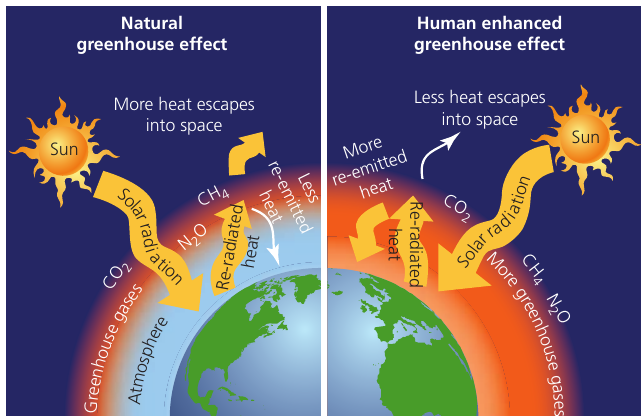
The Earth's natural greenhouse effect is essential for life. Solar energy from the Sun is trapped in the lower atmosphere (troposphere) by greenhouse gases when it is re-radiated from the Earth's surface. This keeps temperatures at a level that makes the planet habitable.
However, the rise in consumption of fossil fuels over the past two hundred years has dramatically increased the quantity of greenhouse gases in the atmosphere. For example, current CO₂ levels are 40 per cent higher than before the Industrial Revolution. As a result, the Earth's greenhouse effect is enhanced as more heat is trapped and global temperatures rise.
Causes and mechanism
Most scientists agree that fossil fuel combustion releases greenhouse gases including carbon dioxide (CO₂), methane and nitrous oxides into the atmosphere. This represents a major factor driving climate change.
Important
Scientists predict that global temperatures will rise on average by 1 to 2°C over the next century. While this may seem modest, the environmental impacts and concerns for the future are substantial.
Environmental consequences of climate change
The main environmental impacts and future concerns include:
- Melting polar ice: Loss of ice sheets in Antarctica and Greenland
- Rising sea levels: Threatens low-lying coastal areas and island nations
- Ecosystem changes: Shifting biomes and species distributions
- Extreme weather events: Increased frequency and intensity of droughts, floods and cyclones
Differential impacts on development
Poorer countries are more vulnerable to the effects of climate change. Many lack the infrastructure and resources to counter the impacts effectively. Single weather events, such as tropical cyclones and floods, can kill thousands of people in regions including South Asia, Southern China and Central America.
Note
In Africa, the UN reports a 40-60 per cent decrease in total water in the large catchment basins of the Niger, Lake Chad and Senegal rivers. In a continent already struggling with poverty and famine, climate change represents a matter of life and death.
Global CO₂ emissions trends
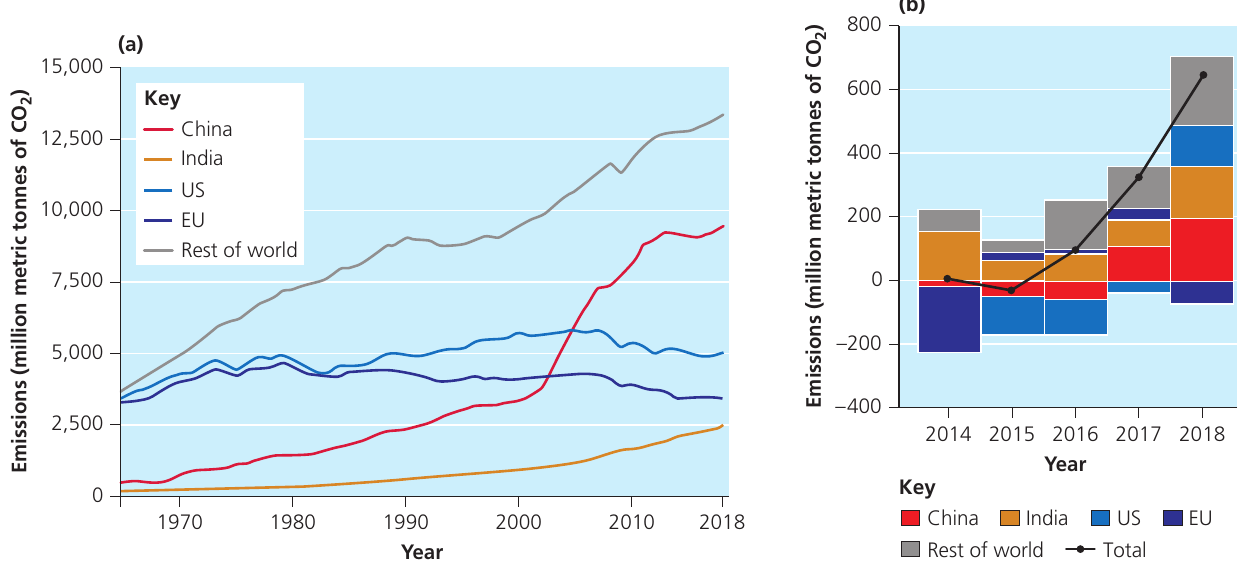
CO₂ emissions continue rising globally, though the rate varies between regions:
- Between 2013 and 2016, emissions slowed significantly to 0.4 per cent per year, resulting from an economic slowdown in both China and the USA
- Since 2017, emission rates have climbed again, growing by 2 to 6 per cent in 2018
- This increase is mainly because of renewed industrial growth in China, increased emissions in India and an increase in the use of gas as an energy source
- The global COVID-19 pandemic in 2020 caused a predicted fall of CO₂ emissions of at least 2.5 billion tonnes - the largest fall in recorded history
Regional patterns: China has shown dramatic emissions growth since 2000, surpassing all other regions by 2010. The USA and EU have shown relatively stable or declining emissions in recent years, whilst India's emissions continue to grow steadily.
Nuclear waste management
Nuclear power generation creates unique sustainability challenges related to the disposal of radioactive waste. These concerns differ significantly from those associated with fossil fuels.
Key concerns regarding nuclear energy development include:
- Risks associated with nuclear accidents
- Disposal of radioactive waste
- Health and safety concerns, particularly leukaemia and other cancers
- Potential contamination of water supplies
- Concern over crops and grazing animals' safety
Characteristics of nuclear waste
Note
Nuclear waste has a very long half-life (the measure of how long it takes to lose half its radioactivity). It remains highly radioactive for thousands of years, which must be considered when disposing of it safely.
Nuclear power stations produce high-level radioactive waste in the form of spent fuel rods and fission products which have been removed from reactors. These are taken for nuclear re-processing, where reusable uranium and plutonium are separated out to leave unusable radioactive waste. This is vitrified into solid blocks of glass and stored in steel-clad or lead-lined glass containers underground.
Requirements for disposal
In the UK, the Nuclear Decommissioning Authority (NDA) has responsibility for disposing of radioactive waste. The NDA provides site licences for the safe disposal and containment of low level waste (LLW) and intermediate level waste (ILW).
There is a need for a geological disposal facility (GDF) site to dispose of high level waste (HLW). Several factors need consideration:
Important
Physical conditions:
- Must be buried 200-1,000m deep in geologically stable rock types
- Requires suitable geology that will contain the waste safely for thousands of years
Economic factors:
- Expensive to purchase land for this purpose
- If located near existing power stations, the local economy may become too dependent on the nuclear industry
Transport requirements:
- Requires safe transport links for moving waste from power stations to disposal sites
- Transport routes must be secure and properly managed
Political and social barriers:
- Strong opposition from local pressure groups concerned about safety
- Security concerns that the site may become a target of terrorism
- Negative impacts on tourism in the surrounding area
Remember!
Summary
Key Points to Remember:
-
Environmental impacts of energy occur across three stages: exploitation/production, transportation/trade, and consumption
-
Acid rain is caused by sulphur dioxide and nitrogen oxides from fossil fuel combustion reacting with water in the atmosphere, damaging forests, aquatic ecosystems and buildings
-
The enhanced greenhouse effect results from increased CO₂ and other greenhouse gases trapping more heat in the atmosphere, driving global climate change
-
Nuclear waste remains radioactive for thousands of years and requires deep geological disposal with careful consideration of physical, economic, transport and political factors
-
Climate change impacts are most severe in developing countries that lack infrastructure and resources to adapt to changing conditions