Resource Security - Mineral Ores (AQA A-Level Geography): Revision Notes
📚Revision Notes
Case Study: Carajás Iron Ore Extraction, Brazil
Background to the scheme
The Carajás complex represents the world's largest single iron ore mine. It is situated in the state of Pará in northern Brazil, within an area that was originally covered by pristine Amazonian rainforest.
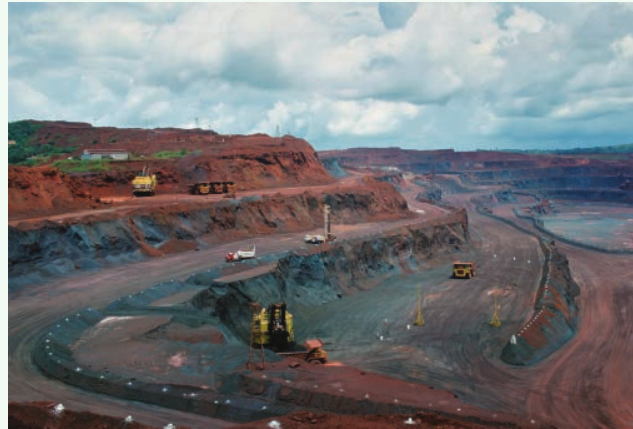
The geological deposits at Carajás contain some of the richest iron ore reserves found anywhere on Earth. The ore has an exceptionally high iron content of approximately 65%, making it extremely valuable for steel production. The site holds proven reserves of 18 billion metric tonnes of iron ore.
Note
These Archaean iron formations represent some of the oldest and most concentrated iron deposits on the planet, formed over 2.5 billion years ago. The exceptional purity of the ore makes Carajás particularly attractive for global steel production.
The mine is owned and operated by Vale (previously known as CVRD), a major Brazilian transnational mining corporation. In addition to iron ore, the region contains deposits of other valuable minerals including copper, tin, manganese and gold. These rich ore deposits are found within Archaean iron formations at depths ranging between 100 and 150 metres.
Scale of operations
The Carajás complex operates as an open-pit mining system, creating several enormous artificial chasms carved into the landscape. The scale of the operation is massive:
- Approximately 3,000 workers are employed at the mine site
- Giant machinery is used, including diggers, crushers and heavy-duty loading trucks
- Daily production exceeds 550,000 tonnes of iron ore
- Around 70% of production is exported as ore to China via a dedicated railway line
- The ore is transported to the Ponta da Madeira deep sea terminal near São Luís in north-eastern Brazil
Note
Memory Aid: "65-18-550"
Remember the key statistics:
- 65% iron content (exceptionally high purity)
- 18 billion tonnes in reserves
- 550,000 tonnes daily production
Infrastructure development
To support mining operations at this remote location, extensive infrastructure has been constructed:
- A railway line connecting the mine to the export terminal at the coast, forming an integrated transport system
- Road networks providing access for large trucks and machinery
- An airport (Carajás is served by its own airport with helicopter access)
- Mining settlements providing accommodation and services for the workforce
- Storage facilities for overburden (the debris and soil removed during excavation)
The S11D expansion
Vale was granted approval to expand production at the complex by developing the giant S11D mine situated to the south-west of the existing operation. Mining operations at S11D commenced in 2016, and this development currently contributes approximately 70 million tonnes to the total annual production of 200 million tonnes from the Carajás complex.
Environmental impacts of the scheme
The environmental consequences of the Carajás mining operation are severe and wide-ranging. The development has necessitated clearing vast areas of pristine rainforest, causing multiple interconnected impacts across the ecosystem.
Overview of impacts
Major environmental impacts include:
- Formation of sinkholes and surface subsidence caused by collapse of underground layers
- Loss of biodiversity across the region
- Contamination of soils, surface water and groundwater through toxic chemicals and leachates
- Significant negative effects on public health in surrounding communities
Important
The "Four Ds of Impact"
The Carajás development demonstrates four major categories of environmental damage:
- Deforestation - clearing of pristine Amazonian rainforest
- Degradation - soil, water and air quality deterioration
- Destruction - loss of habitats and ecosystems
- Disturbance - disruption of natural cycles and processes
Deforestation and land clearance
The most significant environmental impact of the Carajás development has been the necessity to clear enormous tracts of pristine Amazonian rainforest. This clearance has occurred for two main purposes:
Direct clearance: Large areas have been completely removed to make way for the massive open-pit mines themselves, resulting in severe landscape and aesthetic degradation.
Infrastructure clearance: Additional forest has been cleared to accommodate the supporting infrastructure, including:
- The railway line to the coastal export terminal
- Road networks for accessing the site and transporting materials
- The airport facility
- Mining settlements providing accommodation and services
- Temporary storage areas for overburden
Important
The roads constructed to access the rainforest have enabled further unplanned forest clearance by facilitating activities such as agriculture development and illegal logging operations. This represents a significant indirect impact beyond the mine's immediate footprint.
Impacts on landscape, wildlife and ecosystems
The transformation of the landscape has been dramatic. What was once an area of dense vegetation and national forest is now characterized by:
- Bare cliff faces and exposed rock strata
- Billowing clouds of dust
- Severe noise pollution from mining activities
- Constant roar of massive engines, diggers and crushing machinery
Important
Critical Biodiversity Loss
The mine development has resulted in an estimated 25% of wildlife in the region being lost as a direct consequence of the project. This represents catastrophic biodiversity loss with long-term ecosystem consequences.
The construction of railways and road networks has fragmented natural habitats. This habitat fragmentation has several consequences:
- Reduced migration routes for fauna
- Creation of smaller, isolated gene pools
- Increased risk of local extinctions
- Overall decline in biodiversity across the region
- Threatened and endangered species face higher extinction risk
Note
Habitat fragmentation is particularly devastating in rainforest ecosystems because many species require large, continuous territories. When forests are divided into smaller patches, species with specialized habitat requirements or large home ranges cannot survive, leading to cascading effects throughout the food web.
Climate, soils and vegetation impacts
The removal of rainforest across such an extensive area has triggered changes to the local microclimate:
Temperature effects: Trees naturally regulate both temperature and humidity levels. Their removal has resulted in:
- Reduced rainfall in the cleared areas
- Lower humidity levels
- Greater diurnal (daily) temperature range
- Extreme heat affecting the exposed red ferralitic soils
Soil degradation: Without protective tree cover, multiple soil problems have developed:
- The nutrient cycle has been disrupted and broken
- Soils lose organic matter and fertility rapidly
- Severe erosion becomes a major problem
- Natural vegetation struggles to regenerate under these harsh, degraded conditions
Note
Understanding Ferralitic Soils
Ferralitic soils (also called latosols) are typical of tropical rainforests. They appear red due to high iron oxide content and are surprisingly infertile - most nutrients in rainforest ecosystems are stored in the vegetation, not the soil. When forest cover is removed, these soils quickly lose what little fertility they have and become hard, compacted, and unable to support plant growth.
Relief and drainage alterations
Open-pit mining operations directly alter the natural relief and drainage patterns of the landscape:
- Large volumes of soil are displaced and eroded, particularly during storm events
- This erosion can trigger landslides in areas surrounding the mine
- Silt is washed into local rivers, causing siltation of watercourses
- The silt can kill aquatic species by smothering them
- Local flooding problems can develop
Water pollution
Water quality has deteriorated significantly due to mining activities:
- Excessive siltation of river systems affects water clarity and aquatic habitats
- Toxic materials leak from tailing ponds (reservoirs where mining waste is stored)
- Leachates containing processing chemicals contaminate surface water sources
- Groundwater sources are also at risk from chemical contamination
Note
Leachates are liquids that have percolated through mining waste and dissolved toxic substances. These can include heavy metals, processing chemicals, and acidic compounds that persist in water systems for decades, affecting both aquatic life and human communities downstream.
Global environmental impacts
Important
Beyond Local Impacts: Global Consequences
The Carajás project contributes to global environmental problems in several ways, demonstrating how local extractive industries have planetary-scale effects.
Greenhouse gas emissions: The project adds to global climate change through:
- Net increase in greenhouse gas emissions from burning fuel to operate trucks and heavy machinery on site
- Removal of a significant carbon sink through deforestation
Atmospheric pollution: Additional contributions include:
- Sprays and chemicals used on site contribute to ozone layer depletion
- Vehicle and machinery emissions add to atmospheric pollution
- Waste materials contribute to acid rain formation
Sustainability and management efforts
Vale's approach to expansion and remediation
Vale, the operating company, argues that the expansion of mining at the Serra Sul (S11D) operation benefits the Brazilian economy and supports their commitment to sustainable development.
The company states that all operations adopt "green" measures designed to minimize environmental impact. Key initiatives include:
Cleaner technology: Vale has installed a truck-free, electricity-powered automated transport system. This innovation:
- Moves rock and ore around the site more efficiently and safely
- Removes costs associated with fuel consumption
- Reduces emissions from diesel vehicles
Restoration planning: Before commencing any new excavation work, Vale must present a restoration plan to state authorities and the national conservation agency. These plans aim to:
- Restore cleared areas to their original state after mining
- Use spoil material to fill in exhausted mines
- Reshape the landscape topography to match pre-mining conditions
- Replant areas with original native species
- Grow native plants in a dedicated separate nursery for future replanting
Note
Vale's restoration approach includes growing native plant species in controlled nursery conditions before transplanting them to restored areas. This ensures that appropriate species for the local ecosystem are available when mining operations cease in different sections.
Monitoring and protection programmes
Vale supports an extensive monitoring operation in the surrounding forest areas:
- The company has funded 80 additional forest rangers
- Vehicles and boats are provided for patrol activities
- A helicopter is used to guard against poaching of animals and illegal logging operations
- These measures aim to protect remaining forest areas from further degradation
Critical perspective on sustainability claims
As a profit-making transnational corporation, Vale's primary objective is iron ore extraction and maximizing returns. While the company promotes its sustainability credentials, critics argue that:
- Environmental protection may be a secondary concern compared to profit
- Sustainability is embedded in planning primarily to meet regulatory requirements
- The fundamental tension between large-scale extractive industry and environmental protection remains unresolved
Important
Despite Vale's sustainability initiatives, the company remains fundamentally driven by profit maximization. Environmental measures, while beneficial, are often implemented to meet regulatory requirements rather than as the primary operational goal. This creates an inherent conflict between resource extraction and genuine environmental protection.
Remember!
Summary
Key Points to Remember
-
Carajás is the world's largest single iron ore mine, located in Pará state, Brazil, containing 18 billion metric tonnes of high-grade ore (65% iron content).
-
Environmental impacts are severe and wide-ranging: approximately 25% of regional wildlife has been lost, pristine rainforest has been cleared for mines and infrastructure, and significant water, soil and air pollution has occurred.
-
Deforestation causes multiple problems: biodiversity loss, habitat fragmentation, microclimate changes, soil degradation, disrupted drainage patterns, and removal of carbon sinks contributing to global climate change.
-
Infrastructure development extends the damage: roads, railways, airports and settlements require additional forest clearance and enable further illegal logging and agricultural expansion.
-
Vale claims sustainability commitment through restoration planning, native species replanting, monitoring programmes and cleaner technologies, but profit remains the primary driver of their operations.
Memory Aid - "FOREST" Impacts:
- Fragmentation of habitats
- Overburden storage requirements
- Relief and drainage changes
- Erosion and soil degradation
- Species loss (25% wildlife)
- Temperature and microclimate changes