Resource Security - Water (AQA A-Level Geography): Revision Notes
📚Revision Notes
Case Study: Water Shortages in Shimla, Northern India
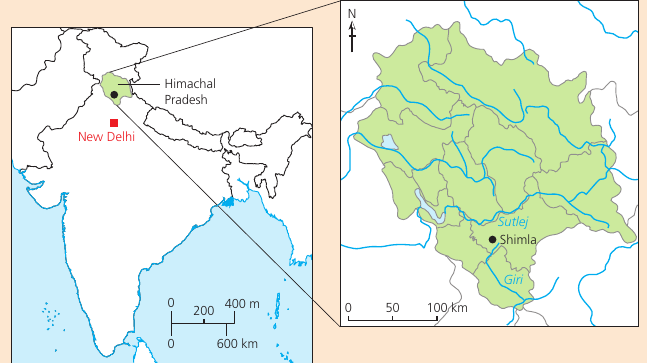
Introduction to Shimla
Shimla serves as the capital of Himachal Pradesh state in northern India. The city functions as the region's main commercial hub and central transport centre. With a permanent population of approximately 200,000 residents, Shimla swells significantly during the tourist season when visitor numbers can increase this figure by a further 50 per cent.
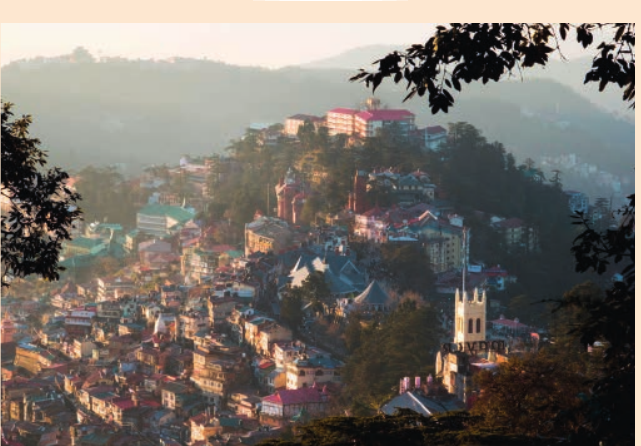
The city has developed into an iconic hill station renowned for its colonial-era British Raj architecture, which now underpins its cultural tourism industry. Tourism and civic administration form the backbone of the local economy. Education also plays a major role, with two universities and numerous colleges providing employment opportunities. The city has seen growth in IT services, technology and media publishing sectors in recent years.
Note
Shimla's unique position as both a state capital and a major tourist destination creates exceptional pressures on its infrastructure. The combination of residential, administrative, educational, and tourism functions means the city must support diverse and often competing demands for resources, particularly water.
Physical environment of Shimla
Topography and drainage
Shimla occupies a location in the foothills of the Himalayas at an average altitude of 2,206 metres (7,238 feet) above sea level. The city sits atop a steep-sided ridge with seven elongated spurs spreading from the main ridge formation.
Significantly, there are no natural water bodies within the city boundaries. The nearest river, the Sutlej, flows 20 kilometres away from Shimla. Other major rivers including the Giri flow through the wider district but remain some distance from the city itself. The steep slopes of the ridge cause rapid run-off rates, making it extremely difficult to capture and retain surface water on the ridge. The surrounding area features deep chasms containing fast-flowing streams.
Important
Critical Geographic Challenge:
The absence of natural water bodies within Shimla's boundaries, combined with its location on a steep ridge, creates a fundamental water supply problem. Water must be pumped uphill from distant sources, requiring significant energy and infrastructure, while the steep terrain causes rapid water loss through run-off.
Climate
Shimla experiences a sub-tropical highland climate with temperatures ranging between and during summer months and to in winter. Visitors typically arrive in summer (May–June) seeking to escape the intense heat of the Gangetic plain to the south, where temperatures can reach .
Precipitation varies considerably across the seasons:
- Winter and spring months typically receive around 45mm per month
- Monsoon season (July and August) brings over 400mm of rainfall
- Monsoon rainfall has been reduced by up to 80 per cent in recent years
- Recent winters have seen precipitation fall much lower than usual, causing water sources to start drying up with 50 per cent lower discharge rates than average
- Rains now arrive in shorter, heavier bursts, causing water to run off quickly rather than being retained below the surface
- More frequent hailstorms have worsened the flooding situation
Altitude and cold winter temperatures historically produced regular annual snowfall, which used to fall in December but over the last 20 years has been falling in January and early February. A reduction in snowfall has decreased the capacity of the khads (mountain streams).
Note
Understanding Climate Change Impacts:
The shift in precipitation patterns represents more than just reduced water availability. The timing changes (snowfall now occurring later in winter) and the nature of rainfall (shorter, heavier bursts instead of sustained periods) fundamentally alter how water interacts with the landscape. This means less water is absorbed into the ground for gradual release and more is lost to immediate run-off and flooding.
Geology and vegetation
The geology of Shimla District has experienced intense tectonic activity. The rocks consist primarily of sedimentary formations, but complex faulting and folding of rock layers provides little opportunity for groundwater storage.
The area around the city and on the slopes is naturally covered in forests of pine, cedar and oak. However, urban expansion has led to significant deforestation. A major environmental concern is the frequent occurrence of landslides after heavy rainfall.
Background to water supply problems in Shimla
Despite substantial monsoon rainfall, Shimla remains prone to perennial water shortages. This occurs due to changing climate patterns, steep terrain, ageing infrastructure and the pressure placed on the city's supplies by visitors.
Important
The 2018 Water Crisis:
During May and June 2018, Shimla experienced an acute drinking water crisis with most of the city receiving water only once in eight days. The city has faced severe water shortages and water-borne epidemics over recent years. Residents also claim that the distribution of water to people is uneven.
At the height of the tourist season in June, visitor numbers can reach up to 30,000 each day. According to Shimla Municipal Corporation (SMC), the city needs about 45 million litres of water daily (MLD). The yield, even out of season, is around 32 MLD but in May 2018 it fell to less than 20 MLD, meaning the municipal water supplies were effectively exhausted.
Example
Worked Example: Calculating the Water Deficit
Step 1: Identify the daily water requirement
- City needs: 45 MLD (million litres per day)
Step 2: Compare with actual supply during crisis
- Supply during May 2018: Less than 20 MLD
Step 3: Calculate the shortfall
- Shortfall = 45 MLD - 20 MLD = 25 MLD
Result: The city faced a deficit of more than 25 million litres per day, representing a shortfall of over 55% of required supply. This meant residents had access to less than half the water they needed.
Water supply infrastructure
The physical environment means that the city relies on surface water being pumped from local streams. When the British established the settlement in the early nineteenth century, the first water came from a spring in the Dhalli catchment, which provided around 4 MLD. Dhalli is now the main water treatment plant for incoming pumped water from other sources, which were developed later.
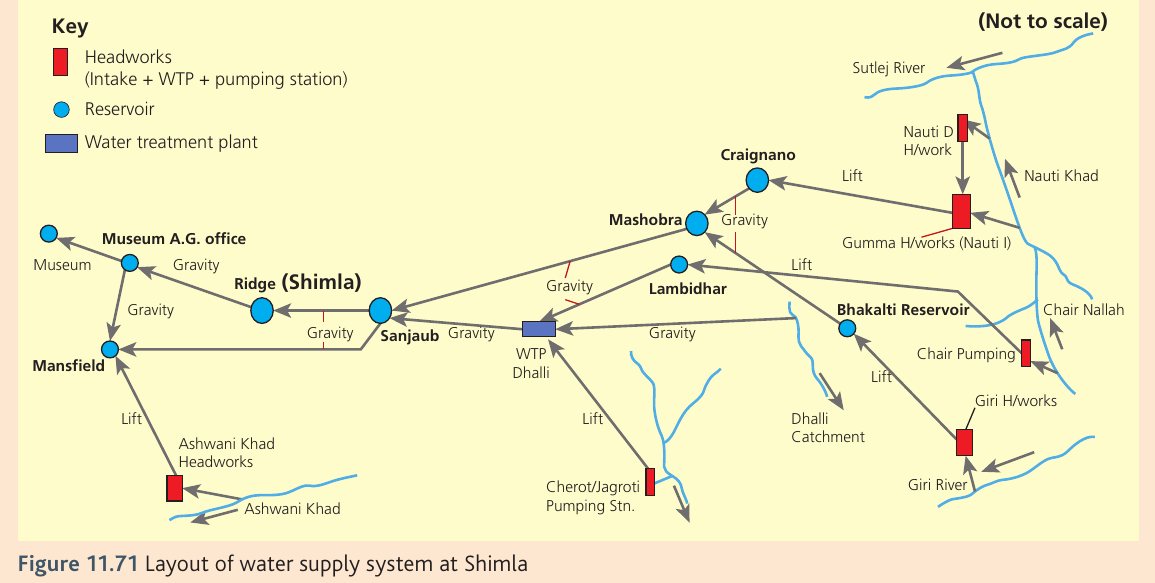
Shimla's main water sources are from several perennial streams (known as khads or nallahs) including the Cherot Nallah and Nauti Khad. Water is transported via pumping stations (for example, the Chair pumping station). As the population grew after independence, water supply was increased with more pumped sources from the Gumma, Ashwani Khad and from the Giri River. The water is lifted from these sources and taken to the treatment plant where it is gravity fed to underground water tank reservoirs, from where the SMC supplies water to the city.
The installed capacity of all these sources combined is 65 MLD, which should meet the demand, but the city only receives around 35 MLD on average throughout the year:
- Nauti Khad has witnessed significant reductions in water level
- The Giri and Gumma schemes have installed capacity of 20 and 24 MLD respectively but together were only pumping 20 MLD
- Ashwani Khad, which has an installed capacity of 10 MLD, was shut in 2015 after a sewage treatment plant was found to be discharging untreated sewage into the water
Note
The Gap Between Capacity and Reality:
Despite having an installed capacity of 65 MLD that exceeds the city's requirement of 45 MLD, Shimla receives only 35 MLD on average. This gap of 30 MLD between installed capacity and actual delivery highlights the critical role that infrastructure failures, leakages, and management issues play in creating water shortages – the problem is not just about total capacity, but about the efficiency of the entire system.
Sanitation problems
Important
Public Health Crisis:
Around 30–40 per cent of the city's population are not covered by the sewage system and sanitation has emerged as a public health issue resulting in water-borne epidemics.
Challenges and underlying causes of water shortages in Shimla
Water has always been a scarce resource in Shimla. The topography represents an underlying issue and the situation has been made worse by climate change, which has affected the physical water supply to the area. However, shortages are exacerbated by a combination of increased demand and poor water management.
Physical environment factors
Topography and natural water availability:
- Shimla is located on a ridge with limited natural water supply and water must be artificially 'lifted' up to considerable heights
- Deforestation has reduced green cover in the region, which means less evapotranspiration, less cloud formation and less rain – a meso-climatic change
- Rapid run-off, soil erosion, flooding and landslides sometimes cause the pumping of water at source to stop due to excessive silt in the streams
Climate change impacts:
Climate change and its impacts are profound on the city's water supply system:
- During recent winters, precipitation has been much lower than usual so water sources have started drying up, with 50 per cent lower than average discharge
- In recent years, during the monsoon, rainfall has also been reduced by up to 80 per cent
- Rains come in shorter, heavier bursts so the water runs off quickly and is not retained below the surface, leading to flooding
- More frequent hailstorms have added to the problem of flooding and erosion
- A reduction in snowfall has reduced the capacity of the khads
Note
Understanding the Cascade Effect:
Climate change creates a cascade of interconnected problems. Reduced snowfall means less gradual water release during spring and summer. Changed rainfall patterns mean less groundwater recharge. Deforestation (partly driven by urban expansion) further reduces the landscape's ability to retain water. Together, these factors create a self-reinforcing cycle where water becomes increasingly scarce and difficult to manage.
Human factors that have exacerbated the problem
Infrastructure failures:
- Failure to upgrade the city's ageing water infrastructure has resulted in leakages – around half the water is lost to leakages during pumping and distribution; some is lost to unauthorised siphoning
Growing demand:
- Water deficit has increased with growing population, more urbanisation and limited expansion of the water supply
- Heavy tourist footfall places huge demands on supply:
- 15,000–30,000 tourists visit Shimla every day during the peak tourist season
- Demand for water soars in the summer months when the city's resident population swells with tourist numbers needing food, drinks and water to wash
- Rapid and unregulated construction of hotels and other properties has occurred
Poor water management:
- Built infrastructure does not help with water retention:
- More embankments are required to restrict the flow of surface water so that it percolates and recharges water bodies
- Catchment wells need to be constructed around water bodies to promote natural recharging
- Farmers in the area use inefficient irrigation methods, so most water is evaporated; investments in more water-efficient technologies, such as drip irrigation, have been minimal
Important
Critical Infrastructure Loss:
The loss of around 50% of water to leakages during pumping and distribution represents a massive inefficiency. In practical terms, this means that for every 40 MLD pumped into the system, only 20 MLD reaches consumers. Addressing this leakage problem alone could potentially solve the water shortage crisis without requiring any new water sources.
Impacts on the residents of Shimla
During the 2018 crisis, the water shortage had severe effects on daily life and the local economy. The impacts touched every aspect of life in the city, from basic hygiene to economic survival.
Daily life disruptions:
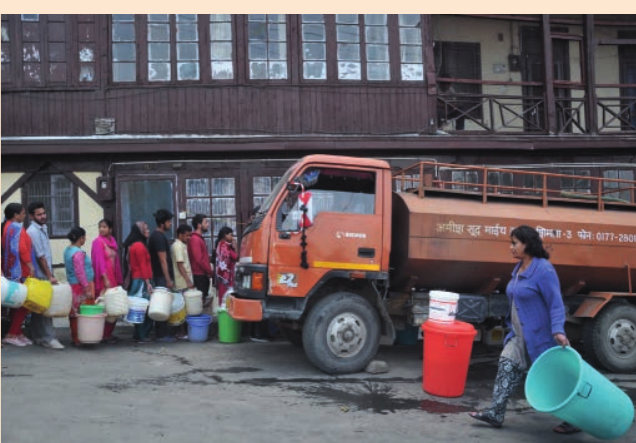
- Residents were made to line up for hours each day to collect a few buckets of water from tankers supplied by the government; there were long queues at public taps
- People adapted their lifestyle to the shortages, for example, by switching to disposable plates and cups to save water
- Demand for bottled water increased by 50 to 60 per cent due to water scarcity; the alternative was to pay steep prices to the 'tanker mafia' – private suppliers accused of siphoning water from the public supply
Note
Social Adaptation Under Stress:
The switch to disposable plates and cups represents an interesting but problematic adaptation. While it saved water in the short term, it created new environmental problems through increased solid waste. This illustrates how crisis responses can sometimes create unintended negative consequences, highlighting the need for comprehensive, sustainable solutions rather than just emergency measures.
Social tensions:
- Protests broke out as a number of frustrated locals, politicians and activists took to the streets to voice their anger; unofficial roadblocks caused traffic jams across the city
- Police officers were deployed to guard water-distribution sites and water was distributed under police protection
Economic impacts:
Water shortages forced city administrators and locals to appeal to tourists to stay away, which had a major negative impact on the local economy:
- Hotels cancelled bookings
- The internationally famous Shimla Summer Festival was cancelled
- Local businesses and hotels suffered losses
- Local coolies and street vendors became unemployed with no income
Important
Economic Paradox:
The water crisis created a devastating economic paradox for Shimla. Tourism, which is essential to the local economy, became unsustainable during the crisis because tourists consume significant water resources. By asking tourists to stay away, the city protected its water supply but devastated its economy. This highlights the fundamental tension between economic development and resource sustainability that many tourist destinations face.
Management responses and solutions
Following the 2018 crisis, the state government decided to resolve the challenges directly by overhauling the way in which water supply and sanitation services are delivered to Shimla. They established a dedicated, autonomous utility to manage water supply and sanitation services. This formalised accountability and overcame the previously fragmented structure.
Important
New Management Structure:
The new utility, the Shimla Jal Prabandhan Nigam Ltd (SJPNL), now runs the city's water supply and sewage systems.
The World Bank supports SJPNL and the state government through development policy loans to ensure water security in the region. The state government also decided to strengthen the financial sustainability of water supply and sanitation operations as only 12 per cent of the costs needed to operate and maintain the system were actually recovered from customers.
Supply management
Infrastructure improvements:
- SJPNL intend to restructure the Giri water scheme so that it is tapped to its full strength
- The next phase is to bring bulk water to Shimla from a new source on the Sutlej River
- Run-off water is to be captured in recharge drains to slow down run-off and ensure groundwater is recharged
Note
Long-term Infrastructure Planning:
The plan to tap the Sutlej River represents a significant infrastructure investment. The Sutlej, being 20 kilometres away, will require extensive pumping infrastructure. However, as a major Himalayan river, it offers a more reliable water source than the smaller khads that currently supply the city. This demonstrates a shift from relying on multiple small, vulnerable sources to developing fewer but more robust supply lines.
Demand management
Pricing reforms:
- SJPNL has switched to volumetric water tariffs for the city, with subsidies targeted at low-income households
- Around 24,000 water meters have been installed so that citizens can track the water they consume; this new approach has reduced the bills for a significant number of consumers who believe they get a fairer deal by only paying for what they use
Public education:
- City officials and volunteers are educating consumers about the changes in water delivery and helping them conserve water
- Shimla gets abundant rainfall in summers and rainwater harvesting on a personal level will help to conserve supplies
Example
Worked Example: Impact of Volumetric Pricing
Traditional System:
- Flat rate regardless of consumption
- No incentive to conserve water
- Heavy users and light users pay the same
New Volumetric System:
- Payment based on actual consumption measured by meters
- Creates financial incentive to reduce usage
- Revenue recovery improves (from 12% to higher levels)
Example calculation: If a household reduces consumption from 500 litres per day to 300 litres per day:
- Old system: Same bill (e.g., $20/month)
- New system: Bill reduced by 40% (e.g., $12/month instead of $20/month)
Result: Consumers benefit financially from conservation, while the utility recovers costs more effectively and water consumption decreases, helping to close the supply-demand gap.
Other measures
Sanitation improvements:
SJPNL are improving sewage management for the city area to ensure that the whole population has access to good sewage and sanitation. This will be followed by expanding sewage services for the fringe areas of the growing city.
Wider context:
Shimla's 2018 water crisis is symptomatic of a wider crisis confronting India. With about 18 per cent of the world's population but just 4 per cent of its water resources, India is gradually running dry. On a local scale, in Shimla, there are aspects of both physical water scarcity and economic water scarcity. The new approach supported by the World Bank is addressing the economic scarcity issue, but climate change may further impact the physical water scarcity.
Note
Understanding Water Scarcity Types:
Physical water scarcity occurs when natural water resources are insufficient to meet demand – in Shimla's case, limited natural water bodies and reduced precipitation. Economic water scarcity occurs when water exists but infrastructure, management, or financial constraints prevent access – in Shimla's case, leakages, poor distribution, and inadequate cost recovery. The SJPNL reforms primarily target economic scarcity, but cannot fully address the underlying physical constraints imposed by geography and climate change.
Remember!
Summary
Key Points to Remember:
-
Shimla faces water stress due to physical geography: Located on a steep ridge at 2,206m altitude with no natural water bodies, the city must pump water uphill from distant streams (khads), but demand of 45 MLD exceeds average supply of 35 MLD.
-
Climate change has worsened the crisis: Reduced snowfall, lower monsoon rainfall (down 80% in recent years), and shorter but heavier rain bursts have decreased water availability and caused rapid run-off instead of groundwater recharge.
-
Multiple factors combine to create shortages: Ageing infrastructure loses 50% of water to leakage, tourist numbers swell the population by 50% during peak season (15,000-30,000 visitors daily), and deforestation has reduced natural water retention.
-
The 2018 crisis had severe impacts: Residents received water only once every 8 days, queued for hours at water tankers, faced a 'tanker mafia', and the local economy suffered as hotels cancelled bookings and the famous Summer Festival was cancelled.
-
New management approach shows promise: The dedicated utility SJPNL (supported by World Bank loans) is restructuring water schemes, installing 24,000 water meters with volumetric tariffs, improving sewage systems, and promoting rainwater harvesting and public education on conservation.