Resource Development (AQA A-Level Geography): Revision Notes
📚Revision Notes
Resource Development
Understanding resource security
The growing global population in the twenty-first century has created a major challenge: the large-scale use of natural resources. Three resources are particularly critical for human survival and development:
- Energy
- Water
- Minerals
Note
These resources are not evenly spread across the Earth. Some nations have an abundance of certain resources, while others face serious shortages. This uneven distribution means that resources often need to be transferred geographically from areas with surplus to areas experiencing shortage or high demand.
For water, these transfers typically occur at local or regional levels. However, energy and mineral resources are traded on a global scale.
The increasing scarcity of these vital resources can lead to conflict between nations. Therefore, ensuring a secure and sustainable supply of each resource has become a major priority for governments worldwide.
What is a resource?
Important
A resource is any aspect of the natural environment that can be used to meet human needs. Resources are useful or necessary materials, such as fossil fuels or fresh water. They also represent a material source of wealth with economic value that can improve a country's prosperity and development.
Resources are distributed unevenly around the world. Some nations possess an abundance of certain resources but face scarcity of others that are equally important.
Example
Real-World Example: Saudi Arabia's Resource Distribution
Saudi Arabia is considered an "oil-rich" nation with approximately 25% of the world's conventional oil reserves. However, it simultaneously experiences a scarcity of water supplies, making water security a greater concern than energy security.
Resource security explained
Important
Resource security refers to a country's ability to safeguard a reliable and sustainable flow of resources to maintain the living standards of its population whilst ensuring ongoing economic and social development.
Resource security is usually determined at a national level, though it can also be applied as a global concept. To achieve resource security, countries must be able to:
- Develop necessary resources from their own physical environment, OR
- Secure reliable supplies from trading partners
Most nations need to employ both strategies to provide their populations with all vital resources.
Key terminology
Understanding resource development requires familiarity with several important terms:
Important
Exploitation means using natural resources to their fullest extent or for the most profitable use.
Important
Exploration is the process of searching an area with the intention of finding and mapping natural resources.
Important
Reserves are the part of a resource that is available for use under existing economic and political conditions with available technology.
Important
Resource frontier describes a newly colonised region where resources have been discovered and are brought into production for the first time.
Important
Resource peak marks the point in time when the maximum production rate of a resource occurs (at all scales from individual reserves to global), with production declining in subsequent years.
Classification of resources
Natural resources encompass a wide range of materials. Organising them into groups helps us understand the differences in how they are used and managed.
Stock and flow resources
Stock resources are compound deposits of materials that have formed over millions of years, usually on or within the Earth's crust. From an economic perspective, stock resources have a "fixed" and finite supply. Once they are used, they cannot be replenished. Their quantity is measured in absolute amounts, such as tonnes.
Important
Stock resources are non-renewable resources that can be permanently used up. Their quantity is expressed in absolute amounts rather than rates.
Flow resources are those which can be naturally renewed within a sufficiently short time span to be relevant to decision makers. We can make a further distinction between flows which are not dependent on human activity and those which are only renewable if human use remains at or below their capacity to reproduce or regenerate. The latter are known as critical flow resources and can be exhausted if not carefully managed.
Important
Flow resources are renewable and can be replaced. Examples include fresh water and timber. They are commonly expressed in terms of the annual rates at which they regenerate.
Energy resources
The distinction between stock and flow resources is best demonstrated through energy resources. Energy resources are classified as either renewable or non-renewable.
Note
Non-renewable energy resources (also known as finite or stock resources) are those that have built up or evolved over time. They cannot be used without depleting the stock because their rate of formation is extremely slow, taking many millions of years in terms of a human lifespan.
Non-renewable energy resources include:
- Fossil fuels (oil, natural gas and coal)
- Uranium used in nuclear energy
Note
Renewable energy resources (also known as flow resources) yield a continuous flow that can be consumed in any given period of time without endangering future consumption, provided that current use does not exceed net renewal during the same period.
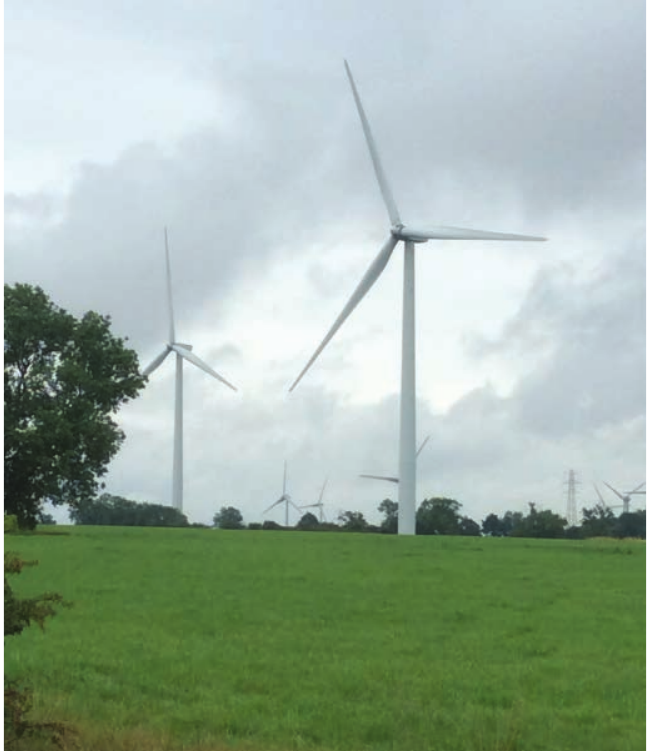
Renewable energy resources include:
- Solar power
- Hydroelectric power
- Geothermal energy
- Wave and tidal power
- Wind power
- Biomass sources
Renewable resources can be subdivided into two categories:
-
Critical resources – sustainable energy resources from forests, plants and other biomass. Critical resources may be depleted by overuse, for example, if they are harvested faster than they can regenerate.
-
Non-critical resources – energy sources that will not be depleted regardless of consumption levels. These include solar, wind, wave, tidal and geothermal energy.
Summary
Key Points to Remember:
- Resources are aspects of the natural environment that meet human needs and have economic value, but they are unevenly distributed globally.
- Resource security involves a country maintaining reliable and sustainable resource flows to support living standards and development.
- Stock resources are finite and cannot be replenished (e.g. fossil fuels), whilst flow resources can naturally renew themselves (e.g. wind, solar).
- Energy resources are classified as either non-renewable (fossil fuels, uranium) or renewable (solar, wind, hydroelectric, etc.).
- Critical renewable resources can be depleted by overuse, whereas non-critical renewable resources cannot be exhausted by consumption.