Resource Peak (AQA A-Level Geography): Revision Notes
📚Revision Notes
Resource peak
What is resource peak?
Resource peak represents the point when resource production reaches its highest rate from either a specific reserve or globally for that resource. This concept originated from the theory of 'peak oil', first proposed by Shell geophysicist M.K. Hubbert in 1956. While initially focused on oil, the theory has since been applied to other finite energy resources and minerals.
Hubbert's work on conventional oil was remarkably accurate. He predicted that oil production from the lower 48 mainland states of the USA (excluding Alaska) would reach its maximum between 1965 and 1970, then enter a decline phase. His theory demonstrates that at any scale - whether a single oil-producing reserve or the entire planet - the rate of production tends to follow a distinctive pattern over time.
The Hubbert curve theory
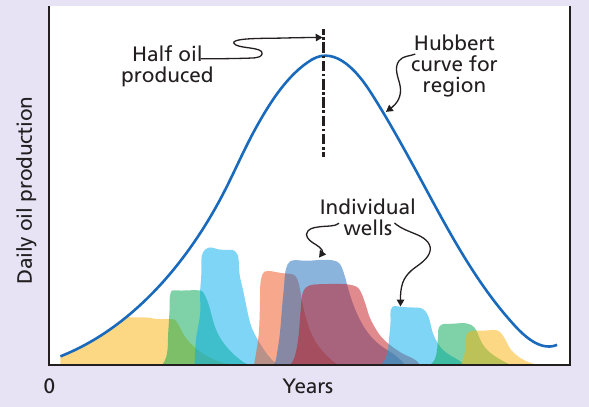
The production pattern that Hubbert identified follows a bell-shaped curve when graphed over time. This curve has important implications for understanding resource availability.
Note
At the peak of this curve, half of the total oil reserve has been produced. The curve represents the combined production from multiple individual wells in a region. Each well contributes to the overall production pattern, and when aggregated, they form the characteristic bell shape.
Peak production curves for oil are commonly referred to as 'Hubbert curves' and can be created for all discovered reserves. If the resource peak sits at the top of this bell-shaped curve, then logically only half the total reserve has been extracted at that point. This means viable production can continue for many years after the peak, though at declining rates.
Peak oil vs depletion: understanding the difference
These two terms are often confused, but they describe different aspects of resource availability:
- Peak oil marks the point of maximum production rate
- Depletion refers to a period of falling reserves
Important
This distinction is crucial for understanding resource security. A resource can be at peak production whilst still having substantial reserves remaining. However, after the peak, extraction becomes progressively more difficult and expensive as the easiest-to-access reserves have already been exploited.
Key definitions:
Conventional oil and gas – Petroleum or crude oil and raw natural gas extracted from the ground by conventional means and methods.
Unconventional (oil and gas) reserves – Hydrocarbon reservoirs that have low permeability and porosity and so are difficult to produce. They require enhanced recovery techniques such as fracture stimulation. Examples include shale deposits, tar sands and heavy oils.
Resource peaks as moving targets
Predicting fossil fuel and other stock resource peaks at national and global scales proves extremely difficult because numerous interconnected factors influence them. These predictions are not fixed points but rather constantly shifting targets.
Factors influencing resource peaks
Reports on fossil fuel peaks vary considerably because they depend on:
- Levels of consumption – How much society uses affects how quickly reserves deplete
- World prices of the resource – Higher prices make previously uneconomic reserves viable to exploit
- Exploration efforts – New discoveries can extend the lifetime of production
- Advances in technology – Innovation can unlock previously inaccessible reserves
Note
These factors operate at both national and global scales and interact in complex ways. In the global economic system, a price increase may reduce demand and consumption adversely. However, for oil in particular, demand tends to remain relatively stable regardless of price.
Higher prices also stimulate technological advances and increased exploration, enabling the exploitation of previously uneconomic reserves.
Case study: US peak oil production
The United States provides an excellent example of how resource peaks can shift due to technological advancement and economic factors.
Example
Case Study: US Peak Oil Production - How Technology Changed the Game
Initial predictions and reality:
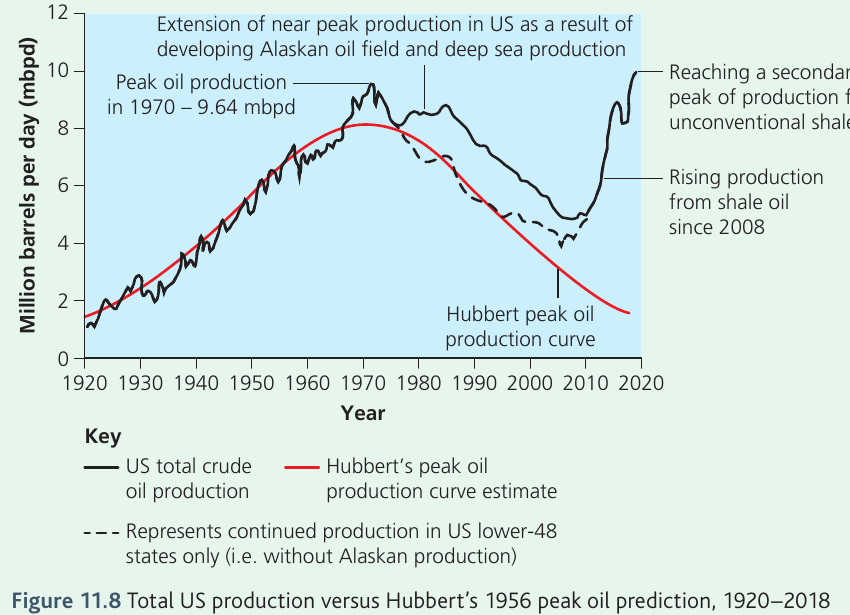
Oil production from the USA's 48 lower mainland states (excluding Alaska) followed Hubbert's predictions remarkably accurately. Production peaked at 9.64 million barrels per day (mbpd) in 1970, then began falling back to around 5-6 mbpd by the mid-2000s. As conventional reserves became depleted (with the exception of Alaska), it appeared Hubbert's theory had been vindicated.
However, Hubbert underestimated several crucial developments. He failed to account for the advances in technology, efficiency gains and effects of increasing oil prices. These factors enabled the development and production of previously uneconomic oil reserves.
The role of technology and unconventional reserves:
Several developments extended peak production in the United States:
Phase 1: Alaskan oil development (1970s-1980s)
- Global oil price rises in the 1970s made the development of Alaska's known oil reserves economically viable
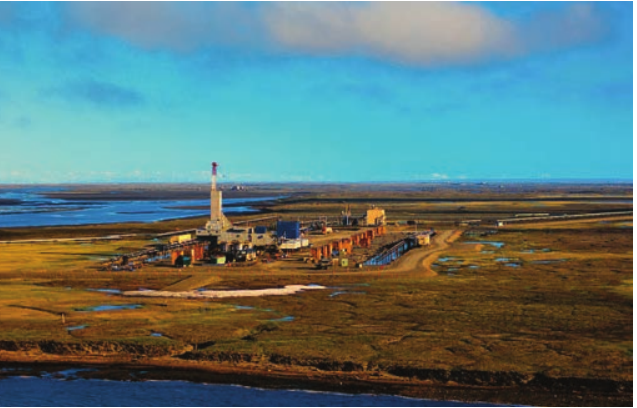
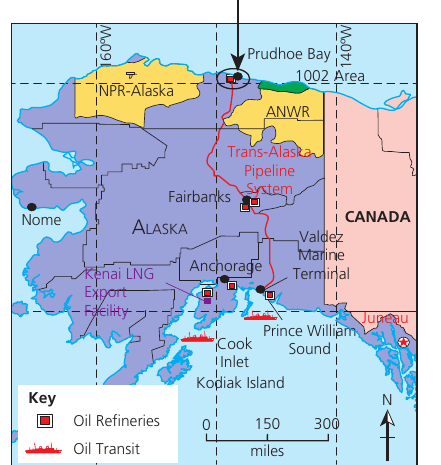
- Despite the high cost of constructing the Trans-Alaska Pipeline to the ice-free port of Valdez, the project became profitable
- This caused a secondary peak of US oil production by the mid to late 1980s
Phase 2: The shale oil revolution (2008 onwards)
- Since 2008, hydraulic fracturing ('fracking') successfully exploited unconventional reserves in shale rock and mainland states
- This enabled US oil production to rebound to its 1970 peak at 9.7 mbpd by 2015
- The 'shale fracking revolution', exploiting 'tight oil', continued driving increases
- US oil production reached a new peak of 12.8 mbpd by 2020
- However, the global COVID-19 pandemic then caused a dramatic fall in production
Key takeaway: This case study demonstrates that whilst Hubbert's peak concept can be applied to individual known reserves, national and global scale predictions can become meaningless as economic factors and technological advances extend or create new peaks.
Increased consumption from newly emerging economies, such as China and India, can also narrow the resource peak by sustaining high demand.
The future of resource peaks
In 2019, the International Energy Agency's (IEA) World Energy Outlook report predicted that global oil and gas production would reach an all-time high and continue rising until at least 2040. However, the report indicated that oil production would then stabilise and decline.
Important
A Fundamental Shift in Thinking
This expected decline is not because of limited oil reserves, but rather due to:
- Reduced demand resulting from emission reduction policies aimed at tackling climate change
- Cost reductions in renewable energy generation and other alternative technologies
As transport systems gradually shift away from carbon-emitting fossil fuels towards using energy from electrical power sources (e-mobility), oil producers have become more concerned about peak oil demand than peak oil production. This fundamental change reflects the transition towards sustainable energy systems.
Some economists now suggest that, despite its finite condition, we will not run out of oil because sufficient reserves will remain available at the point where demand no longer exists.
Sustainable resource development
Resources form the keystone of every economy. When resources are used and processed, they add to the wealth of present and future generations. However, our current patterns of resource use present major problems for long-term sustainability.
The dimensions of unsustainable resource use include:
- The prospect that future generations, particularly in low-income and developing countries, may not have access to their fair share of scarce resources
- The environmental consequences of resource use will cause damage exceeding the planet's carrying capacity
- These effects will intensify as the developing world achieves higher levels of growth and resource consumption, following the pattern of industrialised countries
Achieving sustainability requires different approaches to managing resources. These can be broadly classified into two complementary categories: supply side management and demand side management. Neither approach alone can solve the problem, but together they offer pathways to more sustainable resource use.
Supply side management
Supply side management involves seeking methods to increase or maintain the supply of resources. This approach focuses on ensuring continued availability through various strategies:
- Increasing exploration efforts to locate new renewable resources
- Increasing research efforts to develop more sustainable alternative or substitute resources
- Expanding research to develop more sustainable replacement options
- Developing new technologies that are more sustainable and cause less environmental impact
Note
This approach attempts to address resource security by ensuring adequate supplies continue to be available. However, it does not fundamentally address the problem of overconsumption or environmental damage from resource extraction and use.
Demand side management
Demand side management takes a different approach by focusing on reducing consumption of resources, both individually and across all geographical scales. Key strategies include:
- Changing individual behaviour and lifestyle to discourage wasteful and/or extravagant use of resources
- Developing technology to enable more efficient use of resources
- Recycling after use to reduce demand for virgin materials
- Reducing population growth through population control methods, so there is less pressure on resources
- Implementing regulatory controls and frameworks as part of global governance, such as Agenda 21 and the Paris Climate Agreement
Demand side management addresses the root causes of resource insecurity by tackling consumption patterns. When combined with supply side approaches, it offers a more comprehensive solution to resource challenges.
Table: Supply and demand management strategies for sustainable resource development
| Supply side management | Demand side management |
|---|---|
| Involves seeking methods of increasing the supply of resources | Involves reducing consumption of resources, individually and at all other geographical scales |
| - Increasing exploration efforts for locating new renewable resources - Increasing research efforts to develop more sustainable alternative or substitute resources - New technologies that are more sustainable and cause less environmental impact | - Changing individual behaviour and lifestyle to discourage wasteful and/or extravagant use of resources - Developing technology to enable more efficient use of resources - Recycling after use - Reducing population growth with population control methods so there is less pressure on resources - Regulatory controls and frameworks as part of global governance, for example Agenda 21 and Paris Climate Agreement |
Minimising environmental impacts
Another crucial aspect of sustainable development involves minimising the environmental damage caused by resource use. Technological advances have provided solutions to reduce harmful impacts:
- Catalytic converters on vehicles have mitigated polluting emissions
- Flue-gas desulphurisation (FGD) plant and carbon capture and storage (CCS) technology have reduced emissions of sulphur and carbon into the atmosphere from coal-fired power stations
These technologies demonstrate that resource use can be made cleaner, though they represent incremental improvements rather than fundamental solutions to the environmental challenges of fossil fuel dependence.
Seeking alternatives and substitutes
A wide array of renewable energy alternatives has evolved to replace non-renewable resources as conventional supplies diminish. However, with renewable energy currently contributing only around 18% of the global energy mix, commentators argue that the rate of introduction has been insufficient to significantly reduce fossil fuel use.
Important
Resource depletion
Resource depletion occurs when a resource is consumed faster than it can be replenished. This concept is mostly applied to non-renewable fossil fuels and critical renewable resources such as biomass. It equally applies to water consumption, especially in areas where water supplies come from aquifers, when the rate of abstraction from these large underground stores exceeds the rate of recharge.
The ability to reduce depletion depends on the nature of the resource itself and can generally be achieved by implementing demand management strategies as outlined above.
While non-renewable energy remains the main source of energy globally, the negative environmental impacts will continue. The transition to sustainable alternatives remains one of the greatest challenges facing resource security in the coming decades.
Summary
Key Points to Remember:
-
Resource peak represents the point of maximum production rate - not when reserves run out. At peak, only half the total reserve has typically been extracted, meaning production can continue for many years afterward, though at declining rates.
-
Hubbert's predictions were accurate for conventional oil but didn't account for technology and price changes. The US case study shows how advances like hydraulic fracturing ('fracking') and higher oil prices enabled exploitation of unconventional reserves, creating new production peaks decades after the predicted decline.
-
Resource peaks are moving targets influenced by four key factors: consumption levels, world prices, exploration efforts, and advances in technology. These factors interact at national and global scales, making accurate long-term predictions extremely difficult.
-
The focus has shifted from peak oil production to peak oil demand. As renewable energy becomes cheaper and emission reduction policies take effect, future oil production decline is expected to result from falling demand rather than depleting reserves.
-
Sustainable resource management requires both supply and demand side strategies working together. Supply side focuses on finding new resources and developing alternatives, whilst demand side addresses consumption through behaviour change, efficiency improvements, recycling, and regulatory frameworks.