Foreign affairs (AQA A-Level History): Revision Notes
📚Revision Notes
Foreign affairs
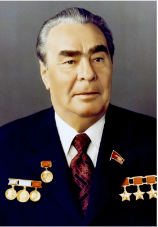
Leonid Brezhnev
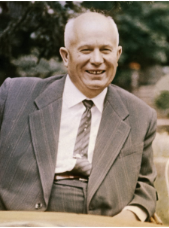
Nikita Khrushchev
Deterioration of relations with the USSR
Sino-Soviet relations deteriorated after Khrushchev's leadership. When Leonid Brezhnev came to power in 1964, China was in crisis because of Mao's Cultural Revolution.
In March 1969, the Sino-Soviet border conflict occurred near Zhenbao (Damansky) Island on the Ussuri River, near Manchuria.
In the early 1960s, the Soviet Border Service began reporting increased Chinese military activity at the eastern border. By 1968, the Soviets stationed about 375,000 troops, 1,200 aircraft and 120 medium-range missiles. Meanwhile, China had over 1.5 million men at the border.
The Sino-Soviet relations further worsened with the Soviet invasion of Czechoslovakia in August 1968 and the implementation of the Brezhnev Doctrine. Mao viewed the policy as a means to justify Soviet invasion of China. Mao also thought that the Soviets would overthrow him, similar to the event in Czechoslovakia.

Soviet Border Troops
On 23 August 1968, Zhou compared the Soviet invasion to the American involvement in Vietnam, and to Hitler's policies towards Czechoslovakia before WWII.
Triangular Diplomacy
As the Vietnam War went on, China assured the US that it would not get involved with the communists of North Vietnam unless the US threatened its southern border. China was cautious in the Indochina conflict, which brought dismay to the North Vietnamese.
US President Nixon wanted to improve its relationship with China. As tension escalated between the Chinese and the Soviets during the 1960s, Nixon saw this as an opportunity.
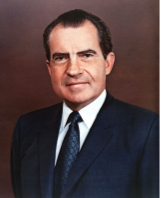
Richard Nixon
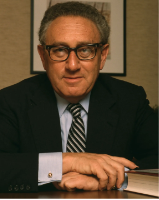
Henry Kissinger
He sent Henry Kissinger, a US emissary, on a secret trip to China. The US assured the Chinese government that it would withdraw its troops from Vietnam and they'd settle their differences over Taiwan. In 1972, Nixon was invited by Mao to visit his country, and Nixon accepted.
Developed during the Vietnam War by Kissinger, triangular diplomacy was utilised to manage US relations with the USSR and China. The policy particularly used the ongoing rivalry between the USSR and China, following the Sino-Soviet split, as an advantage to strengthen American diplomatic relations.
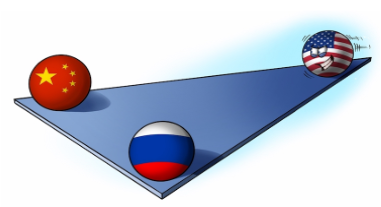
Triangular Diplomacy
Triangular diplomacy was also a way to diminish US involvement in the Vietnam War and to develop the détente. Hence, triangular diplomacy was instrumental to the gradual relaxation of tensions between the US and the USSR.
According to Kissinger, an effective foreign policy needs to rely on a combination of diplomacy and military power. In order to attain international stability, a balance of power should be first established.
Between 1969 and 1977, Kissinger was instrumental to US foreign policy. As National Security Advisor, he negotiated the SALT I and Anti-Ballistic Limitation Talks with Brezhnev.
Aside from easing the tension between the US and the USSR, Kissinger played a crucial role in the 1971 talks with Zhou Enlai, the first premier of the PRC, which resulted in the new Sino-American agreement.
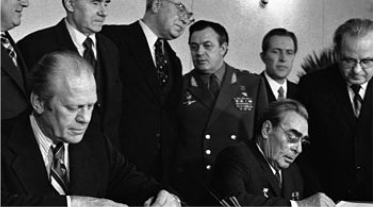
Strategic Arms Limitation Talks
Kissinger's efforts ended the 23 years of diplomatic isolation and mutual hostility between the US and China with the 1972 summit attended by Nixon, Zhou and Mao. In 1973, he was awarded a Nobel Peace Prize for his contributions to the US withdrawal from Vietnam.