Impact of the Germany's new constitution, the federal government and the Länder (AQA A-Level History): Revision Notes
📚Revision Notes
Impact of the Germany's new constitution, the federal government and the Länder
On 10 December 1870, the North German Confederation Reichstag was renamed as the German Empire. This also gave William I, the King of Prussia, the title of German Emperor. On 1 January 1871, the new constitution came into effect.
In April 1871, the second German Constitution was adopted by the Reichstag and the emperor.
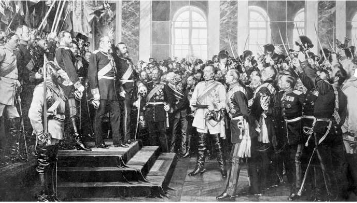
Crowing of King William I of Prussia as the German emperor. Versailles,France. 1871.
POLITICAL STRUCTURE OF THE GERMAN EMPIRE
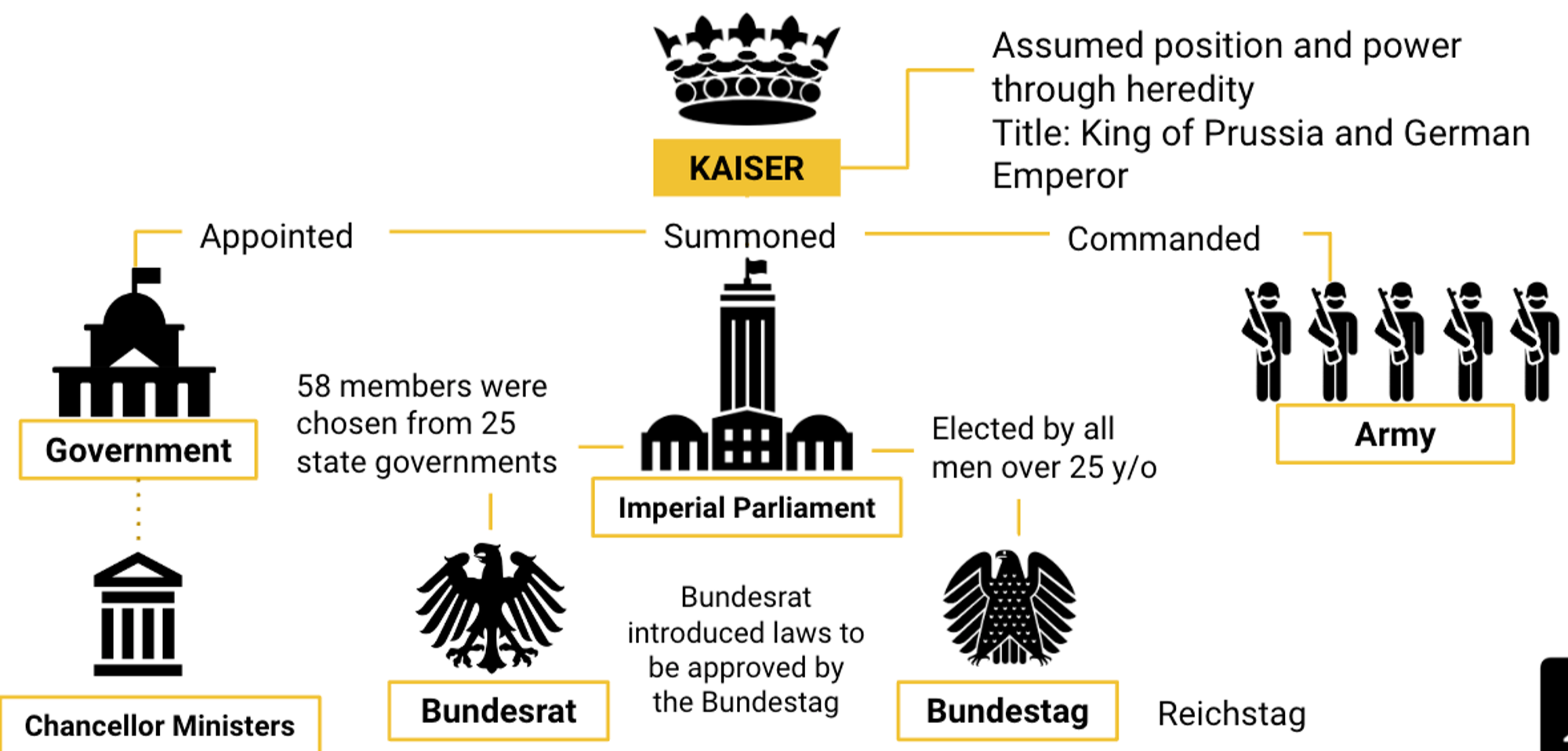
The Political Structure of the German Empire
Often referred to as Bismarck's Imperial Constitution, the Constitution of the German Empire was largely adopted from Bismarck's North German Constitution. It simply stipulated the following:
- The 25 German states were under the presidency of Prussia
- The presidency of the confederation was hereditary with the title of German Emperor
- The emperor had the power to appoint a chancellor as head of the Bundesrat
- Laws were enacted by the Bundesrat and the Reichstag (Bundestag)
- The Reichstag or Imperial Diet was to be elected by German males above 25 years old
- The Reichstag could be dissolved by the emperor
- Under Article 3, a single German citizenship was created
- The emperor had the power to appoint and dismiss imperial officials
Note
The constitution also gave the Kaiser control over foreign policy, the army and execution of all laws.
The new Kaiserreich constitution made Germany a federal state. This meant that power and functions within the empire were divided between the central and state governments. However, some historians considered the type of rule as a military monarchy or a semi-autocracy.
LÄNDER
Also known as Bundesländer, the German federal states were commonly ruled by royal families. Article 1 of the constitution stipulated the Bundesrat as the legislative representation of the states or Länder. Between 1871 and 1919, the apportionment of the Bundesrat was as follows:
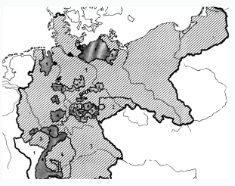
Map Showing the Länder, 1871
| State | votes |
|---|---|
| Prussia | 17 |
| Bavaria | 6 |
| Saxony | 4 |
| Württemberg | 4 |
| Baden | 3 |
| Hesse | 3 |
| Mecklenburg-Schwerin | 2 |
| Brunswick | 2 |
| 17 other small states | 17 |
| Alsace-Lorraine (After 1911) | 3 |
| Total | 61 |
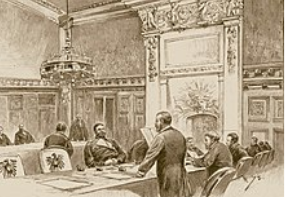
Chamber of the Bundesrat in the Reichstag Building, around 1894
In addition to the functions and limitations mentioned, the Bundesrat could also amend the constitution. A proposal could be passed with only 14 votes. That being said, Prussia which had 17 votes could immediately veto any constitutional changes. While Prussia dominated the Bundesrat, smaller states retained their own governments, but practised considerable autonomy. They had the right to resolve constitutional concerns within a state. In reality, the power of the Bundesrat was limited to the aims of the Kaiser and the chancellor.
Note
As a consequence of WWI, the Treaty of Versailles reduced the German territory. When the Nazis assumed power, they reduced states into provinces under the process of Gleichschaltung.