Occupation of the Ruhr (AQA A-Level History): Revision Notes
📚Revision Notes
Occupation of the Ruhr
As a consequence of failing to pay reparations, the German industrial area of the Ruhr was occupied by about 60,000 French and Belgian troops in January 1923. Key industries and factories located in the Ruhr were controlled by the French. In response, the Weimar government persuaded the German workers to go on strike instead of working for the French. Instead of negotiating with the German workers, the French sent their own labourers to do the work and began arresting leaders of the movement.
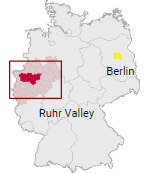
Note
Ruhr is a polycentric urban area in North Rhine-Westphalia, which served as one of Germany's main industrial areas.
According to French Prime Minister Raymond Poincaré, if the Germans would be allowed not to pay reparations, this act would later give them the chance to dismantle the whole Treaty of Versailles. However, some suggest that the French invasion of the Ruhr was simply to get hold of German coal, steel and iron production.
Another justification of the invasion was the French aim to get paid in goods since the marks were generally worthless in late-1922.
The German inhabitants of the Ruhr responded with passive resistance and civil disobedience. The French occupation killed around 130 Germans at different events. The effect was that the German economy was devastated by hyperinflation due to shortages of food and the government's move to produce more money to pay workers on strike. Eventually, the strike was called off by Gustav Stresemann and followed by a state of emergency.
The French invasion of the Ruhr gained Germany the sympathy of Great Britain and the US. The French were forced to agree with the Dawes Plan in 1924 and withdraw its forces from the occupied areas in August 1925. On the side of the French, the value of the franc also declined.

Sign reads 'The Ruhr remains German'
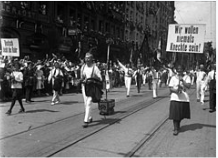
Image showing protests from the Ruhr at the 1923 Munich Gymnastics Festival

Sign reads 'We will never be servants'
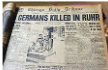
Front page of the Chicago Daily Tribune, 6 March 1923