The Knights and the Crusades (AQA A-Level History): Revision Notes
📚Revision Notes
The Knights and the Crusades

What you need to know - The knights and the Crusades: the nature of knighthood in the late 11th century; the development of the concept of chivalry; protecting Christianity and pilgrims; settlement in the crusader states and the acquisition of wealth.
During the mediaeval period, knights were cavalry warriors. Many were vassals doing their military duties to their lords. Between the 12th and 15th centuries, knighthood was closely related to horsemanship or battle on horseback. While many knights were born of nobility, there were also commoners who could be knighted due to extraordinary military service.
Knightly training in the mediaeval period

Until the late mediaeval era, knights were expected to practise chivalry. They were known to be skilled in horsemanship and military service.
At the age of 21, a squire was eligible for a knighting ceremony or accolade. Knights were then deployed on missions or campaigns.
After a religious ceremony, at the age of 15, they became squires and were allowed to wear their own armour.

At the age of 7, young noble boys were given the title page and trained in combat, swordsmanship and equestrianism.

Note
During this period, an apprentice was called a damoiseau or lordling until he becomes a shield bearer or squire or esquire.
When the Crusades came, the concept of knighthood evolved. For Christians, knightly behaviour included:
- Respect for the Church
- Protection of the weak and poor
- Loyalty to feudal lords and military superiors
- Conservation of personal honour
- In the 1120s, merchants from Naples founded the Sovereign and Military Order of the Knights Hospitaller of St. John of Jerusalem, variously known as the Knights Hospitallers, Knights of St. John, and Knights of Malta. They set up hospital posts along the pilgrimage route going to Jerusalem. Moreover, the Crusades also gave birth to Crusading Orders which was an oath to protect pilgrims on their journey to the Holy Land.
- In 1119, after the crusaders' capture of Jerusalem, a French knight along with 8 companions founded the Poor-Fellow Soldiers of Christ and of the Temple of Solomon, or simply the Knights Templar.
- They pledged to protect Christian pilgrims visiting the Holy Land. This order is known as the Guardian of the Ark of the Covenant.
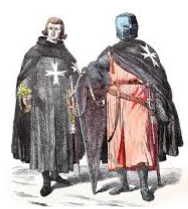
Knights Hospitaller during the First Crusade
The knightly crusading orders became one of the strongest institutions in Europe during the mediaeval period. Most of them fought for their salvation by bearing the cross.
Other Crusading Orders
- At the end of the 12th century, Germans in the city of Acre founded the Order of Brothers of the German House of Saint Mary in Jerusalem, commonly known as the Teutonic Knights. Like other crusading orders, they initially pledged to keep the pilgrims safe, but later turned into an elite military force who joined the Crusades.
- The Knights of St. Lazarus in which most members were lepers or hospitallers who contracted the disease.
- The Sword Brethren was founded to support Western Christian expansion to the east.
- The Knights of Calatrava emerged in the Iberian peninsula after the Templars abandoned the castle. The members were Cistercian monks and Navarrese soldiers.
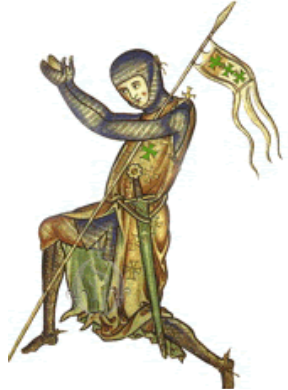
Illustration of a Hospitaller of St. Lazarus
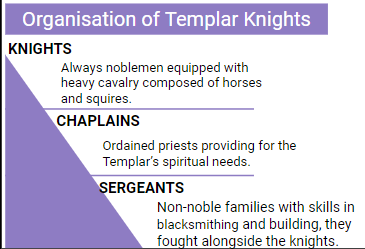
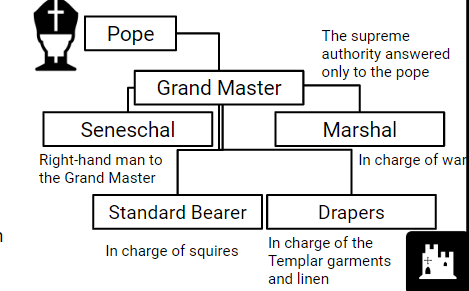
Resembling the structure of the Church, crusading orders developed a hierarchical structure. An example was the Knight Templar, the first among a number of Military Monastic Orders during the crusading movement. They were both knights and monks stationed in monastery castles known as Preceptory or Commandery.
Organisation of Templar Knights
Hierarchy of Templar Order
Many knights settled in crusader states, participated in politics and acquired enormous wealth. Between the late 11th century and middle of the 13th century, the Crusades greatly affected the relationship of knighthood and feudalism. Due to long-distance expeditions and knights who held lands in crusader states, king's armies were replaced with mercenaries. By the 14th and 15th centuries, the gradual erosion of feudalism also resulted in the disintegration of knighthood. By the 16th century, knighthood became an honorific status bestowed by sovereigns.
Summary of the Crusades' militant Christianity
- Many religious Christian knights and fanatical believers of the faith saw the Crusades as a religious duty and right to fight for the Cross.
- Compared to papal indulgence, crusaders under this motif saw war for penance and not penance for war.
- They aimed to rescue the Holy Land from the infidels instead of undertaking pilgrimage to it.

Note
Individual motives include European nobles went on the Crusades to increase land holdings and wealth. Some were drawn by the promise of tax exemption and anticipation of plunder. Feudal and family loyalty among the upper ranks. Some young nobles became crusaders due to the Law of Primogeniture, or the right of succession belonging to the first born.
Glossary of Terms
POPE
CRUSADES
The highest position of the Catholic Church. Initial Crusades were called upon by popes.
A series of military and religious expeditions of European Christians that occured in the mediaeval period to recover the Holy Land.
JERUSALEM
PAPAL INDULGENCE
An ancient city in the Middle East that was captured by the crusaders during the First Crusade. It became the most important kingdom for the crusaders.
During the Crusades, it promised salvation of souls. It was closely tied to the practice of pilgrimage, veneration of saints and relics, conceptions of purgatory, and the sacrament of penance.
PILGRIMAGE
CRUSADER STATES
A sacred journey of religious people to places they considered holy. For Christians, Jerusalem is a holy place, while for Muslims, Mecca is a sanctuary of faith.
Also known as the Outremer or Latin East, established by crusading leaders after the Christian success of the First Crusade.