Factional rivalries and Henry Tudor (AQA A-Level History): Revision Notes
📚Revision Notes
Factional rivalries and Henry Tudor
Richard's short and tumultuous reign was plagued by intense factional rivalries, deeply rooted in the broader conflict of the Wars of the Roses. These rivalries were driven by political ambitions, personal vendettas, and regional loyalties, ultimately contributing to Richard's downfall.
Edward IV's Death: Edward IV's sudden death in April 1483 left a power vacuum and a succession crisis. His elder son, Edward V, was a minor, leading to a struggle for control over the regency.
Note
Edward IV's death in April 1483 created a power vacuum, with his young son, Edward V, being too young to rule. This triggered a fierce struggle for control over the regency and intensified the factional rivalries that plagued Richard III's brief and troubled reign.
Key Factions and Figures
The Woodvilles:
- Rise to Power: The Woodvilles, led by Elizabeth Woodville (Edward IV's queen), gained significant influence through their connections to the king. Elizabeth's large family was strategically married into the nobility, consolidating their power.
- Ambitions and Rivalries: The Woodvilles aimed to control the regency for young Edward V, which placed them in direct conflict with Richard, Duke of Gloucester, who was named Lord Protector.
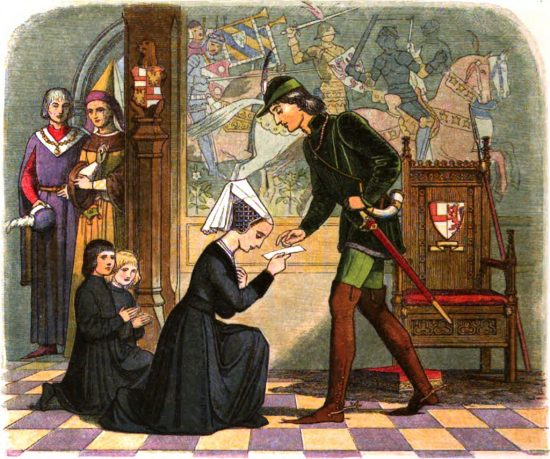
The Woodville Family
- Conflict with Richard III: Richard moved against the Woodvilles swiftly. He intercepted Edward V and arrested key Woodville members, including Earl Rivers and Richard Grey. He declared Edward IV's marriage to Elizabeth Woodville illegitimate, thus disqualifying her children from the throne. The executions of Rivers and Grey in June 1483 marked the brutal suppression of the Woodville faction.
The Buckingham Faction:
- Henry Stafford, Duke of Buckingham: Initially a close ally of Richard III, Buckingham supported Richard's seizure of the throne. Buckingham's motivations are debated, but it is likely he sought increased power and influence.
- Disillusionment and Rebellion: Buckingham grew discontented, possibly due to Richard's failure to grant him the expected rewards. He led a rebellion in October 1483, aligning with Henry Tudor and promoting him as the Lancastrian claimant. The revolt was poorly coordinated and quickly crushed, resulting in Buckingham's capture and execution.
The Northern Affinity:
- Richard's Power Base: Richard III had cultivated strong support in the north of England during his tenure as Duke of Gloucester. His northern affinity included loyal retainers and local nobility who benefited from his patronage.
- Key Supporters: Prominent northern supporters included Lord Lovell, Sir Richard Ratcliffe, and the Neville family. This faction provided military and political support but created resentment among southern nobles who felt marginalised.
The Stanleys:
- Pragmatic Politicians: The Stanley family, led by Thomas Stanley, 1st Earl of Derby, and his brother William Stanley, wielded significant influence in the northwest of England. Their allegiance was crucial but notoriously unreliable.
- Role at Bosworth: The Stanleys' eventual betrayal of Richard III at the Battle of Bosworth was decisive. Thomas Stanley's forces joined Henry Tudor at a critical moment, ensuring Richard's defeat and death on the battlefield.
Richard III's Policies and Actions
Centralization of Power:
- Richard sought to consolidate his authority by rewarding loyal supporters with titles and lands. He also appointed trusted allies to key positions, ensuring control over the administration and military.
Note
Richard consolidated his authority by rewarding loyal supporters with titles and lands, while appointing trusted allies to crucial positions. This strategic move secured his control over both administration and military, strengthening his grip on power.
Legal Reforms:
- Richard's reign saw several legal reforms aimed at promoting justice and reducing corruption. These included the protection of property rights, reforms to the judicial system, and the establishment of bail for those accused of crimes. While these measures were well-received, they did little to stabilise his reign amidst the factional disputes.
Note
Richard's reign introduced significant legal reforms, including the protection of property rights, judicial system improvements, and the establishment of bail for the accused. Despite these advances, the reforms struggled to stabilise his reign amid ongoing factional disputes.
The Fall of Richard III
Henry Tudor's Invasion:
- Henry Tudor, a distant Lancastrian claimant, capitalised on the discontent with Richard's rule. Supported by exiled Lancastrians and disaffected Yorkists, he landed in Wales in August 1485 and marched towards England.
Note
Henry Tudor, a distant Lancastrian claimant, seized on discontent with Richard III's rule, landing in Wales in August 1485. Rallying support from exiled Lancastrians and disgruntled Yorkists, he marched towards England to challenge Richard's authority.
Battle of Bosworth Field:
- On 22 August 1485, the armies of Richard III and Henry Tudor met at Bosworth Field. The defection of key nobles, notably the Stanleys, tipped the balance in favour of Henry. Richard's death in the battle ended the Plantagenet dynasty and initiated the Tudor era.
Note
On August 22, 1485, the Battle of Bosworth Field saw Richard III's forces defeated by Henry Tudor's army, largely due to the defection of key nobles like the Stanleys. Richard's death marked the end of the Plantagenet dynasty and the beginning of the Tudor era.
Conclusion
Factional rivalries during Richard III's reign were symptomatic of the broader political instability of late 15th-century England. Despite his efforts to consolidate power and implement reforms, Richard's reign was marred by deep-seated animosities and shifting allegiances among the nobility. His defeat at Bosworth marked a pivotal moment in English history, ending the Wars of the Roses and ushering in the Tudor dynasty. These rivalries underscore the volatile nature of mediaeval English politics, where loyalty was often a transient and transactional commodity.
Note
Factional rivalries during Richard III's reign highlight the broader political instability of late 15th-century England. Despite his efforts to solidify power, deep-seated animosities and shifting allegiances plagued his rule. His defeat at Bosworth ended the Wars of the Roses and ushered in the Tudor dynasty, illustrating the volatile and transactional nature of mediaeval English politics.
📌 Why did Henry Tudor gain support?
Henry's Life
- Born in Pembroke Castle, Wales on Jan 28th, 1457
- He was the only child of Edmund Tudor Earl of Richmond. Edmund died three months before Henry was born. His mother Margaret was only 14 when she gave birth. Henry took his father's title when he was born
- He spent most of his early years at Pembroke Castle which was seized by Lord Herbert following the defeat of Henry VI in 1461
- Edward IV became Henry's feudal lord but in 1462 Edward sold the guardianship of Henry to Lord Herbert for £1000
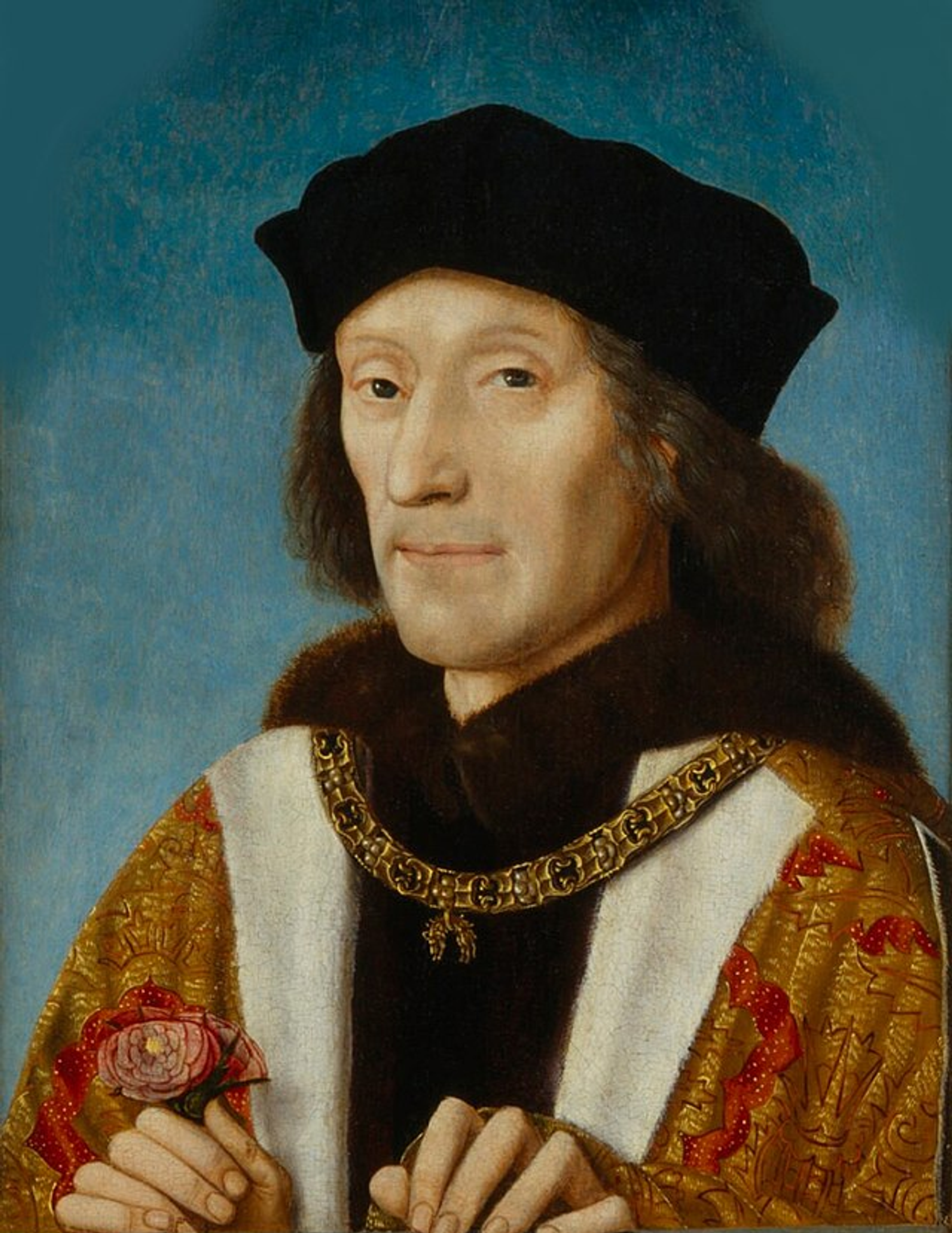
Henry VII
- Duke of Gloucester was given overlordship of the Richmond lands
- Henry stayed at Pembroke was brought up in Herbert's household, Herbert was executed in 1469
- Henry VI retook the throne
- In 1471 both Henry VI and his only son died and so Henry became the main Lancastrian claimant to the throne which put him in a vulnerable position
- Jasper Tudor Earl of Pembroke sent him to France for safety where he spent fourteen years in exile. Francis II Duke of Brittany was his host
- Edward IV referred to Henry as 'the imp' and 'the only one left of Henry VI's brood' and he offered a substantial reward for the capture of Henry. Francis stood by him and also said he would guard Henry & Jasper Tudor so they could not escape and return to England. Francis sent back their English servants and replaced them with Breton servants
- Brittany was an independent French duchy. If England and France joined forces against Francis, his duchy would have no chance of survival. By 1475 France and England had better relations
- Edward tried to persuade Francis that he was hoping Henry would marry one of his daughters. Henry was convinced that his life would be in danger if he was handed over to the English. Francis too was in trouble
- Henry developed a fever, which halted any movement to England and so he was taken into sanctuary along with Jasper. Edward made no further effort to get Henry to England and then in 1483, Edward died. Succeeded by his brother Richard Duke of Gloucester
- The princes were denied of their right to succeed their father and so the political climate became very unsettled. Richard had his supporters but now many saw Henry as the rightful King of England
- Edward IV's widow was drawn into this as she wanted Henry to marry her daughter Elizabeth of York. In theory this should had united the Lancastrians and Yorkists
- Henry set out to land a force in England but did not know how much support he actually had
- On Christmas day 1483 Henry made a public declaration at Rennes Cathedral that if he won the throne from Richard III he would marry Elizabeth of York and make her Queen. He would unite the two houses in this way
- Richard put pressure on Brittany to hand over Henry, Francis was old and ill. His advisors felt sufficiently vulnerable, and they went along with Richard's request
- John Morton warned Henry of what was happening so he escaped to France disguised as a servant to live in Paris
- He gathered a court of English discontents who were becoming more concerned about Richard's actions, these men served Henry after he became king
- He was made aware that Richard had devised a plan to scupper his move to unite the Lancastrians and Yorkists by marrying Elizabeth of York, his niece.
- Those who had gone to Paris (Bishop Moreton, the Earl of Oxford, and Richard Fox) told Henry he could rely on them and the support of the English people
- Oxford had the necessary military expertise to make such a venture a success
- August 7th, 1485: Henry and his army landed at Milford Haven in Wales
Note
Henry VII, born on January 28, 1457, at Pembroke Castle, Wales, was the sole child of Edmund Tudor, Earl of Richmond, who died before Henry's birth. At just three months old, Henry became Earl of Richmond, but his early years were marked by instability. Seized by Lord Herbert in 1461, Henry's guardianship was sold to Herbert in 1462. Following the execution of Herbert in 1469 and the deaths of Henry VI and his son in 1471, Henry became the primary Lancastrian claimant. He spent fourteen years in exile in France, where he faced numerous threats and challenges, including from Edward IV, who sought his capture. Henry's strategic marriage to Elizabeth of York was intended to unite the warring houses of Lancaster and York. On August 7, 1485, Henry landed in Wales with a force, setting the stage for his eventual rise to the English throne.
📌 Who is on Richard III's side?
- Edward Plantagenet, Earl of Warwick
- John de la Pole, Earl of Lincoln
- John Howard Duke of Norfolk
- Lord Stanley (Henry Tudor's stepfather, married to Margaret Beaufort)
- Earl of Northumberland
- Richard Ratcliff
- William Catesby
- Francis Lord Lovell
- James Tyrell
- Robert Brackenbury
Note
These historical figures were key players during the Wars of the Roses and the reign of Richard III, influencing the turbulent politics and power struggles of 15th-century England.
📌 Who is on Henry Tudor's side?
- Margaret Beaufort
- Elizabeth Woodville
- Thomas Grey, Marquess of Dorset
- John Morton, Bishop of Ely
- Sir John Cheyne
- Sir Giles Daubeney
- Sir Robert Willoughby
- John de Vere Earl of Oxford
Note
Margaret Beaufort, Elizabeth Woodville, Thomas Grey, John Morton, Sir John Cheyne, Sir Giles Daubeney, Sir Robert Willoughby, and John de Vere, Earl of Oxford, each played pivotal roles in the tumultuous politics of late 15th-century England. Their alliances and rivalries significantly influenced the power struggles of the era.