The downfall of Richard III (AQA A-Level History): Revision Notes
📚Revision Notes
The downfall of Richard III
📌 Buckingham's Revolt
Henry Stafford, Duke of Buckingham
- Closely related to the royal house
- Three of his grandparents were descended from King Edward III
- This claim could be argued to have been a reason for him to murder the Princes in the Tower as he was more legitimate than Henry Tudor
- One of Gloucester's council members (along with Thomas Lord Stanley, Hastings, Rotherham and Bishop Stillington)
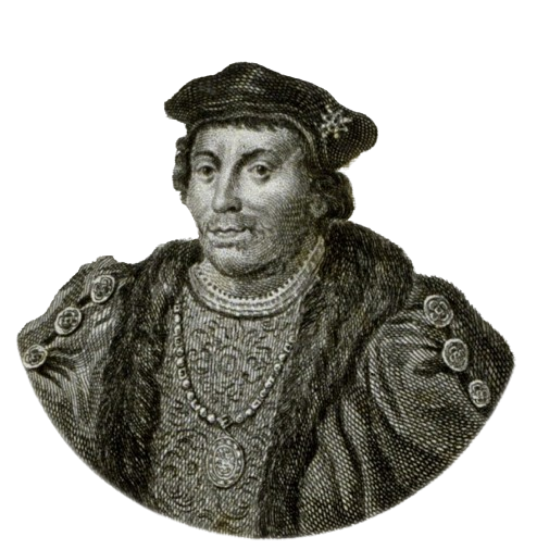
Henry Stafford, Duke of Buckingham
1483
April
- Buckingham learns of Edward IV's death on April 14th
- Gloucester receives a letter from Hastings and sends his own letters to Anthony Woodville, Buckingham and a reply to Hastings
- Gloucester and Buckingham arrive in Northampton on April 29th
- They meet up with Anthony Woodville in Stony Stratford
- The next morning they arrest Anthony by Buckingham and Gloucester
- They take Edward V into Gloucester's custody
May
- Gloucester, Buckingham and Edward V leave Northampton on May 2nd
- They enter London on the 4th of May
- On May 10th, Gloucester's council meet
- Buckingham suggests Edward should be lodged in the Tower until his coronation
Note
On May 21st Gloucester names Buckingham Justiciar and Chamberlain of South Wales, Constable and Captain of Aberystwyth Castle, Constable of royal castles in Shropshire and Herefordshire, Steward of South Wales, and custodian of castles, manors and towns in Wales and the Marches that formed the duchy of Lancaster
June
- June 13th, Hastings accused and executed for treason
- Possibly pre-arranged with the complicity of Howard and Buckingham
- Thomas Rotherham and John Morton also arrested and placed in the custody of James Tyrell
- On June 23rd Buckingham addresses the city officials of London at Guildhall and reinforces the illegitimacy claim Richard made about Edward IV
- June 24th: Buckingham addresses London's mayor and alderman
- June 25th: Buckingham addresses a group of citizens at Westminster and produces a petition summarising Richard's claim to the throne
July
- Richard continues to empower Buckingham and Norfolk
- Richard and Buckingham meet in Gloucester on July 31st
September
Sept 24th: Buckingham reportedly writes to Henry Tudor asking him to invade England on October 18th
Origins of the revolt
- Brewing early September 1483
- Growing rumours that Richard had imprisoned/killed the princes
- Plots emerged that aimed to put Henry Tudor on the throne
- Orchestrated by Margaret Beaufort and Elizabeth Woodville
- Buckingham was turned against Richard by John Morton
Location and leaders
- Three main centres
- One in the south-east of England where Kent was joined by Surrey and Sussex
- They were under the leadership of Edward IV's former household servants
- Not heavily influenced by magnates and barons, Able to wield significant influence and rely on popular following
- The second centre was in south-central England- Salisbury, Wiltshire, Newbury, Berkshire
- Many leaders were supporters of Edward IV. Also, men associated with Clarence including Sir Roger Tocotes and John Harcourt
- Edward's former household men included Sir William Berkeley and Sir John Cheyne
- There were close family ties strengthening the numbers of the rebellious gentry in the main centres
- South-west centre of the rebellion was predominantly led by Thomas Grey, Marquess of Dorset and Sir Thomas St Leger. Their children were contracted to marry
- Supported by members of the gentry who had also been Edward IV's servants E.g. three members of the Courtenay family
Note
The rebellion had three main centres of activity. The first, in the south-east of England, combined Kent with Surrey and Sussex and was led by Edward IV's former household servants who commanded popular support rather than relying on magnates. The second centre, in south-central England, spanned Salisbury, Wiltshire, Newbury, and Berkshire, and included leaders loyal to Edward IV and supporters of his brother Clarence. The third, in the south-west, was driven by Thomas Grey, Marquess of Dorset, and Sir Thomas St Leger, with their alliance further strengthened by marriages and support from Edward IV's former servants, such as the Courtenay family.
Involvement of the Duke of Buckingham
- Buckingham turned against Richard
- Through his prisoner John Morton Bishop of Ely he was put in contact with Reginald Bray
- He was Margaret Beaufort's agent and she was Buckingham's aunt
- They made plans for him to raise a revolt in Brecon in South Wales
- Henry Tudor was encouraged by envoys and the duke to return to England and stake his claim
- Revolt in Wales planned to link up with an invasion force from Brittany
- Combined with uprisings in southern England, the timing was crucial
- News of the plot was leaked by royal spies
- Richard III could prepare himself
- Duke of Norfolk was placed in charge of the defence of London (one of Richard's only supports)
- Richard's supporters focused on defeating Buckingham
- Were commanded to prepare defences on the English/Welsh border and muster their troops
- Royal preparations meant the rebels could not wait any longer for Henry Tudor to arrive
- October 18th, 1483: there were risings at Brecon, Maidstone in Kent, Newbury in Berkshire, Salisbury in Wiltshire, and Exeter in Devon
The capture of the Duke of Buckingham
- Richard went on the attack against Buckingham
- Had him surrounded
- Buckingham was deserted by his Welsh troops
- Buckingham failed to rally any support in Weobley (Herefordshire) and was forced to go into hiding
- Executed at Salisbury on Nov 2nd, 1483
- Richard moved swiftly from Salisbury to meet the south-western rebels in Exeter
- The other rebels had been deterred from attacking London by Norfolk's forces
- Exeter put up no defences against Richard and he occupied the city
- Rebel leader Thomas St Leger was executed
- Henry Tudor's invasion fleet had meanwhile been scattered in a storm
- On arriving near the coast he realised he was too late and turned back for Normandy
- The rest of the rebels were discouraged by the death of Buckingham
- They did not trust the abilities of Henry Tudor and dispersed
Note
In November 1483, Richard swiftly defeated Buckingham, whose Welsh troops abandoned him. Buckingham, unable to gain support, went into hiding and was executed at Salisbury on November 2nd. Richard then quickly moved to Exeter, where he faced no resistance and occupied the city. The rebel leader Thomas St Leger was executed, and Henry Tudor's invasion fleet was scattered by a storm, forcing him to return to Normandy. The remaining rebels, discouraged by Buckingham's death and distrusting Henry Tudor, dispersed.
The build-up to Bosworth
The return of Henry Tudor
- Henry had fled to France after the Duke of Brittany and Richard had come to terms
- They had united against France
- Henry planned his invasion from the French court
- He initially had the support of France as English-backed Brittany threatened France's borders in the spring 1485
- Brittany withdrew from the borders in July and promised support to Henry from them disappeared
- Henry had the new impetus for his invasion plans
- Heard of Richard's plans to marry Elizabeth of York and used it against him as she was his niece.
- Henry raised finances in the form of loans and managed to assemble and arm a small force
- Recruited French mercenaries to bolster his invasion force
- Aimed to marry Elizabeth of York to unite the houses.
Note
In the spring of 1485, Henry fled to France after the Duke of Brittany and Richard III united against France. Initially supported by France due to the threat posed by the English-backed Brittany, Henry's position weakened when Brittany withdrew its support in July. Seizing the opportunity, Henry advanced his invasion plans, leveraging Richard's intention to marry Elizabeth of York—his niece. Raising finances through loans and recruiting French mercenaries, Henry assembled a small but formidable force, aiming to marry Elizabeth to unite the warring houses.
📌 How did Richard III dissuade support for Henry Tudor?
- Says he'll marry Elizabeth, his niece, instead and Nobility does not approve of this notion since they are too closely related
- Richard heard of Henry's invasion plans which they were not unexpecting.
- Richard left Westminster for more secure support in the north and took up residence in Nottingham in early June
- Instructed his chancellor to issue a proclamation in late June 1485
- Repeated a proclamation already made in Dec 1484
- Condemned those he called traitors and called his subjects to arms against them
- Called Henry a bastard child (said his great-grandmother had a child out of wedlock)
- Said he was siding with the enemy (The French)
- Accused Henry of trying to replace Yorkists with Lancastrians
- Richard pawns plates and jewellery to pay for an army
Events preceding the battle
Team Richard III
- John Howard, Duke of Norfolk
- Henry Percy, Earl of Northumberland
- William Catesby
- Richard Ratcliffe
- Francis Lovell
- John de la Pole, Earl of Lincoln
- Lord Stanley
- Some of Richard's men seemed to be reluctant to support him
- Rhys ap Thomas changed sides and joined forces with Henry Tudor
Team Henry Tudor
- Those who had fled to exile after the failed rebellion in 1483
- Experienced commanders and fighting men
- Earl of Pembroke
- Sir Edward Woodville
- Peter Courteney, Bishop of Exeter
- Giles Daubeney
- Richard Edgecombe
- Rhys ap Thomas
- Walter Herbert
- John Morton, Bishop of Ely
- John de Vere, Earl of Oxford (escaped from Hammes Castle in 1484)
- Marquess of Dorset to remain in France as surety for one of the loans taken out by Henry
- French mercenaries of about 2000 men
- Henry was reliant on the network of sympathisers in England, encouraged by his mother Margaret
Note
After the failed rebellion in 1483, notable figures including the Earl of Pembroke, Sir Edward Woodville, Bishop Peter Courteney, Giles Daubeney, Richard Edgecombe, Rhys ap Thomas, Walter Herbert, Bishop John Morton, and John de Vere, Earl of Oxford, went into exile. Marquess of Dorset stayed in France as surety for Henry's loans, while Henry depended on a network of English sympathisers, supported by his mother Margaret. French mercenaries of about 2,000 men bolstered their cause.
The invasion
- Henry planned to land in Wales where the Tudor family's roots lay, The Herbert family was dominant in Wales and would offer huge support
- The Invasion force left France on Aug 1st, 1485
- They Landed at Milford Haven on the Pembrokeshire coast on August the 7th and met no resistance however they were not met by allies either.
- Henry began his march through Wales knowing news would spread quickly
- Letters were written to Kinsmen urging them to support the Tudor cause and some responded positively
- The first signs of uncertain loyalties emerged as the force progressed through Wales
- Rhys ap Thomas and Walter Herbert were flanking the invasion force and they gave the appearance that they were containing the invaders, however, the forces were, in reality, an addition
- Henry promised Rhys the lieutenancy of Wales and so Rhys' force joined Henry's
- Walter Herbert joined not long after
- The force upon reaching Welshpool was enlarged by clansmen from North Wales
- Entered England on Aug 15th and demanded the surrender of Shrewsbury
Note
On August 1st, 1485, Henry's invasion force departed from France, landing at Milford Haven on August 7th. Though they faced no immediate resistance, initial support from local allies was lacking. As Henry advanced through Wales, he swiftly gained crucial backing from Rhys ap Thomas and Walter Herbert, bolstering his numbers. By August 15th, Henry's expanded force, now including North Welsh clansmen, crossed into England and demanded the surrender of Shrewsbury.
The support of the Stanleys
- Henry's reception at Shrewsbury was lukewarm and there was no popular uprising to boost his cause
- Force moved eastwards in hopes of drawing in support from the Stanleys and others
- Upon reaching Newport Henry was joined by Sir Gilbert Talbot with an additional force of 500 men and had the potential to influence other Englishmen to Henry's cause
- Invasion force slowed down upon reaching Stafford
- This was to allow time for the Stanleys to push ahead into the Midlands
- Allowed for supporters to be gathered and rest
- Lord Stanley reached Lichfield by Aug 17th
- Sir William Stanley moved more slowly and met with Henry on Aug 20th
- They conducted the entry into the city
- Henry was received with military honours
- Lord Stafford had already withdrawn from Lichfield as if in retreat
- Was offering a smoke screen while the rebel forces advanced
- More joined the forces
- The Stanleys still kept their distance from the rebel army
- Effective strategy but demoralising for the men
📌 Battle of Bosworth- what actually happened?
Armies and Commanders
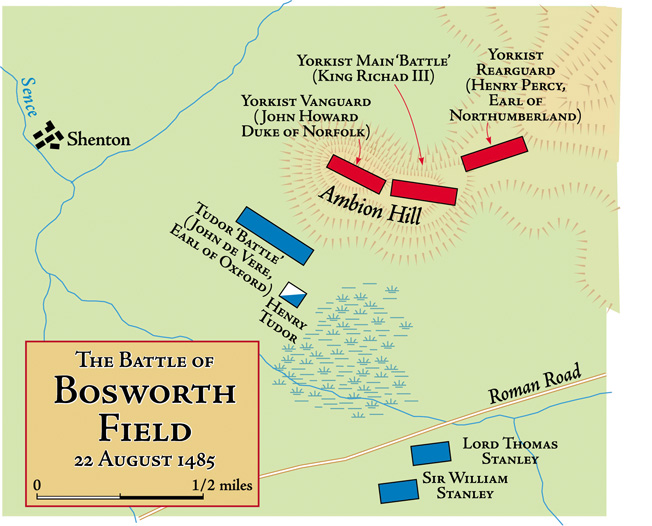
Battle of Bosworth
Tudors
- Henry Tudor, Earl of Richmond (not experienced)
- John de Vere, Earl of Oxford (experienced)
- 5,000 men which included well-paid French Mercenaries
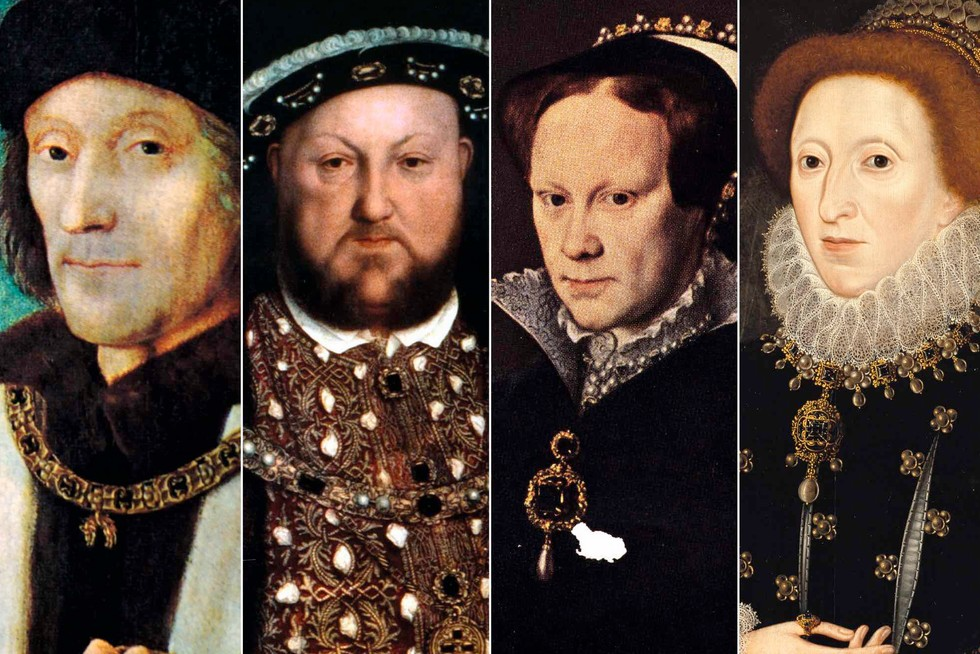
The Tudors
Yorkists
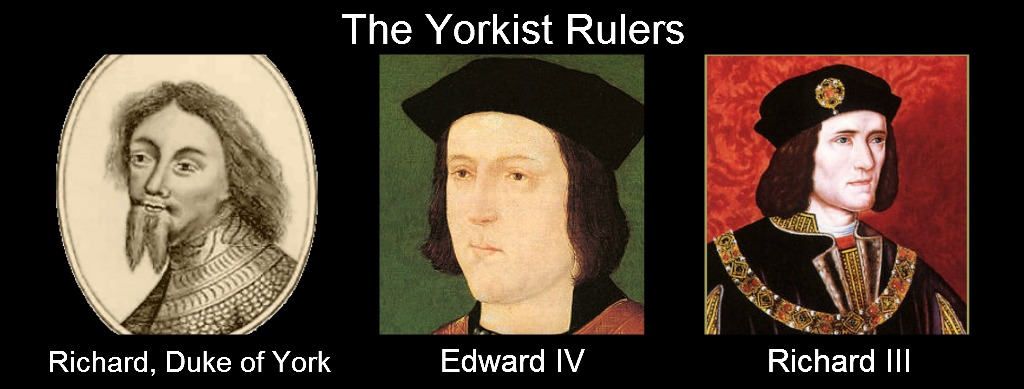
- King Richard III
- Henry Percy, Earl of Northumberland (in the Rear-guard)
- John Howard, Duke of Norfolk (Vanguard)
- 10,000 men
Stanleys
- Thomas Stanley, 2nd Baron Stanley
- 6,000 men
Role of the Stanleys
- Held the mace at Richard III's coronation
- Was made Lord High Constable of England
- Given lots of land
- Married to Margaret Beaufort: Henry's Mother
- Ended up siding with Henry Tudor
- Richard ends up being killed by the Stanleys
Events of the battle
- The Stanleys, who had remained neutral, crucially intervened in favour of Henry Tudor at a critical moment.
- Sir William Stanley's forces attacked Richard's position.
- Richard III was unhorsed and killed during the battle. His death marked the end of the Yorkist resistance and the beginning of Tudor rule.
- The Yorkist army was larger, but the loyalty of some of Richard's commanders was uncertain.
- The battle began with a traditional exchange of artillery, followed by a cavalry charge from both sides.
- Richard III led a courageous charge aimed directly at Henry Tudor in an attempt to end the battle quickly by killing the Lancastrian leader. However, this move left him exposed.
- Some of Richard's men fled and so he lacked support in the battle
- A very small and short battle
Note
The Battle of Bosworth Field, though brief, was pivotal in English history. Richard III, attempting a decisive blow against Henry Tudor, was fatally exposed and unhorsed. With crucial support from the Stanleys and wavering loyalty among his own commanders, Richard's death ended Yorkist resistance and marked the dawn of Tudor rule.
📌 Who is killed?
- Richard III
- Richard Ratcliffe
- John Howard, Duke of Norfolk
- Lord Ferrers of Chartley
- Robert Brackenbury
- Many more
📌 Who flees?
- Francis Lovell
- Humphrey Stafford and his brother Thomas
- John de la Pole Earl of Lincoln
📌 Who was taken captive?
- Henry Percy Earl of Northumberland: didn't actually fight in the battle
- Thomas Earl of Surrey
📌 What happened to Richard III?
- His body was taken from the field and stripped
- Tied to a horse, taken to Leicester and displayed for three days to prove he was dead
- Richard's body was displayed in Leicester to confirm his death
The proclamation of a new Tudor Dynasty under Henry VII
Establishing Henry VII
- Dated his reign from August 21st, 1485, making everyone who fought against him a traitor
- Acted with considerable leniency in the weeks following the battle
- Edward, Earl of Warwick (heir to the male Plantagenet line) captured as a precaution against the uprising
- Earls of Northumberland and Surrey also captured
- The only execution of Richard III's followers was William Catesby
- General pardon issued to all but those who had fled on October 11th, 1485
- Henry VII was coronated on October 30th, 1485
- A week later parliament was summoned to meet at Westminster on November the 7th
- Henry did not ask for the ratification of his title but presented his right at title as a fait accompli
- As far as he was concerned the attainder Richard III passed against him was null and void when he became King, this was Perhaps done to set the tone of Henry VII's rule
- Parliamentary proclamation confirming Henry's right and title made no mention of his pledge to marry Elizabeth of York
- Proclamation of Henry VII as King declared Elizabeth of York illegitimate
- He could not marry and have heirs with an illegitimate woman
- Delay in declaring marriage plans was perhaps done in order to allow time to confirm the fate of Elizabeth's brothers and also gave time to deal with other matters like reversing all attainders made in 1471 and to show that it was not his only reason to gain power. This restored leading Lancastrians to their lands including Henry's mother, Margaret Beaufort, Edmund Duke of Somerset and Edward Stafford Duke of Buckingham
- Attainders of 1484 on Henry VII's followers also reversed
- Formally announced intention to marry Elizabeth of York on December 10th, 1485
- Awaited a papal dispensation to allow the marriage to proceed, They were married on January 18th, 1486
- Significant to the political state of the country as it aimed to unite the political supporters of Tudor and York
- The Tudor Rose devised by Henry, an amalgamation of the white York rose and the red Lancastrian rose and symbolised the union
- Henry's heir, Arthur, was born on September 18th, 1486
- Signified dynastic security
Note
Henry VII's reign began on August 21, 1485, with a strategic blend of leniency and consolidation. He captured key opponents, including Edward, Earl of Warwick, but executed only William Catesby, and issued a general pardon by October 11. Henry was crowned on October 30 and summoned Parliament on November 7 without seeking their ratification of his title, viewing the attainder against him as void. His delay in announcing his marriage to Elizabeth of York, formalised on January 18, 1486, after obtaining a papal dispensation, aimed to address political and dynastic concerns. The union, symbolised by the Tudor Rose, strengthened his claim and secured the Tudor dynasty with the birth of his heir, Arthur, on September 18, 1486.