Emerging Power of Richard of York (AQA A-Level History): Revision Notes
📚Revision Notes
Emerging Power of Richard of York
📌 Henry's Illness
Nature
- He was incapable of speech, unable to move without help and oblivious to surroundings
- He could only eat and drink with assistance
- He spent most of his time sleeping and had no memory of what happened after he recovered
Cause (could have been)
- News of the death of John Talbot, Earl of Shrewsbury, and the loss of Gascony in the Battle of Castillion
- The strain of a large amount of travelling he'd done given his weak constitution
- The pressures of his wife's first pregnancy
- A hereditary condition: his maternal grandfather, Charles VI of France was insane – believed he was made of glass and would shatter if touched
The Ambitions of Richard Duke of York
In the beginning, York continuously proclaimed his loyalty to King Henry, claiming that he solely wanted to replace Henry's corrupt advisors. After Henry fell ill, Margaret was denied regency and York became Protectorate in 1454.
During his first protectorate, York made many changes to address political instability and reduce corruption within the Government. To reduce instability York imprisoned the Duke of Somerset, addressing the grievances of the nobles and dealt with rebellions that had arisen from dissatisfaction with Lancastrian rule.
Despite York's efforts, Henry reversed many of his changes when he recovered in 1455, including Somerset's release from the Tower.
York had a strong sense of duty. Somerset was terrible at defending France and had to surrender Rouen without a fight (York was technically still a commander there).
After the defeat in the Battle of Castillion in 1453, Henry has his first mental breakdown. Parliament refuses to make Margaret of Anjou regent.
The Duke of York
- Born in 1411
- Elected to the Order of the Garter in 1433
- In 1436 he was appointed as the King's lieutenant in France
- Heavily involved in the negotiations of the Truce of Tours in 1444
- He was sent to govern Ireland in the late 1440s
- In 1451 he returned to England
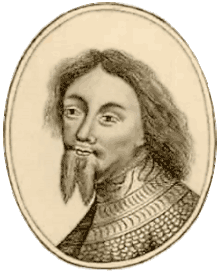
Richard Duke of York
He was not condemned like the other government officials surrounding Henry because he wasn't as involved specifically in government as they were.
He was also owed large amounts of money from the government because of his service in France. He was also, essentially, exiled to another country whilst all the corrupt government officials gained more power after Henry lost all the land in France, so the people did not see him as a traitor. Richard also showed allegiance to his cousin, after Richard's father was executed for his part in the Southampton plot of 1415.
Note
Despite the downfall of many government officials around Henry, Richard was spared from condemnation. His limited involvement in government and the large debts owed to him for his service in France kept him from being labelled a traitor. Moreover, his exile and allegiance to his cousin, after his father's execution for the Southampton plot of 1415, distanced him from the corruption that plagued Henry's circle.
📌 Why was Somerset selected as Suffolk's replacement?
He was driven by a combination of his own needs and the King's. He wasn't wealthy and needed an income that matched his status. The King also needed someone to lead his government. Somerset was following his family record of loyalty to Lancastrian Kings. He also had support from senior nobles with long experience in France, such as John Talbot, Earl of Shrewsbury. They hoped he would restore government authority after the Cade rebellion.
📌 Why was York excluded from power?
Personality: Wasn't very involved in government, was in favour of war
Blood: Lionel Duke of Clarence
King's favourites: Somerset and Suffolk
Margaret: Felt York was damaging the country and did not trust him
Foreign Policy: In favour of military expansion in France, whereas others wanted peace
📌The Jack Cade Rebellion
Context:
The rebellion occurred in 1450 during King Henry VI's reign, a period marked by political instability, economic difficulties, and military losses in the Hundred Years' War, particularly in Normandy.
Heavy taxation and corruption within Henry VI's government led to widespread discontent, especially in Kent.
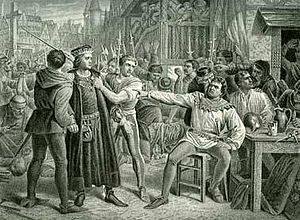
The Jack Cade Rebellion
Motivations:
Economic strain from high taxes and widespread dissatisfaction with the government were primary drivers of the rebellion.
People were particularly angered by the corruption and mismanagement by the king's advisors. Military failures in France, particularly the loss of Normandy, caused national humiliation and frustration. Local grievances in Kent, such as abuses by officials, further fuelled the rebellion.
Role of Richard, Duke of York:
Richard, Duke of York, although not directly supporting the rebellion, was seen as a symbol of potential reform and an alternative to the corrupt Lancastrian rule. Jack Cade used the alias John Mortimer to suggest a connection to York, aiming to legitimise the rebellion. The rebellion heightened tensions between the Yorkist and Lancastrian factions, setting the stage for future conflicts.
Role of Richard, Duke of York
Key Events:
The rebellion began in May 1450 in Kent, quickly gaining widespread support. On June 18, 1450, the rebels defeated a royal force at the Battle of Sevenoaks.
By July 3, 1450, the rebels had entered London and executed several officials. The rebellion collapsed after the government promised reforms and the rebels' behaviour in London led to their expulsion. Jack Cade fled but was captured and mortally wounded on July 12, 1450, dying shortly afterwards.
Consequences and Outcomes:
In response to the rebellion, the government executed many of the captured rebels, although some superficial reforms were promised. Efforts to reduce corruption were made but did not address deeper systemic issues.
The rebellion exposed the weaknesses of Henry VI's rule and increased factional tensions. It highlighted the potential for Yorkist opposition and set the stage for the Wars of the Roses. The rebellion demonstrated the power of popular uprisings and the fragility of royal authority, solidifying York's position as a significant political figure.
📌 Following York's return in 1450, what were his two complaints?
- He wanted to protect his position against attacks from others (especially Somerset)
- He wanted the removal of evil advisors that surrounded the King – he wanted good governance and justice in England
- Backed by a force of 3000 armed retainers
📌 Why did York return from Ireland and why was there tension?
He was anxious to clear his name of conspiring with Cade and having his eyes on the crown. The rebels had wanted York as the King's main advisor and had used the name of York's mother as an alias to claim the throne.
To clear his name from the Jack Cade rebellion:
- Cade had used the name Mortimer
- This was York's mother's maiden name
- Rebel manifesto called for the King to appoint York as royal advisor, not Suffolk
- York declared his loyalty to the King throughout his journey back to London
- York didn't want to be seen as a traitor and was anxious to clear his name
To take the throne:
- Evidence suggests some people saw York as a replacement for Henry VI
- A man was hanged in Ipswich for plotting to put York on the throne
- Nothing in the Cade manifesto to suggest they wanted to replace Henry
- Just wanted York to advise the King
- Also wanted other nobles like Buckingham
To bring justice and end of corruption:
- Claimed to be attacking the 'evil men' surrounding Henry VI
- Made a public statement calling for the traitors to be brought to justice end of September in 1450 and asserted his loyalty to the crown
- Offered personal assistance to help solve the problems of law and order and the household
- He was offering hope to the ordinary people and showed them someone was willing to address their complaints
To protect his position:
- York was furious about Somerset acquiring the position of chief advisor to the king
- York felt it was rightfully his
- Wanted to protect his position as heir presumptive
- Feared if he were to be found guilty of treason Somerset would be recognised as heir instead
To get his loans repaid:
- He wanted the government to pay the money it owed him
- Was owed £26,000
- He was the richest nobleman in England
- Somerset was having war loans repaid ahead of others as well as York
- York had not been paid his wages as Lieutenant of Ireland
To remove Somerset:
- York was furious at the rise of Somerset to chief advisor to the Crown and also felt Somerset was responsible for the loss of Normandy and with it much of York's property
- York and Somerset were enemies from then on
📌 What did York do on his return to London?
He exchanged public letters of propaganda with the King's councillors, written to win the support of the commons and lords. He continually emphasised his loyalty to Henry but agreed with the commoners' argument of the King being dominated by corrupt government officials.
📌 What happened in London upon York's arrival?
A mass demonstration called for Somerset to be tried for treason because of his failure in Normandy. Somerset was attacked, which left York to restore order.
York's main argument he presents for marching on London was that the Duke of Somerset was corrupt and needed to be punished for his losses in France and to be replaced by someone more loyal to the king – himself.
Dartford Coup
Context:
The Dartford Coup took place in March 1452, during the reign of King Henry VI. This period was characterised by political instability and factional disputes within the English nobility. The kingdom was suffering from the fallout of military failures in the Hundred Years' War, economic difficulties, and increasing dissatisfaction with the king's governance.
Motivations:
The primary motivation behind the Dartford Coup was the Duke of York's growing frustration with the influence of the Duke of Somerset, Edmund Beaufort, who was widely blamed for the military failures in France and the mismanagement of royal affairs. Richard, Duke of York, sought to remove Somerset from power and address what he saw as corrupt and ineffective leadership that was damaging the realm, asserting his influence and positioning himself as a protector of the realm and reformer of the government.
Involvement of the Duke of York:
Richard, Duke of York, assembled an armed force and marched towards London in an attempt to confront King Henry VI and demand the dismissal of Somerset. The Duke of York was a significant figure with a strong claim to the throne, and his actions were seen as a direct challenge to the authority of Henry VI and his advisors. York did not gather more support as people were afraid there would be a repetition of the beheadings that followed the Cade Rebellion, and York's actions appeared to be treason, so not many wanted anything to do with him. His letters also forewarned the King of his actions.
Key Events:
- March 1452: Richard, Duke of York, gathered his forces and marched to Dartford, Kent, intending to present his demands to the king.
- Standoff at Dartford: Upon reaching Dartford, York found himself outnumbered by the royal forces loyal to King Henry VI. Realising that he lacked sufficient support from other nobles and faced overwhelming odds, York chose to negotiate rather than engage in battle.
- Submission: Richard was compelled to submit to the king and swear an oath of loyalty. He was briefly arrested but ultimately allowed to return to his estates, with his demands largely ignored and Somerset retaining his position.
Consequences: The Dartford Coup had several significant consequences:
- Weakening of York's Position: The failure of the coup weakened Richard's political position and demonstrated the limits of his support among the nobility at that time.
- Increased Tensions: The events at Dartford further exacerbated the tensions between the Yorkist and Lancastrian factions, contributing to the brewing conflict that would eventually erupt into the Wars of the Roses.
- Continued Rivalry: Despite his temporary setback, Richard, Duke of York, continued to be a key player in the political landscape, maintaining his opposition to Somerset and the Lancastrian court.
- Prelude to Conflict: The Dartford Coup highlighted the deep divisions and dissatisfaction within the kingdom, setting the stage for the escalating power struggle that would follow in the coming years. It underscored the instability of Henry VI's reign and foreshadowed the violent conflicts that would soon engulf England.
📌 York's Growing Ambitions, 1454-60
Henry VI's Recovery and York's Response:
- Henry VI's recovery remained doubtful. York and his supporters were incensed by the return of Somerset and fearful of potential reprisals by their enemies.
- In April, York left the King's court without permission. On 22nd May 1455, both sides met at the First Battle of St Albans.
- The Yorkists were victorious against the army led by Henry VI. Somerset and Henry Percy were killed.
- King Henry himself was wounded in the battle, highlighting the political and physical danger to the monarch.
- Another leading supporter of Henry, the Duke of Buckingham, was also wounded.
- Henry was captured by the Yorkists, who made a deliberate show of loyalty to the King by begging for forgiveness and claiming they only wished to attack 'traitors' to the realm.
- Despite their proclaimed loyalty, the underlying threat to the Lancastrian regime was clear, with York and his followers seeking to govern well and justly.
York's Second Protectorate:
- In the short term, the Yorkist victory at St Albans placed York at the heart of political power.
- In November 1455, his role was formalised when the duke was made Defender and Protector of the Realm on the grounds that Henry was not well enough to discharge his duties personally.
- The position of Prince Edward as heir was emphasised.
- Some evidence suggests Henry suffered a breakdown in health, requiring an appointed Protector. There is considerable scholarly discussion, with some arguing that York exaggerated the king's ill-health to justify seizing power.
- York's main gain from the Second Protectorate was the prominence it gave to Richard Neville, Earl of Warwick. Warwick played a significant role in securing York's victory during the battle and increasingly began to take pre-eminence over his own father.
- According to A.J. Pollard, Warwick was "York's right-hand man" and was granted the Captaincy of Calais (previously held by Somerset). This significant military role gave Warwick an important power base in the late 1450s, which he used to great effect in supporting the Yorkist cause.
Opposition and Political Unease:
- York faced significant opposition from Queen Margaret, who was enraged by York's power and perceived him as a threat to the dynastic claims of her son.
- A significant section of the nobility remained uncertain about York's growing power and were unwilling to give the Duke unqualified backing.
- Some nobility were fearful that York may have given in to pressure from the Commons to agree to the Act of Resumption.
- In February 1456, York was removed as Protector, although he continued to play a significant role in the King's council.
Developing Powerbase (1456-59):
- In June 1459, a Great Council met at Coventry (only Lancastrians were present) and accused Yorkist leaders of treason.
- Buckingham raised an army to defeat York and his supporters. York remained in the Welsh Marches awaiting military support from the Nevilles.
- Aid was intercepted by Lancastrian troops. The Lancastrian commander, Lord Audley, was killed in the battle of Blore Heath.
- In a difficult military position, the Yorkists fled rather than face Henry VI at Ludford Bridge (October 1459). York and his second son sailed to Ireland, while Salisbury, Warwick, and York's eldest son (Edward, Earl of March) fled to Calais.
Lancastrian Response:
- Flushed with victory, the Lancastrians sought to ensure they avenged the Yorkists with the 'Parliament of Devils' in November 1459.
- Warwick, Salisbury, and York were convicted of treason, sentenced to death, and their land and goods were seized.
- The Parliament ordered that the heirs of traitors were not permitted to inherit entailed estates, which was regarded as an unjust breach of custom and had an important influence in encouraging the Yorkists to seek redress.
York's return to England in 1460
- The Duke of York did not return to England until the 8 of September 1460 after the success of the Yorkists at the battle of Northampton
- He arrives marching under the royal banner, holding his sword upright like the sword of state
- When he got to Westminster he went up to the throne and placed his hand on it as a sign of possession
- The archbishop of Canterbury asked if he wanted to see the king
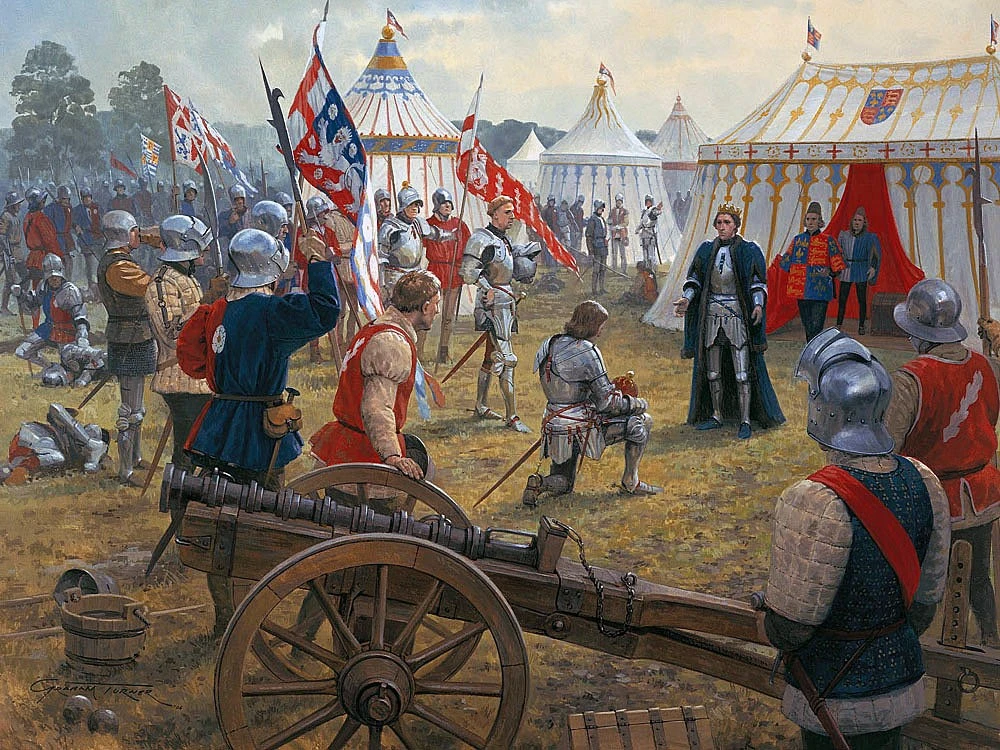
Richard Duke of York
- He turned to the lords, many of which were his own supporters, expecting applause, but none came
- York stormed out, humiliated
- However, he could not back down and formally claimed the throne six days later in the high court of parliament
- The lords had to decide – on October 24, the Act of Accord was passed The Act of Accord stated that Richard Duke of York had to accept Henry as his King, but when Henry died, York would be made King. York was to Govern England as Protector.
By passing this act, parliament hoped for peace with the compromise. York was promised the position of King but was not King. He had been made Heir Apparent. Henry was still in the position of monarch, but his son was not in line to the throne, making Margaret of Anjou very unhappy.
The Archbishop Bourchier refused to take part in any coronation of York, and Warwick was no longer on York's side. York's opponents felt vindicated that their suspicions had been right all along – that York's true ambition was to take the throne, and that his ambition and pride had spurred on his rebellion.
The Accord only added to the political unrest in England, as parliamentary decisions were uncertain, and parts of government-held less or no authority at all.
Note
After the Yorkist victory at the Battle of Northampton, Richard Duke of York returned to England on September 8, 1460, making a bold claim to the throne. Marching under the royal banner, he dramatically placed his hand on the throne in Westminster, signalling his intention to rule. However, his expectations for support were met with silence, leading to his humiliation. Six days later, he formally claimed the throne, leading to the Act of Accord on October 24, 1460. This act made York the Heir Apparent, fuelling further political unrest and dissatisfaction, especially from Queen Margaret of Anjou.