English Society and Politics in 1450 (AQA A-Level History): Revision Notes
📚Revision Notes
English Society and Politics in 1450
HENRY VI
Born: Dec 1421 Died: May 1471 Parents: Henry V and Catherine of Valois Spouse: Margaret of Anjou
Henry was only nine months old when he succeeded his father. He was crowned King of England in 1429 and King of France in 1431. A regency council ran England until Henry was considered old enough, in 1447.
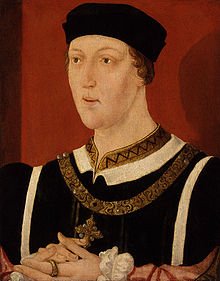
HENRY VI
He was named King of France during the 100 years war.
He married in 1445, to Margaret of Anjou. The double monarchy of both England and France was proving too difficult to maintain after the success of the Dauphin and Joan of Arc and England lost Normandy in 1450.
Henry VI was portrayed as a weak king who was not fit for the role of governing his country, he lacked character and military strength and therefore failed to navigate his country out of conflict.
In 1453, Henry had a breakdown and Richard Duke of York was made Protector. After Henry had recovered in 1455, a civil war broke out between the Yorkists and the Lancastrian Houses.
These struggles became known as the Wars of the Roses. Richard was the main figure of the Yorkist side, whilst Henry's wife, Margaret, was the main figure for the Lancastrians.
Henry VI's Personal Influence on Power:
J. Warren observed that "the king's personality touched and affected every facet of power and authority in the kingdom."
- Under the regency of Richard Beauchamp, Earl of Warwick, Henry VI learned kingship, warfare, good governance, patronage, and military leadership, yet these lessons seemed ineffective.
Contemporary Criticisms:
- J. Capgrave (1446): criticised the neglect of naval and coastal security.
- J. Hardyng pointed to civil unrest and local injustice, noting the king's failure to establish peace and law and order.
- Anonymous writers highlighted Henry's habitual dilatoriness and lack of good governance.
- He was the first English king never to command an army against a foreign enemy.
- R. Griffiths: Henry never visited France after 1432 and failed to undertake a projected visit in 1445-7 to discuss peace with Charles VII.
Weak Leadership:
- Despite being titled Lord Protector, Gloucester couldn't make decisions without the council's approval.
- Henry employed courtiers like John, Duke of Somerset, William de la Pole, Duke of Suffolk, and Richard, Duke of York to govern on his behalf. Even Margaret of Anjou showed more military inclination.
- He failed to live up to his father Henry V's military reputation and was criticised for his poor judgement and susceptibility to manipulation, especially during his mental breakdown in 1453.
Contemporary Assessments:
J. Blacman described Henry VI as "a good man but a bad King who became a fool of God."
- C. Richmond noted the political system's limitations in dealing with an inept monarch.
- Propaganda from the Civil War and later Yorkist or Tudor perspectives may have distorted historical judgements.
- B. Wolffe: Henry's preference for religious rather than military building projects indicated his personality.
- J. R. Lander: Henry was intelligent but ill-equipped to handle governance stresses.
J. Watts: Henry was "exceptionally ineffective and inane."
A.J. Pollard: Henry was "improvident, malleable, vacillating, partisan, uninterested in governance, and antipathetic."
Political Rivalries and Consequences:
- The unchecked rivalry between Richard, Duke of York, and Edmund Beaufort, Duke of Somerset, led to civil war.
- Henry mishandled the war in France, resulting in the loss of Normandy and the fall of his chief adviser, the Duke of Suffolk.
Henry VI's Inherited Challenges:
- Following his successful father, Henry V, exacerbated perceptions of Henry VI's inadequacy.
- The Treaty of Troyes left a complex legacy as monarch of both England and France.
- Henry V's expensive military campaigns left financial strains, with parliament already complaining by the end of his reign.
- Inheriting the throne at age nine, Henry VI was governed by a minority council divided by hostility.
- Suffering from hereditary mental illness, Henry experienced political crises and weakened authority due to bouts of insanity.
Economic and Military Failures:
- The loss of Normandy (1450) and Gascony (1451) demoralised the nobility, reluctant to fund failures.
- Crown income fell from £120,000 (Henry IV) to £45,000 (Henry VI) due to trade depression, inflation, and increased war spending.
- The royal court cost £24,000 annually, but the income was only £5,000, leading to resentment against the king's favourites like Edmund Beaufort, Cardinal Henry Beaufort, and the Duke of Suffolk.
- Many demanded the removal of "evil councillors," willing to oppose not the king but those who harmed him and the country.
Note
"Henry VI, crowned King of England at just nine months old, witnessed the turbulent Wars of the Roses, the loss of Normandy, and his own imprisonment and murder, with Margaret of Anjou fiercely defending the Lancastrian cause against the Yorkists."
Margaret of Anjou
- Margaret was born in March 1430 in France.
- She had many marriage proposals before her betrothal to Henry VI.
- She was raised by her mother Isabelle and grandmother Yolande of Aragon. She was greatly influenced by these two women and was brought up in a society where women had more freedom and power as regents than in England.
- Margaret was Henry VI's wife and was the complete polar opposite. She was intelligent and politically aware – she was everything Henry was not. However, because she was a woman, her power was limited. When she came to England, she was 15. Her father was Rene Duke of Anjou, brother of the Queen of France. Her marriage to Henry was to create a truce between England and France. They married quietly in Titchfield Abbey near Southampton.
- In 1453 she had given birth to a son, Edward. Anjou was worried that York would threaten the future of her child, therefore she aimed to protect her son's right to be King.
- For a year after the first battle of St Albans she had to acquiesce in York's power. She was organising her party during this time. She moved the government to Coventry in October 1456.
- The Paston Letters describe her as strong and hardworking and said she would see things through to secure her power.
The marriage seemed promising:
Henry was busy planning his new projects at Eton and Cambridge, and in the following year the marriage was specially honoured by the Pope – he was given the papal Golden Rose in recognition of his services to religion and education.
Margaret soon realised how weak her husband was. She realised she had to take some sort of control, especially during the Wars of the Roses.
She was intelligent and courageous and was the dominant partner in her marriage to Henry. She was considered to be hot-tempered and rose to anger quickly. She was renowned in England and France for her beauty and intelligence, which impressed the Duke of Suffolk.
Suffolk was sent to France to make peace talks and secure the hand of Margaret. He carried her ashore at Porchester.
Charles VII of France agreed to the marriage of his niece only on the condition of him paying no dowry and receiving the lands of Maine and Anjou (which was kept secret from Gloucester and the public).
📌 Factional Rivalries
Examples:
- Nevilles vs Percys
- Bonville vs Courtenay
- Woodvilles vs Nevilles
- Yorkists vs Lancastrians
- Anti-Woodville vs Pro-Woodville
York vs Somerset
Main causes of the dispute
- Somerset and York were both great-grandsons of Edward III
- As long as Henry VI had no son, there were qualms about who would succeed him
- York served as Lieutenant of France 1436-7 and 1440-45. He had to fund the effort himself, whereas Edmund and John Beaufort were given men and money
- Somerset was made Lieutenant of France instead of York who was sent to govern Ireland. England then lost all the territory in France and York blamed Somerset for this
- Somerset upon returning to England took the place of Suffolk next to Henry VI
- York was widely viewed as the heir at the time, but nothing was certain
- 1452: York wrote a letter to Shrewsbury and other towns on the Welsh border asking for support
- End of February: York was at Dartford with an army of around 23,000
- Dartford Coup saw York betrayed and Somerset Chief Advisor to the King, this intensified the rivalry
- York was appointed Protector when Henry VI fell ill in 1453
- Henry recovered on Christmas day 1454
- York was dismissed and Somerset released from the Tower
- York had joined the Neville family against the Lancastrians and Percy family
Note
The Beaufort family, closely tied to the House of Lancaster, played a pivotal role in the power struggle of 15th-century England. Edmund Beaufort, a second cousin to King Henry VI and a great-grandson of Edward III, clashed with Richard, Duke of York, over control of England. As tensions rose, York blamed Somerset for England's losses in France and a whispering campaign at court. The rivalry culminated in the failed Dartford Coup of 1452, deepening animosity between them. Despite briefly becoming Protector, York's influence waned when Henry VI recovered, and Somerset resumed power, fuelling the Wars of the Roses.
Nevilles vs Percys
- Nevilles are married to all the main nobles
- Cecily Neville & Richard Neville Duke of York
- Henry Earl of Northumberland and Eleanor Neville
- Thomas Neville and Maud Stanhope
- The families were intertwined
- Henry Hotspur Percy and his brother Thomas Percy supported Henry IV in rebellion against Richard II
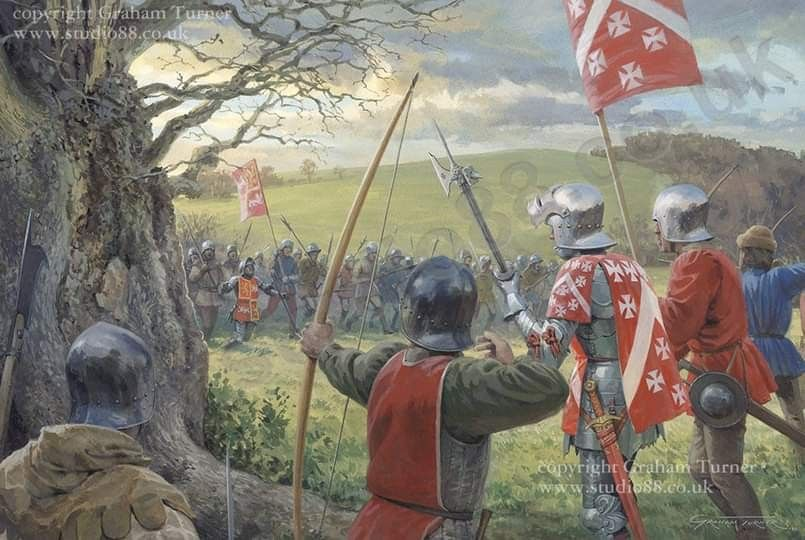
Nevilles vs Percys
- The King refused to give Percy his promised Cumberland lands
- Percys gathered their retainers and fought the King in the Battle of Shrewsbury
- They nearly win but ultimately lose and are slain
- Thomas Percy's land (e.g. Wressle Castle) was forfeited to the crown and distributed to other nobles
- Lord Ralph de Cromwell was an important noble who received most of the Percy lands. When he died the lands went to his niece Maud Stanhope, who marries Thomas Neville. Thomas Neville effectively became inheritor of Percy land, which the Percy family hated
Thomas Percy, Lord Egremont
- Thomas Percy, Lord Egremont, was the son of Henry Percy Earl of Northumberland
- In the Battle of Heworth, Egremont attacked the marriage party of Thomas Neville and Maud Stanhope
- They lose and the Percy lands go to the Neville family e.g. the manors of Wressle and Burwell
- During York's protectorate, Egremont attacked the city of York in 1454 to overthrow Richard
- Egremont escaped and attacked the Neville manor of Stamford Bridge in Oct 1454
- He escaped again in 1456
- He is captured and imprisoned by Thomas and John Neville
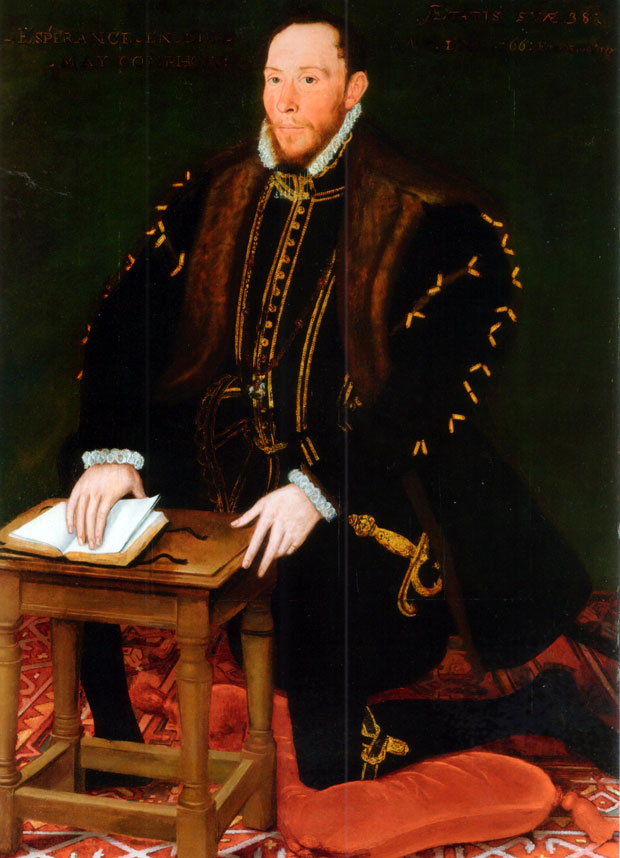
Thomas Percy
- Became part of the 1458 Love Day reconciliation
- Was made to pay to keep peace for ten years
- Took up arms for Henry VI in 1459 and died at the Battle of Northampton in 1460
John Neville Lord Montagu
- Son of Richard Neville Earl of Salisbury
- Younger brother to Warwick
- August 1453: raided the Percy castle of Topcliffe
- Summoned to appear before the royal council with Egremont however, they both ignore it
- Feuding continued through the summer despite being instructed to keep peace
- The council was issuing letters to Northumberland and Salisbury regarding their sons by July 27
- The inability of Henry VI to deal with this feud is evidence of Henry's failure to deal with the noble rivalries
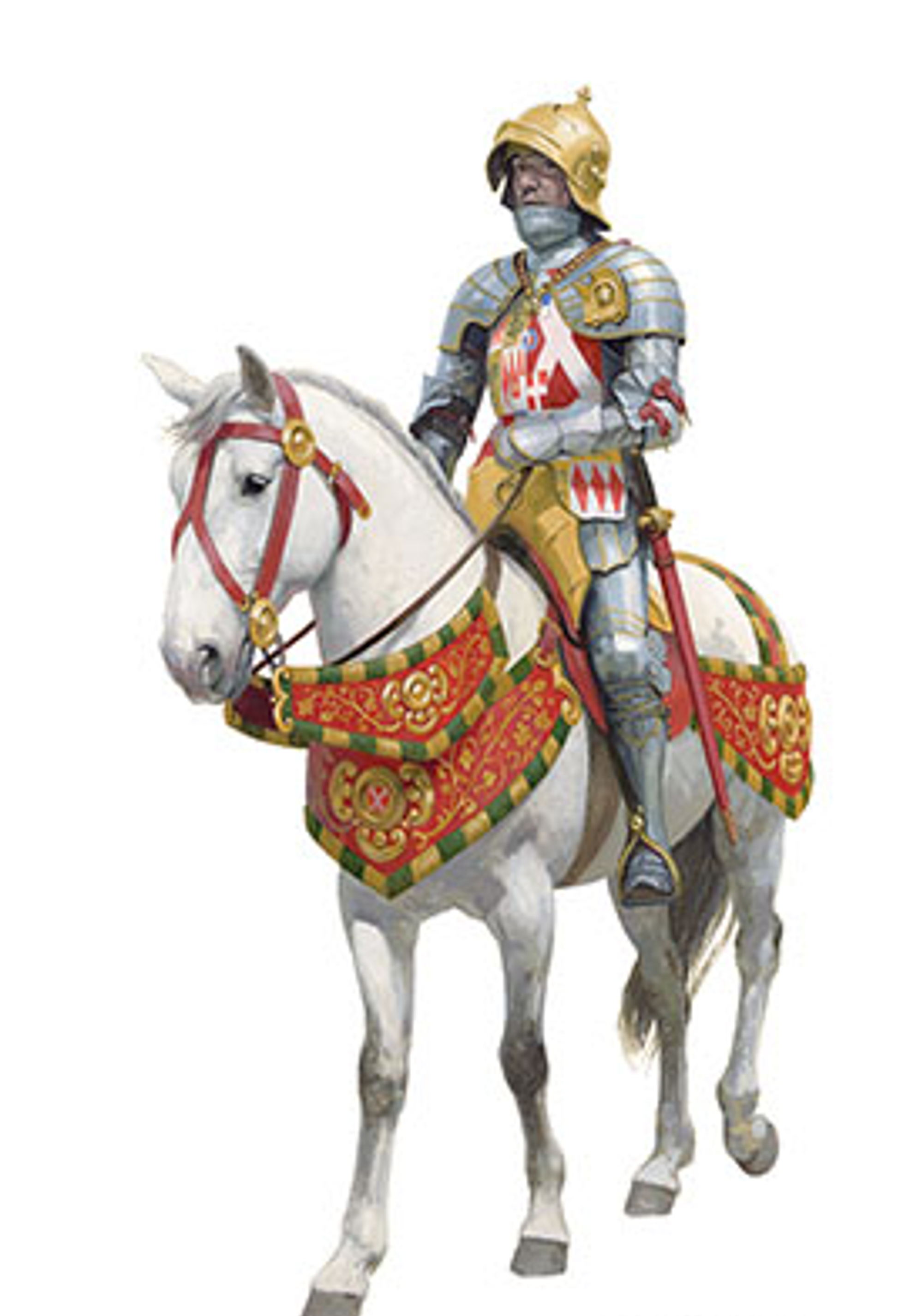
John Neville
Note
John Neville, the younger brother of Warwick and son of Richard Neville, Earl of Salisbury, was a key figure in the Wars of the Roses. He played a crucial role in several battles, including St Albans and Towton, and was instrumental in defeating Lancastrian forces at Hedgeley Moor and Hexham. Although captured and imprisoned twice, he was released both times, eventually becoming Earl of Northumberland. Despite his loyalty to the Yorkist cause, he was killed at the Battle of Barnet in 1471, after a brief period of supporting his brother's rebellion against Edward IV.
Bonville-Courtenay Fispute
- The conflict started in 1440
- Bonville's property was attacked by Courtenay
- 1441: Duchy given back to Courtenay Earl of Devon
- 1449: Suffolk promoted Bonville to a Baron which caused Courtenay to besiege him at Taunton Castle
- 1452: Courtenay allied himself to Richard Duke of York and supported him at Dartford
- Courtenay lost all his land and they are given to Bonville
- Courtenay attacked Bonville as a result
- York punishes him so Courtenay switches to supporting the King
- The main dispute is over land
📌 How far was Henry responsible for the economic problems facing the Crown?
The Great Slump 1440-80
A major economic depression caused by:
- Shortage in silver used for monetary supply
- Fall in international trade resulting in decline of English exports
- Poor harvests resulting in a decline in agrarian revenue which in turn saw a fall in prices and wages
What the potential effects would be on:
- The People – less food to eat, unable to pay rents or taxes, debt increase, value of goods goes down, unemployment, homelessness
- Henry VI – people blaming him and his government, less trust in the crown, weakens relationships with other trading countries, chance of revolt increased
📌 Who was affected by the Slump?
- The Magnates (Great Nobility) saw their rental income fall
- Woollen cloth manufacturers experienced a decline in woollen cloth exports
- Workers involved in manufacturing were increasingly under-employed or unemployed
Arguments for Henry being to blame:
- The government made things worse for themselves and Henry should shoulder the responsibility
- The government got into a trade war with Burgundy in North-western Europe
- Burgundy banned the import of English woollen cloth
- The government had been feeble in response to this
- Henry gave generous grants that lost the Crown money
- He spent money on personal projects like the construction of King's College, Cambridge
- By 1450 the government was mortgaging future income to meet current debts
- Grants were given to Somerset and Suffolk using the taxation revenue (Suffolk was given £1000, Somerset £1700)
Arguments against Henry being to blame:
- He was simply a victim of the Slump
- Cloth exports fell by a third between 1440 and 1450
- Decline in wine imports
- International trade decline
- Reduction of Crown revenue from customs duties (was £40,000 in 1421, but was £28,000 between 1446 and 1448)
- Shortage of silver
- Poor harvests
Main consequences
- Pressure on Magnate rental incomes
- Increased risk of revolts
- Trade decline
- Poor harvests leaving people starving and unable to pay rent
- Debts
- The decrease in the value of goods
- Public unrest and distrust in govern,ent
Note
There is significant evidence to show that Henry was mostly to blame for The Slump, as his spending habits and his giving of generous grants not only lost the Crown thousands of pounds but also led the public to being more distrustful of their government. The trade war they'd been fighting in Burgundy caused English Cloth imports in that area to be banned, reducing the amount of money coming back home from trade. All of these things caused public unrest and led to rebellions of the people, as they believed their king and government were unable to lead the country.
📌 Key Events Revision – 1450-52
1450:
- January: Adam Moleyns Bishop of Chichester murdered by sailors in Portsmouth
- February: Suffolk is charged with plotting with the French by Parliament (was actually doing that), King exiles him instead of treason
- May: Suffolk executed in a boat named Nicholas of The Tower by Kentish pirates
- 11 June: Jack Cade rebellion starts – protests for the death of Gloucester, Royal Forest fears, York, evil advisors embezzling money, soldiers returning from French war
- Also in June: murder of Bishop of Salisbury
- July: Jack Cade's rebellion reaches London, Lord Saye and the Sheriff of Kent (William Aiscough) are murdered
- 6 July: rebels forgiven
- 12 July: Jack Cade (John Mortimer) executed
- August: LOSS OF NORMANDY
- Nov: York returns from Ireland, marches on London, sends out his propaganda, Somerset placed in the Tower for safety
York's Chamberlain was Sir William Oldhall
- Implicated in the Dartford Coup
- Also implicated in the Yorkist rumours behind the Jack Cade Rebellion
- Was with York in Ireland in Sept 1450
- Somerset's house in Blackheath was looted in 1450
- Oldhall was implicated
- Found guilty and attainted on the 22 of June
- Took sanctuary in St Martins-le-Grand
- Remained in the custody of the King's valet until after the battle of St Albans
- Obtained his release and reversal of attainder on the 9 of July
- Attainted again in Nov 1459
- Upon the ascension of Edward IV the attainder was treated as null and void
- Died shortly after in 1460
📌 Loss of France – who was to blame?
- 1440: York (is a cousin of Henry VI) is reappointed as Lieutenant of France to defend Normandy
- 1442: York is appointed chief commissioner to negotiate with France
- 1443: John Beaufort Duke of Somerset is made commander of army in France to relieve Gascony but dies in 1444
- 1444: Treaty of Tours signed, Maine and Anjou ceded
- 1445: York brought back to England
- 1446: Edmund Beaufort (Somerset) appointed Lieutenant of Normandy
- 1447: York appointed Lieutenant of Ireland
- 1448: Suffolk and Somerset are both made Dukes
William de la Pole, Duke of Suffolk
- Once Humphrey Duke of Gloucester died, William was appointed chamberlain, Admiral of England, and to several other important offices
- He was created Earl of Pembroke in 1447 and then the Duke of Suffolk in 1448
- He was suspected for Humphrey's death and later of being a traitor
- On 16 July he met in secret with Jean, Count de Dunois the French hero of the Siege of Orleans
- This was the first of several meetings in London where Suffolk passed the King's Council minutes to Dunois
- It was rumoured that Suffolk never paid his ransom of £20,00 owed to Dunois
- Suffolk had been instrumental in renewing the war with France and was blamed along with Somerset for the loss of Normandy and Gascony
- Parliament accused him of misgovernment, mismanaging the war and financial corruption so he was imprisoned in the Tower of London for five years
- Henry VI banished him from England for five years to save him from execution and gave him a ship to take him to France yet he was intercepted by enemies (Nicholas of the Tower crew) and they executed him
Parliament
- They demanded Henry VI approve the passing of an act of resumption
- This would recover all grants of land the king had rewarded his favourites with over the previous decade
- Undermined his authority and his ability to offer rewards for faithful service. This was a humiliation for Henry VI
- Discontent in the Commons mirrored by the discontent from the peasants led to the Jack Cade Rebellion
The Treaty of Arras (1435):
The Congress of Arras, held from July to September 1435 was supposed to be a chance to secure a truce between England and France and broker marriage. There was an agreement between Henry VI and the French princess. Henry VI's embassy, led by Cardinal Beaufort, comprehensively outmanoeuvred by brilliant French diplomacy, designed collapse talks with maximum blame attached to English
A treaty by which the two warring factions in France's civil war agreed to be reconciled Burgundy recognised Charles VII as rightful King France; Charles promised to take action against men who'd killed Philip's father in 1419
'In matter weeks, England's entire diplomatic position, carefully constructed over more than 20 years, had been swept away' (Royle)
The greatest ally switched sides; a blow from which English ambition could never recover.
In 18 months following Arras, English position France began collapse:
French began address their attacks towards duchy of Normandy:'forcing the English into a war of defence and retrenchment' (Royle)
Margaret's Influence Over the English Surrender of Maine, March 1448
Maine surrendered to France as agreed under the Treaty of Tours:
- This decision was massively unpopular across the country. King Henry VI was reluctant to make the final handover but faced considerable pressure from French envoys.
Margaret's Role and Contemporary Perception:
- As the Queen, Margaret's actions were expected and considered typical for a foreign queen to use her position effectively as an ambassador for her country of birth. She would have been seen as betraying her family if she hadn't acted in France's interest.
- Contemporary English chroniclers were highly critical of her actions. They noted the unpopularity of the surrender and alleged that Margaret tormented the malleable King Henry VI with continual harassment regarding the issue, which added considerably to her unpopularity.
Historical Debate on Responsibility:
- The extent to which Margaret was responsible for the handover remains a moot point, with historians divided on the degree of King Henry VI's influence in the 1440s.
J. Watts argues that "the King was an entirely negligible force with no will of his own." C. Carpenter contends that "it must be emphasised Margaret was not alone in pushing for acceptance of the treaty," noting that Somerset and Suffolk also backed the agreement.
TREATY OF TOURS
From May 22nd, 1444, the treaty gave Maine and Anjou to France and a 21-month truce. Gloucester and York were not informed and blamed Suffolk for securing a poor deal Henry did not cede the territories until 1448 when Charles threatened him with an army The treaty was extended until English soldiers sacked the town of Fougeres in 1449
The collapse of Lancastrian power in France
21st October 1422: Death of Charles VI of France – title passed to Henry VI, John, Duke of Bedford named regent of France
1429: Joan of Arc leads the defeat of the English at Orleans
17th July 1429: Charles VII of France crowned at Reims
16th December 1431: Henry VI crowned at Paris. Bedford becomes governor general of France
9th September 1435: Death of Bedford
1435: Duke of Burgundy breaks Anglo-Burgundian alliance. Allies with Charles VII at Congress of Arras
Winter 1435-36: The English lose control of Harfleur and Dieppe, and much of Upper Normandy
May 1436: The English lose control of Paris
1439: peace negotiations – release of the Duke of Orleans after 24-year captivity
1440-41: English lose control of Evreux and Louviers
November 1441: The English regain control of Harfleur
1443: failed expedition of John Beaufort, Duke of Somerset, to recover Dieppe
28th May 1444: Truce of Tours; Henry VI's marriage to Charles VII's niece Margaret of Anjou
March 1449: English raid on Fougeres
August 1449: Charles VII invades Normandy
15th April 1450: defeat of the English army at Formigny
12th August 1450: defeat of the English at Cherbourg, complete loss of Normandy
1451: English lose control of Gascony