Outbreak of War (AQA A-Level History): Revision Notes
📚Revision Notes
Outbreak of War
📌 Causes of the first Battle of St Albans
Factional rivalries
- Percy family lost lands and they were given to Ralph Cromwell
- When Cromwell died the lands passed to his niece Maud Stanhope
- Maud marries Thomas Neville
- Lord Egremont (Thomas Percy) attacks the wedding party (Battle of Heworth 1453)
- Bonville (Lancastrian side) vs Courtenay (Yorkist side)
Henry's illness and York's first protectorate
- 1453: Henry had his first mental breakdown and his and Margaret's son was born
- Margaret was concerned about her son's inheritance
- She was refused the position of Regent and York was made protectorate
- There are worries York would attack Somerset
- Gov couldn't function without a chancellor
- York's protectorate was only temporary
📌 York/Somerset Feud
In 1450:
- Both were closely related to the king played leading parts in gov and in France seem to have supported Suffolk's policies in the 1440s had capable (though not outstanding) military records
- York had been lieutenant of France in 1436-37 and 1440-45
- He had won a reputation for good political leadership whilst leaving military leadership to more experienced commanders
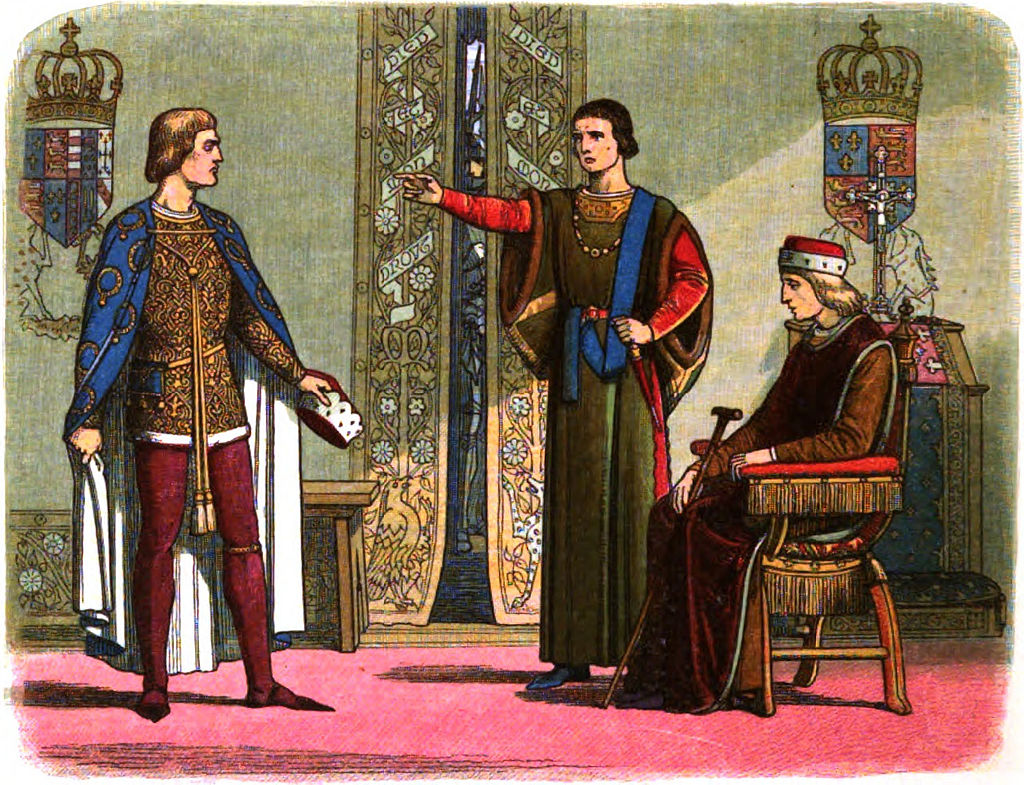
Richard Duke of York returned.1450
- Appointed Lieutenant of Ireland in 1447
- Somerset was put in charge of France in 1447 when English lands were surrendered and lost and therefore Somerset was seen as part to blame for the declining economic position of England.
- Somerset was made Chief Advisor in 1450 after Suffolk was killed
- The Jack Cade rebellion wanted to replace Somerset as chief advisor with York
- York resented Somerset for the loss and surrendering of lands in France.
- Once in the power of Chief Advisor, Somerset began to resent York and his stirring up of opposition
Influence of Margaret
- Treaty of Tours (started the rivalries)
- She was not well liked because she was an ambitious French woman
- Aligns herself with Suffolk and aimed to reduce York's influence as much as possible
- Produced an heir to the throne, wanted to ensure her son's position would be protected
The First Battle of St Albans
- Henry recovers from his illness December 1454
- Somerset was released from the Tower
- York's Protectorate ended
- Salisbury resigned as Chancellor
- Somerset called a Great Council in Leicester
- Somerset appeals for support from the Percy family
- York and the Neville family marched to intercept Henry and Somerset The Battle of St Albans, 22nd May 1455
Main Events:
- York, Warwick, and Salisbury rallied troops
- The King and the Lancastrians got to St Albans first. The Lancastrians set up defences in the town whilst the Yorkists made camp in a field just outside the town
- Peaceful negotiations were attempted first, but they failed
- The Yorkists made the first attack, with a frontal assault but the Lancastrians beat them back
- Warwick and his troop attacked in the town as York and Salisbury split the Lancastrians
- The Duke of Somerset was slain
- Henry was captured whilst the Earl of Northumberland and Lord Clifford were killed
- Henry suffered another mental breakdown, as well as being wounded in the neck with an arrow
- York took control as Protector again
- Queen Margaret was forced to the side-lines again
📌 What did York do on his return to London?
Seizing Control
The Duke of York, having emerged victorious, marched back to London with his forces. His victory had eliminated several key Lancastrian leaders, including Edmund Beaufort, Duke of Somerset, a major opponent of York.
Reaffirming Allegiance to the King
Upon arriving in London, Richard made a point of reaffirming his loyalty to King Henry VI. Despite his military victory, he did not immediately claim the throne or overthrow the king, but instead presented himself as a loyal subject who had acted to rid the king of "evil counsellors."
Becoming Protector of the Realm
King Henry VI, who was captured during the battle, was mentally unstable, and Richard was soon appointed as Lord Protector of the Realm. This gave him significant power, effectively placing him in control of the government. He used this position to strengthen his power base and further his political ambitions.
Calling a Parliament
York convened a Parliament in July 1455, where the Yorkists solidified their power. During this Parliament, the actions at St Albans were justified as being in the best interest of the king, and York's position as Protector was confirmed
Managing Political Repercussions
York had to manage the complex political aftermath of the battle. Although victorious, he faced opposition from Lancastrian supporters and had to navigate the delicate balance of power at court. His actions during this time were focused on consolidating his authority while avoiding being seen as a usurper.
📌 What was the main aim of St Albans?
It was a battle to become Chief Minister
📌 What were the consequences?
Henry was captured and suffered another breakdown. There was an uneasy truce for four years. York becomes Protector once again and pledges allegiance to the King. Margaret is pulling the strings to keep her son in power. She gets her husband Henry to sack the Duke of York. The sons of Northumberland and Clifford wanted revenge for their father's deaths – an assassination attempt was made on Warwick in London.
📌 Why were the Yorkists successful in Battle?
- The King's forces were small and outnumbered by the Yorkists
- The King's banner was not in view – he did not have a psychological advantage over the rebels
- The Yorkist forces were thus undaunted
- They attacked the weak defences of the Lancastrians
- The battle in the town scattered the King's forces
- The Yorkists attacked quickly
- The Yorkists attacked first, therefore obtaining the element of surprise on the Lancastrians
- The royal forces were short of archers
- Military power was in the hands of the Yorkists
Note
The King's forces, outnumbered and without the psychological advantage of a visible banner, were swiftly overwhelmed by the Yorkists. Lacking archers and strong defences, the Lancastrians were caught by surprise in a sudden attack. The Yorkists, seizing the element of surprise, scattered the King's troops, consolidating their military dominance in the town.
📌 What were Richard Duke of York's actions following his victory?
- He was in possession of Henry
- York displayed his return to authority by placing the crown on Henry's head in a ceremony at St Paul's Cathedral on the 25 of May
- He summoned parliament, issued a pardon on the Yorkists, and placed the blame for the battle on the Duke of Somerset
- York was then once again made Protector of England
- His authority relied on military might
- York faced opposition from the House of Lords and Queen Margaret
- York tried to take more control over the Royal Household, which then caused him to be removed from his role by the House of Lords, on the 25 of Feb 1456
Note
Richard, Duke of York, briefly regained power by placing the crown on Henry VI's head on May 25, but his authority was short-lived. Although he summoned Parliament and blamed the Duke of Somerset for the recent conflict, opposition from Queen Margaret and the House of Lords led to his removal as Protector on February 25, 1456, highlighting his reliance on military might.
📌 What was the immediate aftermath of the Battle of St Albans?
- The death of Clifford, Somerset and Northumberland left their sons angry and wanting revenge
- The Lancastrians thought the Yorkists had targeted the three nobles specifically
- Henry Beaufort, Somerset's son, wanted to pursue a vendetta against York and the Nevilles for revenge against his father's death
- York and Margaret were now direct enemies
Note
The deaths of Clifford, Somerset, and Northumberland left their sons furious and craving revenge. The Lancastrians believed the Yorkists had specifically targeted these nobles. Henry Beaufort, Somerset's son, sought a vendetta against York and the Nevilles, igniting a fierce rivalry between York and Margaret.
📌 How were each of these people affected by the battle?
Henry VI
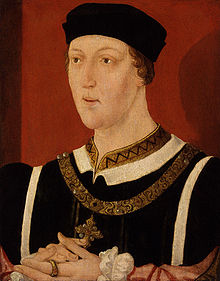
Henry VI
- Captured by the Yorkists and taken to St Albans Abbey
- Injured by an arrow graze to the neck during battle
- Suffered another breakdown
Margaret
- Found herself in position of leader of the Lancastrian party
- Wanted to keep her son in line to the throne
- York was now her enemy
- Distrusted the city of London, believing it held Yorkist sympathies
- She set up her court at Coventry
- She surrounded herself with those loyal to the Lancastrian cause
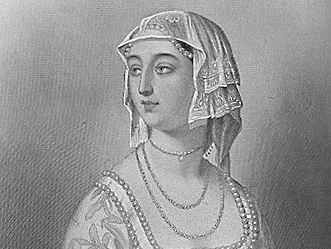
Margaret
- The court was hostile to York and the Nevilles, determined to bring them down
York
- He was more in the heart of the government
- Became protector once more
- Pledged allegiance to the king, crowned King Henry himself
- He wanted to show people he was only concerned with removing evil advisors
- He was made constable of England
Events leading to the breakdown of peace by 1459
- Autumn 1455: Henry VI has a breakdown and York assumes his Second Protectorate
- November 1455: York made a Protectorate
- December 1455: Bonville/Courtenay dispute, murder of William's lawyer sees Thomas Courtenay thrown in the Tower
- February 1456: York's second Protectorate ends, the King recovers
- April 1456: Margaret and her son left London and headed for Kenilworth
- August 1456: Henry joined Margaret and their son at Kenilworth
- September 1456: Laurence Booth, Margaret's private chancellor, was made Keeper of the Privy Seal
- Autumn 1456: Margaret continues to place more Lancastrian loyal men in gov, replacing York's men (new chancellor – Bishop of Winchester, new treasurer – Earl of Shrewsbury)