Factional rivalries and court politics (AQA A-Level History): Revision Notes
📚Revision Notes
Factional rivalries and court politics
📌 Why was George Duke of Clarence executed?
Reason 1: Betrayal
- 1469 Edward IV had still not produced a son and his brother George was restless for power
- Edward fails to put down the uprising of Robin of Redesdale and calls for Clarence and Warwick to support him
- In secret Clarence has married Warwick's daughter Isobel and they return to England in support of the uprising
- Edward is imprisoned after being defeated at Edgecote
- After Clarence defects back to Edward, Warwick is killed in the Battle of Barnet by Edward's forces supported by Charles the Bold
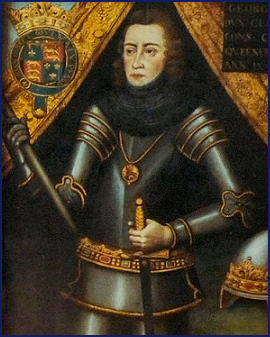
George Plantagenet, Duke of Clarence
- Warwick and Clarence failed to rule successfully and had to release Edward IV but with French support from Louis XI they succeeded in putting Henry back on the throne in 1470
Rising tensions
- With Warwick defeated Gloucester received his northern properties (Neville inheritance)
- They were given to him to stop rival nobles from gaining power
- Clarence in spite of his treachery had all his lands restored to him
- Edward sides with Gloucester and Clarence feels betrayed by this
- Gloucester feels betrayed by Clarence as his lands have been restored despite his treachery
Reason 2: The Beauchamp inheritance
- Richard Beauchamp, 13th Earl of Warwick had been Henry V's key advisor and one of the leading generals of the Hundred Years War
- He was rewarded with patronage such as the Captaincy of Calais and tutor to Henry VI
- Upon his death, his son Henry Beauchamp was promoted to Duke of Warwick and granted the Forest of Feckenham in Warwickshire but died two years into his role in 1446
- The Beauchamp inheritance then passed to his sister Anne Beauchamp as he had no children
- Upon his death, the lands passed to his widow and his daughters Anne and Isobel
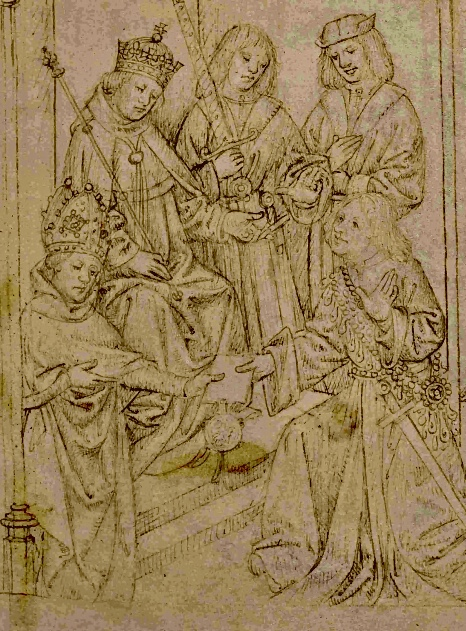
Anne Beauchamp Countess of Warwick
- She was married to a rising nobleman – Richard Neville – who then became the new Earl of Warwick (Kingmaker)
📌 How did Clarence try and prevent Gloucester from securing the lands?
- Gloucester wanted to marry Anne Neville
- Clarence tried hiding Anne as a kitchen maid in London
- Gloucester seized her however and married her
📌 What was agreed in 1472? How was this changed in 1474?
- Gloucester was allowed to marry Anne but not granted the lands
- The lands would be split but Clarence claimed most of it
- Warwick's wife (mother of Anne and Isobel) still owned most of the Warwick lands
- In 1474 they split the lands and Anne Beauchamp was stripped of her inheritance
📌 How did this affect the relationship between Edward IV and Clarence?
- This caused a lot of debate between the brothers
- Clarence had betrayed Edward multiple times and Gloucester had been loyal
Reason 3: the ambitions of Clarence
- In 1468 Edward's sister Margaret was married to Charles the Bold, Duke of Burgundy
- This secured a stronger alliance with them but also caused issues when Charles died in 1477
- The Duchy passed to Charles' 19-year-old daughter Mary, by a previous marriage
- Margaret wanted an English marriage to protect her inheritance from Louis XI and so proposed Mary marry the newly widowed George Duke of Clarence
- Edward IV refused as Mary had a distant claim to the English throne through her grandmother Isabel of Portugal
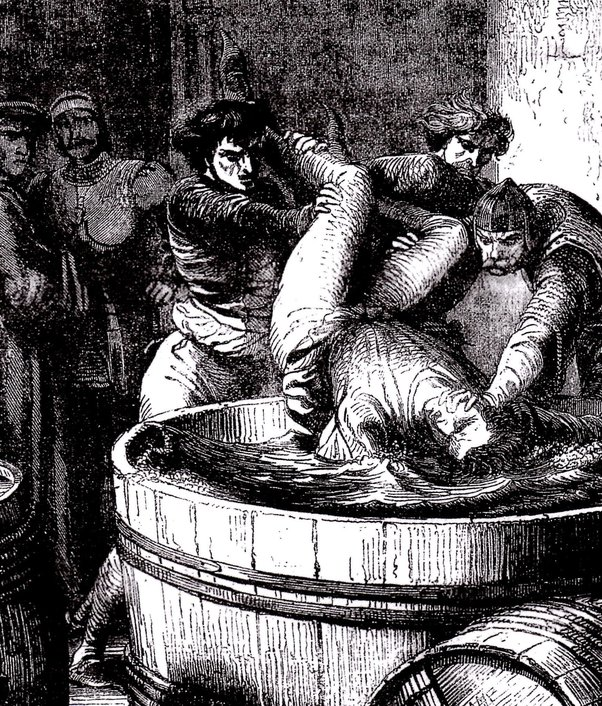
Duke of Clarence drowned in Malmsey wine
March 1477
- Rumours began to circulate that an English force was preparing to assist Margaret of Burgundy
- This caused great excitement among some members of the aristocracy
- Hastings (Lieutenant of Calais) set sail with a small force to assist the Burgundians
- Gloucester supported this
April 1477
- Clarence arrested Ankarette Twynho (a servant of his late wife), John Thursby
- He accused them of poisoning his wife Isobel, who had died on December 22nd, 1476
- Clarence claimed they had murdered her through a mixture of 'poison and ale'
- They were found guilty by a packed jury and were executed
- Clarence wanted to exact revenge on them for taking news of his discontent to the king's servants
- Ankarette's nephew was given a full pardon from Edward IV
May 1477
- Hastings, with Gloucester's support, sent troops to the besieged town of Boulogne
- This was against Edward IV's wishes and broke the terms of the Treaty of Picquigny
- Louis XI angrily reminded Edward of his obligations and called for an immediate halt to Hastings' activities
- This dashed Gloucester's plans to recommit to war and Clarence's ambitions to the Duchy of Burgundy
- This further drove a wedge between the brothers
- Edward dismissed Clarence's plans to marry Mary of Burgundy and the King of Scotland's sister, Margaret
- Clarence retreated to Warwick castle
June 1477
- In retaliation, Edward IV had Dr John Stacy, an Oxford academic, and Clarence's servant Thomas Burdet, accused of Necromancy and planning the King's death
- They confessed and Burdet was charged with approaching Stacy with treasonable intent, requesting the use of info about the king to predict his early death
- Clarence declared their innocence before the King's Council
- Clarence was then arrested as he had implicated himself and sent to the Tower of London
January 1478
- Parliament took the future of Clarence into their hands
Accusations (by Parliament) were made against him:
1470: during the rebellions against Edward, Clarence secured a certified copy of his nomination as heir to the throne
Clarence preaches Edward's illegitimacy
1477: implicated himself in the necromancy carried out by Dr John Stacy and Thomas Burdet – predicting the King's death
The judicial murder of Ankarette Twynho
- No one came to his defence
- He was attainted
February 1478
- Clarence was condemned on the 7th of February
- He was executed 10 days later
- Edward had delayed it until the House of Commons demanded justice – Clarence was still his brother
- This suggests that Clarence's execution was not entirely his decision
Note
Edward allowed George to choose his method of execution. He chose to be drowned in a barrel of Malmsey wine. This was supposedly the Queen's favourite, and it has been suggested that he deliberately chose this as a slight to the Queen and the Woodvilles.
📌 Factional Rivalries – Why did feuds break out between noble rivalries?
The Nevilles and the Percys hated each other's guts
Intervention in the Neville-Percy feud
- Henry 'Hotspur' Percy and his brother Thomas Percy supported Henry IV in rebellion against Richard II
- The Percys gathered their retainers and fought the king
- The Neville family had ties to the Beaufort line which kept them close to the crown
- However, the king refused to give Percy the lands he was promised in Cumberland
- The Percy family had a troublesome, rebellious past, which meant they too showed allegiance to the crown
- The two families shared the duty of protecting the border with Scotland
- There were marriages between the two families (e.g. the younger Ralph Neville was married to Elizabeth Percy)
- Tensions at their home in the north of England had grown
- 1453-54: the families broke out in a private war, throwing the North (especially Yorkshire) into turmoil
- The behaviours of Thomas Percy, Lord Egremont, and Sir John Neville, were central to the dispute, but it was exacerbated by the political divisions in gov.
- After his father's rebellion, the Earl of Northumberland was trying to claw back the Percy land as some of it had been granted to other members of the nobility
- The marriage of Thomas Neville to one of Lord Cromwell's heiresses meant that former Percy land (now in the hands of Cromwell) would pass into the hands of the Neville family
- The Percy family saw this as unacceptable and attacked the wedding party as they returned north
- There was a skirmish between the sons of the two Earls. The two Earls ignored all attempts to broker peace between them despite being called to the council
- The rivalry spilled into national politics
- The Nevilles were associated with the Duke of York by 1453
- The youngest of the Nevilles, the Earl of Warwick, conflicted with the Duke of Somerset, a Lancastrian and great rival of the Duke of York
- Warwick tried to get ownership of the Lordship of Glamorgan and tried to get it by force from Somerset. As a result, he sided with the rest of his family supporting the Duke of York
- Percys allied with the King and Somerset
- The feuds were critical in alienating the Neville family from the Lancastrian regime
- The Nevilles joined forces with York in the first battle of St Albans
- Northumberland was slain in the King's company
Note
The Percy and Neville families, once allies, became fierce rivals in the mid-15th century, leading to a private war that devastated the North of England. Tensions arose from broken promises, disputed lands, and political divisions. The marriage of Thomas Neville, which threatened Percy's land holdings, ignited further conflict. Despite efforts to broker peace, the feud escalated, with the Nevilles aligning with the Duke of York and the Percys with the Lancastrian King. Their rivalry culminated in the Battle of St Albans, where Northumberland, a Percy, was killed fighting for the King.