Proclamation of Edward IV (AQA A-Level History): Revision Notes
📚Revision Notes
Proclamation of Edward IV
📌 Edward's Usurpation
KEY BATTLES
Stalin's: May 1455, St Albans and 1458 Loveday
Bad: Sept 1459, Blore Heath
Leg: Oct 1459, Ludford Bridge and Parliament of Devils 1459, Invasion of Sandwich 1459
Now: 1450, Northampton and 1460 Act of Accord
Weeps: Dec 1460, Wakefield
Mucus: Feb 1461, Mortimer's Cross
Silly: Feb 1461, Second St Albans and Edward is crowned
Twat: 1461, Towton
📌 How was Edward able to take the throne?
God's Verdict
- Edward had a true and legitimate claim to the throne
- Three suns shining at Mortimer's Cross was believed to be a sign from God that Ed should be King
- Victory at Towton was also a sign
Henry's VI's failure as King
- Failures led to all the events and rivalries that came together at Towton
- Henry's inability to rule led to the escalation of the rivalry between Somerset and York
- Did not stop the feuds between his nobles
- He was responsible for the loss of land in France
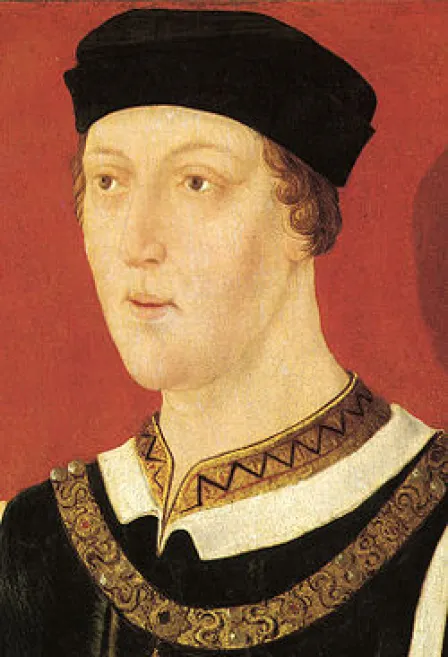
Henry's VI
Richard Duke of York's opposition
- Supported by Salisbury and Warwick
- Wanted to at first rid Henry of 'evil' advisors
- Then progressed to wanting the throne
London's support for Edward
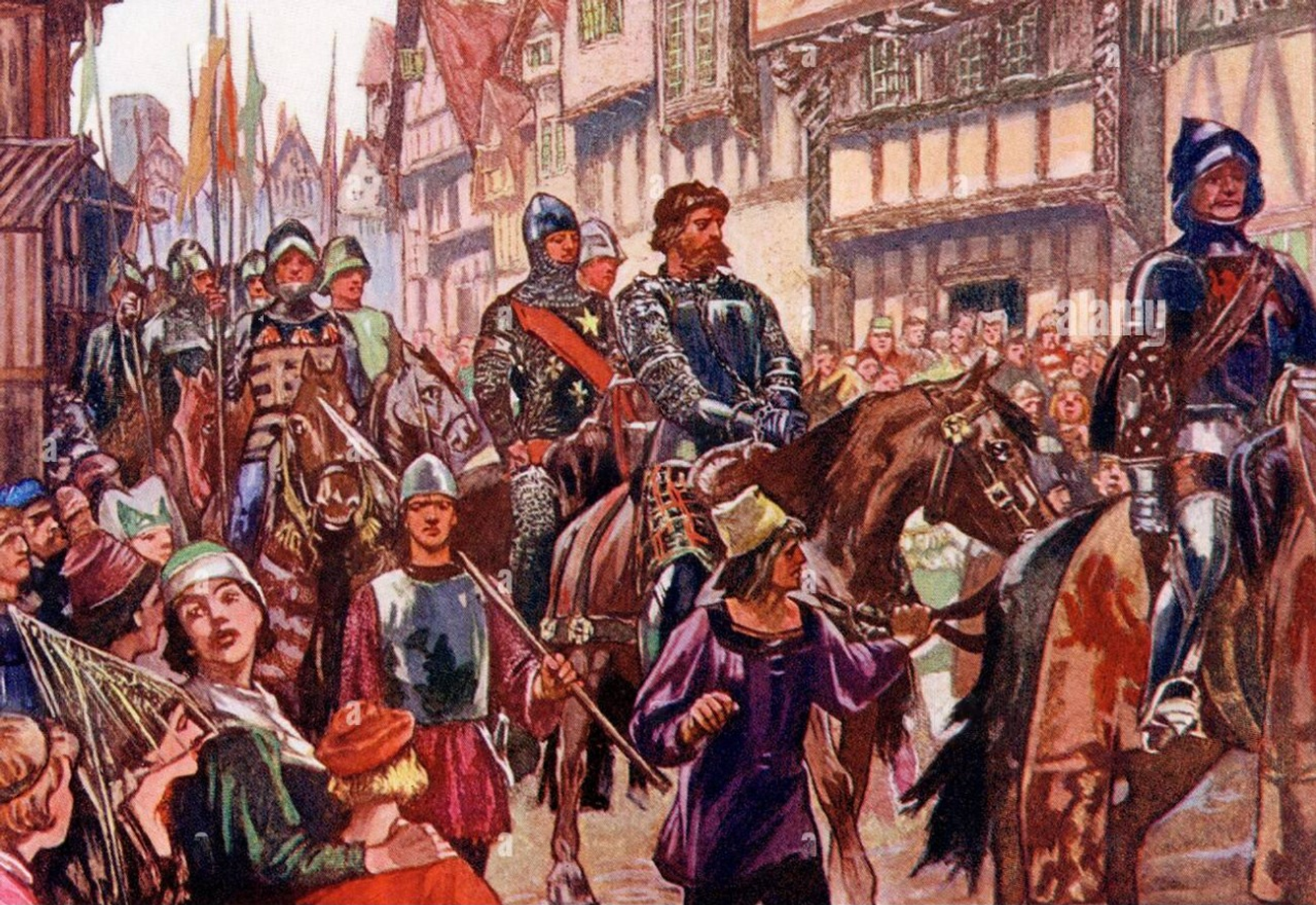
London's support
- They feared Margaret's northern army
- There were stories of the Lancastrian army looting property and destroying homes on its way south
- There were also rumours that Margaret's soldiers had permission to ransack London
- When Margaret had moved her royal court to the Midlands in 1456 this was seen as an insult to the capital
- It was a considerable loss of trade to the city's business
- Wealthy courtiers spent their money in Coventry, not London
- Many London merchants believed the Lancastrian gov favoured foreign merchants over English ones
- Londoners believed they had economic reasons for opposing the Lancastrians
- Also had strong links with pro-Warwick merchants in Calais
- London therefore gave Edward money, men and credibility because he was proclaimed King in the capital on the 4th of March 1461
The decisions of Margaret (and the Lancastrian leaders)
- Between 1459 and 1461 Margaret and the Lancastrian leaders made a series of critical and difficult decisions
- Two in particular had unintended consequences and put Henry's hold on the throne at a greater risk
- Autumn 1459: Margaret called a great council believing the Lancastrians were strong enough to end the Yorkist threat and convict them of treason
- When the Yorkists fled from Ludford, Margaret went ahead with Acts of Attainder at the Coventry Parliament
- The treason charges seemed a good tactic, showing the full treachery of the Yorkists and so increased support for Henry
- These acts rebounded on the Lancastrians
- They forced the Yorkists to make a choice: give in or fight back
- The acts unintentionally turned the conflict into a fight for the crown
- The Yorkists called this the Parliament of Devils, this boosted support for the Yorkists
- Lancastrians decided to return north in Feb 1461, leaving London open to Edward
- Attacking London could lead to increased support for the Yorkists and prolonged warfare
- Lancastrians were short on food – soldiers may desert in search of supplies and be caught by Edward's approaching army
- Londoners were hostile towards Margaret especially after she moved the royal court
- The Lancastrians believed they could build up their army in the north, so they abandoned London
Note
Between 1459 and 1461, Margaret of Anjou and the Lancastrian leaders made key decisions that backfired, risking Henry VI's throne. In 1459, the Acts of Attainder against Yorkists aimed to show their treachery but instead pushed them to fight back, turning the conflict into a struggle for the crown. The Yorkists gained support, labelling this the "Parliament of Devils." By February 1461, the Lancastrians retreated north, abandoning London to Edward, risking loss of support and desertion due to dwindling supplies. This strategic error left the throne vulnerable.
Edward's qualities and skills
- He was more truthful than his father
- Tall, well-built, tactical, an excellent soldier, handsome
- Significantly better alternative than Henry
Warwick's support
- By 1461 he was the most powerful and influential nobleman
- Had control of Calais
- He could gather men to fight
- Good for shipping to mount an invasion
- Piracy in the English Channel
- Had fame and charisma
Towton
- March 1461: Edward's power was not secure
- Before Towton there were more Lancastrian nobles than Yorkists
- The Yorkist win meant that Edward could demonstrate his better leadership skills to higher noblemen
- The death of leading Lancastrians meant less competition for the throne
- People were happier to let Ed be king because they wanted it to be over
- The weather was to the Yorkist win: seemed as though God was on his side
- A consolidation of power
📌 Strengths and Weaknesses of the Yorkists by 1461
📌 Why was Edward accepted as the New Monarch in 1461?
- Victory at Towton and Mortimer's Cross
- Many Lancastrians simply gave up and changed their allegiance to Edward IV, e.g. Lord Rivers
- He had the support of the aristocracy
- He had great abilities as a military leader
- Got involved with the fighting and was great at raising morale of his men
- Wise beyond his years – intelligent
Note
Edward IV's victory at Towton and Mortimer's Cross marked a turning point as Lancastrians, including Lord Rivers, switched allegiance. His military prowess and leadership skills, coupled with aristocratic support, solidified Edward IV's rise, showcasing his intelligence and morale-boosting abilities on the battlefield.
📌 What impact did the Yorkists have on securing Edward's reign?
- They had more effective military commanders than the Lancastrians
- They had the support of London and Kent
- They had finances coming from the merchants of London, who raised corporate loans, advances and private loans, totalling at least £11,000
- Henry was incapable of managing finance and strategic sources of support were allowed to pass into the hands of his opponents
- Yorkists relied on the command of military resources, including the lieutenancy of Ireland and the 1000-strong Calais garrison
- The Nevilles commanded the West March in the north to defend the border against Scotland
- Men could be paid with royal wages
- Calais provided the largest arsenal of weapons available to the English Crown
- From their position in Calais before June 1460, Warwick and Edward managed to recruit Burgundian Knights, men-at-arms and gunners
Note
The Yorkists' success in the Wars of the Roses can be attributed to their superior military commanders, strategic support from London and Kent, and significant financial backing from London's merchants, raising at least £11,000. They also controlled key military resources, including the 1,000-strong Calais garrison and the largest arsenal of weapons available to the English Crown. Command over regions like the West March further solidified their power. Their strategic alliances, such as recruiting Burgundian forces before June 1460, showcased their effective military and financial strategies compared to the Lancastrians.
📌 What issues did he still face?
- When he came to the throne, Edward inherited Henry's financial problems and could not afford to garrison the northern castles under reliable captains
- Margaret and her son Edward were still at large despite the many Lancastrians who had given up
- The Queen had the support of foreign powers, including France and Scotland so she had the potential to rebuild her forces
- The Percy family still showed great resistance and had the stronghold in the far north of England (although the family was much diminished)
- Any campaign against them would be long and expensive as the region was protected by the castles of Alnwick, Bamburgh and Dunstanburgh
- The Lancastrians still had strongholds in Wales although resistance soon fell apart after a campaign led by Lord Herbert
- Edward tried to win over the support of Sir Ralph Percy, by giving him commands over some of the northern strongholds, but Ralph was quick to pass over Dunstanburgh castle to Queen Margaret in 1462
- There was still a strong enough Lancastrian party that was not going to accept Edward IV on the throne, making his position less certain
Note
Edward IV inherited Henry VI's financial woes and struggled to secure northern castles, despite efforts to win over Sir Ralph Percy. Margaret and her son, backed by France and Scotland, remained a threat, while Percy's resistance and Lancastrian strongholds in Wales made Edward's position precarious.
Lord Rivers
- Father was involved as a captain on Henry V's campaigns in France in 1415 and 1417
- Rivers followed in his father's footsteps and served in France from 1427 in a number of roles
- He was knighted by Henry VI in 1426
- He was one of the escorts that took Margaret to England in 1444
- In 1450 he was appointed as seneschal (steward) of Gascony
- Served as Lieutenant of Calais from 1451 to 1455
- He had a secret marriage to the late John, Duke of Bedford's wife, Jacquetta of Luxemburg in 1437. It was a scandalous alliance between a duchess and a mere knight. He was fined £1000 by Henry VI for marrying without his permission and for taking possession of Jacquetta's dower
- He was created a baron on the 9th of May 1448 and chose to style himself as Lord Rivers
- Was involved in the suppression of the Cade rebellion in 1450
- Spent most of the next decade abroad, avoiding most of the growing crisis
- Started to spend more time in England in 1456
- Became constable of Rochester in 1457
- Tried to defend Kent against invasion by the Yorkists but was captured in 1460 at Sandwich
- Continued support of the Lancastrian cause and fought on their side at Towton
- He was swift to concede defeat however
- He changed sides with the Yorkists and became a favourite to Edward IV, who married his eldest daughter Elizabeth
Note
Rivers was a notable English figure in the 15th century, serving in key roles from knighted in 1426 to baron in 1448. His secret marriage to Jacquetta of Luxembourg was scandalous, costing him £1000 in fines. Active in various military and administrative roles, he was captured by Yorkists in 1460, but later switched sides, becoming a supporter of Edward IV.
📌 1459-61: What were the key turning points?
- Loveday
- Blore Heath
- Ludford Bridge
- Parliament of Devils
- Invasion of Sandwich
- Northampton
- Act of Accord
- Wakefield
- Second battle of St Albans
- Mortimer's Cross
- Ferry Bridge
- Towton
The Second Battle of St Albans
It can be argued that the Second Battle of St Albans was the biggest turning point in the years 1459 – 1461. Following the death of Richard Duke of York in the battle of Wakefield, the Lancastrians advanced towards London, led by Somerset, Northumberland and Clifford. Edward Earl of March had taken over the Yorkist claim to the throne but got caught up in the Battle of Mortimer's Cross, leaving Warwick in charge of meeting the Lancastrian army under Margaret of Anjou on its journey south to release Henry VI and claim the throne.
Note
The Second Battle of St Albans was a pivotal moment in the Wars of the Roses. Following the death of Richard, Duke of York, the Lancastrians, led by Somerset, Northumberland, and Clifford, advanced towards London. Edward, Earl of March, preoccupied with the Battle of Mortimer's Cross, left Warwick to defend against Margaret of Anjou's forces. The battle resulted in a Lancastrian victory, leading to the release of King Henry VI and significantly shifting the momentum in favour of the Lancastrians.
Essay Question: "The Act of Accord was the most significant turning point in the years 1459 – 1461." Assess the validity of this view. [25 marks]
Intro: define what a turning point is, state points and your argument
Agree argument: Act of Accord was a catalyst for other events in the Wars of the Roses, and lead to Margaret's decision to lead the Lancastrians as she was angered by the fact that her son was now no longer in line to the throne, Warwick no longer on York's side, York made heir apparent
Disagree argument: the consequences of the Second Battle of St Albans (Margaret and the Battle of Towton could be seen as the most significant turning point – other battles/events can be seen as a more significant turning point than the act of accord – Edward's victory on his own, as well as Mortimer's Cross, Margaret, Henry and their son fled to Scotland, Edward's reign consolidated
Conclusion: Judgement, Evidence
On the other hand: the act of accord on its own did not do much
Nevertheless: It did act as a catalyst for other events
My claim: the Act of Accord was the most significant turning point during the years 1459-61.