Forced vibrations and resonance (AQA A-Level Physics): Revision Notes
📚Revision Notes
6.1.4 Forced vibrations and resonance
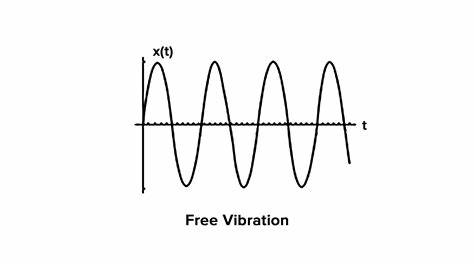
Free Vibrations
Free vibrations occur when an object oscillates without a continuous external force acting on it. In this case, the object vibrates at its natural frequency, which is its inherent rate of oscillation.
Forced Vibrations
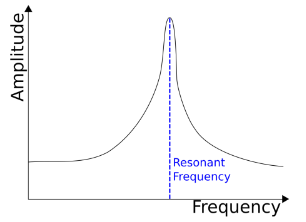
Forced vibrations happen when an external driving force causes an object to oscillate. The frequency of this external force is known as the driving frequency. When the driving frequency matches the natural frequency of the object, a phenomenon called resonance occurs, resulting in a significant increase in the amplitude of the oscillations.
Resonance
Resonance is the condition where the amplitude of an oscillating system becomes large due to energy being absorbed from a driving force at the natural frequency of the system. Here are some applications and examples of resonance:
- Musical Instruments: For instance, air resonating inside a flute creates a stationary sound wave.
- Radio Tuning: Radio circuits resonate at specific frequencies, allowing them to select desired broadcast signals.
- Swinging: When someone pushes a swing at its natural frequency, the swing reaches greater heights. While resonance can be useful, it may also have negative effects. For example, if the driving frequency of a bridge matches its natural frequency, it could cause the bridge to oscillate violently, risking structural damage.
Damping and Resonance Control
Damping is the reduction of energy in an oscillating system, which decreases the amplitude over time. Damping can mitigate the harmful effects of resonance by:
- Decreasing the resonant frequency: Shifting the resonant frequency to the left on a frequency-amplitude graph.
- Reducing the maximum amplitude: Preventing extreme oscillations.
- Widening the peak of maximum amplitude on the graph, making the system less sensitive to specific driving frequencies. The graph below illustrates the relationship between damping and resonance. Here, the damping ratio (ζ) represents how much damping is applied, with ζ = indicating critical damping (where oscillations cease most quickly without overshooting).
