Origins, Beliefs, and Strands (AQA A-Level Politics): Revision Notes
📚Revision Notes
Origins, Beliefs, and Strands
Conservatism is a political approach characterised by suspicion of radical change. It has three core aspects: an attitude to society, an idea of government, and a political practice. All three are shaped by scepticism towards liberal and socialist ideas about human nature.
Origins of conservatism
Conservatism emerged in the late eighteenth century as a reaction to the French Revolution (1787-99). The revolutionaries aimed to replace the monarchy and aristocracy with a written constitution and representative government based on Enlightenment principles of rationalism and individualism.
Note
The birth of conservatism was fundamentally a defensive reaction to revolutionary change, not a proactive political philosophy. This reactive nature continues to shape conservative thinking today.
Core principles from the outset
Rather than embracing abstract philosophical ideals, conservatism focused on the value of custom, tradition and continuity. It rejected the notion that a perfect society based purely on reason could be achieved.
Conservatives opposed revolution, instead promoting the principle of change to conserve. As Edmund Burke argued in his Reflections on the Revolution in France (1790), "A state without the means of some change is without the means of its conservation."
Important
Change to conserve means that conservatives oppose radical social change because they view society as an organic, complex whole. Long-established institutions and practices, such as the monarchy and parliamentary sovereignty, reflect the accumulated wisdom of the past and are tried and tested. Change should be incremental, building on what works in order to conserve what is valuable.
Key philosophical foundations
Conservatism developed as a philosophy of imperfection, seeing human nature as flawed and limited in its understanding of the world. This contrasted sharply with the optimistic views of liberals and socialists. This sceptical perspective on human nature has its roots in the writings of Thomas Hobbes.
Conservatives emphasised organic society over individualism. Society depends on bonds of trust and affection between 'little platoons' – local communities and small societal groups like families, churches, schools and universities.
The state needed to be strong to provide order, peace and stability, making society and freedom possible. Conservatives emphasised hierarchy and authority over equality and democracy.
Key definitions
Note
Organic society: Society is a natural, complex body like a tree. It develops and grows slowly, needs constant nurturing and pruning to ensure its health, and should not be uprooted and replaced with something new through radical change or revolution.
Hierarchy: Human nature and society are naturally divided by wealth, status and power. There is a natural ruling class with the necessary wealth and authority to govern, while the masses should naturally obey the elite that is governing in their best interest.
Development of conservatism
Conservatism has developed different variants over time. Traditional conservatism dominated from the French Revolution to the late nineteenth century before developing into One-nation conservatism. Since the late twentieth century, New Right thinking has pushed conservatism in a more neo-liberal direction.
Key thinker: Thomas Hobbes (1588-1679)
Thomas Hobbes wrote Leviathan (1651) in response to the English Civil War (1642-51) and the anarchy he associated with it. He was the first philosopher in the English-speaking world to outline a modern justification for the state.
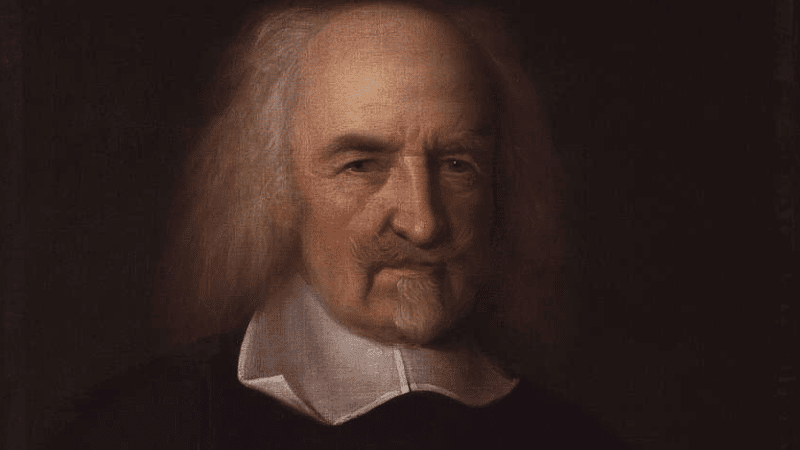
Human nature
For Hobbes, political philosophy begins with the study of human nature. His view is perhaps the most pessimistic. He sees humans as endlessly restless in their pursuit of power to satisfy their immediate desires and any potential future desires.
This desire for power is both selfish and competitive, reflecting Hobbes's emphasis on the individual. Humans are roughly equal in strength and ability, meaning everyone must be fearful of others as the "weakest has strength enough to kill the strongest."
State of nature and natural law
In Hobbes's state of nature, resources are scarce. Given humans' desire for power and their rough equality, there will be a "war...of every man against every man" where "notions of right and wrong, justice and injustice, have no place."
Important
Hobbes famously argued that life in the state of nature would be "solitary, poor, nasty, brutish and short."
However, the first natural law is that people should seek peace as far as possible and, if not, use war. As humans are rational, it is reasonable to assume that people, if only for self-preservation, will rise above the state of nature by agreeing to submit their individual desires to the absolute authority of a sovereign.
Power of the sovereign
This social contract between the people establishes a sovereign with absolute power to provide order, security and stability, which will lead to the emergence of society.
The key for Hobbes was that sovereign power was placed in one supreme authority who is not limited by the legal rights of other bodies. His preferred form of government was monarchy, though his arguments can apply to all forms of government where there is one absolute authority.
Note
Importantly, this social contract is made between the people, not between the people and the sovereign. When the contract is completed, the power of the people is at an end, as the sovereign has all power and the people only have the rights that the sovereign chooses to give.
Exam guidance
Hobbes argued that the English Civil War resulted from power being divided between the monarch, the Lords and the Commons. Power must be placed in one supreme authority, which contrasts with the ideas of limited government and separation of powers put forward by John Locke.
Important
It is inaccurate to see Hobbes as a purely conservative thinker. He pre-dates the birth of conservatism and served as an inspiration to both conservatives and liberals. His pessimistic view of human nature is shared by conservatives. However, Anthony Quinton in The Politics of Imperfection (1978) did not count Hobbes as a conservative due to his rationalism, individualism and absolutism.
Conservatism as an ideology
There is debate about whether conservatism is truly a coherent political ideology.
Criticisms of conservatism
Some political theorists have argued that conservatism is politically incoherent due to inbuilt tensions between one-nation conservatism and the New Right. Others have argued it is a jumbled collection of beliefs, attitudes and ideas that are, in the words of Michael Oakeshott, "more psychology than ideology." Critics suggest this amounts to no more than a defence of property, privilege and inequality to prevent power passing into the hands of what Burke describes as the "swinish multitudes."
Further criticisms include:
- Conservatism emerged as a response to the French Revolution, attacking it for attempting to "only change and pervert the natural order of things"
- Conservatism lacks an end goal with no vision of the type of society or economy it is working towards, so lacks any concrete idea of progress or development
- Conservatism is pragmatic and flexible in its approach to politics, which can be seen as lacking clear underlying principles
- This flexibility is used to allow conservatism to develop and adapt in order to preserve inequality and privilege, seen in conservatism's gradual acceptance of democracy over time
- Conservatives support change but the type of gradual change and the traditions they support remain open to the charge that they are simply about preserving inequality and privilege (e.g. why support monarchy but not trade unionism?)
Defences of conservatism
These criticisms have been challenged, with conservative thinkers from both traditional and New Right traditions putting forward their views of a coherent, principled vision of conservatism.
Exam guidance
Note
The Conservative Party in the UK does not just follow the principles of conservatism. The ideals of Margaret Thatcher reflected the classical liberal ideals of individualism and free-market capitalism, as well as fundamentally conservative principles of authority and order.
Main strands of conservatism
Traditional conservatism (from the French Revolution to the late nineteenth century)
Traditional conservatism has the following distinctive features:
Hierarchy is natural in society.
Paternalism: The ruling elite have a sense of obligation and duty to the many. Government should act like a "father" to its "children," the people. This involves governing in their best interests, remembering that the government often has a clearer view of those best interests than the people. The people should show deference to their leaders.
Order: The government provides clear rules, discipline and guidance to ensure that society is ordered, peaceful and stable. This will create responsible citizens and ensure that freedom benefits everyone.
Freedom: Traditional conservatism is about freedom and the limits to freedom provided by institutions and attitudes that allow all to enjoy that freedom responsibly. These limits allow all to understand that their good behaviour, trust and care for others will be reciprocated by others, partly for fear of breaking the law.
Social attitudes: Traditional conservatism upholds that there are moral values (e.g. traditional marriage and the nuclear family) that have provided stability and certainty. Individual freedoms need to be limited to protect these values, to ensure society is stable and works for all.
'Little platoons': Society is a collection of little platoons, not individuals. Each community provides the sense of security, order and stability that an individual desires. The little platoons provide the first link in the chain to "a love of our country and to mankind," according to Burke. A powerful, centralised state, remote from these 'little platoons' would be damaging to society.
Change to conserve: Change and reform must be gradual and respect the accumulated wisdom of tradition.
Empiricism: The traditional conservative approach is to focus on what works (tradition, customs and attitudes) rather than what theory and abstract principles say will work. This means conservatism is pragmatic and flexible in its approach to tackling political problems.
Note
Empiricism means that politics should be based on what works most effectively, not on abstract principles or ideas. This idea emerges from the politics of imperfection, as humans are limited in what they are able to know and understand about the world.
Exam guidance
Note
To show a deeper understanding, you can illustrate the differences between liberalism and traditional conservatism. Traditional conservatism has opposed unrestrained individualism, whose freedoms will undermine the natural bonds of affection and trust that hold society together.
Burke's role as a Whig MP can be used to reinforce the idea that conservatism is not synonymous with belonging to the Conservative/Tory Party.
Key thinker: Edmund Burke (1729-97)
Edmund Burke is often regarded as the father of conservatism, with his key text being Reflections on the Revolution in France (1790). Burke was a Whig MP and his thinking was based on the Whig principle of opposition to absolute, arbitrary power.
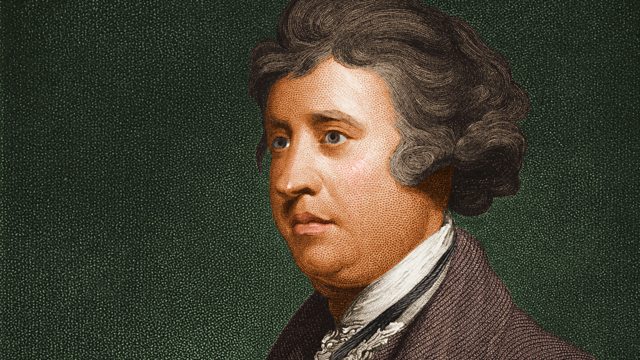
American and French revolutions
Burke was a supporter of the American Revolution, which ended in 1783, but was fundamentally opposed to the French Revolution.
Example
Contrasting Revolutions: Burke's Perspective
Burke supported the American Revolution as its aim was to protect the ancient rights and privileges of the people, which existed before the monarch in London began to tax them without authority. It was 'change to conserve'.
In contrast, Burke opposed the French Revolution because it was based on theory and idealism. It aimed to destroy the collective wisdom of the ages by throwing out existing institutions, customs and traditions to create a new society based on "philosophical abstractions" rather than empiricism.
Human nature
Burke had a sceptical view of human nature. He saw the individual as foolish but the species as wise.
He argued that humans could not rely on individual reason (rationalism) but could rely on tradition and custom, which was the "general bank and capital of nations and ages".
Important
Burke opposed the idea of a social contract as suggested by Hobbes. He argued that the only contract that existed was between the dead, the living and the yet to be born. The present must nurture and protect tradition and custom to pass it on to future generations.
The French Revolution was a destruction of that contract, as it destroyed existing institutions, practices and customs and so removed the inheritance of those yet to be born.
Society
Burke was highly critical of individualism, defending the importance of the 'we' over the 'I'. 'Little platoons' are the places where traditions and customs are formed that are the bank of knowledge developed from trial and error in dealing with political problems.
In this sense, society is organic as it develops naturally. Traditions and customs change slowly based on practical knowledge and evidence, not theory.
Burke also attacked the French Revolution's emphasis on equality, arguing that hierarchy was natural in organic societies.
One-nation conservatism (from the late nineteenth century to the late twentieth century)
One-nation conservatism is most closely associated with Benjamin Disraeli, leader of the Conservative Party and prime minister in 1868 and between 1874 and 1880.
Threat of disorder
One-nation conservatism emerges from the threat to the order of state and society from socialism, class conflict and the effects of free-market capitalism. It updates traditional conservatism's ideas to deal with this threat.
Disraeli was particularly concerned with the ravaging effects on society of an unchecked free market. He accepted the rise of big cities and the spirit of commercialism as inevitable, so he did not want reactionary policies to head back to a previous time. He wanted instead to tackle the worst consequences of the market in order to conserve society because he saw reform as an inoculation against revolution.
One nation
Conservatism should emphasise and focus on the bonds of affection and trust that hold society together as part of a nation. All classes and groups in society are part of one nation as society is organic, where damage or distress to one element will damage the whole.
Important
This is summed up in Benjamin Disraeli's phrase, "the palace is not safe when the cottage is not happy".
Change to conserve
Disraeli's approach exemplified 'change to conserve'.
Paternalism
There is a clear bond between groups, so it is clear that the wealthy have a responsibility to the less well-off. This would involve the state intervening in the free-market economy and society in order to ensure social stability.
Examples of One-nation conservatism in action
Example
One-nation Conservatism in Practice
Examples include the Employers and Workmen Act 1875, which allowed workers to sue employers if they broke contracts, and the Public Health Act 1875, which combated filthy urban living conditions and various diseases such as cholera.
These legislative measures demonstrate how One-nation conservatism translated theory into practical social reform.
Exam guidance
Note
You can illustrate the flexibility of conservatism driven by the idea of 'change to conserve' by citing Disraeli as the first prime minister to view the role of the state as providing essential public services. Conservative leaders adapted the idea further in the twentieth century, supporting increased taxation and extensive public spending on welfare in order to ensure social stability.
You could cite Conservative prime minister Benjamin Disraeli's motivations for passing the Reform Act 1867 to extend the franchise to illustrate this pragmatism. He felt it would guarantee peace for the years ahead by reducing the desire for more radical reform and attract the new voters to the Tory party.
Key thinker: Michael Oakeshott (1901-90)
Michael Oakeshott updates the conservative approach to human nature and the conservative view on gradual reform in his collection Rationalism in Politics and Other Essays (1962) and The Politics of Faith and the Politics of Scepticism (1996).
Human nature and rationalism
Oakeshott saw humans as fragile and fallible, unable to understand the world because it is too complex for human reason to grasp.
He was highly critical of the politics of 'rationalism', which is the idea of remaking society based on the abstract ideas and principles of political philosophers.
Important
Abstract ideas will always fail, as they are not based on concrete experience. Worse, the remaking of society can do untold damage to traditions which are based on hundreds of years of practical experience.
Humans and societies prefer instead "the familiar to the unknown, the actual to the possible", so a pragmatic and empirical approach to problems works best.
Politics of scepticism
Oakeshott rejected the 'politics of faith', with its faith in the ability of the government to improve the condition of mankind or even to perfect mankind. In its place, he proposed the 'politics of scepticism' as the government's attempts to perfect mankind are dangerous for human liberty and dignity.
The idea of perfection is absurd and there should be scepticism about the ability of the government, staffed by officials who are human like us, to use their power justly and efficiently. Instead, the government's role should be limited to preserving public order.
Note
As Oakeshott argued, "In political activity, then, men sail a boundless and bottomless sea; there is neither harbour for shelter nor floor for anchorage, neither starting-place nor appointed destination. The enterprise is to keep afloat on an even keel."
This metaphor captures the conservative view that politics is about navigation and survival, not reaching an ideal destination.
Conservatism as a disposition
Conservatism is a 'disposition' not an ideology, and although conservatives are disposed toward limited government, it should not be on the basis of some abstract ideal.
Exam guidance
Note
You can use Oakeshott both as attacking the left-wing social planning that saw the growth of government control over an increasing range of human activities and as criticising neo-liberalism. Oakeshott comments that "A plan to resist all planning may be better than its opposite, but it belongs to the same style of politics."
The New Right (from the late twentieth century to the present)
Small state
The New Right has as its inspiration Ayn Rand's idea of the 'morality of rational self-interest'. For rational self-interest to be the key principle of society, the state needs to be rolled back. The state should be limited to providing armed forces, a police force and a court system in order to ensure that property is respected and contracts enforced. The New Right opposes public spending on welfare, as it is both unjust according to Robert Nozick and creates a dependency culture.
Free-market capitalism
The New Right believes that market forces are the best method for the distribution and management of society's resources. Therefore, deep cuts in taxation, privatisation, deregulation and tight restrictions on government spending are needed to return to free-market capitalism. Everyone should be free to follow all the opportunities they can in the marketplace, with minimal levels of taxation and regulation in order to create generalised prosperity.
Society
Socially, the New Right is divided between neo-conservatives who wish to return to a society built around authority, national identity and traditional morality, and neo-liberals, who advocate a society built around individual choice:
Neo-conservatives are anti-permissive and would extend the role of the state to promote traditional family values, like traditional marriage, and to protect national security and defence. Neo-conservatives, for example, fear the impact of immigration on social cohesion and national identity.
Note
Anti-permissiveness is a rejection of permissiveness, which is a liberal belief that people should make their own moral choices (e.g. about abortion, marriage and relationships) that stems from the 1960s. The state should impose social order and public morality by promoting traditional values and tough law and order policies.
For neo-liberals, individual choice is not just about economics but also about morality and so the state should not intervene in areas of private morality. The state should be stripped back to the minimum to minimise tax and spending. Neo-liberals are relaxed about immigration, as it is natural to a free market to have a free movement of people/labour.
Important
Although there are clear tensions within the New Right, neo-conservatism and neo-liberalism can work in a complementary fashion.
Tensions within the New Right
| Area | Neo-conservatism | Neo-liberalism | Areas of agreement |
|---|---|---|---|
| The state | Strengthen the state in terms of law and order, promoting traditional values and patriotism. | Roll back the frontiers of the state - spending cuts, privatisation and deregulation. | Free-market economics creates tension as inequality may flourish, increasing the need for law and order and the protection of private property. A strong, but limited, state is required. |
| Society | Restrict individual liberties to promote law and order and national security - increased police power, longer prison sentences. The state should direct the moral life of society, e.g. Thatcher's Clause 28 banning the teaching within schools of the promotion of homosexuality. | Advance individual liberty through the reduction of tax and the reduction of the welfare state. The state has no role in intervening in areas of private morality. | The smaller state means those in need will require support and guidance from society in the form of 'little platoons' to promote the bonds of affection and trust between individuals and communities. |
| The economy | Increase spending to promote the country abroad and for national security - increased defence spending. | Minimise government spending in all areas where possible, but accept the need for government funding of defence and justice. | Reduce funding in areas like welfare to concentrate money on law and order, promoting the country and national security. |
Exam guidance
Note
The New Right's conservative and liberal elements appear contradictory but they are also complementary. It is important to recognise that the New Right does have important continuities with traditional conservatism.
Key thinker: Ayn Rand (1905-82)
Ayn Rand was one of the most controversial thinkers of the New Right, who offered a stark and radical challenge to the ideas of statism and collectivism through her novels, like Atlas Shrugged (1957), and her works of philosophy, like The Virtue of Selfishness (1964).
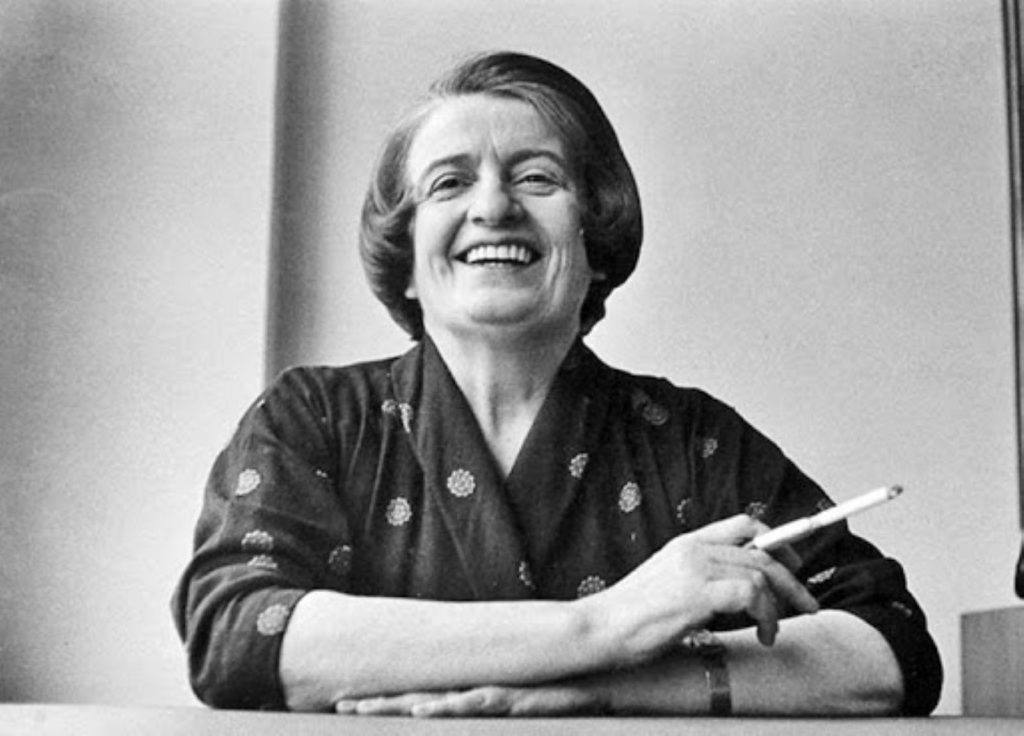
Objectivism and rational self-interest
Rand offered a new concept of rational and ethical egoism: an ethics of rational selfishness which is the basis of a new morality and can be seen as a form of radical individualism. She describes her philosophy as objectivism.
Important
She argued "[Man] must exist for his own sake, neither sacrificing himself to others nor sacrificing others to himself. The pursuit of his own rational self-interest and of his own happiness is the highest moral purpose of his life."
Selfishness does not mean doing as you please; rather it means humans must pursue their own happiness as the highest moral aim and prosper by treating others as individuals. This supports the view of atomism, where there is no such thing as society, only a collection of individuals pursuing their own happiness.
Following reason means rejecting emotions, faith and any other forms of authority in order to think for yourself.
Free-market capitalism and meritocracy
The ideal social system is free-market capitalism, which involves "a separation of state and economics". This system protects the rights of the individual to use their own mind, act on their own judgement, work for their values and keep the product of their labour.
Society should be meritocratic not hierarchical. The most talented individuals start businesses, invent new technologies and create ideas and art through their own talents, and trade with other rational egoists to reach their goals.
The state
The state's role is vital but strictly limited to acting as a police officer, protecting the rights of each individual against criminals and foreign invaders.
Key definitions
Note
Statism: A political system where the state has a large degree of control over social and economic affairs.
Objectivism: Rand's philosophy is based on the principles of reason, self-interest and capitalism, which she claims will deliver freedom, justice, progress and man's happiness on Earth. It is set against statism or collectivism, where man's life and work belongs to the state, which she argues leads to "slavery, brute force, stagnant terror and sacrificial furnaces."
Atomism: The concept that society, if indeed it exists, is a collection of individuals pursuing their own individual lives and being responsible for themselves. Collective identities, like class, are meaningless.
Exam guidance
Note
You can highlight the tensions within conservatism by showing how Rand's radical individualism breaks with the traditional conservative view of human imperfection and the importance of tradition. Her atheism and opposition to any role for the state in social morality are also a source of conflict with traditional conservatism.
For Rand, the success of talented individuals creates the material conditions and moral space for the less talented to thrive, reflecting a very positive view of human nature and what humans can achieve under the right conditions. This can be used to show tensions with the more pessimistic view normally associated with conservatism.
Key thinker: Robert Nozick (1938-2002)
Writing in the 1970s, Robert Nozick has become one of the key thinkers of the New Right. His work, Anarchy, State and Utopia (1974), can be seen as an attack on socialism and wealth redistribution of any kind.
Human nature and self-ownership
Nozick broke from the Hobbesian tradition and has a far more optimistic view of human nature.
All individuals have self-ownership: they are the owners of their own body, mind and abilities.
He saw individuals as having their own ends and projects to which they rationally devote themselves. Individuals have rights that existed before any social contract or state and "there are things no person or group may do to them (without violating their rights)".
Liberty and taxation
As individuals are so central, liberty is the fundamental value. This means individuals should be free from any form of legally enforced obligations in either the social or the economic sphere.
Important
Any attempt at social justice via the redistribution of wealth and progressive taxation is an assault on liberty, as "taxation of earnings is on a par with forced labour".
The individual should be able to keep the fruits of their labour, as they have been earned in a free market through their hard work and talents.
The Wilt Chamberlain argument
Example
The Wilt Chamberlain Argument
Nozick proposed the 'Wilt Chamberlain' argument, based on a famous basketball player. Chamberlain was in demand, so included in his contract that 25 cents from each spectator went to him. One million people attended games he played throughout the season, earning him $250,000, much more than everyone else.
For Nozick, this payment was just and he should keep it all, as he had earned it through his own labour and the contract was freely entered into.
This demonstrates Nozick's principle that voluntary exchanges in a free market produce just outcomes, regardless of resulting inequality.
The minimal state
A minimalist state could be justified if it is strictly limited to the protection of person, property and contract. This is a concession to the conservative view that the state needs to be strong but limited, to provide the necessary order for liberty to flourish.
Nozick's positive view of human nature led him to conclude that "there are only individual people, different individual people, with their own individual lives" who are dignified and rational in pursuit of their own goals rather than brutishly competitive atoms.
Note
The minimal state is just but inspiring. It allows for the emergence and peaceful co-existence of voluntarily formed communities, with their own morals, values and ideals. As long as individuals are free to contract in or out of these communities, it allows individuals to fully explore and live their own lives.
Exam guidance
Note
You can demonstrate a deeper understanding by showing that Anarchy, State and Utopia is a direct attack on Rawls's principle of distributive justice, arguing that progressive taxation and redistribution of wealth make the individual a slave to the collectivist goals of the state.
Remember!
Summary
Key Points to Remember:
- Conservatism emerged as a response to the French Revolution, emphasising tradition, custom and continuity over abstract philosophical ideals
- The principle of 'change to conserve' is central to all strands of conservatism – change should be gradual and respect accumulated wisdom
- Traditional conservatism emphasises hierarchy, paternalism, organic society and 'little platoons' with a pessimistic view of human nature
- One-nation conservatism developed in response to socialism and free-market capitalism, promoting state intervention to ensure social stability
- The New Right is divided between neo-conservatives (emphasising authority and traditional values) and neo-liberals (emphasising individual liberty and minimal state intervention), though both support free-market capitalism
- Key thinkers represent different strands: Burke (traditional), Oakeshott (one-nation), Rand and Nozick (New Right)
- There is ongoing debate about whether conservatism is a coherent ideology or simply a defence of property, privilege and inequality