Origins, Beliefs, and Strands (AQA A-Level Politics): Revision Notes
📚Revision Notes
Origins, Beliefs, and Strands
What is ecologism?
Ecologism is a political ideology concerned with the relationship between humans and the natural world. It argues that the non-human world deserves moral consideration, and this principle should shape our social, economic and political systems.
Note
It is important to distinguish ecologism from ecology. Ecology is the scientific study of plants and animals in relation to their environment, focusing on the interdependence and interrelationships that sustain different forms of life. Ecologism, however, is a political ideology that draws heavily on ecology's insights to argue that humans are not masters of nature but part of an intricate web of interrelationships.
Origins of ecologism
The modern environmental movement emerged during the 1960s and 1970s, when concerns about humanity's impact on the natural world began to gain mainstream attention.
Rachel Carson's Silent Spring (1962) became a bestselling book that exposed how pesticides like DDT were destroying wildlife. Carson introduced the wider public to ecological thinking and questioned society's faith in science, technology, government and businesses to deliver progress and prosperity. Her work inspired the founding of major environmental organisations including Friends of the Earth and Greenpeace. The book also prompted the US government to ban DDT and establish the Environmental Protection Agency in 1970.
Important
The Limits to Growth (1972), published by the Club of Rome, represented the first clear expression of ecologism as a political ideology. This report identified that Earth has finite limits in three key areas:
- Carrying capacity: the ability to support population growth
- Productive capacity: the supply of natural resources
- Absorbent capacity: the ability to absorb pollution
The report argued that overshooting these limits would have terrible consequences, advocating for "a fundamental revision of human behaviour, and by implication, of the entire fabric of present-day society."
The relationship between humanity and nature
Anthropocentrism
Anthropocentrism places humans above and outside of nature, viewing humanity as the master and nature purely as a resource whose value is measured only by its usefulness to mankind. This worldview permits the exploitation of nature for human purposes.
During the Enlightenment, science and philosophy developed a mechanistic world view that was reductionist in approach. This means nature was redefined as a machine composed of independent parts rather than a living organism. By studying individual components rather than the whole system, this perspective encouraged the view that nature exists for humanity's use and that technological solutions can fix or improve upon nature.
Note
The philosopher Francis Bacon (1561-1626) exemplified this thinking when he wrote that nature should be "put in constraint, moulded, and made as it were new by art and the hand of man."
Enlightened anthropocentrism
In contrast to pure anthropocentrism, enlightened anthropocentrism represents the light green position. This view argues that nature should be protected so it continues to sustain human life. Rather than positioning humans as masters of nature, this perspective sees humanity as nature's steward.
This limited holistic view protects nature for practical, self-interested reasons: nature is valuable because it sustains human life. Unlike the mechanistic worldview, holism sees nature as a system of relationships and ecosystems rather than a collection of isolated particles.
Important
Enlightened anthropocentrism introduces the principle of intergenerational equity: the present generation must not compromise the ability of future generations to meet their needs. This principle is critical because environmental issues like climate change will impact future generations more severely than current ones.
Ecocentrism
Ecocentrism represents the dark green position. This view asserts that nature has intrinsic value - value in its own right, entirely separate from its usefulness to humanity. The priority becomes ecological balance rather than human ends.
Ecocentrism opposes the mechanistic world view and replaces it with radical holism, seeing nature as a system of relationships rather than separate fragments. This places humanity as living within the intricate web of nature rather than as its master or steward.
Note
A strong ethical imperative to protect nature emerges from deep moral concern for the planet and all living things. Ecologism differs fundamentally from other political ideologies because it extends moral consideration beyond living people to include other life forms (plants and animals) and wider nature (land, water, atmosphere).
Rachel Carson (1907-64)
Carson's Silent Spring (1962) formed the basis for the emergence of the environmental movement. The book opened the public's eyes to damage caused by the pesticide DDT and challenged society's faith in science, technology, government and businesses.

Carson articulated a key ecological insight: "man is a part of nature, and his war against nature is inevitably a war against himself." She questioned the reductionist and mechanistic worldview, arguing that science, technology, the state and businesses, while worshipping "the gods of profit and production," were damaging the Earth and human life.
Carson proposed a more holistic approach based on sustainable management of resources. This involves working within the limits of ecology by managing natural resources to protect Earth's sustainability - the ability of a system to maintain its health over time.
Note
Her ecological vision of the interconnectedness of life inspired the environmental movement, with both Friends of the Earth and Greenpeace tracing their founding to her work.
Sustainability
In ecology, sustainability refers to the biosphere's ability to maintain its health over time. The biosphere comprises all parts of Earth where life exists: the ground, the air and the water.
The Club of Rome's report highlighted that Earth has limits to its carrying capacity, productive capacity and absorbent capacity. Currently, all core political ideologies are based on industrialism: large-scale production, faith in technology, and belief in limitless growth to satisfy material needs and consumer desires.
Given the centrality of industrialism to modern societies, green thinking recognises that maintaining a sustainable biosphere requires changes in how societies are ordered:
- The consumption of material goods by individuals must be reduced, especially in modern capitalist economies
- Attitudes must change to recognise that human needs are not satisfied by continual economic growth and the endless purchasing of material goods
Light greens have tackled these issues through the concept of weak sustainability, often defined as sustainable development: development that meets the needs of the present without compromising the ability of future generations to meet their own needs. This clashes with the strong sustainability view adopted by dark greens and social ecologists.
Weak sustainability vs Strong sustainability
| Weak sustainability | Strong sustainability |
|---|---|
| Economic growth at a slower pace - greening economic growth. Doing more with less. | A steady-state economy - a period of de-growth will be needed to find a human economy that fits with Earth's ecosystems. At this point the economy should remain steady, with zero growth. |
| Smarter growth - using technology to reduce the environmental impact of growth and solve environmental issues. | Technology can be part of the solution but not the solution. The technological fix fails to recognise Earth's finite limits and resources. |
| Natural capital (e.g. coal, gas, water) can be depleted as long as it is used to build manufactured capital (e.g. infrastructure such as roads) of equivalent value. | Natural capital should be maintained as it is crucial to the sustainability of Earth's ecosystems. |
| Growth should meet the needs of the present generation without compromising the needs of future generations. | Growth is only supportable where benefits outweigh costs, i.e. to ensure people can meet basic needs. Society will be built around satisfying basic needs, requiring a radical alteration in society's materialist attitude. |
| Consumption of goods is still possible through a green lifestyle built around green consumerism, recycling and environmental awareness. | There is a clear difference between needs and wants. Wants are turned into needs by powerful corporations to sell goods. Society should focus on consumption based only on real needs. This new society will seek deeper and more profound happiness than consumerism provides. |
Note
Consumerism is the idea that the consumption and acquisition of material goods is the principal goal of human existence, through which we achieve happiness and social status. A materialist attitude considers material possessions and the social image they project as more important than spiritual values.
Example
Illustrating the Difference: The Case of Recycling
Recycling illustrates the fundamental difference between light and dark green approaches:
Light green perspective: Recycling is a technological fix allowing continued consumption growth while reducing environmental impact.
Dark green perspective: While recycling may be part of the solution, it remains an industrial process using resources, requiring energy and creating pollution, so cannot be the complete solution.
Ecologism is unique among political ideas as it does not focus on material growth and economic growth.
Dark green ecologism
Dark green thinking demands a radical transformation of our relationship with non-human nature and therefore the organisation of the state, society and the economy.
Ecocentrism in dark green thought
Dark green thinking opposes the idea that humanity is either the master or steward of nature. It moves beyond human instrumental reasons for protecting the environment in two ways:
Biocentric equality creates a new form of ethics placing intrinsic value in nature. Aldo Leopold's "land ethic" is the most influential example of this approach.
Environmental consciousness can be found in Arne Næss's deep ecological theory, Ecosophy T, which has two key principles:
- Self-realisation: Rising above the egotistical view of self to realise that true human nature is identical to nature's nature. Once this realisation occurs, harming the natural world would mean harming oneself, eliminating the need for further ethical rules.
- Biocentric egalitarianism: The idea that all life forms have an "equal right to live and blossom" - equality across the whole of nature.
Note
The difference between environmental consciousness and biocentric equality can be illustrated through Warwick Fox's example of the Nez Perce American Indian, Smohalla. When asked why the Nez Perce peoples don't plough the Earth, his answer wasn't about nature's intrinsic value but rather: "Shall I take a knife and tear my mother's breast?" This demonstrates environmental consciousness rather than abstract ethics.
Example
Thought Experiment: The Last Tree
The Robin Attfield thought experiment illustrates intrinsic value: if you were the last human on Earth, facing the last tree, would it be wrong to cut it down knowing you would die before the tree?
If the answer is yes, the tree has intrinsic value - value independent of human use or benefit.
Environmental consciousness and spirituality
Close links exist between environmental consciousness and Eastern religions, which view nature as sacred, and the attitudes of indigenous peoples in their strong attachment to their natural environment.
Sustainable societies
Dark green sustainable societies would be built on these principles:
- Strong sustainability: natural capital must be preserved and capitalism opposed
- The end of the domination of materialism and consumerism, replaced with more profound forms of human happiness and fulfilment
- A period of de-growth in advanced capitalist economies, currently based on consuming luxuries and representing the greatest source of environmental destruction
- The steady-state economy, based on zero economic growth and production for needs rather than wants. Herman Daly defines this as "constant stocks of people and physical wealth, maintained at some chosen, desirable level by a low rate of output"
- Based on E.F. Schumacher's ideas, a move away from gigantism (the growth of huge, greedy global corporations that mass produce goods in vast numbers in huge factories, creating dehumanising work, and the growth of massive cities that separate people from each other and nature) to small autonomous economic communities using local skills, local resources and local knowledge, with land and resources communally owned
- Work that is spiritually fulfilling and creative, reconnecting humans with each other, the land and nature. Wealth measured in spiritual, not material, terms.
Living democracies
Dark green ecologists believe the state and society should be built on ecological principles favouring decentralised, interdependent communities modelled on anarchist lines:
- Bioregionalism: Natural regions across Earth with their own natural cycles and boundaries should provide the basis for organisation rather than artificial state boundaries
- Interdependent: Based on ecology's lessons, communities would be interdependent in political and economic life, creating a federation of local communities
- Communal: Nature is naturally communal with no centralised control. Societies should be organised on communal lines, with land communally owned and political decisions taken locally. Local decisions will be more in tune with nature and therefore both ecologically and socially fair
- Diversity: Nature is diverse, so bioregional communities can be diverse but will be based on concepts of true democracy, freedom, toleration and equality
Aldo Leopold (1887-1948)
Aldo Leopold's A Sand County Almanac (1949), although predating ecologism's rise, is now seen as one of the clearest expressions of ecocentric thinking.

Leopold saw traditional economics as unable to solve problems of wilderness protection and wildlife management. He viewed capitalism and all alternatives as based on "the distribution of more machine-made commodities to more people." His conclusion was that "a new kind of people" with a holistic, ecocentric, ethical approach was needed.
Important
His "land ethic" came in two parts:
-
Leopold extended the community worthy of moral or ethical consideration "to include soils, waters, plants, and animals, or collectively: the land"
-
His moral rule: "A thing is right when it tends to preserve the integrity, stability and beauty of the biotic community. It is wrong when it tends otherwise"
This holistic approach extends ethical consideration to the non-human world, including non-living elements, as Leopold sees Earth itself as having a certain kind of life. It provides a guide for action by creating a rule for what can and cannot be done, acting as a limit on state, society and economy actions.
This form of ethical consideration involves a radical transformation in humanity's understanding of non-human nature. Humanity will move from being "conqueror of the land-community to a plain member and citizen of it."
E.F. Schumacher (1911-77)
E.F. Schumacher's Small is Beautiful: A Study of Economics as if People Mattered (1973) attacked the gigantism of mass production, questioned the importance of economic growth and insisted human happiness would not be achieved by material wealth.
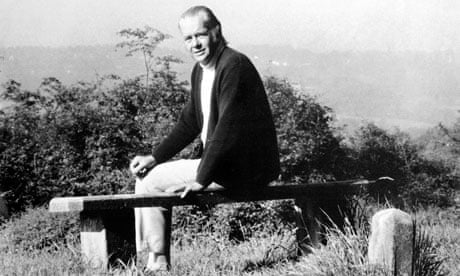
Key ideas include:
- Global capitalism is squandering "the capital represented by living nature"
- The gigantism of mass production and industrialised agriculture based on modern technology is wreaking havoc on the natural world and causing misery for humanity by creating unemployment, migration from local communities into gigantic cities, and mind-numbing, soul-destroying work
- This dehumanised work leads to "a greater concern with goods than with people" and "an evil lack of compassion"
- "Technology must be the servant of man, not its master" - currently science and technology are used to further economic growth, but should be oriented to "the organic, the gentle, the non-violent, the elegant and beautiful"
- Gigantism should be replaced by "lots and lots of small autonomous units" using local resources, skilled labour and appropriate technology, empowering people to produce high-quality products satisfying "simplified and reduced" needs, not "temptation for luxuries"
- Schumacher criticised traditional economics, arguing "there is more to life than GDP." The gross domestic product measure sees economic growth as positive and links happiness to consumerism and materialism
- In its place, Schumacher proposed "Buddhist economics," which replaces quantity of goods with quality, wants with simplified needs to make production sustainable, and dehumanised work with spiritually fulfilling employment
Note
Bookchin saw dark green thinking as "eco-la-la" as it is unrealistic in its expectation of an ethical/spiritual revolution in how people think and also misanthropic in seeing humanity as the problem. He was also critical of light greens, arguing their anthropocentrism is just the domination of nature.
Light green ecologism
Light green ecologism draws on ecology and holism principles to promote policies and practices aligned with environmental protection. There are limits to growth, but sustainable development is possible within mainstream political ideas and capitalism.
Important
Four main principles underpin light green thinking:
-
Enlightened anthropocentrism: Based on ecology's lessons that humanity is part of nature; poisoning nature ultimately means nature will poison humanity. Therefore, nature needs protection to protect human societies
-
Weak sustainability: The principle of getting richer slower and smarter. It is possible to work within modern societies to "green economic" growth so it works with nature rather than against it
-
Intergenerational equity: Expressed through the principle of sustainable development
-
Technocentric approach: Faith in science and technology's ability to both "green" economic growth and resolve environmental issues
Light green approaches
Different elements of the light green movement support various approaches:
"The private is political": Individuals can become ethical consumers, "green" their lifestyle and focus on non-material happiness. By using their purchasing power ethically, individuals can drive corporations to act in more environmentally sensitive ways. Examples include purchasing goods with environmental stamps of approval (Rainforest Alliance, Forest Stewardship Council) or boycotting environmentally damaging companies and products.
Green capitalism: Corporations react to the market and will be forced to respond to ethical consumerism. Additionally, rising natural resource costs will force corporations to find cheaper, more environmentally responsible alternatives to maintain profits.
Managerialism: This approach utilises intervention in the market at state or international level to promote environmental regulations:
- International treaties: The Paris Agreement of 2015, where 195 countries entered a legally binding global deal to limit global warming well below 2°C above pre-industrial levels with a long-term goal of net zero emissions, phasing out fossil fuels
- State level: Individual states can set binding targets. In 2008 the UK passed the Climate Change Act, committing the UK government by law to reducing greenhouse gas emissions by at least 80% of 1990 levels by 2050
- Policy approaches: Green taxes (taxes placed on products or activities associated with environmental damage, making them more expensive to reduce consumption) or cap and trade schemes (large emitters like power plants buy permits for greenhouse gases they release, allowing government to cap emissions by limiting permits; trade refers to a market where companies can buy and sell emissions allowances, giving them strong incentive to cut emissions to save money). Further approaches include plastic carrier bag charges or banning plastic straws.
Note
Environmental pressure groups like Greenpeace and the Sierra Club often take a light green approach to ecological destruction by focusing on lifestyle choices, technological fixes or the state's ability to manage the environment through regulation.
Dark green ecologists tend to see light green ecologism as part of the problem rather than the solution, viewing it as a form of denial about real problems. Only a radical change in humanity's relationship with nature, they argue, can bring the change necessary to avert ecological catastrophe.
Social ecology
Social ecology originates from the idea that society's current ecological problems arise from deep-seated social problems. Therefore, ecological problems can only be understood and tackled by confronting problems within society.
These problems need addressing through social movements and collective actions that confront the source of ecological problems rather than through ethical consumerism, lifestyle choices or eco-spiritual revolution, which social ecologists view as unrealistic.
Social ecology divides into three strands: eco-anarchism, eco-socialism and eco-feminism.
Eco-anarchism
Eco-anarchism argues that the idea that humanity must dominate nature originates in the domination of humans by humans. This has led humanity to become separated from its own true nature and from the natural world itself.
Important
All forms of hierarchy must be challenged and overthrown: domination of the young by the old, women by men, countryside by city, and one ethnic group by another. Capitalism's rise creates new forms of hierarchy and domination, reinforcing the idea that the only possible relationship between humanity and nature is domination.
Capitalism must "grow or die" as its core elements are competition, capital accumulation and limitless growth. It must be replaced by "an ecological society based on non-hierarchical relationships, decentralised democratic communities, and eco-technologies like solar power, organic agriculture, and humanly scaled industries" (Bookchin, Remaking Society, 1989).
Murray Bookchin (1921-2006)
Murray Bookchin was a radical thinker who saw the domination of humans by humans as central to nature's destruction. The move to a democratic, cooperative, ecological society was central to both a free society and humanity's survival.

Key ideas include:
- Social hierarchy and social domination are central to humans becoming estranged from their own true nature and non-human nature
- Bookchin developed social ecology, aiming to replace capitalism, the nation state and other forms of domination with a rational, ecological and anarchist commune society based on cooperative and humane relations between humans and between humans and nature
- Capitalism's "grow or die" imperative meant persuading capitalism to "green" and limit growth was no more possible than persuading a human to stop breathing
- Modern technology had eliminated the need for "toil," which would free people to become "citizens" who could reconstruct their worlds by participating in democratic self-government (Post-Scarcity Anarchism, 1971)
- Bookchin developed "libertarian municipalism," where self-governing assemblies practise face-to-face democracy based on ideals from Ancient Greece
- Citizens' active participation in assembly democracy would lead to moral and material transformation in human nature; society would become deliberative, rational, ethical and focused on cooperation
- Based on ecology and holism principles, municipalities would be interdependent, especially economically, based on communalism: a loose confederation of self-governing communes where the confederation's purpose is administration between communes through committees formed of members from each commune. Decisions must be approved in all communes as power comes from the bottom up
- Economic life is "municipalised" as it is placed under community ownership in the guise of citizens' assemblies. Economic policies would be devised in the community's interests, with technology used to meet basic needs and free humans from toil and drudgery, leading to a moral economy rather than a market economy
- Ecological principles of limits and balance, rather than capitalist principles of expansion and competition, would guide communities, with cooperation between people and nature the result
Eco-socialism
To eco-socialists, capitalism's dominant ideology includes both climate-change deniers and those who acknowledge the problem but turn to market or technological fixes. Both positions really just defend economic arrangements benefiting the few.
John Bellamy Foster argues capitalism is "a system of unsustainable development" and goes back to Karl Marx's writings. Land was turned into private property and became seen merely as a means for profit accumulation. Capitalism is based on an unquenchable thirst for profit, so systematically exploits "the original sources of all wealth - the soil and the worker" (Marx, Das Kapital, 1867).
Note
This will create a growing environmental proletariat, working in inhumane conditions and directly in line to face the worst consequences of impending ecological disasters such as rising sea levels.
This proletariat, mainly based in the global South, will rise in revolution to overthrow capitalism and existing human-nature relations to create a sustainable, equitable society.
This eco-socialist society, according to John Bellamy Foster, will be based on the social use (not ownership) of nature, satisfaction of communal needs, and regulation of human-nature relations by those who work with nature.
Eco-feminism
Eco-feminism links nature's exploitation with women's oppression. It challenges the idea that men are identified with culture, reason and science and so are superior to women, who are identified with nature.
Important
The Scientific Revolution is built on the idea that nature is female but should be viewed like a machine, not a living organism, and needs to be interrogated and "her" secrets extracted. This domination of nature by men of science is also the domination of women (patriarchy).
Simultaneously, women are made inferior as they are closer to nature and therefore further from reason. Patriarchy needs to be overthrown and a new relationship with nature established, built on partnership rather than domination.
Carolyn Merchant (1936-)
Carolyn Merchant developed a form of socialist eco-feminism clearly articulated in The Death of Nature (1980).

Key ideas include:
- Before the Enlightenment and Scientific Revolution, "the female earth was central to organic cosmology...[and] the root metaphor binding together the self, society and the cosmos was that of an organism"
- During early capitalism's rise, women were removed from the sphere of production while simultaneously losing control over their own bodies in the sphere of reproduction
- Women were forced into the role of labour reproduction by birthing the new generation of workers and domestic labour
- The Scientific Revolution, led by Francis Bacon, argued nature should have "her" secrets wrested from "her" "womb" by science and technology
- The domination of man over woman is central to the domination of science, technology and capitalist production over nature
- The Scientific Revolution's mechanistic world view was seen as a marker of progress but is implicated in creating ecological crises
- The domination of man over woman needs to be overthrown
- Nature should no longer be gendered or dominated and there should be "an ethic of partnership with nature in which nature was no longer symbolised as mother, virgin, or witch but instead as an active partner with humanity"
Summary
Key Points to Remember:
- Ecologism is a political ideology focused on the relationship between humans and nature, arguing the non-human world deserves moral consideration that should inform our political, social and economic systems
- The ideology emerged in the 1960s-70s, with Rachel Carson's Silent Spring (1962) and the Club of Rome's The Limits to Growth (1972) as foundational texts
- Anthropocentrism views humans as masters of nature, while enlightened anthropocentrism sees humans as nature's stewards, and ecocentrism recognises nature's intrinsic value independent of human use
- Light green thinking advocates weak sustainability and working within existing systems through technological solutions and regulation, while dark green thinking demands radical transformation through strong sustainability, including a steady-state economy with zero growth
- Social ecology links environmental destruction to social problems, with eco-anarchism opposing all hierarchy, eco-socialism arguing capitalism must be overthrown, and eco-feminism connecting nature's exploitation to women's oppression