Assessing a Country as a Market (Edexcel A-Level Business): Revision Notes
📚Revision Notes
Assessing a Country as a Market
Introduction
Evaluating whether a country represents a viable market for business expansion requires extensive research and careful analysis. Even with thorough investigation, businesses can make incorrect decisions about international markets. However, understanding certain key factors can help companies make more informed choices about where to invest or sell their products and services.
Note
When assessing a potential market, businesses must consider whether successful entry will enhance their competitive advantages. This strategic alignment is crucial for long-term success.
This unit explores five critical factors that businesses should evaluate when considering expansion into a new country.
Levels and growth of disposable income
Understanding disposable income
Disposable income represents the money remaining after individuals have paid taxes, national insurance, and other mandatory deductions. This remaining income can be used for consumption (buying goods and services) or saving.
For businesses considering international expansion, customers must have sufficient purchasing power to buy their products. Understanding both current disposable income levels and future trends is essential for market assessment.
Finding disposable income data
Businesses can access disposable income information from various sources:
- United Kingdom: Office for National Statistics (ONS)
- International data: OECD, Euromonitor, World Bank, United Nations
Comparing average household disposable income across countries helps businesses identify markets with strong consumer purchasing power.
Impact of changing disposable income levels
Falling disposable income typically indicates:
- Low-income consumers struggling to afford basic living standards
- Higher-income consumers reducing spending on luxury or non-essential items
- Decreased total market expenditure
- Reduced savings rates
Rising disposable income suggests:
- Consumers have more money for goods and services
- Potential for increased savings
- Growing market opportunities
Comparative analysis: Greece vs United Kingdom
The importance of disposable income trends becomes clear when comparing different countries during the same period.
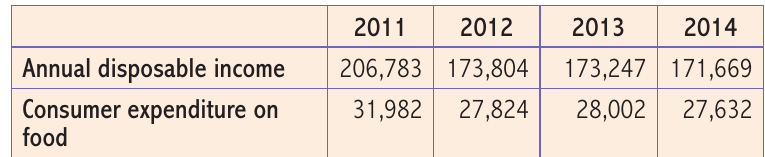
Greece experienced significant economic difficulties between 2011 and 2014. Annual disposable income fell dramatically from $206,783 million in 2011 to $171,669 million in 2014. This decline meant Greek consumers had substantially less money for purchases, including essential items like food. Consumer expenditure on food dropped from $31,982 million to $27,632 million during this period.
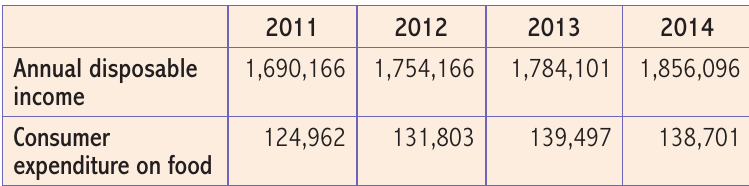
In contrast, the United Kingdom showed a very different pattern. UK disposable income in 2011 stood at $1,690,166 million—considerably higher than Greece. More importantly, UK disposable income rose consistently throughout the same period, reaching $1,856,096 million by 2014. British consumers had more money available for spending or saving, making the UK a more attractive market for businesses.
Important
Critical Market Entry Considerations
Businesses seeking to expand internationally should ensure:
- Current disposable income levels are sufficient for customers to afford their products
- Disposable income is stable or, preferably, growing over time
- Several years of positive trends exist to indicate sustainable market potential
Example
Case Study: India's Growing Luxury Market
India's expanding young professional class has driven growth in the luxury goods market. Rising disposable incomes have created demand for items like jewellery and watches, which serve both fashion and investment purposes.
According to Euromonitor projections, the number of Indian households with disposable income between $10,000 and $25,000 will continue increasing significantly through 2030, establishing India as a growth market for numerous products and services.

India's GDP growth demonstrates the country's economic potential. After growing 6.6% in 2011, growth slowed to 5.1% in 2012 before rebounding to 6.9% in 2013. This pattern shows the economic volatility businesses must consider alongside disposable income trends.
Ease of doing business
Why business environment matters
The regulatory and administrative environment directly affects a company's ability to operate successfully. When businesses face difficulties entering a market, establishing premises, or conducting daily operations, they typically seek alternative locations.
Problems with ease of doing business lead to:
- Delays in sales and revenue generation
- Increased operational costs
- Disruptions across the distribution chain
- Reduced profitability
World Bank ease of doing business rankings
Each year, the World Bank Group evaluates the regulatory burden countries place on businesses. Countries receive rankings from 1 to 189, with higher rankings indicating easier business environments.
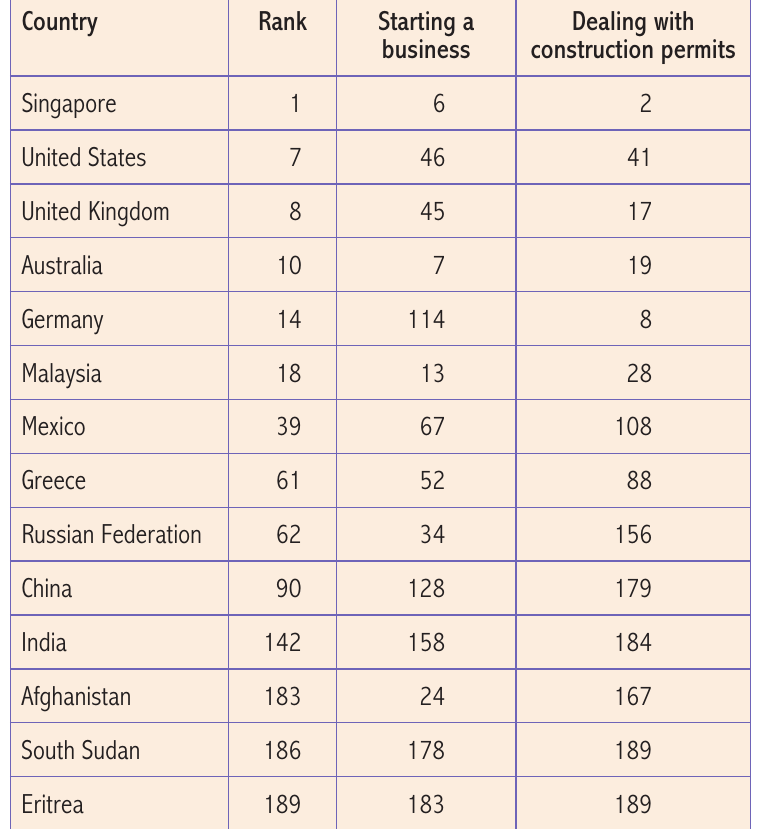
The rankings reveal significant variations between countries:
Top performers (easiest to do business):
- Singapore consistently ranks 1st globally
- United States (7th), United Kingdom (8th), and Australia (10th) also perform well
- Germany ranks 14th despite being a major economy
Mid-range performers:
- Malaysia (18th) and Mexico (39th) offer moderate ease of business
- Greece (61st) and Russian Federation (62nd) face more challenges
Poor performers (most difficult):
- China ranks 90th despite its economic size
- India ranks 142nd, indicating significant regulatory barriers
- Afghanistan (183rd), South Sudan (186th), and Eritrea (189th) represent the most challenging business environments
Note
The table also shows variation within specific indicators. For example, Singapore ranks 6th for "Starting a business" but 2nd for "Dealing with construction permits," while China ranks much lower at 128th and 179th respectively.
This demonstrates why businesses should examine specific indicators relevant to their operations rather than relying solely on overall rankings.
The ten business environment indicators
The World Bank tracks ten indicators covering the complete business lifecycle:
- Starting a business: Number of procedures, time required, costs, and minimum capital requirements
- Dealing with construction permits: Procedures, timeframes, and associated costs
- Getting electricity: Steps needed, duration, and expenses for obtaining power connections
- Registering property: Procedures, time, and costs for property registration
- Getting credit: Strength of legal rights and information requirements for borrowing
- Protecting minority investors: Legal protections for shareholders
- Paying taxes: Number of annual payments, time spent, and percentage of profit paid in tax
- Trading across borders: Documentation requirements, import/export timeframes, and costs
- Enforcing contracts: Procedures, duration, and costs as percentage of claim value
- Resolving insolvency: Processes and outcomes when businesses fail
Each indicator identifies potential problems at different stages, helping businesses anticipate challenges in specific countries.
Example
Case Study: India's Business Environment Reforms
When Narendra Modi became India's prime minister in 2014, India ranked 142nd in the World Bank's ease of doing business rankings—two places lower than the previous year. This poor ranking reflected high corruption levels, excessive red tape, and stifling regulations.
India's 2015/2016 Union Budget introduced reforms to improve the business environment:
- Simplifying regulations across government departments
- Streamlining infrastructure approval processes
- Speeding up dispute resolution procedures
- Instituting a single national goods and services tax to create an internal market
- Enabling easier land acquisition for development
- Creating a single portal for obtaining all development permits
These reforms aimed to attract more entrepreneurs and investors by reducing bureaucratic obstacles.
Infrastructure
The role of infrastructure in market assessment
A country's infrastructure encompasses the physical systems and facilities necessary for business operations. Even when consumers have sufficient disposable income, businesses must be able to manufacture and deliver their products. This requires adequate communication and transportation networks.
Important
Poor infrastructure significantly increases production and operating costs, potentially making otherwise attractive markets unviable for business expansion.
Transportation infrastructure challenges
Many developing countries suffer from underdeveloped and unreliable transportation systems. Common problems include:
- Inefficient entry points: Poorly designed or operated airports and sea ports
- Limited rail networks: Few or unreliable train services
- Incomplete road systems: Missing connections or poor road quality
- Insufficient warehousing: Limited storage facilities
- Unreliable shipping lanes: Inconsistent or infrequent sea transport
These infrastructure deficiencies cause:
- Delivery delays leading to lost sales
- Increased transportation costs
- Inability to serve certain market areas
- Reduced market attractiveness for potential entrants
Communication infrastructure requirements
Modern businesses increasingly rely on electronic systems to coordinate production, sales, and distribution. Effective communication infrastructure requires:
- Reliable electricity supply: Consistent power for operations
- Internet coverage: Adequate broadband availability
- Communication networks: Mobile and fixed-line connectivity
Electricity shortages and limited internet access prevent businesses from implementing efficient operational systems, reducing productivity and increasing costs.
Example
Case Study: Dubai's Infrastructure Investment
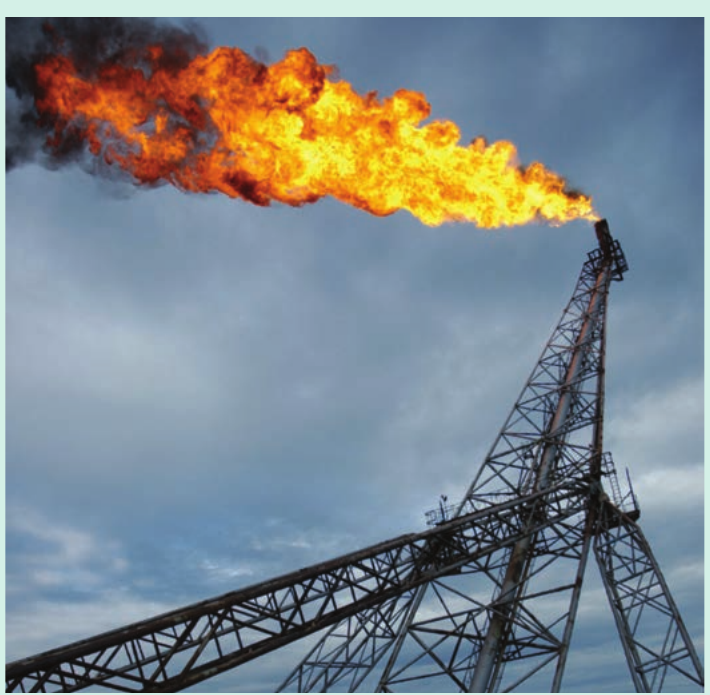
Dubai demonstrates how strategic infrastructure investment can attract business. Using proceeds from oil sales, Dubai has developed extensive infrastructure including:
- Artificial harbour: Purpose-built shipping facilities
- Jebel Ali Free Trade Zone: Special economic area with reduced regulations
- Dubai Internet City: Information technology hub where businesses like IBM benefit from zero taxes, minimal currency restrictions, and limited regulation
- Dubai Ideas Oasis: Facilities supporting venture capital and business start-ups
- Dubai Knowledge Village: Educational infrastructure for skills development
- Hotels and residential complexes: Accommodation making Dubai attractive for visitors and residents
Results of Investment:
This infrastructure investment has produced significant results. Although Dubai's growth is difficult to separate from other United Arab Emirates monarchies in World Bank statistics, Dubai government data shows foreign direct investment has risen significantly year-on-year since 2012.
Political stability
Understanding political risk
Political stability refers to a calm political climate that minimises uncertainty for businesses. Political decisions and events can significantly affect business environments and potentially cost investors some or all of their investment value.
Countries with stable political environments reduce uncertainty, making them more attractive for business investment. Conversely, political instability creates risks that can undermine business operations and profitability.
Key political factors to evaluate
Before investing in a country, businesses should assess:
Government characteristics:
- Nature of the government and its relationship with business
- Government relationships with major international institutions (United Nations, World Trade Organization, International Monetary Fund, World Bank)
- Legal orientation and approach to regulation and taxation
Potential political risks:
- Election-related instability
- Political vacuums when leadership changes
- Increasing authoritarianism
- Government factions and party splits
- Rising corruption levels
- Terrorism threats
- External threats (border conflicts, trade disputes, invasion) causing internal power shifts
Measuring corruption risk
Businesses often struggle to gauge corruption levels when entering new markets. Transparency International, a non-governmental organisation combating corruption, publishes an annual global Corruption Perceptions Index. This index measures perceived public sector corruption levels across countries and territories.

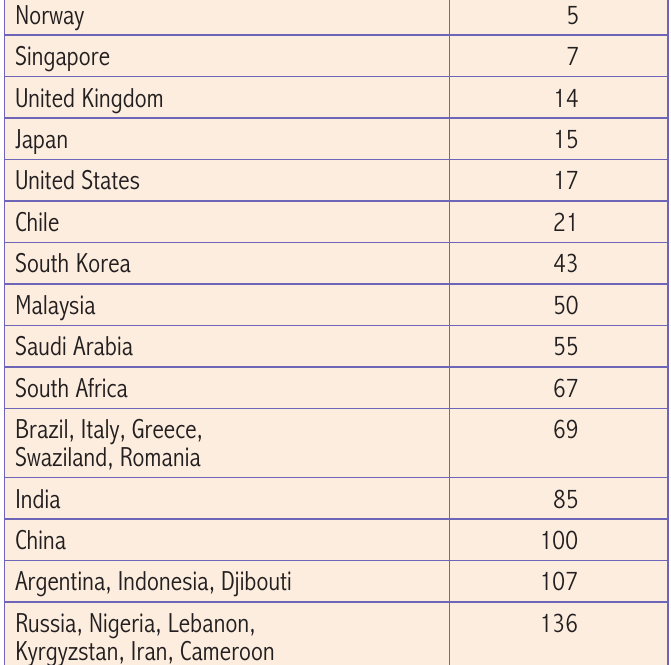
The Corruption Perceptions Index provides a useful starting point for understanding corruption risk. Rankings range from 1 (least corrupt) to higher numbers (more corrupt):
Low corruption countries (most transparent):
- Denmark ranks 1st (least corrupt)
- Norway (5th), Singapore (7th), United Kingdom (14th), Japan (15th), United States (17th)
Moderate corruption:
- Chile (21st), South Korea (43rd), Malaysia (50th)
- Saudi Arabia (55th), South Africa (67th)
- Brazil, Italy, Greece (69th)
High corruption countries:
- India (85th), China (100th)
- Argentina, Indonesia (107th)
- Russia, Nigeria, Iran (136th)
Note
These rankings help businesses anticipate corruption-related challenges in different markets. However, they represent perceived corruption rather than measured corruption, so should be used alongside other assessment tools.
Example
Case Study: Political Risk in Argentina
Political instability can severely damage business investments. In 2012, Argentina's government seized assets from Spanish energy firm Repsol. Two years later, in May 2014, Repsol left the Argentine market after agreeing to a settlement worth only half its original investment.
Background:
Repsol had owned 50% of YPF, an Argentine oil and gas business originally state-owned but privatised in 1993. By 2011, oil and gas production had fallen below domestic demand levels. The government and Repsol disagreed about causes:
- Repsol's position: Government controls, red tape, and price controls on domestic oil and gas made investments unprofitable
- Government's position: Repsol used Argentine profits to finance expansion elsewhere rather than investing in local production
Outcome:
Argentina renationalised YPF in 2012. Despite years of lawsuits, Repsol ultimately accepted significant losses and left the market, demonstrating how political decisions can devastate foreign investments.
Exchange rate
Understanding exchange rates
The exchange rate represents the price of one currency measured in another currency. Exchange rates constantly fluctuate based on market forces.
Currency appreciation occurs when a currency rises in value against other currencies. For example, when the pound appreciates against the euro, one pound buys more euros than before.
Currency depreciation happens when a currency falls in value against other currencies. If the pound depreciates against the euro, it buys fewer euros.
Impact on international business
Exchange rate movements significantly affect businesses operating internationally. The impact depends on whether businesses are exporting, importing, or making foreign investments.
Exchange rates and exports
Consider a UK business exporting goods to Japan. The business wants payment in pounds, but exchange rate changes affect the price Japanese consumers pay.
When the pound appreciates against the yen:
- British goods become more expensive for Japanese customers
- Japanese consumers may buy less
- UK business sales and profits may decline
When the pound depreciates against the yen:
- British goods become cheaper for Japanese customers
- Demand may increase
- UK business sales and profits may rise
Exchange rates and foreign investment
Exchange rates affect businesses buying assets or building facilities abroad differently than they affect exporters.
When the pound appreciates:
- Foreign currency becomes cheaper to buy
- Costs of purchasing foreign businesses or building facilities decrease
- Overall investment costs may fall over time
When the pound depreciates:
- Foreign currency becomes more expensive
- Investment costs increase
- Projects may exceed budget
Example
Worked Example: Car Exports and Exchange Rates
A car manufactured in Sunderland costs £10,000 to produce and sells for £12,000 in Britain. When exported to European countries, exchange rate changes significantly affect the price consumers pay.
Given: The exchange rate changed from 1.2 euros per pound in 2014 to 1.4 euros per pound in 2015
Calculation:
Result: The pound's appreciation makes the car €2,400 more expensive for European consumers. This may decrease demand and reduce profit margins for the manufacturer.
Complexity: However, the full picture is more complex. Many car components come from eurozone countries (German engines, Spanish interior fixtures). The stronger pound makes these components cheaper, potentially reducing production costs. The manufacturer might lower prices to offset some exchange rate impact.
Conclusion: Ultimately, the effect depends on:
- Price elasticity of demand for the car model
- Growth levels in various markets where the car is sold
- Proportion of costs denominated in different currencies
Example
Case Study: Exchange Rate Fluctuations and Factory Construction
Suppose a UK business signs a contract with a Malaysian builder to construct a vacuum factory. The two-year project costs £10 million, payable at completion using the 2014 average exchange rate.
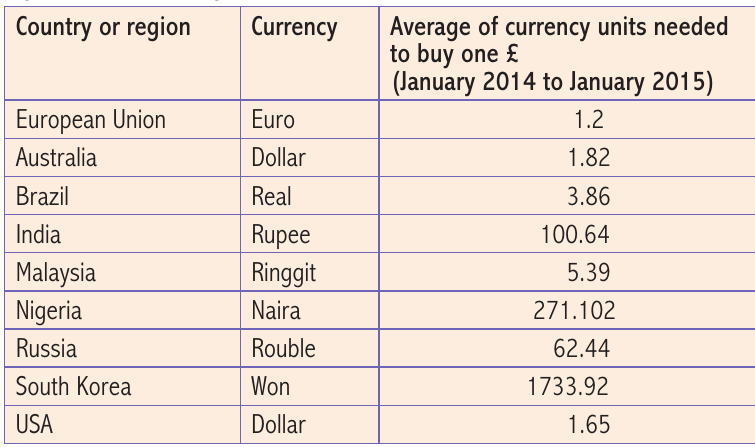
Initial Calculation (2014):
In 2014, the average exchange rate was 5.39 ringgits per pound. Therefore:
If Exchange Rate Changes:
However, if the exchange rate moves against the UK business and the ringgit strengthens to 5 ringgits per pound by completion:
Problem: The contract specifies £10 million, but this now only purchases 50 million ringgits. The UK business must pay an additional 3.9 million ringgits (equivalent to £780,000 at the new rate) to fulfil its £10 million commitment.
Note
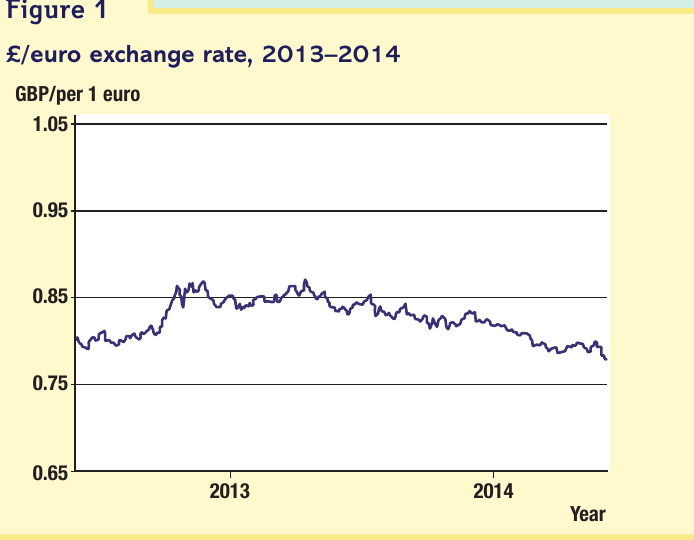
The graph shows GBP/Euro exchange rate fluctuations between 2013 and 2014. Starting around 0.80 in early 2013, the rate rose sharply to approximately 0.86 by mid-2013, remained relatively stable throughout 2013, then gradually declined through 2014 to finish around 0.80. This demonstrates the volatility businesses face with exchange rates.
Managing exchange rate risk
Businesses can protect themselves from adverse currency movements through:
Insurance: Taking out policies to protect against financial losses from exchange rate changes
Hedging: Using financial instruments to offset potential currency risks. Hedging involves taking positions in financial markets that profit when exchange rates move unfavourably, offsetting losses on the underlying business transaction.
Strategic considerations for exchange rates
When assessing a country as a market, businesses should:
- Analyse the relationship between their home currency and the target country's currency
- Review historical trends to identify whether exchange rate movements are short-term fluctuations or sustained trends
- Consider whether currency appreciation or depreciation helps or hinders their specific business model
- Evaluate risk management options to protect against adverse movements
- Factor exchange rate volatility into investment decisions and pricing strategies

Note
Disney's $5 billion investment in Shanghai Disneyland demonstrates confidence in China's market despite currency and exchange rate considerations. Expected to attract 25 million visitors in its first full year, the resort leverages Shanghai's infrastructure (demonstrated by the World Expo's 73 million visitors in 2010) and rising Chinese disposable incomes.
Summary
Remember!
Five key factors for assessing a country as a market:
- Disposable income levels and growth determine whether consumers can afford products and whether the market will expand
- Ease of doing business affects operational efficiency—evaluate World Bank rankings and specific indicators relevant to your business
- Infrastructure quality impacts costs and reliability—both transportation and communication systems matter
- Political stability reduces investment risk—assess government relationships, corruption levels, and potential political threats
- Exchange rates affect profitability—consider whether your business model benefits from currency appreciation or depreciation
Critical definitions:
- Disposable income: Money remaining after taxes and deductions, available for consumption or saving
- Exchange rate: Price of one currency in terms of another
- Appreciation: Currency rising in value / Depreciation: Currency falling in value
Key assessment principle: Successful market entry requires matching your business strengths with market conditions. A market attractive for one business may be unsuitable for another depending on competitive advantages and strategic objectives.