Context & Writers Techniques (Edexcel A-Level English Literature): Revision Notes
📚Revision Notes
Context & Writer's Techniques
Context of 'A Streetcar Named Desire'
Tennessee Williams: Life and Background
Early Life
-
Born Thomas Lanier Williams III in 1911 in Columbus, Mississippi.
-
Had a difficult childhood with an unhappy family life; his father was an alcoholic and his mother, a Southern belle, was controlling.
-
Close relationship with his sister Rose, who later suffered from mental illness and was institutionalised. Career
-
Adopted the pen name "Tennessee" in college, named after his home state.
-
Became a prominent playwright with works like "The Glass Menagerie" (1944) and "A Streetcar Named Desire" (1947).
-
His works often explored themes of desire, mental illness, and the fragility of human relationships.
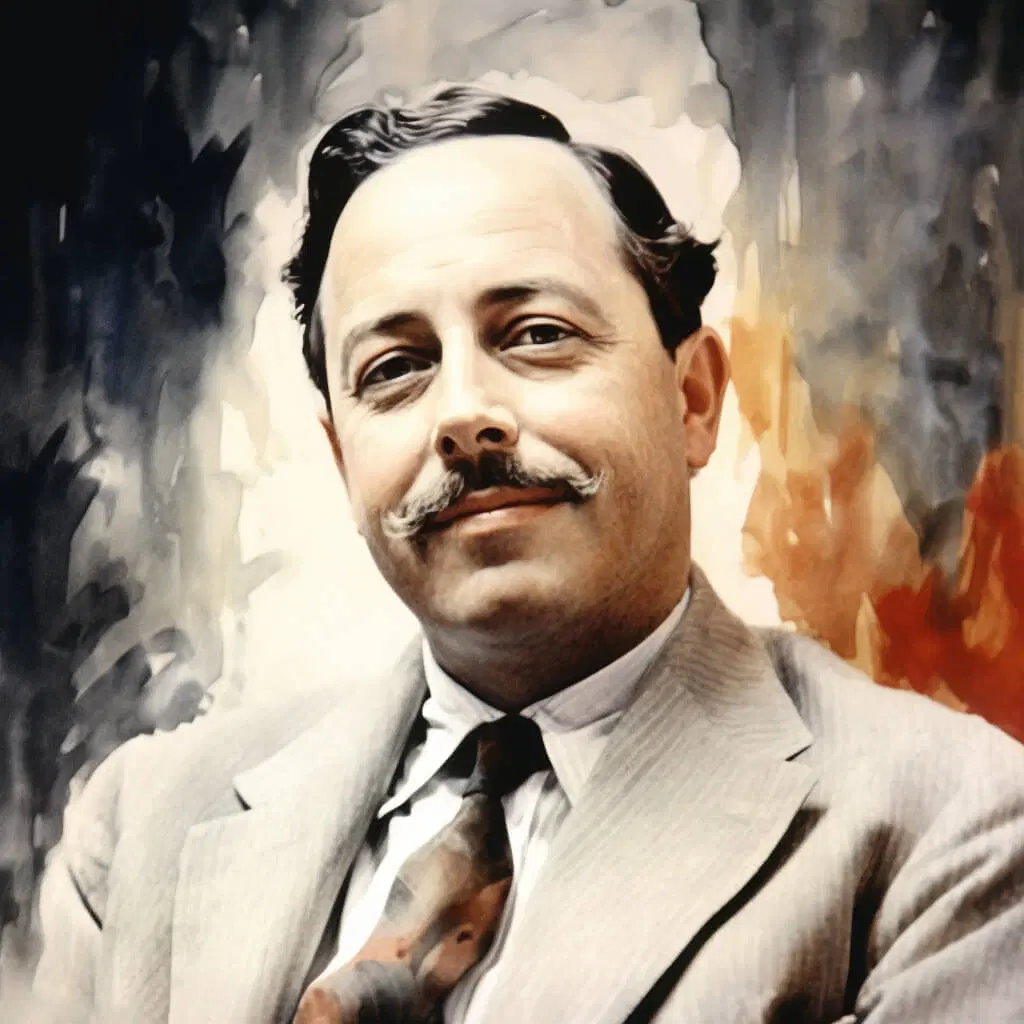
Tennessee Williams
Personal Struggles
- Williams was gay and lived during a time when homosexuality was considered a mental illness.
- Struggled with his own mental health, loneliness, and addiction throughout his life.
History of "A Streetcar Named Desire"
Writing and Performance
-
Written in 1947, premiered on Broadway on December 3, 1947.
-
Directed by Elia Kazan, the play starred Marlon Brando as Stanley and Jessica Tandy as Blanche. Performance History
-
Adapted into a successful film in 1951, also directed by Elia Kazan, with Brando reprising his role.
-
Continues to be performed worldwide, known for its enduring relevance and powerful themes. Reception
-
Initially received with critical acclaim, winning the Pulitzer Prize for Drama in 1948.
-
Praised for its raw portrayal of complex characters and social issues.
Literary Contexts
Genre of the Play
-
Tragedy and Social Drama: Classified as a tragedy, focusing on the downfall of its protagonist, Blanche DuBois.
-
Incorporates elements of social drama, highlighting the struggles of individuals within societal constraints.
-
Psychological Realism: Emphasises psychological depth and realism, exploring the inner lives of its characters. Historical and Political Context
-
Post-World War II America: Set in the late 1940s, reflecting the social changes and tensions of the time.
-
America was transitioning from wartime unity to peacetime normalcy, with an emphasis on traditional family roles and economic prosperity.
-
Southern Gothic: The play is steeped in Southern Gothic tradition, highlighting decay, grotesque elements, and the conflict between the old and new South. Cultural and Social Context
-
Gender Roles and Sexuality: Critiques the rigid gender roles and expectations of post-war American society.
-
Explores themes of female sexuality and the stigmatisation of women who deviate from societal norms.
-
Class and Race: Examines class conflict, particularly between the old Southern aristocracy (Blanche) and the rising working class (Stanley).
-
Touches on racial issues subtly, using the diverse setting of New Orleans as a backdrop for these tensions. Philosophical Context
-
Existentialism and Human Fragility: Explores existential themes such as the search for meaning, the inevitability of death, and the fragility of human identity.
-
Characters struggle with their sense of self and reality, highlighting the transient nature of human existence.
-
Morality and Redemption: While not overtly religious, the play delves into moral questions about sin, redemption, and the human capacity for cruelty and compassion.
-
Reflects on the Christian principles that underpin American society, particularly in the South.
Useful Contextual Concepts
- Southern Gothic: Understand the characteristics of Southern Gothic literature, including its focus on decay, grotesque elements, and the conflict between tradition and progress.
- Psychological Realism: Be aware of the emphasis on psychological depth and realism in the play, reflecting the characters' inner conflicts and motivations.
- Class and Race: Look for the play's examination of class tensions and subtle commentary on racial issues within the diverse setting of New Orleans.
- Post-World War II America: Recognise the social and cultural shifts in America during the late 1940s, particularly regarding gender roles, class dynamics, and economic change.
- Gender Roles and Sexuality: Understand the critique of traditional gender roles and the exploration of female sexuality in a patriarchal society.
Writer's Techniques in 'A Streetcar Named Desire'
Realism
Authentic Dialogue
-
Williams uses realistic dialogue to capture the natural speech patterns of the characters, reflecting their socio-economic backgrounds.
-
📝 Example: Stanley's brusque and direct speech contrasts sharply with Blanche's poetic and refined language: "I don't want realism. I want magic!" (Scene Nine). Detailed Setting
-
The detailed setting of the New Orleans apartment and its surroundings enhances the realism of the play.
-
📝 Example: The stage directions describe the setting vividly: "The kitchen now suggests that sort of lurid nocturnal brilliance, the raw colours of childhood's spectrum" (Scene One).
Expressionism
Symbolic Use of Light
- Light is used symbolically to represent truth and reality, which Blanche seeks to avoid.
- 📝 Example: Blanche covers a naked light bulb with a paper lantern to soften its harshness:
"I can't stand a naked light bulb, any more than I can a rude remark or a vulgar action" (Scene Three).
Music and Sound Effects
- Music and sound effects are used to reflect the characters' inner states and to foreshadow events.
- 📝 Example: The recurring use of the Varsouviana polka music, which plays in Blanche's mind, symbolises her guilt and mental instability:
"The Varsouviana is heard, its music rising with sinister rapidity" (Scene Nine).
Symbolism
Blanche's Bathing
- Blanche's frequent bathing symbolises her desire to cleanse herself of her past and her guilt.
- 📝 Example: Blanche says
"I think I will bathe. My nerves are in knots. Is the bathroom occupied?" (Scene Seven), highlighting her need for purification.
The Paper Lantern
- The paper lantern Blanche uses to cover the light bulb symbolises her attempt to mask reality and create illusions.
- 📝 Example: When Mitch tears the lantern off, he exposes the harsh truth:
"He tears the paper lantern off the light bulb. She utters a frightened gasp" (Scene Nine).
Characterisation
Complex Characters
-
Williams creates complex characters with deep psychological backgrounds, contributing to the play's realism and depth.
-
📝Example: Blanche is portrayed as a tragic figure haunted by her past, while Stanley is depicted as a brutish yet charismatic man. Use of Dialogue
-
The dialogue reveals the characters' motivations, backgrounds, and conflicts.
-
📝Example: Blanche's past is slowly revealed through her conversations with Mitch and Stanley, such as when she says, "I don't want realism. I want magic!" (Scene Nine).
Flashbacks and Non-linear Structure
Temporal Shifts
-
Williams employs flashbacks to reveal Blanche's past and the events that led her to her current state.
-
📝Example: Blanche's memory of her husband's suicide is depicted through fragmented recollections: "We danced the Varsouviana!" (Scene Six). Character Development
-
The non-linear structure allows for gradual character development and the unfolding of backstories.
-
📝Example: The audience learns about Blanche's troubled past and the loss of Belle Reeve through her interactions and memories.
Use of Stage Directions
Detailed Descriptions
-
Williams' stage directions provide detailed descriptions of settings, actions, and even the emotions of characters, enhancing the play's depth.
-
📝Example: The opening stage directions describe the setting in vivid detail: "The exterior of a two-story corner building on a street in New Orleans which is named Elysian Fields" (Scene One). Atmosphere Creation
-
The stage directions help create the atmosphere and mood of the play.
-
📝Example: The description of the sound of the "blue piano" music sets the tone for the New Orleans setting: "The music of the 'blue piano' grows louder" (Scene One).